
Laura McNeal
Author of Crooked
About the Author
Laura McNeal received a master's degree in fiction writing from Syracuse University. She taught middle school and high school English before becoming a novelist and journalist. She has written several books with her husband Tom McNeal including Crooked, winner of the California Book Award for show more Juvenile Literature; Zipped, winner of the PEN Center USA Literary Award for Children's Literature; Crushed; and The Decoding of Lana Morris. Dark Water is her first solo title and was a finalist for the National Book Award. (Bowker Author Biography) show less
Works by Laura McNeal
Tagged
Common Knowledge
- Gender
- female
- Education
- Brigham Young University (BA|1988)
- Places of residence
- Fallbrook, California, USA
- Associated Place (for map)
- California, USA
Members
Reviews
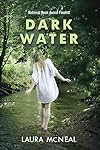
This debut solo effort after several collaborations with husband Tom McNeal (The Decoding of Lana Morris, 2007, etc.) stands out in the crowded coming-of-age field. The affecting narrative springs believably from the first-person thoughts of Pearl DeWitt as she recalls her 15th summer, when, entranced by a nearly mute, illegal Mexican migrant worker, the beautiful and gifted teenage Amiel, Pearl makes choices that lead to tragedy. Evocative language electrifies the scenes between the pair, show more as they develop a relationship both complicated and deepened by their limited verbal communication. Her warnings to readers of impending disaster amplify rather than diminish the impact of the misguided, wrenching decisions she makes when a raging wildfire sweeps through their rural California community. Besides her poignant relationship with Amiel, Pearl navigates her father’s recent abandonment of her and her mother and her complicated relationship with her cousin Robby as he blunderingly deals with his father’s apparent infidelity. Notable for well-drawn characters, an engaging plot and, especially, hauntingly beautiful language, this is an outstanding book. (Fiction. 12 & up) show less
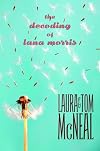
I’m so glad to have found these wonderful writers. Tom McNeal of course is the author of the ethereally beautiful To Be Sung Underwater and Laura McNeal, Tom's wife, is also the author of a number of prize-winning books (see her oeuvre delineated on their website, here). This collaboration by them for young adults has a plotline I normally would eschew, as it involves an occult element. However, in the right hands - like theirs - a bit of magic can be enchanting.
Lana Morris is a show more sixteen-year-old foster child who lives with four other foster children in the home of Veronica and “Whit” Winters. Lana's four foster siblings, Tilly, Carlito, Alfred, and Garth are “snicks;” i.e., SNKS or Special Needs Kids. Lana’s foster parents are a bit “special” themselves: Veronica is an “ice queen” who clearly is into fostering for the money, and Whit thinks that fostering children includes fostering a sexual desire in Lana for him. Lana struggles with her attraction for Whit in spite of his position in her life and their fifteen-year age difference, but Whit has no such scruples.
While at first, Lana is appalled to be living with "snicks," she comes to love them, and finds that she assesses the goodness of others - including the “semi-handsome” boy next store - by how they treat her foster-siblings. Lana wants to make all of their lives better, but doesn’t know how, until a serendipitous visit to an antiques store gives her what she needs to make her life go “from grim to good.”
Evaluation: I love these authors. They have taken topics I normally would avoid, and made a book that provides a stellar reading experience. It goes without saying that featuring protagonists with special needs is a rarity, and their portrayals ensure that you love each of the kids in the book as individuals. Especially noteworthy is the quality of the dialogue among the adults, the snicks, and the other teens. Will I be chasing down more of their backlists? Absolutely! show less
Lana Morris is a show more sixteen-year-old foster child who lives with four other foster children in the home of Veronica and “Whit” Winters. Lana's four foster siblings, Tilly, Carlito, Alfred, and Garth are “snicks;” i.e., SNKS or Special Needs Kids. Lana’s foster parents are a bit “special” themselves: Veronica is an “ice queen” who clearly is into fostering for the money, and Whit thinks that fostering children includes fostering a sexual desire in Lana for him. Lana struggles with her attraction for Whit in spite of his position in her life and their fifteen-year age difference, but Whit has no such scruples.
While at first, Lana is appalled to be living with "snicks," she comes to love them, and finds that she assesses the goodness of others - including the “semi-handsome” boy next store - by how they treat her foster-siblings. Lana wants to make all of their lives better, but doesn’t know how, until a serendipitous visit to an antiques store gives her what she needs to make her life go “from grim to good.”
Evaluation: I love these authors. They have taken topics I normally would avoid, and made a book that provides a stellar reading experience. It goes without saying that featuring protagonists with special needs is a rarity, and their portrayals ensure that you love each of the kids in the book as individuals. Especially noteworthy is the quality of the dialogue among the adults, the snicks, and the other teens. Will I be chasing down more of their backlists? Absolutely! show less
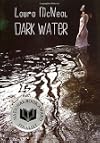
Pearl falls for her uncle's migrant worker, Amiel, a young man with a mysterious past. But her longing for Amiel leads to a tragic consequence as she hints throughout the book. Even with these hints, the turn of events still comes as a shock. Pearl's story is passionate and heartbreaking but at book's end you wonder if she isn't hanging on too tight to an impossible dream. And you have to love lines like "I was Braille and his eyes were fingers" and "I adjusted to the situation the way I show more suppose people adjust to being on a hijacked plane." show less
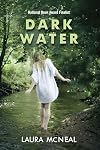
This coming of age/young love story is a departure from the usual young adult fare. It utilizes the elemental forces of fire and water to help tell the story, enriching it for the reader by the multiple layers of meaning in the text. There is so much in this book to stimulate the mind of readers: the symbolism of the life-giving role of water, and of the dual nature of fire that simultaneously connotes death but also the opportunity for clear-cutting renewal; the question of what constitutes show more communication: must you use the same language? can methods of communication other than speech allow you to communicate just as well?; and the notion of home: is it where you live or with whom you love? Is it with whom you were placed by chance of birth, or with the person who can see into your very soul? And interwoven throughout is the theme of an everlasting love that admits no barriers, even when the odds of overcoming them are overwhelming.
Pearl DeWitt is fifteen, and has heterochromia: one eye is blue and the other is brown. This physical split is echoed by other aspects of her life: her father left because he could not abide her mother, and her mother cannot get past the anger she feels over the desertion. Pearl and her mother now have to live in a guest cottage on her Uncle’s ranch in Fallbrook, California, where Pearl feels like an outsider. Further, although Pearl is able to get by in the real world with her friends, she feels most comfortable in the dreamlike existence of fantasy and nature (so often fantastical): a world that her friends, now grown, no longer wish to inhabit. Pearl is, as Amiel - the 17-year-old boy she comes to love – says, de dos mundos - of two worlds.
Amiel is of two worlds as well. He is an illegal immigrant from Mexico who must constantly hide from authorities, but the California farmers near the border depend on him and others like him for labor. His native tongue is Spanish, but he also understands English. Ironically, he can hardly speak aloud in either language because of a tragic incident when he was young; nevertheless, he has learned to communicate in other ways. He wants to be with Pearl, but fears he would never be admitted to her world.
Pearl and Amiel slowly develop a relationship in spite of the many obstacles dividing them, until the Agua Prieta fire roars through their area. It destroys the not only bridges they were building between one another, but those connecting others to their lives as well.
Discussion: The motif of transmogrification permeates the story. Pearl’s mother has a tank full of caterpillars she nurtures, hoping to collect the silk one day from their cocoons. Pearl too is poised on the cusp of a transformation, hers analogous to the oyster: she struggles to come into her own as a person as beautiful as her nacreous name, but there is much in her life she doesn’t understand, and many situations in which she doesn’t know the right thing to do. After the fire, she muses, "They say that parts of a teenager’s brain aren’t formed yet. That might have been the problem. I’d like to think that rather than a malignancy of heart.”
Amiel’s harrowing situation is one we live with every day in Southern Arizona. There are many young men who take put their lives in danger in order to get across the border and earn a living. They work extremely hard and live in impoverished conditions so they can send money home to their families. Those who try to cross legally are at the mercy of the very corrupt Mexican police force and often find their money taken without receiving permission to exit the country. We have had friends, who, like Amiel, refused to go for help when sick or injured because of the fear of getting deported. In this book, Amiel is more afraid of the fire fighters than the fire itself, because authorities are a danger to him, as is a home-grown “posse” trying to drive out the migrant workers. Amiel’s story is presented in a low-key way as just one of the many barriers against a relationship forming with Pearl, but it is told with a sensitivity and compassion so often missing in the current political landscape.
Another part of this book that rang very true for me was the ability to communicate between Pearl and Amiel. Living in a bilingual culture, I have been impressed with how well one can get to the heart of meaning even if one doesn’t know the words with which to communicate directly. These two have additional bonds to draw upon: they both know each other is an outsider, and they both are “coming-of-age” teens, who can connect powerfully through their shared longing and hope and inchoate love that makes every day seem shimmering with possibility.
Wildfires and the fear and loss that accompany them also come close to my own experience, living in the Southwest. In Dark Water, McNeal writes of the fictional Agua Prieta Fire, which most closely resembles the actual Rice Canyon area of the October 2007 California wildfires. Overall, at least 1,500 homes were destroyed and over 500,000 acres burned from Santa Barbara County to the U.S.–Mexico border. In Fallbrook and outlying areas, 9,000 acres burned and 45,000 had to evacuate. (See a map of affected areas here.) The cause was never ascertained, but similar to when fires start in Southern Arizona, immigrants are generally suspected. Rarely do newscasters document the devastating effects on teenagers caught in the maelstrom; the author fills this gap by writing imaginatively of the reactions of Pearl, her cousin, and her classmates.
No matter the issue, McNeal’s prose is beautifully evocative, like this passage about the scorching hot day before the fire:
"On September 13, we were the kindling, and a monstrous god leaned over us to breathe. Clouds melted brush trembled, and the ocean burned white like molten glass. Palm fronds crashed into roads. Leaves swirled in the parking lot. My nose bled and my skin cracked. I breathed cotton-dry breaths through paper lips and dreamed of Amiel in the heat.”
Evaluation: The relationship between the two teenage protagonists is choreographed like a gentle ballet of two reticent people who sense that the acceptance they crave can finally be found with one another. But it is not just a story about love. It is a story about deciding what is wrong and what is right, and having the moral courage to embrace the ethical choice no matter the consequences.
This author is a gem, and her books are well worth seeking out.
Note: National Book Award Finalist show less
Pearl DeWitt is fifteen, and has heterochromia: one eye is blue and the other is brown. This physical split is echoed by other aspects of her life: her father left because he could not abide her mother, and her mother cannot get past the anger she feels over the desertion. Pearl and her mother now have to live in a guest cottage on her Uncle’s ranch in Fallbrook, California, where Pearl feels like an outsider. Further, although Pearl is able to get by in the real world with her friends, she feels most comfortable in the dreamlike existence of fantasy and nature (so often fantastical): a world that her friends, now grown, no longer wish to inhabit. Pearl is, as Amiel - the 17-year-old boy she comes to love – says, de dos mundos - of two worlds.
Amiel is of two worlds as well. He is an illegal immigrant from Mexico who must constantly hide from authorities, but the California farmers near the border depend on him and others like him for labor. His native tongue is Spanish, but he also understands English. Ironically, he can hardly speak aloud in either language because of a tragic incident when he was young; nevertheless, he has learned to communicate in other ways. He wants to be with Pearl, but fears he would never be admitted to her world.
Pearl and Amiel slowly develop a relationship in spite of the many obstacles dividing them, until the Agua Prieta fire roars through their area. It destroys the not only bridges they were building between one another, but those connecting others to their lives as well.
Discussion: The motif of transmogrification permeates the story. Pearl’s mother has a tank full of caterpillars she nurtures, hoping to collect the silk one day from their cocoons. Pearl too is poised on the cusp of a transformation, hers analogous to the oyster: she struggles to come into her own as a person as beautiful as her nacreous name, but there is much in her life she doesn’t understand, and many situations in which she doesn’t know the right thing to do. After the fire, she muses, "They say that parts of a teenager’s brain aren’t formed yet. That might have been the problem. I’d like to think that rather than a malignancy of heart.”
Amiel’s harrowing situation is one we live with every day in Southern Arizona. There are many young men who take put their lives in danger in order to get across the border and earn a living. They work extremely hard and live in impoverished conditions so they can send money home to their families. Those who try to cross legally are at the mercy of the very corrupt Mexican police force and often find their money taken without receiving permission to exit the country. We have had friends, who, like Amiel, refused to go for help when sick or injured because of the fear of getting deported. In this book, Amiel is more afraid of the fire fighters than the fire itself, because authorities are a danger to him, as is a home-grown “posse” trying to drive out the migrant workers. Amiel’s story is presented in a low-key way as just one of the many barriers against a relationship forming with Pearl, but it is told with a sensitivity and compassion so often missing in the current political landscape.
Another part of this book that rang very true for me was the ability to communicate between Pearl and Amiel. Living in a bilingual culture, I have been impressed with how well one can get to the heart of meaning even if one doesn’t know the words with which to communicate directly. These two have additional bonds to draw upon: they both know each other is an outsider, and they both are “coming-of-age” teens, who can connect powerfully through their shared longing and hope and inchoate love that makes every day seem shimmering with possibility.
Wildfires and the fear and loss that accompany them also come close to my own experience, living in the Southwest. In Dark Water, McNeal writes of the fictional Agua Prieta Fire, which most closely resembles the actual Rice Canyon area of the October 2007 California wildfires. Overall, at least 1,500 homes were destroyed and over 500,000 acres burned from Santa Barbara County to the U.S.–Mexico border. In Fallbrook and outlying areas, 9,000 acres burned and 45,000 had to evacuate. (See a map of affected areas here.) The cause was never ascertained, but similar to when fires start in Southern Arizona, immigrants are generally suspected. Rarely do newscasters document the devastating effects on teenagers caught in the maelstrom; the author fills this gap by writing imaginatively of the reactions of Pearl, her cousin, and her classmates.
No matter the issue, McNeal’s prose is beautifully evocative, like this passage about the scorching hot day before the fire:
"On September 13, we were the kindling, and a monstrous god leaned over us to breathe. Clouds melted brush trembled, and the ocean burned white like molten glass. Palm fronds crashed into roads. Leaves swirled in the parking lot. My nose bled and my skin cracked. I breathed cotton-dry breaths through paper lips and dreamed of Amiel in the heat.”
Evaluation: The relationship between the two teenage protagonists is choreographed like a gentle ballet of two reticent people who sense that the acceptance they crave can finally be found with one another. But it is not just a story about love. It is a story about deciding what is wrong and what is right, and having the moral courage to embrace the ethical choice no matter the consequences.
This author is a gem, and her books are well worth seeking out.
Note: National Book Award Finalist show less
Lists
Boy Protagonists (1)
to get (1)
Awards


You May Also Like


Associated Authors
Statistics
- Works
- 12
- Members
- 1,256
- Popularity
- #20,421
- Rating
- 3.6
- Reviews
- 58
- ISBNs
- 59