
Don Tracy (1905–1976)
Author of Crimson is the Eastern Shore
About the Author
Disambiguation Notice:
Don Tracy used his Roger Fuller pseudonym for TV and movie tie-in novels and Peyton Place sequels.
Series
Works by Don Tracy
The Black Amulet 7 copies
Who Killed Beau Sparrow? 3 copies
The Cheat 2 copies
Kermis in Peyton Place 1 copy
Too Many Girls 1 copy
Eve of Judgement 1 copy
The Big Knockout 1 copy
The Big Brass Ring 1 copy
La morte sa baciare 1 copy
UN BLOC DE HAINE 1 copy
Streets of Askelon 1 copy
Tudor Renegade 1 copy
Associated Works
The Saturday Evening Post Stories of 1949 — Contributor — 2 copies
Tagged
Common Knowledge
- Legal name
- Tracy, Donald Fiske
- Other names
- Fuller, Roger
- Birthdate
- 1905
- Date of death
- 1976
- Gender
- male
- Birthplace
- New Britain, Connecticut, USA
- Place of death
- Clearwater, Florida, USA
- Disambiguation notice
- Don Tracy used his Roger Fuller pseudonym for TV and movie tie-in novels and Peyton Place sequels.
- Associated Place (for map)
- USA
Members
Reviews

How Sleeps the Beast is a mixed bag, to put it mildly. It's the story of an ugly, ugly lynching in a rural Maryland town, taken part in by a very large, rabid, hate-filled mob, with the lynching itself, far from a "simple" hanging, and exceedingly cruel and brutal affair. All this is true to the actual events of many, many lynchings, in which Blacks were not just hung, but disemboweled and sometimes burned alive. So as far as that goes, while the book is hard to read, it's a valuable show more historical testimony. However, three major flaws are also evident. The first is that the Blacks of this town are often (not always) portrayed as the simplistic, child-like folk of the worst racist tropes. Second, and even worse, is that the victim, in the event, is actually guilty of the crime he's accused of, and again via an even more vile racist stereotype, having gotten drunk and in his inebriated haze decided to go off in search of a white woman. Any white woman. When, in reality, Blacks in the Jim Crow South got lynched for protesting about being cheated out of payment for the crops they'd grown, or making their houses look too attractive, or having money in the bank: anything that made them appear to be rising "above their station." So suggesting that a Black person had to be guilty of an actual crime in order to be lynched in fact borders on doing more harm than good in terms of the message taken away by the reader, no matter how deprived the perpetrators of the lynching are portrayed as being. The third, and least objectionable in the long run, flaw is that the characters are essentially all cardboard cutouts, put in place to espouse this point of view or that one, whether evil or well intentioned, strong or weak, cynical or idealistic.
So, despite the book being intriguing at the outset, and a good fictional portrayal of the horrors of racial hatred and the depravity of lynch mobs, in the end it falls short for me of being anything ultimately but an historical curiosity. show less
So, despite the book being intriguing at the outset, and a good fictional portrayal of the horrors of racial hatred and the depravity of lynch mobs, in the end it falls short for me of being anything ultimately but an historical curiosity. show less

A special investigator goes undercover at a Louisiana university to solve 2 murders and uncovers a totalitarian conspiracy.
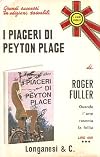
Orribile. Scritto male, senza ritmo, con troppi personaggi in troppo poco spazio. Giudizio negativo.
Dec 24, 2017Italian
Awards

You May Also Like


Associated Authors
Statistics
- Works
- 62
- Also by
- 5
- Members
- 248
- Popularity
- #92,013
- Rating
- 3.6
- Reviews
- 3
- ISBNs
- 35
- Languages
- 3