
Tom Reamy (1935–1977)
Author of Blind Voices
About the Author
Image credit: From isfdb.org
Works by Tom Reamy
Deep Text: Using Text Analytics to Conquer Information Overload, Get Real Value from Social Media, and Add Bigger Text to Big Data (2016) 10 copies
Millemondi Inverno 1990 — Author — 3 copies
Under the Hollywood sign 1 copy
Associated Works
The Best Fantasy Stories from the Magazine of Fantasy & Science Fiction (1985) — Contributor — 77 copies, 2 reviews
Six Science Fiction Plays (Pocket Books Sci-Fi No. 48766) (1975) — Contributor — 61 copies, 2 reviews
The Best Horror Stories from The Magazine of Fantasy & Science Fiction (1988) — Contributor — 52 copies, 1 review
Light Years and Dark: Science Fiction and Fantasy of and for Our Time (1984) — Contributor — 38 copies
The Best Horror Stories from the Magazine of Fantasy & Science Fiction, Vol. I (1989) — Contributor — 27 copies
The Magazine of Fantasy and Science Fiction, 50. Die Cinderella- Maschine. (1980) — Author, some editions — 9 copies
Tagged
Common Knowledge
- Legal name
- Reamy, Thomas Earl
- Birthdate
- 1935-01-23
- Date of death
- 1977-11-04
- Gender
- male
- Organizations
- Turkey City Writer's Workshop
- Awards and honors
- John W. Campbell Award (1976)
- Agent
- Virginia Kidd Agency
- Nationality
- USA
- Birthplace
- Woodson, Texas, USA
- Associated Place (for map)
- Texas, USA
Members
Reviews

Published in 1978 this novel has the feel of good old time fantasy writing. It is the sort of story that would have appeared in those wonderful Marvel comic publications such as "Strange Tales" or "Journey into Mystery" back in the 1960's. I used to lap those up as a young teenager and Reamy's book took me right back there.
The freak show comes to town: so typical of a story from "Strange Tales" and Reamy sets his story in 1930's America. A small town in the middle of farming country gets show more geared up for the show that rolls into town, but these are no ordinary freaks some of them really do have supernatural powers. Three young women of marriageable age caught up in the business of looking for a husband are drawn to the show along with most of the townspeople. Like the three friends and their dates there is an air of expectancy built up before the first show and when it comes Reamy's writing doesn't let him down. Amazing things happen under the canvas big top that will change the lives of the three young women for ever.
Reamy is particularly good at describing life in a small farming town and the very different world of the freak show. He builds his story nicely and manages to convey an aura of creepiness along with the fantastic. All is not well in the world of the freak circus and there is murder and rape as events spiral out of control of the sinister Haverstock the ringmaster. There is both tragedy and pathos and the story held my interest right to the end.
A hoary old tale is handled with panache and although it is a little dated, the fantasy elements are imaginative enough to hold it all together. I enjoyed it even if part of this was nostalgia for those old Marvel comics show less
The freak show comes to town: so typical of a story from "Strange Tales" and Reamy sets his story in 1930's America. A small town in the middle of farming country gets show more geared up for the show that rolls into town, but these are no ordinary freaks some of them really do have supernatural powers. Three young women of marriageable age caught up in the business of looking for a husband are drawn to the show along with most of the townspeople. Like the three friends and their dates there is an air of expectancy built up before the first show and when it comes Reamy's writing doesn't let him down. Amazing things happen under the canvas big top that will change the lives of the three young women for ever.
Reamy is particularly good at describing life in a small farming town and the very different world of the freak show. He builds his story nicely and manages to convey an aura of creepiness along with the fantastic. All is not well in the world of the freak circus and there is murder and rape as events spiral out of control of the sinister Haverstock the ringmaster. There is both tragedy and pathos and the story held my interest right to the end.
A hoary old tale is handled with panache and although it is a little dated, the fantasy elements are imaginative enough to hold it all together. I enjoyed it even if part of this was nostalgia for those old Marvel comics show less

I came to this collection with fairly high expectations, given Harlan Ellison’s effusive praise and the Nebula Award for the eponymous entry. And there were indeed several strong stories in this collection, two of which (“Twilla” and “Under the Hollywood Sign” I rated as high as an 8 out of 10). But on balance I came away a little bit disappointed.
These stories are largely dark fantasy, bordering on horror, often with a healthy dash of the perverse. They are not particularly show more complex. At their most effective they connect on a direct emotional level. Some of them called to mind some of the best of the X-Files episodes. “Dinosaurs,” a far future story which reminded me of George R.R. Martin’s fabulous “In the House of the Worm,” is the sole science fiction entry. Two of my favorites were shorter stories that felt a bit less labored and established mood convincingly, “The Mistress of Windraven” and “Waiting for Billy Star.” I don’t think it will ever again be possible to the think about the concept of death in a moment of passion (I can't think of an appropriate euphemism) in a lighthearted way (i.e., “but what a way to go”) after reading “Twilla.”
I gather that the title story and “The Detweiler Boy” are generally regarded as Reamy’s best, but to my taste neither offered particularly convincing characters. “Insects in Amber” felt like a concept paper for a really bad horror movie, and “2076: Blue Eyes” felt like an outline for a really bad Kevin Costner movie.
Still, I am intrigued enough to add “Blind Voices,” Reamy’s sole novel, to my wishlist. show less
These stories are largely dark fantasy, bordering on horror, often with a healthy dash of the perverse. They are not particularly show more complex. At their most effective they connect on a direct emotional level. Some of them called to mind some of the best of the X-Files episodes. “Dinosaurs,” a far future story which reminded me of George R.R. Martin’s fabulous “In the House of the Worm,” is the sole science fiction entry. Two of my favorites were shorter stories that felt a bit less labored and established mood convincingly, “The Mistress of Windraven” and “Waiting for Billy Star.” I don’t think it will ever again be possible to the think about the concept of death in a moment of passion (I can't think of an appropriate euphemism) in a lighthearted way (i.e., “but what a way to go”) after reading “Twilla.”
I gather that the title story and “The Detweiler Boy” are generally regarded as Reamy’s best, but to my taste neither offered particularly convincing characters. “Insects in Amber” felt like a concept paper for a really bad horror movie, and “2076: Blue Eyes” felt like an outline for a really bad Kevin Costner movie.
Still, I am intrigued enough to add “Blind Voices,” Reamy’s sole novel, to my wishlist. show less
The story takes place in a tiny rural Kansas town in the early 1900’s…seemingly before WWI. The first chapter sets the scene with a description of the bucolic setting that is so well done it makes boredom beautiful: “It was a time of pause, a time between planting and harvest when the air was heavy, humming with its own slow, warm music.” By the time Reamy is done telling us where and when we are we’ve joined the locals in expecting nothing and anticipating joy in the smallest of show more novelties. And then the freak show comes to town on the same night as the first “talkie” is to be shown in the cinema—talk about excitement!
The plot is that the freak show is real…the owner is using the travelling show as a means to make enough money to allow him to continue his experiments in creating freaks as part of his exploration of his growing ESP powers. The hinge factor is that he has no scruples concerning “normal” people. Sadly the plot is poorly served by the evilness of the villains and the innocence of the victims. This would have been a good YA story if the sex wasn’t so “steamy”—the girls were so mesmerized by the intense sexual energy exuded by the auxiliary characters that their dooms are foreordained.
All in all, this is a quick read and mildly entertaining…just not that believable in all its aspects, even allowing for the basic premise. I can go along with the flow of the story line until the resolution at the end where the good people quickly settle down and return to normal life and learn to ignore the remnants of the death and destruction they’ve just endured. show less
The plot is that the freak show is real…the owner is using the travelling show as a means to make enough money to allow him to continue his experiments in creating freaks as part of his exploration of his growing ESP powers. The hinge factor is that he has no scruples concerning “normal” people. Sadly the plot is poorly served by the evilness of the villains and the innocence of the victims. This would have been a good YA story if the sex wasn’t so “steamy”—the girls were so mesmerized by the intense sexual energy exuded by the auxiliary characters that their dooms are foreordained.
All in all, this is a quick read and mildly entertaining…just not that believable in all its aspects, even allowing for the basic premise. I can go along with the flow of the story line until the resolution at the end where the good people quickly settle down and return to normal life and learn to ignore the remnants of the death and destruction they’ve just endured. show less
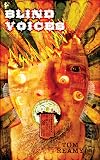
I read this in one day, I may have read it years ago? Starts out slow as the author sets the stage, then moves along quite well. More violence and sex then I expected, but appropriate to the story. Setting is Kansas farmland just as "talking picture" shows started. I liked that the powers described by the main characters were explained as natural rather than supernatural. A basic good vs evil story.
Lists
Awards


You May Also Like


Associated Authors
Statistics
- Works
- 21
- Also by
- 23
- Members
- 592
- Popularity
- #42,408
- Rating
- 3.6
- Reviews
- 7
- ISBNs
- 17
- Languages
- 1
- Favorited
- 1