
Edgar Pangborn (1909–1976)
Author of Davy
About the Author
Image credit: isfdb
Series
Works by Edgar Pangborn
Edgar Pangborn SF Gateway Omnibus: Davy, Mirror for Observers, Good Neighbors and Other Strangers (2015) 8 copies
Bibliothek der besten SF- Stories. Die fünfziger Jahre I. ( 1950 - 1954 ). (SF- Spezial). (1981) — Contributor — 8 copies
galaxy 14 Auswahl der besten Stories aus dem Science Fiction Magazine Galaxy (1970) — Contributor — 5 copies
The Night Wind 3 copies
Pick-Up for Olympus 2 copies
The World Is a Sphere 2 copies
The Red Hills Of Summer 2 copies
Short Science Fiction Collection 056 2 copies
Harper Conan and singer David 2 copies
A Better Mousehole 1 copy
The Golden Horn 1 copy
Un Miroir pour les observateurs - Davy [Board book] [Jan 01, 1973] Pangborn Edgar and Caza Philip (1973) 1 copy
The witches of Nupal 1 copy
The children's crusade 1 copy
Associated Works
Worlds Apart: An Anthology of Lesbian and Gay Science Fiction and Fantasy (1986) — Contributor — 181 copies, 1 review
An exaltation of stars; transcendental adventures in science fiction (1973) — Contributor — 137 copies, 1 review
The World That Couldn't Be and 8 Other Novelets From "Galaxy" (1959) — Contributor — 86 copies, 5 reviews
The Best Horror Stories from The Magazine of Fantasy & Science Fiction (1988) — Contributor — 52 copies, 1 review
The Best Horror Stories from the Magazine of Fantasy & Science Fiction, Vol. I (1989) — Contributor — 27 copies
The Magazine of Fantasy and Science Fiction February 1962, Vol. 22, No. 2 (1962) — Contributor — 11 copies
Short Science Fiction Collection 011 4 copies
Tagged
Common Knowledge
- Legal name
- Pangborn, Edgar
- Other names
- Harrison, Bruce
- Birthdate
- 1909-02-25
- Date of death
- 1976-02-01
- Gender
- male
- Education
- Harvard University
New England Conservatory of Music - Awards and honors
- Cordwainer Smith Rediscovery Award (2003)
- Relationships
- Pangborn, Georgia Wood (mother)
- Nationality
- USA
- Birthplace
- New York, New York, USA
- Places of residence
- New York, New York, USA (birthplace)
Voorhoesville, New York, USA
Bearsville, New York, USA (death) - Place of death
- Bearsville, New York, USA
- Associated Place (for map)
- New York, USA
Members
Reviews

The Hugo Award has never aligned with my taste in science fiction. Occasionally it’s picked novels I like and admire, but more often than not I find its nominated works uninteresting or poor. So why I’ve been picking up and reading novels from old Hugo Award shortlists, I’ve no idea. Such as Davy, which was nominated in 1965, but lost out to Fritz Leiber’s The Wanderer.
The title is the name of the narrator, who lives in a balkanised USA several hundred years after a nuclear war. A show more rise in sea level has reduced the country to some three thousand square miles somewhere in the north-east of the original. The novel is presented as his memoir, written many years later while he’s fleeing across the Atlantic from a coup that saw him and his friends ousted from power. The ship reaches the Azores, where it founds a settlement.
The novel opens with Davy at fourteen, working as a yard-boy in an inn. In the first chapter alone, there’s child labour, indentured labour, slavery, sexual assault, capital punishment and religious oppression. America is now a pre-technological society, with several small nations and city-states all under the thumb of the Holy Murkan Church. There are mutant births - a popular, and long-since discredited, trope in US sf in the 1940s and 1950s - which has somehow led to a stratified society, with an aristocracy. None of the world-building is at all convincing, despite the narrator’s attempts to convince the reader. (This is definitely a story aimed as a reader, explicitly so, as it ‘s a memoir, and features footnotes by Davy’s wife and friends.)
Unfortunately, Davy is also badly structured. Davy the narrator is in his thirties, but fourteen when the novel opens. While he mentions events immediately before he began the memoir, two-thirds of its length only covers his escape from indentured labour and a handful of years afterwards. He meets up with some survivors from a neighbouring nation of a battle, and travels with them, and then joins a travelling caravan of musicians - making Davy explicitly a carnival novel, an over-used pattern in US genre fiction.
I don’t like carnival novels, I didn’t like Davy. I thought its world-building unimaginative, and its structure badly unbalanced. Also, as critics at the time noted, nothing actually happens in it. I’ve yet to read Leiber’s The Wanderer - I have it on the TBR - but I’m hoping it’s better than Davy. show less
The title is the name of the narrator, who lives in a balkanised USA several hundred years after a nuclear war. A show more rise in sea level has reduced the country to some three thousand square miles somewhere in the north-east of the original. The novel is presented as his memoir, written many years later while he’s fleeing across the Atlantic from a coup that saw him and his friends ousted from power. The ship reaches the Azores, where it founds a settlement.
The novel opens with Davy at fourteen, working as a yard-boy in an inn. In the first chapter alone, there’s child labour, indentured labour, slavery, sexual assault, capital punishment and religious oppression. America is now a pre-technological society, with several small nations and city-states all under the thumb of the Holy Murkan Church. There are mutant births - a popular, and long-since discredited, trope in US sf in the 1940s and 1950s - which has somehow led to a stratified society, with an aristocracy. None of the world-building is at all convincing, despite the narrator’s attempts to convince the reader. (This is definitely a story aimed as a reader, explicitly so, as it ‘s a memoir, and features footnotes by Davy’s wife and friends.)
Unfortunately, Davy is also badly structured. Davy the narrator is in his thirties, but fourteen when the novel opens. While he mentions events immediately before he began the memoir, two-thirds of its length only covers his escape from indentured labour and a handful of years afterwards. He meets up with some survivors from a neighbouring nation of a battle, and travels with them, and then joins a travelling caravan of musicians - making Davy explicitly a carnival novel, an over-used pattern in US genre fiction.
I don’t like carnival novels, I didn’t like Davy. I thought its world-building unimaginative, and its structure badly unbalanced. Also, as critics at the time noted, nothing actually happens in it. I’ve yet to read Leiber’s The Wanderer - I have it on the TBR - but I’m hoping it’s better than Davy. show less

Pangborn, Edgar. A Mirror for Observers. 1954. Afterword by Peter S. Beagle. Bluejay, 1983.
Years before Terry Pratchett and Neil Gaiman collaborated on Good Omens, Edgar Pangborn, an almost forgotten master of fantasy and science fiction, gave the idea a more serious treatment. In A Mirror for Observers, two Martians meddle in human affairs, one intending benevolence and one hoping to hasten the collapse of civilization. In a small New England town, they observe a young boy who they suspect show more will have special qualities. The story is character-driven in the extreme, to the extent that some reviewers argue that the science fictional elements of the novel are unnecessary. Perhaps, but the ethical message at the heart of the novel goes down easier if it is enunciated by a caring Martian than it would be by a human character or an angel. Is the novel a creature of its time? Sure. Is it slow at times? Yup. Is it still worth a read? Definitely. show less
Years before Terry Pratchett and Neil Gaiman collaborated on Good Omens, Edgar Pangborn, an almost forgotten master of fantasy and science fiction, gave the idea a more serious treatment. In A Mirror for Observers, two Martians meddle in human affairs, one intending benevolence and one hoping to hasten the collapse of civilization. In a small New England town, they observe a young boy who they suspect show more will have special qualities. The story is character-driven in the extreme, to the extent that some reviewers argue that the science fictional elements of the novel are unnecessary. Perhaps, but the ethical message at the heart of the novel goes down easier if it is enunciated by a caring Martian than it would be by a human character or an angel. Is the novel a creature of its time? Sure. Is it slow at times? Yup. Is it still worth a read? Definitely. show less
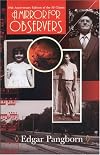
Heartbreakingly beautiful story of a Martian "Observer" trying to nurture and protect the lives of a gifted boy and girl (later a young man and woman), in conflict with another Martian who desires to corrupt and destroy them. The Martian framework is a platform for a lot of ruminating about the nature of humanity, and good vs. evil. The characters are beautifully drawn and developed, and the dialogue is pitch perfect. The lead character, The Observer, becomes a person so real (actually, show more persons so real), and his caring about the boy and girl so genuine and powerful, that it reflects back onto him, and makes him unforgettable. This attention to detail is characteristic of Pangborn, as is the abiding love of humankind that pervades all of his best work. It took me a chapter or two before the Martian framework fell away, and I became the Observer of these characters. The ending, which is both tragic and uplifting, moved me to tears. This is just a stunning piece of SF, as good as anything I've ever read in the genre. It's the first thing of his I've read--aside from a handful of short stories--that isn't part of his post-apocalyptic Tales of a Darkening World books--these include the novels "Davy," "In the Company of Glory," "The Judgement of Eve," and the story collection "Still I Persist In Wondering." I recommend all of them most highly. For me, he's become one of those writers you wonder how you ever did without. show less

It's a crime that this novel has never seen another printing (as of 2010). Seldom do historical narratives take a clearly humanistic bent to portray a wider, historical context through a fictional story and succeed this well. In "Wilderness of Spring", Pangborn uses two adolescent, orphaned brothers in turn-of-the-18th century Massachusetts and the tale of their experiences to plumb the economic, political,and (most importantly) ideological tides of the time.
The book opens in February of show more 1704 and takes the reader through the next decade. The witch trials of Salem are but 12 years passed, and fire-and-brimstone writer Jonathan Edwards was born in 1703, so there is the lingering cultural legacy of Puritanism in the air, but the Age of Reason has begun. Literate citizens in Boston speak among themselves about the scientific works of Isaac Newton and Robert Hooke, global trade is becoming a fact and there's a timbre of optimism and rebirth in the prose of "Wilderness of Spring" that reflects this break from the confines of anti-intellectualism.
It is not only the speculation concerning this sea-change in ideological climate that make this book such a treasure, but it is in Pangborn's use of language. Some passages are stunning in the emotional impact he's able to coax, and others are idyllic. Even his action-packed scenes maintain the integrity he's established. He also exhibits again his love for his characters, making them real if distant in time. If he dotes a bit too much on the boys, particularly Reuben, he can be forgiven such a small conceit; it is interesting that, while he portrays characters as complex individuals beyond simple caricatures of good/bad, the only truly nasty characters are the ones, like the boys aunt, that are close-minded extremists.
When published in 1958, I think it met an audience unwilling to deal with a Colonial tale of breaking the social order, with a softly eloquent style and with tenderly-presented but risque moments of early adolescent sexuality. If there is any justice, some wise publisher will pick up the rights to this novel and introduce it to a new audience.
Avoid electronic or unauthorized editions: they are flawed and/or incomplete show less
The book opens in February of show more 1704 and takes the reader through the next decade. The witch trials of Salem are but 12 years passed, and fire-and-brimstone writer Jonathan Edwards was born in 1703, so there is the lingering cultural legacy of Puritanism in the air, but the Age of Reason has begun. Literate citizens in Boston speak among themselves about the scientific works of Isaac Newton and Robert Hooke, global trade is becoming a fact and there's a timbre of optimism and rebirth in the prose of "Wilderness of Spring" that reflects this break from the confines of anti-intellectualism.
It is not only the speculation concerning this sea-change in ideological climate that make this book such a treasure, but it is in Pangborn's use of language. Some passages are stunning in the emotional impact he's able to coax, and others are idyllic. Even his action-packed scenes maintain the integrity he's established. He also exhibits again his love for his characters, making them real if distant in time. If he dotes a bit too much on the boys, particularly Reuben, he can be forgiven such a small conceit; it is interesting that, while he portrays characters as complex individuals beyond simple caricatures of good/bad, the only truly nasty characters are the ones, like the boys aunt, that are close-minded extremists.
When published in 1958, I think it met an audience unwilling to deal with a Colonial tale of breaking the social order, with a softly eloquent style and with tenderly-presented but risque moments of early adolescent sexuality. If there is any justice, some wise publisher will pick up the rights to this novel and introduce it to a new audience.
Avoid electronic or unauthorized editions: they are flawed and/or incomplete show less
Lists
Awards


You May Also Like


Associated Authors
Statistics
- Works
- 35
- Also by
- 58
- Members
- 1,888
- Popularity
- #13,619
- Rating
- 3.7
- Reviews
- 45
- ISBNs
- 72
- Languages
- 6
- Favorited
- 3