
Miroslav Penkov
Author of East of the West: A Country in Stories
Works by Miroslav Penkov
A est dell'Occidente 1 copy
Associated Works
Tagged
Common Knowledge
- Canonical name
- Penkov, Miroslav
- Birthdate
- 1982
- Gender
- male
- Education
- First English Language High School
University of Arkansas, Fayetteville (BS - Psychology, MFA - Creative Writing) - Agent
- Sorche Fairbank (Fairbank Literary Representation)
- Nationality
- Bulgaria
- Birthplace
- Gabrovo, Bulgaria
- Places of residence
- Sofia, Bulgaria
Fayetteville, Arkansas, USA
Denton, Texas, USA - Map Location
- Bulgaria
Members
Reviews
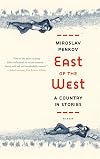
Stories can reveal much about a people, culture or nation. They tend to reflect not only tradition but the variety and evolution of beliefs and societal viewpoints. Although Miroslav Penkov now lives and teaches in the United States, his debut collection of short stories provides insight into his native Bulgaria a reader would never pick up in a travelogue or similar work.
The title itself, East of the West: A Country in Stories, could be a definitive précis of the book. Penkov's stories show more tell of life in and the people of Bulgaria in a guileless, congenial fashion. They reflect the mix that is part of Bulgaria, a country that may long for the West but retains pride in its Eastern roots. At least here, the history of Ottoman rule, the longstanding issues of the Balkan states, and the installation and fall of Communism remain relevant.
What role does history play in Bulgarian society? The first story, "Makedonija," opens with: "I was born just 20 years after we got rid of the Turks." It proceeds to recount the man's discovery of love letters his wife received in 1905 from a soldier fighting to free Macedonia from Turkish rule. The title story is set in two hamlets on the opposite banks of a river. They used to be one one village but following the Balkan Wars and World War I, the hamlet on the west side of the river is in Serbia and the one on the east is in Bulgaria. Set in part in the 1970s, the story tells of a romance between a boy and a girl on opposite sides of the river. "The Night Generation," meanwhile, involves a family proud of its Turkish ethnicity but caught up in the Communist government's late 1984 directive forcing citizens of Turkish heritage to adopt Bulgarian names.
The divergent generational views of the Communist era are more fully seen in "Buying Lenin," which seems to have at least a touch of autobiography to it. It tells of a Bulgarian who comes to America in 1999 to attend the University of Arkansas, Penkov's alma mater, and his exchanges with his grandfather, who fought for the Communists in 1944 and rose in the national party. With a touch of love, the grandfather and grandson call each other names like "you rotten capitalist pig" and "you communist dupe." When the grandfather's village reverts to communist times, the grandson goes on eBay to but him Lenin's corpse.
East of the West is marked with a touch of humor that can at times seem to make the stories more identifiable. Thus, when the grandson arrives in Arkansas, the people who pick him up at the airport hand him a book, telling him "These are the words of our Savior. The world of our Lord." The grandson replies, "Oh, Lenin's collected works. Which volume?"
Likewise, the opening paragraph of "Makedonija" almost completely sets the curmudgeonly character of the narrator for us. After telling us his birth after defeating the Turks makes him 71, he says,
Yet East of the West isn't exclusively about Bulgaria. Parts of it also relate to the American experience. In "Buying Lenin," we get a sense of both acclimation to America but at the same time the sense of homesickness the narrator is surprised to encounter. And "Devshirmeh" tells of the life of a Bulgarian man who wins a green card in the lottery, comes to the U.S. with his wife and infant daughter but now lives the life of a divorced father who barely makes ends meet. Still, he seeks to instill in his daughter a sense of their heritage and background and how blood -- family -- can lead a person to set aside the worst in themselves.
Ultimately, the book is about the Bulgarian experience, whether there or as a Bulgarian living in America. While it would be unfair to call this Eastern European or Bulgarian literature, it is a fine introduction to some inventive, enjoyable writing and Bulgaria itself.
(Originally posted at A Progressive on the Prairie.) show less
The title itself, East of the West: A Country in Stories, could be a definitive précis of the book. Penkov's stories show more tell of life in and the people of Bulgaria in a guileless, congenial fashion. They reflect the mix that is part of Bulgaria, a country that may long for the West but retains pride in its Eastern roots. At least here, the history of Ottoman rule, the longstanding issues of the Balkan states, and the installation and fall of Communism remain relevant.
What role does history play in Bulgarian society? The first story, "Makedonija," opens with: "I was born just 20 years after we got rid of the Turks." It proceeds to recount the man's discovery of love letters his wife received in 1905 from a soldier fighting to free Macedonia from Turkish rule. The title story is set in two hamlets on the opposite banks of a river. They used to be one one village but following the Balkan Wars and World War I, the hamlet on the west side of the river is in Serbia and the one on the east is in Bulgaria. Set in part in the 1970s, the story tells of a romance between a boy and a girl on opposite sides of the river. "The Night Generation," meanwhile, involves a family proud of its Turkish ethnicity but caught up in the Communist government's late 1984 directive forcing citizens of Turkish heritage to adopt Bulgarian names.
The divergent generational views of the Communist era are more fully seen in "Buying Lenin," which seems to have at least a touch of autobiography to it. It tells of a Bulgarian who comes to America in 1999 to attend the University of Arkansas, Penkov's alma mater, and his exchanges with his grandfather, who fought for the Communists in 1944 and rose in the national party. With a touch of love, the grandfather and grandson call each other names like "you rotten capitalist pig" and "you communist dupe." When the grandfather's village reverts to communist times, the grandson goes on eBay to but him Lenin's corpse.
East of the West is marked with a touch of humor that can at times seem to make the stories more identifiable. Thus, when the grandson arrives in Arkansas, the people who pick him up at the airport hand him a book, telling him "These are the words of our Savior. The world of our Lord." The grandson replies, "Oh, Lenin's collected works. Which volume?"
Likewise, the opening paragraph of "Makedonija" almost completely sets the curmudgeonly character of the narrator for us. After telling us his birth after defeating the Turks makes him 71, he says,
And yes, I'm grump. I'm mean. I smell like old men do. I am a walking pain, hips, shoulders, knees and elbows. I lie awake at night. I call my daughter my grandson's name and I remember the day I met my wife much better than yesterday, or today. August 2, I think. 1969. Last night I pissed my bed and who knows what joy tonight will bring?
Yet East of the West isn't exclusively about Bulgaria. Parts of it also relate to the American experience. In "Buying Lenin," we get a sense of both acclimation to America but at the same time the sense of homesickness the narrator is surprised to encounter. And "Devshirmeh" tells of the life of a Bulgarian man who wins a green card in the lottery, comes to the U.S. with his wife and infant daughter but now lives the life of a divorced father who barely makes ends meet. Still, he seeks to instill in his daughter a sense of their heritage and background and how blood -- family -- can lead a person to set aside the worst in themselves.
Ultimately, the book is about the Bulgarian experience, whether there or as a Bulgarian living in America. While it would be unfair to call this Eastern European or Bulgarian literature, it is a fine introduction to some inventive, enjoyable writing and Bulgaria itself.
(Originally posted at A Progressive on the Prairie.) show less
"You use legos to build castles while we use them to make weapons."
My love for Balkan Literature led me to a (supposedly) promising writer from Bulgaria and his first novel named Stork Mountain. Miroslav Penkov was born in Bulgaria but he resides in the United States and, in my opinion, this is amply demonstrated in his writing. I found very little evidence of the distinctive Balkan style in the development of the story and the building of the characters. Clarity and directness have been show more substituted by melodrama, exaggeration and what seemed to me as utter propaganda. The result is an uneven, average novel that only becomes interesting through the use of legends and folklore and not thanks to the story itself.
A young man -unnamed throughout the novel- returns from the States to Strandja in order to sell the land of his family and cope with student loans. The only connection to his childhood is his grandfather, a figure that remains a big mystery to him. He finds himself in the middle of a strange feud between people of different religions and ethnicity. Naturally, we have the epitome of a clichéd relationship between the young man and a young woman who is not allowed to be with him and the same old need to discover the past of his grandfather in order to understand the world around him. And I was not impressed in the slightest....
Let me start with what I consider the few strong parts of the book. Penkov makes excellent use of the mystical tradition of the Anastenarides, the firewalkers, a custom that is still alive in Bulgaria and in certain parts of Northern Greece. Men and women, carrying icons, fall into a kind of ecstasy and walk on burning coals under the sound of traditional music. The custom takes place in May during the commemoration of Saint Constantine and Saint Helen. Penkov builds the story around the firewalkers, the secrecy and persecution of their community. Through them, fire becomes a significant symbol in the narrative. We have the sacred fire, the cleansing substance, and the fire that destroys, a weapon in the hands of people driven by twisted "ideals".
The Anastenarides are linked to two famous cases of mass hysteria. The Salem Trials and the Dancing Plague of Strasburg in 1518, when 400 people started dancing without any reason. Many of them died, collapsing after days and days of dancing. However, I found the writer's choice to draw a comparison between the firewalkers and these incidents unconvincing and misinformed, like comparing apples and oranges. Religious customs are hardly cases of mass hysteria....
Another theme that was executed with moderate success was the use of folklore and symbolism. Penkov has a real talent in demonstrating the impact of the natural environment in the course of the action and its relevance to the past. There are omens. Darkness remains even during the day, the mists don't seem to lift, the rain falls constantly, thunder and lightning shake the houses, the trees stand naked and torn and the storks haven't returned yet. The beautiful birds stand as a symbol of life and hope and they are scarce. Penkov pays homage to the old world by focusing on the myth of Lada, the goddess of fertility, love and beauty in the Slavic mythology, and the mighty Perun, the highest God, the Zeus of the Slavic people. The problem is that Penkov didn't exactly stay faithful to the myths and his choice to include Attila, the mighty Hun warrior, resulted in a dubious twist of the legends with ugly connotations.
The story itself reads like any old family/generation drama with the political and religious implications of the Communist period in the country. This is very interesting but Penkov chooses to resort to repetition and melodrama. The technique of the elderly man's recollections and his grandson's reflections on them doesn't really work. I can't commend on whether the descriptions of the places are faithful or not because I haven't had the chance to visit Bulgaria yet, but what I can safely say is that his take on the disputes between the different countries is heavily prejudiced. These are historical facts that cannot be disputed and those of us who have the habit of reading and studying History know who fought against whom, who were allies or not, therefore the so-called writers can keep their intended propaganda to themselves. Not to mention that it is sad to see this in the work of a young writer who should have been free from the dusty beliefs of a dark past. After all, he cannot lecture when he writes in English and not in his mother tongue.
The characters are extremely one-dimensional with the possible exception of the grandfather. The young man is extremely naive (to put it kindly) and the female characters are made of every possible negative stereotype you can think of. They are either hysterical temptresses who use men to escape their fate/families/arranged marriages or fairly demure maidens who cannot wait to fall into a man's bed. Excuse you, writer. Furthermore, he opens too many windows only to leave them thus without thus any satisfying resolution.
I was heavily disappointed by this book. It started in such a beautiful, haunting way but ended up being just another story, averagely written, populated with irritating characters and a shady view on the history of the region. But for the folklore focus, this would have been a clear 2-star rating.
My reviews can also be found on https://theopinionatedreaderblog.wordpress.com show less
My love for Balkan Literature led me to a (supposedly) promising writer from Bulgaria and his first novel named Stork Mountain. Miroslav Penkov was born in Bulgaria but he resides in the United States and, in my opinion, this is amply demonstrated in his writing. I found very little evidence of the distinctive Balkan style in the development of the story and the building of the characters. Clarity and directness have been show more substituted by melodrama, exaggeration and what seemed to me as utter propaganda. The result is an uneven, average novel that only becomes interesting through the use of legends and folklore and not thanks to the story itself.
A young man -unnamed throughout the novel- returns from the States to Strandja in order to sell the land of his family and cope with student loans. The only connection to his childhood is his grandfather, a figure that remains a big mystery to him. He finds himself in the middle of a strange feud between people of different religions and ethnicity. Naturally, we have the epitome of a clichéd relationship between the young man and a young woman who is not allowed to be with him and the same old need to discover the past of his grandfather in order to understand the world around him. And I was not impressed in the slightest....
Let me start with what I consider the few strong parts of the book. Penkov makes excellent use of the mystical tradition of the Anastenarides, the firewalkers, a custom that is still alive in Bulgaria and in certain parts of Northern Greece. Men and women, carrying icons, fall into a kind of ecstasy and walk on burning coals under the sound of traditional music. The custom takes place in May during the commemoration of Saint Constantine and Saint Helen. Penkov builds the story around the firewalkers, the secrecy and persecution of their community. Through them, fire becomes a significant symbol in the narrative. We have the sacred fire, the cleansing substance, and the fire that destroys, a weapon in the hands of people driven by twisted "ideals".
The Anastenarides are linked to two famous cases of mass hysteria. The Salem Trials and the Dancing Plague of Strasburg in 1518, when 400 people started dancing without any reason. Many of them died, collapsing after days and days of dancing. However, I found the writer's choice to draw a comparison between the firewalkers and these incidents unconvincing and misinformed, like comparing apples and oranges. Religious customs are hardly cases of mass hysteria....
Another theme that was executed with moderate success was the use of folklore and symbolism. Penkov has a real talent in demonstrating the impact of the natural environment in the course of the action and its relevance to the past. There are omens. Darkness remains even during the day, the mists don't seem to lift, the rain falls constantly, thunder and lightning shake the houses, the trees stand naked and torn and the storks haven't returned yet. The beautiful birds stand as a symbol of life and hope and they are scarce. Penkov pays homage to the old world by focusing on the myth of Lada, the goddess of fertility, love and beauty in the Slavic mythology, and the mighty Perun, the highest God, the Zeus of the Slavic people. The problem is that Penkov didn't exactly stay faithful to the myths and his choice to include Attila, the mighty Hun warrior, resulted in a dubious twist of the legends with ugly connotations.
The story itself reads like any old family/generation drama with the political and religious implications of the Communist period in the country. This is very interesting but Penkov chooses to resort to repetition and melodrama. The technique of the elderly man's recollections and his grandson's reflections on them doesn't really work. I can't commend on whether the descriptions of the places are faithful or not because I haven't had the chance to visit Bulgaria yet, but what I can safely say is that his take on the disputes between the different countries is heavily prejudiced. These are historical facts that cannot be disputed and those of us who have the habit of reading and studying History know who fought against whom, who were allies or not, therefore the so-called writers can keep their intended propaganda to themselves. Not to mention that it is sad to see this in the work of a young writer who should have been free from the dusty beliefs of a dark past. After all, he cannot lecture when he writes in English and not in his mother tongue.
The characters are extremely one-dimensional with the possible exception of the grandfather. The young man is extremely naive (to put it kindly) and the female characters are made of every possible negative stereotype you can think of. They are either hysterical temptresses who use men to escape their fate/families/arranged marriages or fairly demure maidens who cannot wait to fall into a man's bed. Excuse you, writer. Furthermore, he opens too many windows only to leave them thus without thus any satisfying resolution.
I was heavily disappointed by this book. It started in such a beautiful, haunting way but ended up being just another story, averagely written, populated with irritating characters and a shady view on the history of the region. But for the folklore focus, this would have been a clear 2-star rating.
My reviews can also be found on https://theopinionatedreaderblog.wordpress.com show less
I'd describe this as a Young Adult book, with the focus on the story - the characters are very "flat".
The nameless young narrator- a Bulgarian, now settled in the US, returns to his homeland with the aim of getting his share of the family land to pay off his student debts.
Once there, he meets up with Grandpa- a man with many a tale to tell- and is embroiled in a quasi-mystical world: of fire dancers; people seized with a fever to walk on the hot coals. He falls for the rebellious daughter of show more the stern local imam; and there's a thing going on about the land being sold for a wind farm.
Penkov DOES, quite cleverly, weave in much Bulgarian myth and history to his story- from Grandpa's own youth in communist times; through to the ancient Thracian tales of gods and the underworld. And- the constant throughout- the storks, wheeling above them.
A brave attempt. show less
The nameless young narrator- a Bulgarian, now settled in the US, returns to his homeland with the aim of getting his share of the family land to pay off his student debts.
Once there, he meets up with Grandpa- a man with many a tale to tell- and is embroiled in a quasi-mystical world: of fire dancers; people seized with a fever to walk on the hot coals. He falls for the rebellious daughter of show more the stern local imam; and there's a thing going on about the land being sold for a wind farm.
Penkov DOES, quite cleverly, weave in much Bulgarian myth and history to his story- from Grandpa's own youth in communist times; through to the ancient Thracian tales of gods and the underworld. And- the constant throughout- the storks, wheeling above them.
A brave attempt. show less

This is a magical novel narrated by a young man returning to the Bulgarian Strandja Mountains, like the storks return yearly, to find his grandfather and claim his inheritance. He has gone deeply into debt in America and plans to sell his ancestral land to bail himself out. Instead he is drawn into a tangled society inhabited by Christian and Muslim neighbors, a maze of dreams and helf-truths built by his grandfather, pagan myths and an ancient society of fire dancers. I found the novel, by show more turns, enthralling, quite funny and poignant, until the ending which didn't quite work for me. It's an intriguing first novel by a writer best known for his short stories. show less
Awards


You May Also Like


Associated Authors
Statistics
- Works
- 5
- Also by
- 5
- Members
- 243
- Popularity
- #93,556
- Rating
- 3.7
- Reviews
- 14
- ISBNs
- 31
- Languages
- 9