
Anjali Joseph
Author of Saraswati Park
Works by Anjali Joseph
Tagged
Common Knowledge
- Gender
- female
Members
Reviews
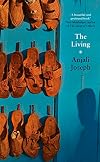
Anjali Joseph’s third novel tells two tenuously connected stories of two dissimilar people living thousands of miles apart. Thirty-something Claire lives in Norwich, England, with her teenage son, Jason, and works in a shoe factory. Claire, estranged from her family and long out of touch with Jason’s father, makes ends meet but lives a sterile and inert emotional life. She goes to work without regret because it is a kind of labour that, though often tedious, occupies her physically and show more intellectually and provides welcome distraction from her empty love life and other worries. Eventually she meets a man, Damian, with whom she strikes up a casually romantic relationship. But where love is concerned, Claire is reserved and tentative, unable to commit, to take the next step. After she and Damian meet a few times and have fun, she starts putting him off and pretending to not be available. But when he stops calling she is assailed by confusion and regret. When her father dies, and she has no choice but to reconnect with members of her family, the hurts and grudges of the past come rushing back. In the novel’s other thread, we meet Arun, in his late sixties, a reformed but still susceptible alcoholic, who lives in India and earns a modest wage by making sandals by hand, an outmoded but exacting craft that he knows will soon be lost. Arun’s story is one heavy with forebodings of mortality. Arun is suffering from physical indignities that are consistent with his age and history of alcohol abuse, and he resists visiting the doctor because of what he might discover. Arun both loves and resents his wife, whose strong and steady demeanor is the glue holding the family together. Their lengthy up and down marriage, which survived his drinking and an affair he had with a local woman, has remained steady, though his relationships with his two sons are strained. As the days pass and he senses physical decline signalling that his time on earth is limited, the affair and accompanying guilt are increasingly on his mind. Joseph’s novel, vividly written and filled with painterly detail, though lacking somewhat in immediacy and narrative drive, urgently evokes sensations of remorse and reproach as Claire and Arun struggle to come to terms with decisions they have made and how those decisions continue to affect the people they love. The two stories, split into four alternating sections, are not linked in any conventional sense, though each carries thematic echoes of the other. The Living is a wise and beautiful book that shines a light on human nature at its most vulnerable and exposed. However, readers will likely finish it with as many questions about the structure as about the fates of the two main characters. show less
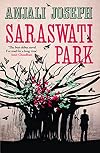
It took me a while to get into this, but it's well worth it. S Park is a much better defense of the realist novel than Franzen's Freedom, for instance; it packs the same emotional weight into a third of the pages (and, at a guess, a quarter of the words). Like 'Freedom,' the book has a bit of a chip on its shoulder: while Franzen talks a lot about Tolstoy, Joseph's particular reference is Henry James, and there's some great, gentle parody of the modernists (James Joyce as captain of the show more pick-up cricket team, menacing the younger boys). I'm curious to know how much the media representation of this as a kind of anti-Magical Realism polemic is based on Joseph's actual feelings, and how much of it is just good marketing aimed at people who, like me, can't really be bothered trudging through 600 page novels about the 'color' and 'exoticism' of the sub-continent. Certainly you could read the novel as precisely that kind of polemic; but maybe it's not.
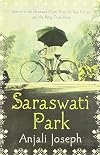
And if you don't care about that, it's just a lovely book full of the minor domestic dramas that we all live through, and an all too rare instance of a well-written book that suggests family life isn't there just so the young have something from which to escape. There are very, very few false steps in the prose, and one or two wonderful moments- particularly the paragraph which gives the book its cover in this edition. Certainly the writing isn't ambitious, but since so many young authors torture language in order to express nothing, I'm fine with that. show less
And if you don't care about that, it's just a lovely book full of the minor domestic dramas that we all live through, and an all too rare instance of a well-written book that suggests family life isn't there just so the young have something from which to escape. There are very, very few false steps in the prose, and one or two wonderful moments- particularly the paragraph which gives the book its cover in this edition. Certainly the writing isn't ambitious, but since so many young authors torture language in order to express nothing, I'm fine with that. show less
"a lovely quiet come off the page, it was rich and held shards of past experiences."
This book is set in a fictional quiet suburb of Bombay (now Mumbai), Saraswati Park, and centres around a middle-aged married couple Mohan and Lakshmi. Their lives are settled, mundane and unexciting until one day Mohan's nephew Ashish comes to live with them for a year when work compels Ashish's parents have to leave the city. As Ashish struggles with school and relationships Mohan and Lakshmi must also show more confront the quiet little discontents that have grown and been left unspoken between them during many years of marriage.
Mohan belongs to a vanishing trade as a writer, spending his days sitting in the middle of the bustling city writing letters and money orders for the illiterate but he still manages to find peace and quiet in the chaos. He loves the sound of the pigeons overhead and to huddle with his fellow writers around cups of hot tea. Books are his passion and at home he sits quietly, drifting in and out of the novels he is reading barely aware of his surroundings. Lakshmi has no interest in books preferring TV soaps for her entertainment and now that their own children have flown the nest find their lives are slowly almost imperceptibly drifting apart.
When Ashish comes to stay with them, things start to unravel. So when Laksmi’s brother dies her underlying frustrations become apparent and she leaves the city to stay with her family helping to look after an ailing relative. It soon becomes evident that both are disappointed with their marriage. Mohan's life has become sedentary but Lakshmi’s absence spurs him into starting to write about what he sees about him and his experiences. The first steps are very tentative but through Ashish’s influence he gets more confident and one of his stories wins a prize and is published.
Ashish is in many respects like Mohan. He is a quiet student, who has to repeat a year because of poor attendance, he appears passive rather than pro-active but there is also a deep sadness within him. He loses one boyfriend shortly after moving in with his aunt and uncle and although he finds someone else this relationship also ends abruptly. Finally he realises that to have any future he must not only leave the city but he also leave the country and sets off for America.
Saraswati Park is therefore about love,marriage and loss but also about the power of imagination and memories, the beauty and danger of reading and ultimately also about writing.
Overall given that this was the author's first novel I felt that that she produced an accomplished piece of writing. You could see the combination of the outside world and the pressures that it puts on interior lives, meaning that the portrayal of the three characters was very good. However, I also felt that it was missing something. The plot was polite rather than dramatic and whilst you got some colour from this vibrant, disparate city (I had the good fortune to spend 5 or 6 weeks there some 30 years ago) I felt she just skimmed over the surface of it. It felt like a homage to it rather than a true exploration and as such I felt that I learnt nothing new or compelling. Overall I felt that this was an enjoyable read whilst it lasted but a bit like a salad or McDonalds not one that will live long in the memory. show less
This book is set in a fictional quiet suburb of Bombay (now Mumbai), Saraswati Park, and centres around a middle-aged married couple Mohan and Lakshmi. Their lives are settled, mundane and unexciting until one day Mohan's nephew Ashish comes to live with them for a year when work compels Ashish's parents have to leave the city. As Ashish struggles with school and relationships Mohan and Lakshmi must also show more confront the quiet little discontents that have grown and been left unspoken between them during many years of marriage.
Mohan belongs to a vanishing trade as a writer, spending his days sitting in the middle of the bustling city writing letters and money orders for the illiterate but he still manages to find peace and quiet in the chaos. He loves the sound of the pigeons overhead and to huddle with his fellow writers around cups of hot tea. Books are his passion and at home he sits quietly, drifting in and out of the novels he is reading barely aware of his surroundings. Lakshmi has no interest in books preferring TV soaps for her entertainment and now that their own children have flown the nest find their lives are slowly almost imperceptibly drifting apart.
When Ashish comes to stay with them, things start to unravel. So when Laksmi’s brother dies her underlying frustrations become apparent and she leaves the city to stay with her family helping to look after an ailing relative. It soon becomes evident that both are disappointed with their marriage. Mohan's life has become sedentary but Lakshmi’s absence spurs him into starting to write about what he sees about him and his experiences. The first steps are very tentative but through Ashish’s influence he gets more confident and one of his stories wins a prize and is published.
Ashish is in many respects like Mohan. He is a quiet student, who has to repeat a year because of poor attendance, he appears passive rather than pro-active but there is also a deep sadness within him. He loses one boyfriend shortly after moving in with his aunt and uncle and although he finds someone else this relationship also ends abruptly. Finally he realises that to have any future he must not only leave the city but he also leave the country and sets off for America.
Saraswati Park is therefore about love,marriage and loss but also about the power of imagination and memories, the beauty and danger of reading and ultimately also about writing.
Overall given that this was the author's first novel I felt that that she produced an accomplished piece of writing. You could see the combination of the outside world and the pressures that it puts on interior lives, meaning that the portrayal of the three characters was very good. However, I also felt that it was missing something. The plot was polite rather than dramatic and whilst you got some colour from this vibrant, disparate city (I had the good fortune to spend 5 or 6 weeks there some 30 years ago) I felt she just skimmed over the surface of it. It felt like a homage to it rather than a true exploration and as such I felt that I learnt nothing new or compelling. Overall I felt that this was an enjoyable read whilst it lasted but a bit like a salad or McDonalds not one that will live long in the memory. show less

I really didn't connect with this book in any way. We first meet Leela in Paris, where she is working as a teacher (subject unclear) and having various unsatisfactory relationships with men. Then we find her in London, working in publishing and in an unsatisfactory relationship with another man. I don't understand why this book needed writing, no woman should be defining herself in relation to men in the way Leela. She felt very immature, even though by the time of the end of the book she show more must have been late 20s. Possibly there's a cultural influence here, in that Leela is Indian and it's possible that imparts a certain cultural sense in this definition of sense. Felt to me that she needed to work out what she wanted, rather than trying to fit in everywhere. Not convincing, not terribly enjoyable and i fail to see why a book like this needs to be written in the 21st century. show less
Awards


You May Also Like


Statistics
- Works
- 4
- Members
- 182
- Popularity
- #118,784
- Rating
- 3.2
- Reviews
- 11
- ISBNs
- 26
- Languages
- 1