

Meghan O'Rourke
Author of The Invisible Kingdom: Reimagining Chronic Illness
About the Author
Meghan Q'Rourke is Editor of The Yale Review and the author of the best-selling memoir The Long Goodbye and the poetry collections Once, Halflife, and Sun in Days. She is currently completing a book about contested chronic illness.
Image credit: Meghan O'Rourke (left) and Dana Goodyear
at 2007 LA Times Festival of Books
Copyright © 2007 Ron Hogan
at 2007 LA Times Festival of Books
Copyright © 2007 Ron Hogan
Works by Meghan O'Rourke
Sun in Days: Poems 1 copy
Associated Works
Bodies Built for Game: The Prairie Schooner Anthology of Contemporary Sports Writing (2019) — Contributor — 7 copies
Tagged
Common Knowledge
- Canonical name
- O'Rourke, Meghan
- Birthdate
- 1976-01-26
- Gender
- female
- Education
- Yale University (BA|1997)
Warren Wilson College MFA|2005) - Occupations
- literary editor
poet - Organizations
- Radcliffe Institute for Advanced Study
Princeton University
New York University
The New Yorker
Slate
Paris Review - Awards and honors
- Lannan Literary Award (2007)
May Sarton Poetry Prize (2008) - Relationships
- Surowiecki, James (husband)
- Nationality
- USA
- Birthplace
- New York, New York, USA
- Places of residence
- Brooklyn, New York, USA
- Associated Place (for map)
- New York, USA
Members
Reviews
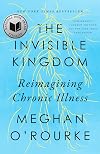
In The Invisible Kingdom, author Meghan O'Rourke seeks to understand the mysterious, debilitating illnesses that dominated her life for a decade. Does she have a complex autoimmune disturbance, chronic Lyme disease, or a vexing combination of both? O'Rourke maxes out her credit cards as she investigates both Western and integrative therapies, none of which are completely satisfactory. Yet, eventually, O'Rourke achieves a state of relative health that allows her to resume teaching, have two show more children, and write this book.
I thought I would really like this book, but I grew tired of the self-absorbed nature of the narrative. Still, I recommend it to those with chronic diseases. show less
I thought I would really like this book, but I grew tired of the self-absorbed nature of the narrative. Still, I recommend it to those with chronic diseases. show less
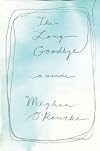
This is possibly the most honest review I'll ever write. I read O'Rouke’s book as part of the TLC Book Tour and if I hadn’t had an actual deadline to read and review the book by, I’m not sure I would have made it all the way through it.
It was incredibly hard for me to finish this book, but that’s not because it wasn’t excellent, it’s because it hit too close to home. I saw too much of myself in the circumstances of Meghan's mother's death. My own mom was diagnosed with cancer, show more then after months of chemo she was declared in remission. A few months after that she relapsed and the cancer killed her after a two-year battle. She was exactly ten years younger than Meghan's mom. I read The Long Goodbye sobbing through many of its pages. As most people who know me well could attest, I don’t cry easily or often. When my own mom died, most of my weeping was done in the middle of the night when no one was around, so when I say I couldn't stop crying while reading this, that's no small thing.
O'Rouke's memoir is so painfully honest. She writes of arguments with her mom, trying to escape the situation and pretend like it wasn't happening, fights with her siblings or Dad, she doesn't hold back on the all-encompassing pain that death causes. It's amazing how far away you can feel from you own family when experiencing a loss like this. Even though you are all losing the same person, you experience that loss in such different ways that it's hard to connect with them.
Then there are the dreams. After losing your mother, this person who has literally brought you into the world, you can't stop dreaming about them. Those dreams, so real that you wake and have to remember their death all over again, haven't stopped for me after 13 years. I still see her, so close to me, and then wake to have to process the loss all over again.
Of course Meghan wasn't perfect while dealing with doctors and people in her own life, but none of us are. We see death closing in and we panic. We decide we can fight it if we just know enough about the disease. Then when that doesn't work we pray, then we argue, then we hope, then, finally, we understand that we can't control it and we grieve.
O’Rouke’s memoir is intensely personal and looks at her own relationships and reactions to the death, but it also deals with broader issues. She discusses American’s lack of traditions and rituals in grieving. We don’t wear black for months anymore or wail with anguish or tear our clothes. Grieving has become the final taboo. You’re supposed to act like everything is ok, when you feel the opposite. No one wants to hear about your grief, especially if it has been a couple months.
I can’t explain quite how much her memoir meant to me. It was like reading my own grief. She put words to so many of my feelings and I completely agree with both her and Iris Murdoch, who once said, “The bereaved cannot communicate with the unbereaved.” To me, this book was one bereaved woman speaking to another.
“When we are learning the world, we know things we cannot say how we know. When we are relearning the world in the aftermath of loss, we feel things we had almost forgotten, old things, beneath the seat of reason.” show less
It was incredibly hard for me to finish this book, but that’s not because it wasn’t excellent, it’s because it hit too close to home. I saw too much of myself in the circumstances of Meghan's mother's death. My own mom was diagnosed with cancer, show more then after months of chemo she was declared in remission. A few months after that she relapsed and the cancer killed her after a two-year battle. She was exactly ten years younger than Meghan's mom. I read The Long Goodbye sobbing through many of its pages. As most people who know me well could attest, I don’t cry easily or often. When my own mom died, most of my weeping was done in the middle of the night when no one was around, so when I say I couldn't stop crying while reading this, that's no small thing.
O'Rouke's memoir is so painfully honest. She writes of arguments with her mom, trying to escape the situation and pretend like it wasn't happening, fights with her siblings or Dad, she doesn't hold back on the all-encompassing pain that death causes. It's amazing how far away you can feel from you own family when experiencing a loss like this. Even though you are all losing the same person, you experience that loss in such different ways that it's hard to connect with them.
Then there are the dreams. After losing your mother, this person who has literally brought you into the world, you can't stop dreaming about them. Those dreams, so real that you wake and have to remember their death all over again, haven't stopped for me after 13 years. I still see her, so close to me, and then wake to have to process the loss all over again.
Of course Meghan wasn't perfect while dealing with doctors and people in her own life, but none of us are. We see death closing in and we panic. We decide we can fight it if we just know enough about the disease. Then when that doesn't work we pray, then we argue, then we hope, then, finally, we understand that we can't control it and we grieve.
O’Rouke’s memoir is intensely personal and looks at her own relationships and reactions to the death, but it also deals with broader issues. She discusses American’s lack of traditions and rituals in grieving. We don’t wear black for months anymore or wail with anguish or tear our clothes. Grieving has become the final taboo. You’re supposed to act like everything is ok, when you feel the opposite. No one wants to hear about your grief, especially if it has been a couple months.
I can’t explain quite how much her memoir meant to me. It was like reading my own grief. She put words to so many of my feelings and I completely agree with both her and Iris Murdoch, who once said, “The bereaved cannot communicate with the unbereaved.” To me, this book was one bereaved woman speaking to another.
“When we are learning the world, we know things we cannot say how we know. When we are relearning the world in the aftermath of loss, we feel things we had almost forgotten, old things, beneath the seat of reason.” show less
O'Rourke here limns the few months before her mother's death and the year or so following it in searing, heartbroken prose. This is a grief acutely, almost claustrophobically, observed. There were a few times I grew impatient with her inability to process her grief but then I remembered trying, just the other day, to tell someone about my uncle, dead lo these 20-odd years, and being ambushed by a fresh wave of mourning.
The prose is crystalline and jagged and sometimes transcendent. It's a show more sad and beautiful book that's at times almost too intimate. Well worth reading, but not one I think I will ever read again. show less
The prose is crystalline and jagged and sometimes transcendent. It's a show more sad and beautiful book that's at times almost too intimate. Well worth reading, but not one I think I will ever read again. show less
I almost didn't finish this book. Multiple times. I had at least one anxiety attack in the middle of it. It's taken me almost two weeks to get to the end. It's one of the most painful books I've ever read, unvarnished sorrow, alarming in how realistic it seemed. I picked it up after my dog died but as I was coming out of my grief, I fell into Meghan O'Rourke's -- a ravaging, fierce grief that, while very specific, also spoke to the universality of the awful experience of losing someone show more close.
I found the first half of the book almost unreadable. Not because of the writing, which was exquisite and delicate and vociferously sincere, but because the experience of watching your mother die slowly felt so excruciating. At one point, toward the end of her mother's life, faced with the inevitability of my own looming demise, I had to put the book down for a few days and think about what I'm doing with my life. The second half, too, was harrowing -- the author felt her mother's absence so sharply, and there was no way for her to overcome the pain.
I loved how, after her mother's death, O'Rourke starts recovering and seeing the world in a new light. To me, it seemed like she saw everything in a new color, everything weighted down by its mortality but also freed of another kind of weight. The beautiful excerpts of other people's experiences of grief were powerful, too. I should re-read this book one day in a slower, more careful manner to fully comprehend O'Rourke's pain. show less
I found the first half of the book almost unreadable. Not because of the writing, which was exquisite and delicate and vociferously sincere, but because the experience of watching your mother die slowly felt so excruciating. At one point, toward the end of her mother's life, faced with the inevitability of my own looming demise, I had to put the book down for a few days and think about what I'm doing with my life. The second half, too, was harrowing -- the author felt her mother's absence so sharply, and there was no way for her to overcome the pain.
I loved how, after her mother's death, O'Rourke starts recovering and seeing the world in a new light. To me, it seemed like she saw everything in a new color, everything weighted down by its mortality but also freed of another kind of weight. The beautiful excerpts of other people's experiences of grief were powerful, too. I should re-read this book one day in a slower, more careful manner to fully comprehend O'Rourke's pain. show less
Lists
Awards


You May Also Like


Associated Authors
Statistics
- Works
- 13
- Also by
- 7
- Members
- 842
- Popularity
- #30,363
- Rating
- 3.8
- Reviews
- 57
- ISBNs
- 30
- Languages
- 2
