
Rachel Aviv
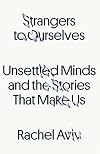
Author of Strangers to Ourselves: Unsettled Minds and the Stories That Make Us
Works by Rachel Aviv
Associated Works
Tagged
Common Knowledge
- Gender
- female
- Education
- Brrown University
- Nationality
- USA
- Places of residence
- Brooklyn, New York, USA
- Associated Place (for map)
- New York, USA
Members
Reviews

Rachel Aviv uses four case studies to explore the interaction between psychiatry and the actual lives of the people who fall under its care for varying reasons. A woman in India becomes increasingly involved in living spiritually, and Aviv uses this case to explore how religious behavior and western psychiatry can conflict. A man spends months in an institute undergoing psychotherapy, losing his family and career along the way, only to have pharmaceuticals quickly lift him from his show more depression. Aviv here looks at the tension between therapy and modern pharmaceuticals as well as society's belief that certain mental illnesses are personal failings rather than errors in brain chemistry. A young Black woman's mental health issues go unaddressed until she ends up incarcerated, highlighting how society is set up to provide support to some, and punishment to others. And a woman, having been prescribed an ever changing and increasing cocktail of drugs to manage her depression is faced with the difficult task of trying to wean herself off the drugs.
The book is also prefaced and ended with an account of her own early childhood stay in a mental health ward and how the two girls she looked up to while she was there had lives that turned out very differently than her own.
There's so much here, and it's all so fascinating. Aviv isn't advocating for specific approaches (although she is clear on the need for more funding and improvements to mental healthcare), but exploring the places where the contradictions lay. It makes sense that an organ as complex as the human brain would sit uncomfortably with simple answers or that what works for one person would also work for another. Aviv is also so deeply caring of her four subjects and her reporting here includes family members and those who have interacted with them, showing how mental illness doesn't only affect the person disabled by the illness. Aviv knows how to tell a story and her attention to detail is effective here. This is a far cry from the usual "look at this wacky mental illness and how it makes this guy act weird" approach and I'll be thinking about the issues she raises and the very real people she writes about for some time. show less
The book is also prefaced and ended with an account of her own early childhood stay in a mental health ward and how the two girls she looked up to while she was there had lives that turned out very differently than her own.
There's so much here, and it's all so fascinating. Aviv isn't advocating for specific approaches (although she is clear on the need for more funding and improvements to mental healthcare), but exploring the places where the contradictions lay. It makes sense that an organ as complex as the human brain would sit uncomfortably with simple answers or that what works for one person would also work for another. Aviv is also so deeply caring of her four subjects and her reporting here includes family members and those who have interacted with them, showing how mental illness doesn't only affect the person disabled by the illness. Aviv knows how to tell a story and her attention to detail is effective here. This is a far cry from the usual "look at this wacky mental illness and how it makes this guy act weird" approach and I'll be thinking about the issues she raises and the very real people she writes about for some time. show less
This is so spectacularly good. I don't think I have read another book that looks at mental illness from different perspectives. How can we define sanity from a very particular POV and apply it to people from entirely different cultures? Do we medicate and modify people's behavior to fit a White, Western, male perspective defining appropriate behavior? This concept of normal being a neutral state is rubbish. Why do we make it compulsory to fit in? When we do "assist" people who are a danger show more to themselves or others what intervention is correct, and why do we stop thinking about helping beyond medication?
Aviv looks at the experiences of an Indian woman who speaks with and seeks to emulate gods, a poor Black woman living in one of the worst public housing complexes in the nation who kills one of her children to save him from what she perceives as a worse fate at the hands of America, a Greenwich wasp Queen Bee who ascends to the Ivy and then struggles when she feels out of synch with others" expectations of her and her own struggles with mental illness. Why do we not acknowledge that mental illness is, in most cases, biochemistry, environment, psychology and other factors choosing instead to simply chemically moderate behavior? Are we creating dependency that changes brain chemistry and thereby createing actual mental illness in people who were simply a bit down or tired? (There is a section about giving women Lexapro that is terrifying in a Stepford Wives way.)
Aviv addresses the harms that have radiated from the current common "wisdom" that mental illness is biological, and also with the concept that difference (or perhaps weirdness) is something that needs to be treated. I have not seen much said about any of this, and it is eye-opening. In what I found the most chilling portion the tale of Naomi, the Black mother who dropped her youngest babies onto the river to save them from a life of “inferiority, indifference and ridicule” in a racist society. When she was examined to determine her fitness to stand trial the psychiatrists opined that though she talked about an impending apocalypse and living in another dimension, her remarks about racism were too astute for her to meet the legal bar for insanity. So America helped to drive her mad, and then decided she was not legally insane because she could see that.
This is a brilliant piece of reporting, and also a starting point for meaningful advocacy. Incredibly important work. show less
Aviv looks at the experiences of an Indian woman who speaks with and seeks to emulate gods, a poor Black woman living in one of the worst public housing complexes in the nation who kills one of her children to save him from what she perceives as a worse fate at the hands of America, a Greenwich wasp Queen Bee who ascends to the Ivy and then struggles when she feels out of synch with others" expectations of her and her own struggles with mental illness. Why do we not acknowledge that mental illness is, in most cases, biochemistry, environment, psychology and other factors choosing instead to simply chemically moderate behavior? Are we creating dependency that changes brain chemistry and thereby createing actual mental illness in people who were simply a bit down or tired? (There is a section about giving women Lexapro that is terrifying in a Stepford Wives way.)
Aviv addresses the harms that have radiated from the current common "wisdom" that mental illness is biological, and also with the concept that difference (or perhaps weirdness) is something that needs to be treated. I have not seen much said about any of this, and it is eye-opening. In what I found the most chilling portion the tale of Naomi, the Black mother who dropped her youngest babies onto the river to save them from a life of “inferiority, indifference and ridicule” in a racist society. When she was examined to determine her fitness to stand trial the psychiatrists opined that though she talked about an impending apocalypse and living in another dimension, her remarks about racism were too astute for her to meet the legal bar for insanity. So America helped to drive her mad, and then decided she was not legally insane because she could see that.
This is a brilliant piece of reporting, and also a starting point for meaningful advocacy. Incredibly important work. show less
An interesting book about psychology that even readers who aren't mental health professionals might find enjoyable. The author doesn't exactly propound a theory as much as present a set of case studies to demonstrate how modern psychology's worldview might not encompass the whole of human psychological experience. "Strangers to Ourselves" doesn't dismiss psychology as much as it calls for a wider vision of how human beings understand and cope with their psychological problems. There is, the show more author seems to be arguing, a world of experience outside the professional psychological mindset. "Strangers to Ourselves" occasionally makes this observation seem like a truly thrilling idea. Aviv's stories and her willingness to look beyond the professions's limits sometimes reminded me of early psychologists' belief that human experience was deeper and stranger than most of their contemporaries suspected.
It helps that the author seems to have chosen her case studies well. Freud occasionally gets criticized for basing many of his theories on his experiences with wealthy, fin-de-siecle Viennese patients, but Aviv takes things in a very different direction here. She includes a woman with a privileged upbringing who grew up in Greenwich, Connecticut, but also a working class black woman whose mental issues and disastrous choices lead to her incarceration and an Indian woman who uses her Hindu faith to better deal with her mental health issues. The author also describes her own experiences in the mental health system -- she was once the youngest anorexic on record -- and traces the experiences of another patient she met while institutionalized. While I found "Strangers to Ourselves" generally interesting, the author's decision to tell these stories struck me as genuinely brave. It's hard not to feel that something's wrong when, as she puts it, a psychological diagnosis can lead to a "career" in mental illness.
The author also provides a historically interesting recounting of how traditional, long-term psychotherapy fell out of favor, describing a court case that marked the beginning of the end of the school of thought that believed that you'd need a comfortable couch and a decade in therapy to resolve your inner conflicts. This case is justly famous in mental health circles, but I'd never heard of it. While many of these stories are genuinely inspiring -- since they show how people with difficult psychological issues adopted unconventional methods in order to live with their genuinely difficult psychological issues -- this chapter serves as a warning. Even the best care won't solve your problems for you. Recommended to professionals and hobbyists alike. show less
It helps that the author seems to have chosen her case studies well. Freud occasionally gets criticized for basing many of his theories on his experiences with wealthy, fin-de-siecle Viennese patients, but Aviv takes things in a very different direction here. She includes a woman with a privileged upbringing who grew up in Greenwich, Connecticut, but also a working class black woman whose mental issues and disastrous choices lead to her incarceration and an Indian woman who uses her Hindu faith to better deal with her mental health issues. The author also describes her own experiences in the mental health system -- she was once the youngest anorexic on record -- and traces the experiences of another patient she met while institutionalized. While I found "Strangers to Ourselves" generally interesting, the author's decision to tell these stories struck me as genuinely brave. It's hard not to feel that something's wrong when, as she puts it, a psychological diagnosis can lead to a "career" in mental illness.
The author also provides a historically interesting recounting of how traditional, long-term psychotherapy fell out of favor, describing a court case that marked the beginning of the end of the school of thought that believed that you'd need a comfortable couch and a decade in therapy to resolve your inner conflicts. This case is justly famous in mental health circles, but I'd never heard of it. While many of these stories are genuinely inspiring -- since they show how people with difficult psychological issues adopted unconventional methods in order to live with their genuinely difficult psychological issues -- this chapter serves as a warning. Even the best care won't solve your problems for you. Recommended to professionals and hobbyists alike. show less
Rachel Aviv's Strangers to Ourselves: Unsettled Minds and the Stories That Make Us (2022) is a thought-provoking and profound study of how lives are defined by stories, perceptions, and choices. The author examines the lives of six families defined by mental illness. The stories that unfold are complex and multi-generational. However, the bigger picture here describes a history of psychiatry in the late 20th century as psychoanalytic concepts of personality gave way to pharmacological show more explanations for understanding and treating mental illness.
Readers learn about an influential malpractice lawsuit that changed psychiatry and the spread of Western psychiatry to India, how loneliness and despair lead mothers to seek protection for their children, and how relationships with food and society provide comfort. This is also a book about acceptance and finding one's way. While I learned and thought about defining mental illness, sometimes finding myself back in the early stages of my career, I reflected on the importance of seeing people as they see themselves.
Early career mental health professionals are well-trained to recognize mental illness and provide treatments that promise relief to their clients. They are trained that the working relationship between therapist and client is of utmost importance. With some practice, they often learn how to sit with a client and experience both the subjective and the objective experiences of both client and therapist--the place is where a Buddhist-influenced psychology points. But it is not easy. Quiet observation of ourselves takes time.
Aviv takes us on her journey as she observes herself and her context. She challenges the question, "is mental illness a personality flaw or a brain imbalance?". This book is a good read for counseling students and practitioners or anyone interested in examining the assumptions underlying how they approach people with mental illness. show less
Readers learn about an influential malpractice lawsuit that changed psychiatry and the spread of Western psychiatry to India, how loneliness and despair lead mothers to seek protection for their children, and how relationships with food and society provide comfort. This is also a book about acceptance and finding one's way. While I learned and thought about defining mental illness, sometimes finding myself back in the early stages of my career, I reflected on the importance of seeing people as they see themselves.
Early career mental health professionals are well-trained to recognize mental illness and provide treatments that promise relief to their clients. They are trained that the working relationship between therapist and client is of utmost importance. With some practice, they often learn how to sit with a client and experience both the subjective and the objective experiences of both client and therapist--the place is where a Buddhist-influenced psychology points. But it is not easy. Quiet observation of ourselves takes time.
Aviv takes us on her journey as she observes herself and her context. She challenges the question, "is mental illness a personality flaw or a brain imbalance?". This book is a good read for counseling students and practitioners or anyone interested in examining the assumptions underlying how they approach people with mental illness. show less
Lists
Awards


You May Also Like


Associated Authors
Statistics
- Works
- 2
- Also by
- 3
- Members
- 514
- Popularity
- #48,283
- Rating
- 3.9
- Reviews
- 11
- ISBNs
- 19
- Languages
- 5