
Nella Last (1889–1968)
Author of Nella Last's War: The Second World War Diaries of Housewife, 49
About the Author
Works by Nella Last
Associated Works
The Assassin's Cloak: An Anthology of the World's Greatest Diarists (2000) — Contributor, some editions — 622 copies, 9 reviews
Tagged
Common Knowledge
- Other names
- Housewife 49
- Birthdate
- 1889-10-04
- Date of death
- 1968-06-22
- Gender
- female
- Occupations
- housewife
memoirist
diarist - Organizations
- Women's Voluntary Service
- Short biography
- Nella Last, née Nellie Lord, was a housewife in Barrow-in-Furness, England, at the outbreak of World War II. Her husband was a shopfitter and joiner, and they had two sons. Nella volunteered for the Mass Observation Archive, which had been set up in 1937 to record the views of ordinary British people, and keep a record of everyday life. Nella began keeping a detailed diary -- she headed the first entry Housewife, 49 -- as her town, an important shipbuilding center, became a target for German bombing during the Blitz.
Her own house was among those hit. Nella also worked for the Women's Voluntary Service (WVS) and the Red Cross. Her remarkable account of the lives of ordinary families coping with the war on the home front was compiled into Nella Last's War: A Mother's Diary, 1939-45, and published in 1981; it was republished in 2006 as Nella Last's War: The Second World War Diaries of Housewife 49. A second volume of her diaries, Nella Last's Peace: The Post-war Diaries of Housewife 49, was published in 2008, and a third volume, Nella Last in the 1950s, appeared in October 2010. The wartime diaries were dramatized by ITV in 2006 as Housewife, 49. - Nationality
- England
UK - Places of residence
- Barrow-in-Furness, England, UK
- Associated Place (for map)
- England, UK
Members
Reviews
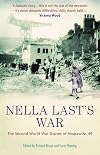
In 1937 the Mass Observation Project in Britain began to archive materials related to everyday life. Nella Last became one of 500 who participated in the writing project, maintaining a diary for 30 years! Her diaries cover three periods: WWII, post-war, and the 1950s.
Nella was 49 in 1939 and lived in Barrow-in-Furness in Lancashire with her husband and had two grown sons. The WWII diary begins on September 3 when she wrote "Well, we know the worst." England was at war and Nella became a show more faithful recoreder of the wartime life of an average homemaker. She joined the WVS (Women's Volunteer Service) and became very involved in it and the Red Cross. What I liked most about her diary is that she didn't just tell what she did, she recorded her thoughts as well. As the war goes on and Nella shoulders increasing responsibility for the projects she takes part in, we can see her become more independent and confident. She begins to be frank about her marriage and ponders why she hasn't stood up to her husband in the past. Often her thoughts wandered to the future and she speculated there would be many social changes after the war. It will be interesting to read Nelia's other books and see what she thought of those changes when they did indeed take place. show less
Nella was 49 in 1939 and lived in Barrow-in-Furness in Lancashire with her husband and had two grown sons. The WWII diary begins on September 3 when she wrote "Well, we know the worst." England was at war and Nella became a show more faithful recoreder of the wartime life of an average homemaker. She joined the WVS (Women's Volunteer Service) and became very involved in it and the Red Cross. What I liked most about her diary is that she didn't just tell what she did, she recorded her thoughts as well. As the war goes on and Nella shoulders increasing responsibility for the projects she takes part in, we can see her become more independent and confident. She begins to be frank about her marriage and ponders why she hasn't stood up to her husband in the past. Often her thoughts wandered to the future and she speculated there would be many social changes after the war. It will be interesting to read Nelia's other books and see what she thought of those changes when they did indeed take place. show less

An amazing account of daily life in wartime England as recorded by a recruit of the Mass-Observation Project. Nella Last, a housewife living in the small seaside town of Barrow-in Furness agreed to keeping a diary of her thoughts and activities to fulfill the ambition of the project to put on record the voice of ordinary people. We are given a detailed, vivid picture of her well-kept middle-class home, her husband who was a joiner in the nearby shipyard, her two sons, her meal preparation show more and menus and of the daily miseries of coping with the blitz, rationing and a multitude of inconveniences.
Nella was a woman of keen sensitivity with a love of nature, animals and children. She was tolerant of the weaknesses in others and generous with her time. And she had the gift and love of writing. With little education or training, she was able to choose just the right words to express her feelilngs or describe a passing scene. She is a prime argument for writing being an outright gift rather than an acquired craft.
An important sociological contribution from her diaries is the revelation of the thinking of women and how it changed during the course of the war. In Nella's case, she was a very compliant housewife to a demanding and possessive husband. She stayed in the home, preparing tasty meals, tidied the house daily and even warmed her husband's slippers by the fire for when he came home at night.--all done with this being the expectation of what every wife should do and with little gratitude. During the war, Nella busied herself with war-work and discovered that she had a real knack for organizing and keeping the peace amongst sometimes fractious women. She spoke of the confidence it gave her and her inclination after the war to never return to the near serfdom of her former life.
An altogether priceless window on ordinary life during the days of England's "finest hour," by a woman who exemplified the spirit that kept England free. show less
Nella was a woman of keen sensitivity with a love of nature, animals and children. She was tolerant of the weaknesses in others and generous with her time. And she had the gift and love of writing. With little education or training, she was able to choose just the right words to express her feelilngs or describe a passing scene. She is a prime argument for writing being an outright gift rather than an acquired craft.
An important sociological contribution from her diaries is the revelation of the thinking of women and how it changed during the course of the war. In Nella's case, she was a very compliant housewife to a demanding and possessive husband. She stayed in the home, preparing tasty meals, tidied the house daily and even warmed her husband's slippers by the fire for when he came home at night.--all done with this being the expectation of what every wife should do and with little gratitude. During the war, Nella busied herself with war-work and discovered that she had a real knack for organizing and keeping the peace amongst sometimes fractious women. She spoke of the confidence it gave her and her inclination after the war to never return to the near serfdom of her former life.
An altogether priceless window on ordinary life during the days of England's "finest hour," by a woman who exemplified the spirit that kept England free. show less
Nella last harbored a secret longing to “write a book” but felt she was not clever enough. Well, she was and she did and it is a wonderful account of life during WWII, but away from the “big events” and “major figures” we read about in the histories of that time. Nella made it her own war in many ways: she worked tirelessly in homefront efforts while battling with her own sense of who she was. She was very empathetic, energetic, independent, resourceful, funny and brings all show more these gifts to her relationships and her writing. Her book is a product of the Mass Observation Project which encouraged the writing of such diaries. I have already ordered another one even though I doubt any can match this free-thinking and free-spirited woman. show less
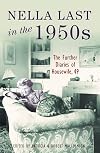
This is the third volume extracted from the prolific diaries kept by Nella Last, a housewife and mother living in the ship-building town of Barrow-in-Furness, in the North-West of England. Admitting to her journal that she'd always wanted to write books, Nella Last found a way of fulfilling her childhood dream when she signed up for the Mass Observation project, an ambitious attempt to create a picture of English life as chronicled by an army of volunteer writers. Although the project was at show more its heyday during World War 2, providing a riveting survey of daily existence on the 'Home Front', it continued into peacetime (and, in fact, is still running to this day, administered by a team at the University of Sussex).
Nella Last was a naturally-gifted writer who sought refuge, in her diary, from an often-frustrating life; clearly she needed the release of putting her experiences down on paper as a way of dealing with turbulent feelings. She loved her two sons (both grown up and living elsewhere when this volume opens, one of them - Cliff - having emigrated to Australia), but found her taciturn, unsociable, depressed husband Will (whom she never actually calls by his first name) increasingly difficult to deal with. During the war she'd been able to escape many of the constraints of her home life by volunteering in various aid organisations, but in peacetime she was ever more held back by a husband whose suffocating possessiveness gradually gave way to mental illness and a terror of being left alone. In many ways this is a sad book - the wartime diaries show Nella Last at her best: gallant, resourceful, determined to keep home and family life going despite her fears of what war might bring. But her plucky spirit deserves admiration as she battles on, doing her best to come to terms with a much-changed world with new priorities and challenges. show less
Nella Last was a naturally-gifted writer who sought refuge, in her diary, from an often-frustrating life; clearly she needed the release of putting her experiences down on paper as a way of dealing with turbulent feelings. She loved her two sons (both grown up and living elsewhere when this volume opens, one of them - Cliff - having emigrated to Australia), but found her taciturn, unsociable, depressed husband Will (whom she never actually calls by his first name) increasingly difficult to deal with. During the war she'd been able to escape many of the constraints of her home life by volunteering in various aid organisations, but in peacetime she was ever more held back by a husband whose suffocating possessiveness gradually gave way to mental illness and a terror of being left alone. In many ways this is a sad book - the wartime diaries show Nella Last at her best: gallant, resourceful, determined to keep home and family life going despite her fears of what war might bring. But her plucky spirit deserves admiration as she battles on, doing her best to come to terms with a much-changed world with new priorities and challenges. show less
Lists
Awards

You May Also Like


Associated Authors
Statistics
- Works
- 4
- Also by
- 4
- Members
- 735
- Popularity
- #34,565
- Rating
- 4.2
- Reviews
- 21
- ISBNs
- 20
- Favorited
- 1