
Richard Christian Matheson
Author of Created By
About the Author
Image credit: Richard Christian Matheson
Works by Richard Christian Matheson
Hell Comes To Hollywood II: Twenty-Two More Tales Of Tinseltown Terror (Volume 2) (2014) 4 copies, 1 review
Arousal 3 copies
Vampire 3 copies
Transfiguration 2 copies
Menage a Trois [short fiction] 2 copies
Matheson On Matheson a conversation with Dennis Etchison (signed Limited Edition hardcover) (2014) 2 copies
Venturi 2 copies
Holiday: By Richard Christian Matheson ; preface Richard Matheson ; illustrations Ken Snyder (1988) 1 copy
Shrapnel 1 copy
Battleground [2006 Nightmares & Dreamscapes: From the Stories of Stephen King TV Episode] (2006) — Writer — 1 copy
The Dark Ones 1 copy
Bulimia [short story] 1 copy
City of Dreams 1 copy
Promotie 1 copy
Mutilator 1 copy
Graduation 1 copy
Making Cabinets 1 copy
The Film 1 copy
Sentences 1 copy
The Great Fall 1 copy
Hiding 1 copy
Mr. Right 1 copy
Oral 1 copy
Associated Works
Alien Sex: 19 Tales by the Masters of Science Fiction and Dark Fantasy (1990) — Contributor — 526 copies, 6 reviews
He Is Legend: An Anthology Celebrating Richard Matheson (2009) — Contributor — 209 copies, 6 reviews
Lethal Kisses: 18 Tales of Sex, Horror, and Revenge (1996) — Contributor, some editions — 75 copies, 5 reviews
The Mammoth Book of Halloween Stories: Terrifying Tales Set on the Scariest Night of the Year! (2018) — Contributor — 72 copies
Gauntlet: Exploring the Limits of Free Expression, No. 3 - Politically [In]Correct Issue (1992) — Contributor — 16 copies
Four for Fantasy: A Quartet of Fantastical Stories Collected for World FantasyCon 2013 (2013) — Contributor — 13 copies, 1 review
Tagged
Common Knowledge
- Canonical name
- Matheson, Richard Christian
- Birthdate
- 1953-10-14
- Gender
- male
- Occupations
- screenwriter
horror writer - Relationships
- Matheson, Richard (father)
- Nationality
- USA
- Associated Place (for map)
- USA
Members
Reviews
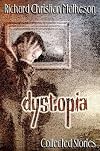
One of the darkest collections of short stories I have ever, ever read, but also one of THE best, Richard Christian Matheson's anthology really, REALLY gets under your skin, in good ways and bad. No one else I have read before writes like he does and maybe that's for the best. Gripping, unnerving, often surprisingly spot on (in a very scary way) about the human heart and mind, Dystopia is well-titled and refreshingly unique.

Richard Christian Matheson is the son of longtime science fiction writer Richard Matheson. RCM has made a career for himself as a Hollywood screen writer; in this novel, he certainly writes what he knows. This is a psychological horror story set against the background of Hollywood in the early 1990s, when episodic tv shows were just beginning to break away from the tired formulas of the 1960s, 70s and 80s.
It's an inherent feature of any fiction that the characters and situations of the story show more never existed. And yet, the best fiction can take on a life of its own. Sometimes that's to do with the quality of the writing itself, or the nature of the story - how it is told, how relevant it seems to the listener, viewer or reader, and how realistically the story is integrated into what most of us think of as "reality". Sometimes, the life that the characters take on comes about because of their placing. For instance: in 1891, the population of London was some 5.5 million people, yet the citizen of London that most people will have heard of, and for whom there is perhaps the most complete and detailed documentary evidence, is Sir Arthur Conan Doyle's fictional detective, Sherlock Holmes. The detail that Doyle put into the Holmes stories locates Holmes in time and place and with a high level of what we now call 'granularity'; far more than the vast majority of London's other inhabitants of the time enjoyed. Sherlock Holmes is no less real for us today, 130 years on, than a large number of those Londoners. It's a different sort of 'reality', it's not one that has left verifiable proof beyond a series of stories that are becoming myth over time, but it is a reality of sorts. Take another popular fictional milieu - the universe of Gene Roddenberry's 'Star Trek'. Here we have a series of tv shows about the future; though as the supposed back story of the show, which first aired in 1966, is now covered by our history, we know that events turned out differently, that the future of 'Star Trek' is not our future. Yet the shared world that Roddenberry and his successors created has captivated millions of viewers and has spawned a number of spin-off films, sequel tv series, novels and concordances. The universe of 'Star Trek' has a consensus reality, even though it has not yet happened and most likely never will. Yet it is "real" for very many people, and that "reality", is just as tangible even though no one will ever directly experience it.
The same applies to the central character in 'Created by', a Hollywood tv writer who has an idea for a ground-breaking action show, 'The Mercenary'. Intended to break the mould of previous tv in its depiction of sex and violence, the writer, Alan White, begins to find that his reality is beginning to merge with the world of the show as his life begins to become embroiled in a downward spiral of horror and violence. Is it coincidence? Copycat re-enactments? Or has White tapped into something deep in his own soul which is emerging and taking on a life of its own, literally? And if it fully emerges, what will be left of Alan White at the end of it?
The story is told in a series of vignettes which chart White's descent into terror. And how can he emerge from this fugue state? RCM tells the story in a highly telegraphic way with a sardonic turn of phrase that seems totally in keeping with his characters. Some have called the characters in this book shallow; but if they are, they are drawn from life and their lack of depth is true to life. The author drops the right names in the right places (though as a UK reader, I suspect there are some which I missed or mistook for fictional people).
Written and set when broadcast terrestrial tv was looking at the challenge of home video, this is as much a picture of a time and place that generated a lot of "product" as it is a horror story. It won't be to everyone's taste, reflecting as it must the sex and violence of 'The Mercenary' itself, but it has the ring of authenticity in its settings and characters, no matter how stereotypical they may seem. In our time of Netflix and Amazon Prime, this story still comes over as well told and relevant. show less
It's an inherent feature of any fiction that the characters and situations of the story show more never existed. And yet, the best fiction can take on a life of its own. Sometimes that's to do with the quality of the writing itself, or the nature of the story - how it is told, how relevant it seems to the listener, viewer or reader, and how realistically the story is integrated into what most of us think of as "reality". Sometimes, the life that the characters take on comes about because of their placing. For instance: in 1891, the population of London was some 5.5 million people, yet the citizen of London that most people will have heard of, and for whom there is perhaps the most complete and detailed documentary evidence, is Sir Arthur Conan Doyle's fictional detective, Sherlock Holmes. The detail that Doyle put into the Holmes stories locates Holmes in time and place and with a high level of what we now call 'granularity'; far more than the vast majority of London's other inhabitants of the time enjoyed. Sherlock Holmes is no less real for us today, 130 years on, than a large number of those Londoners. It's a different sort of 'reality', it's not one that has left verifiable proof beyond a series of stories that are becoming myth over time, but it is a reality of sorts. Take another popular fictional milieu - the universe of Gene Roddenberry's 'Star Trek'. Here we have a series of tv shows about the future; though as the supposed back story of the show, which first aired in 1966, is now covered by our history, we know that events turned out differently, that the future of 'Star Trek' is not our future. Yet the shared world that Roddenberry and his successors created has captivated millions of viewers and has spawned a number of spin-off films, sequel tv series, novels and concordances. The universe of 'Star Trek' has a consensus reality, even though it has not yet happened and most likely never will. Yet it is "real" for very many people, and that "reality", is just as tangible even though no one will ever directly experience it.
The same applies to the central character in 'Created by', a Hollywood tv writer who has an idea for a ground-breaking action show, 'The Mercenary'. Intended to break the mould of previous tv in its depiction of sex and violence, the writer, Alan White, begins to find that his reality is beginning to merge with the world of the show as his life begins to become embroiled in a downward spiral of horror and violence. Is it coincidence? Copycat re-enactments? Or has White tapped into something deep in his own soul which is emerging and taking on a life of its own, literally? And if it fully emerges, what will be left of Alan White at the end of it?
The story is told in a series of vignettes which chart White's descent into terror. And how can he emerge from this fugue state? RCM tells the story in a highly telegraphic way with a sardonic turn of phrase that seems totally in keeping with his characters. Some have called the characters in this book shallow; but if they are, they are drawn from life and their lack of depth is true to life. The author drops the right names in the right places (though as a UK reader, I suspect there are some which I missed or mistook for fictional people).
Written and set when broadcast terrestrial tv was looking at the challenge of home video, this is as much a picture of a time and place that generated a lot of "product" as it is a horror story. It won't be to everyone's taste, reflecting as it must the sex and violence of 'The Mercenary' itself, but it has the ring of authenticity in its settings and characters, no matter how stereotypical they may seem. In our time of Netflix and Amazon Prime, this story still comes over as well told and relevant. show less
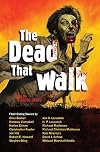
In the introduction, Jones pretty much admits that he is jumping on the zombie bandwagon. He compares as a publishing trend to vampires in the 1990s and Star Trek tie in books. He provides a bit of a history and then admits to the challenge of trying to reinstate zombies as proper monsters. Regardless of the reasons, I still bought and read the book so could say I'm continuing the trend. Either way this collection is kind of a weird one. It's a mix of old and new; the oldest being "Black show more Canaan" by Robert E. Howard. Unfortunately I would have to say that the quality was also a mix of good and bad. Some stories were fun to read (or re-read) like "Haeckel;s Tale" by Clive Barker. Others were drudge work to get through. Overall I would have to say that I prefer the Mammoth Books by Jones instead. This collection wasn't bad but it wasn't overly good either. I had some favorite stories from this collection but most of them were reprints that I read elsewhere. And that doesn't count Barker's tale.
"Where There's a Will" by Richard Matheson and Richard Christian Matheson - A man has the will power to return. Unfortunately it loses some punch when put into a zombie collection.
"Bobby Conroy Comes Back From The Dead" by Joe Hill - Two friends from high school reunite while being zombies. A really good story!
"Obsequy" by David J. Schow - A man gets another chance with a past love.
"Call First" by Ramsey Campbell - A man obsesses over a regular phone call. Another story that loses a little being in a zombie collection.
"Granny's Grinning" by Robert Shearman - A young girl ends up helping her grandmother. It took me a while to like the ending. show less
"Where There's a Will" by Richard Matheson and Richard Christian Matheson - A man has the will power to return. Unfortunately it loses some punch when put into a zombie collection.
"Bobby Conroy Comes Back From The Dead" by Joe Hill - Two friends from high school reunite while being zombies. A really good story!
"Obsequy" by David J. Schow - A man gets another chance with a past love.
"Call First" by Ramsey Campbell - A man obsesses over a regular phone call. Another story that loses a little being in a zombie collection.
"Granny's Grinning" by Robert Shearman - A young girl ends up helping her grandmother. It took me a while to like the ending. show less
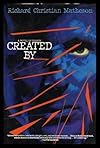
Matheson does a superb job of pulling readers in to the world of Alan White, a writer in Hollywood who comes up with a huge money making series. The story invokes the world of screenplays and TV series with each chapter name: "character motivation", "backstory", "flashback". Plus the entire story is hard hitting and a fast read. Very enjoyable!
The plot almost mimics Stephen King's THE DARK HALF but varies enough so that they are not the same. Sort of like zombie stories must have zombies but show more aren't the same. Additionally the final result is nothing at all like King's story. Now there were a few parts that stretched the imagination, mostly the amount of stuff that was allowed on network TV. Granted more and more has gotten by the FCC and the censors but they still wouldn't have allowed as much as what is done here. A minor point maybe but still something to acknowledge. Overall everything was excellent and this is not a book to miss!
Quick note: my review is from when I finished the book back in 2001. I'm now posting this in 2019. And TV has changed so much in the last nearly 20 years. I am very interested in re-reading this book to see how "hard hitting" it is by today's standards. I'm expecting not very. My only task now is finding my copy of the book or simply buy the ebook. Another thing that wasn't around nearly 20 years ago. show less
The plot almost mimics Stephen King's THE DARK HALF but varies enough so that they are not the same. Sort of like zombie stories must have zombies but show more aren't the same. Additionally the final result is nothing at all like King's story. Now there were a few parts that stretched the imagination, mostly the amount of stuff that was allowed on network TV. Granted more and more has gotten by the FCC and the censors but they still wouldn't have allowed as much as what is done here. A minor point maybe but still something to acknowledge. Overall everything was excellent and this is not a book to miss!
Quick note: my review is from when I finished the book back in 2001. I'm now posting this in 2019. And TV has changed so much in the last nearly 20 years. I am very interested in re-reading this book to see how "hard hitting" it is by today's standards. I'm expecting not very. My only task now is finding my copy of the book or simply buy the ebook. Another thing that wasn't around nearly 20 years ago. show less
Lists
Awards

You May Also Like


Associated Authors
Statistics
- Works
- 36
- Also by
- 71
- Members
- 364
- Popularity
- #66,013
- Rating
- 3.7
- Reviews
- 7
- ISBNs
- 27
- Languages
- 2
- Favorited
- 3