
David J. Schow
Author of Gun Work
About the Author
Image credit: Damon D'Amato - Wikimedia Commons
Series
Works by David J. Schow
Water Music 4 copies
Refrigerator Heaven 4 copies
Blossom 3 copies
A Week in the Unlife 3 copies
Pamela's Get [short fiction] 3 copies
Not From Around Here 3 copies
Obsequy 3 copies
Jerry's Kids Meet Wormboy 3 copies
Red Light 3 copies
Coming Soon To A Theater Near You 2 copies
Denker's Book 2 copies
Where the Heart Was 2 copies
The Thing Too Hideous To Describe 2 copies
Life Partner 2 copies
Busted in Buttown [short fiction] 2 copies
Warbirds 1 copy
Leatherface #1 1 copy
Petition 1 copy
狂嵐の銃弾 1 copy
Unhasped 1 copy
scribbled graffiti 1 copy
Night Bloomer 1 copy
One for the Horrors 1 copy
Bunny Didn't Tell Us 1 copy
Dying Words 1 copy
Calendar Girl 1 copy
The Last Song You Hear 1 copy
Bagged 1 copy
2c Worth 1 copy
Plot Twist 1 copy
Visitation 1 copy
En'tracte 1 copy
Size Nothing 1 copy
Kill Rift 1 copy
Associated Works
Love in Vein II : Eighteen More Tales of Vampiric Erotica (1997) — Contributor — 513 copies, 7 reviews
The Year's Best Fantasy and Horror: First Annual Collection (1986) — Contributor — 332 copies, 6 reviews
The Year's Best Fantasy and Horror: Ninth Annual Collection (1996) — Contributor — 259 copies, 3 reviews
Lethal Kisses: 18 Tales of Sex, Horror, and Revenge (1996) — Contributor, some editions — 75 copies, 5 reviews
In the Shadow of Frankenstein: Tales of the Modern Prometheus (2016) — Contributor — 58 copies, 1 review
A Haunting of Horrors: A Twenty-Novel eBook Bundle of Horror and the Occult (2014) — Contributor — 14 copies
Elemental Forces: Horror Short Stories (The Flame Tree Book of Horror) (2024) — Contributor — 13 copies
Hollywood Ghosts: Haunting, Spine-Chilling Stories from America's Film Capital (American Ghost Series) (1991) — Contributor — 12 copies
A Haunting of Horrors, Volume 2: A Twenty-Book eBook Bundle of Horror and the Occult (2014) — Contributor — 10 copies
Pop the Clutch: Thrilling Tales of Rockabilly, Monsters, and Hot Rod Horror (2019) — Contributor — 7 copies
Bare Bones #23: Summer 2025 — Contributor — 2 copies
Bare Bones #24: Fall 2025 — Contributor — 1 copy
Tagged
Common Knowledge
- Legal name
- Schow, David J.
- Other names
- McConnell, Chan
Lowenbruck, Oliver
Hunt, Gabriel - Birthdate
- 1955-07-13
- Gender
- male
- Occupations
- writer
- Awards and honors
- J. F. Gonzalez Lifetime Acheivement Award (2018)
- Nationality
- USA
- Associated Place (for map)
- USA
Members
Reviews
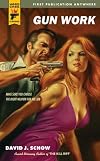
Gun Work is a terrific fun book that fits well with soldier of fortune or spy novels. It is not a mystery (at least after the first section).
There are three main parts to the book. The main character is Barney, an ex-US Army soldier, returned from battle in Iraq, where he met a news correspondent, Carl Ledbetter. Barney is ensconsed at a gun range in Los Angeles, where he works and practices his shooting every day. He keeps his most valuable possessions in his safe at the gun range and is show more not terribly connected to modern society. He is the kind of friend polite people don't associate with much except when they need some real muscle and firepower to protect them and get them out of a jam. "When you worked at a range with a piece on your hip, every customer was your pal from bangers to cops." Indeed, "people tended to seek Barney's counsel whenever they fell afoul of some extralegal difficulty, the kind of gray zone balls-up that consistently befalls people you think of as completely normal and law-abiding." The author tells the reader to rate your friends and acquaintances and admonishes the reader that you already know which friend you'd ask for help "when shady bad stuff rears up in your life."
Carl, in a panicked telephone call from a payphone in Mexico City, tells Barney that he was recently married, they vacationed in Mexico, and his wife has been kidnapped with one million dollars ransom being demanded. And, Carl doesn't know what to do. Of course, Barney, being the hero that he is, flies down to help Carl. Carl doesn't seem to know how to handle a gun and is taken aback when Barney brings weapons to the hostage exchange location. Everything seems to go wrong and Barney ends up suffering in a hostage hotel in some really horrible ways. After he escapes (and if he didn't, there wouldn't be much of a story, so that's not giving anything away), he plans his revenge with three other gun-toting vigilantes, almost like the posse heading to the rescue in a Western, guns blazing away.
The action takes this story from Mexico City to Manhattan to Los Angeles. There is plenty of gun play and fighting and the author seems to take immense pleasure in detailing the precise weaponry and defensive armaments that Barney and his small army are wielding. Although the start of the book is like a pulp-era travel adventure, the majority of the book is a mean, lean action story that reads incredibly quickly. Besides the action, the book includes one of the most dangerous femme fatales the world has ever seen and dozens of masked wrestlers.
If you open this book expecting a hardboiled detective novel in the Sam Spade tradition, forget about it. This book is an action-packed adventure from beginning to end. Well done. show less
There are three main parts to the book. The main character is Barney, an ex-US Army soldier, returned from battle in Iraq, where he met a news correspondent, Carl Ledbetter. Barney is ensconsed at a gun range in Los Angeles, where he works and practices his shooting every day. He keeps his most valuable possessions in his safe at the gun range and is show more not terribly connected to modern society. He is the kind of friend polite people don't associate with much except when they need some real muscle and firepower to protect them and get them out of a jam. "When you worked at a range with a piece on your hip, every customer was your pal from bangers to cops." Indeed, "people tended to seek Barney's counsel whenever they fell afoul of some extralegal difficulty, the kind of gray zone balls-up that consistently befalls people you think of as completely normal and law-abiding." The author tells the reader to rate your friends and acquaintances and admonishes the reader that you already know which friend you'd ask for help "when shady bad stuff rears up in your life."
Carl, in a panicked telephone call from a payphone in Mexico City, tells Barney that he was recently married, they vacationed in Mexico, and his wife has been kidnapped with one million dollars ransom being demanded. And, Carl doesn't know what to do. Of course, Barney, being the hero that he is, flies down to help Carl. Carl doesn't seem to know how to handle a gun and is taken aback when Barney brings weapons to the hostage exchange location. Everything seems to go wrong and Barney ends up suffering in a hostage hotel in some really horrible ways. After he escapes (and if he didn't, there wouldn't be much of a story, so that's not giving anything away), he plans his revenge with three other gun-toting vigilantes, almost like the posse heading to the rescue in a Western, guns blazing away.
The action takes this story from Mexico City to Manhattan to Los Angeles. There is plenty of gun play and fighting and the author seems to take immense pleasure in detailing the precise weaponry and defensive armaments that Barney and his small army are wielding. Although the start of the book is like a pulp-era travel adventure, the majority of the book is a mean, lean action story that reads incredibly quickly. Besides the action, the book includes one of the most dangerous femme fatales the world has ever seen and dozens of masked wrestlers.
If you open this book expecting a hardboiled detective novel in the Sam Spade tradition, forget about it. This book is an action-packed adventure from beginning to end. Well done. show less
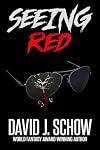
David J. Schow is best known as one of the original horror writer “splatterpunks” of the eighties and nineties, as well as a horror film screenwriter and connoisseur (he penned a regular column for Fangoria magazine). Both of these elements are readily apparent in Seeing Red, his first published collection of short stories, which is overflowing with unflinching violence and gore that is reminiscent in style and substance of the golden age of the spatter film and horror novel.
True to show more Schow’s cinematic roots, many of the short stories in this volume are either directly or indirectly involved with the motion picture industry, and most are set in or around Hollywood. “One for the Horrors” and “Coming Soon to a Theatre Near You” actually take place in movie theaters, while “Incident on a Rainy Night in Beverly Hills” and “Blood Rape of the Lust Ghouls” revolves around the film industry. These stories stand out as the best of the collection – and as a product of the splatterpunk era I might be biased – as these stories contain a passion and romanticism that is noticeably missing from some of the other entries. “Blood Rape of the Lust Ghouls” stands out as the keystone of the film-related stories, a self-referential (and self-deprecating) homage to horror film reviewers that skewers the industry even as it revels in its excesses (and do I detect a nod to Chas Balun in his use of the phrase “chunk-blowing?”).
The best of the collection isn’t restricted to the film-themed stories; his story titled with an illegible scribble is not only a heartfelt love-letter to the dying west-coast punk scene of the late eighties, but a nearly poetic use of street vernacular that recalls past classics like A Clockwork Orange without a hint of mimicry. In fact, “scribble” is probably the most glaring example in this collection of Schow’s mastery of prose and general and the genre specifically. Also at the top of the list is the last story in the book, “Not From Around Here.” Not only does Schow subtly evoke the eldritch horrors of lovecraftian lore with ease with his tale of city-folk stumbling into a rural nightmare, but he showcases his ability to pull the reader effortlessly through the increasingly horrific narrative like the master storyteller he is. How this short story has not been adapted into a film is beyond me.
Schow’s nods to literary horror are less impressive, with “Pulpmeister” feeling too gimmicky (perhaps by design), and “Visitation” coming off as an overly-forced genre homage. Honestly, if you’re going to write a Lovecraft-inspired horror story, try not to actually mention Lovecraft in it.
“Bunny Didn’t Tell Us,” “The Woman’s Version,” and “Lonesome Coyote Blues” are unremarkable yet solid entries. A big deal is made on the front cover of the inclusion of “Red Light,” which won the 1987 World Fantasy Award for Best Short Fiction, but its predictable resolution and neo-noir narrator (who is far less believable than Eye Man from ‘scribble’) puts it a step or two behind several more notable stories included in the collection. The two weakest links in the chain are probably “The Embracing” and “Night Bloomer,” with the former feeling like a writing exercise, and the latter an after-hours Twilight Zone reject.
With all of that being said, the few flaws within are minor, making Seeing Red a very solid collection of short stories, and a great starting point for anyone unfamiliar with this founding splatterpunk’s oeuvre. show less
True to show more Schow’s cinematic roots, many of the short stories in this volume are either directly or indirectly involved with the motion picture industry, and most are set in or around Hollywood. “One for the Horrors” and “Coming Soon to a Theatre Near You” actually take place in movie theaters, while “Incident on a Rainy Night in Beverly Hills” and “Blood Rape of the Lust Ghouls” revolves around the film industry. These stories stand out as the best of the collection – and as a product of the splatterpunk era I might be biased – as these stories contain a passion and romanticism that is noticeably missing from some of the other entries. “Blood Rape of the Lust Ghouls” stands out as the keystone of the film-related stories, a self-referential (and self-deprecating) homage to horror film reviewers that skewers the industry even as it revels in its excesses (and do I detect a nod to Chas Balun in his use of the phrase “chunk-blowing?”).
The best of the collection isn’t restricted to the film-themed stories; his story titled with an illegible scribble is not only a heartfelt love-letter to the dying west-coast punk scene of the late eighties, but a nearly poetic use of street vernacular that recalls past classics like A Clockwork Orange without a hint of mimicry. In fact, “scribble” is probably the most glaring example in this collection of Schow’s mastery of prose and general and the genre specifically. Also at the top of the list is the last story in the book, “Not From Around Here.” Not only does Schow subtly evoke the eldritch horrors of lovecraftian lore with ease with his tale of city-folk stumbling into a rural nightmare, but he showcases his ability to pull the reader effortlessly through the increasingly horrific narrative like the master storyteller he is. How this short story has not been adapted into a film is beyond me.
Schow’s nods to literary horror are less impressive, with “Pulpmeister” feeling too gimmicky (perhaps by design), and “Visitation” coming off as an overly-forced genre homage. Honestly, if you’re going to write a Lovecraft-inspired horror story, try not to actually mention Lovecraft in it.
“Bunny Didn’t Tell Us,” “The Woman’s Version,” and “Lonesome Coyote Blues” are unremarkable yet solid entries. A big deal is made on the front cover of the inclusion of “Red Light,” which won the 1987 World Fantasy Award for Best Short Fiction, but its predictable resolution and neo-noir narrator (who is far less believable than Eye Man from ‘scribble’) puts it a step or two behind several more notable stories included in the collection. The two weakest links in the chain are probably “The Embracing” and “Night Bloomer,” with the former feeling like a writing exercise, and the latter an after-hours Twilight Zone reject.
With all of that being said, the few flaws within are minor, making Seeing Red a very solid collection of short stories, and a great starting point for anyone unfamiliar with this founding splatterpunk’s oeuvre. show less
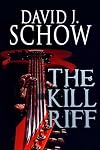
I'm not sure why but I was a little hesitant to start this novel. Maybe it was because it appears to be a heavy metal, slasher novel. Nothing wrong with that but I wanted more. Boy was I pleasantly surprised. Sure, it involves a heavy metal band, but it is really a psychological analysis of a shattered parent.
Lucas Ellington's daughter is killed during a riot at a concert for the band Whip Hand. After a year long stint at a mental institution, he is now out and apparently normal.
I won't show more spoil anything for you but the story that unfolds is intense, passionate and surprising. It does not play out like you expect. Each character is vivid and comes alive in almost no time. The only negative that I have is that many scenes are told as memories, not quite a flashback but similar in nature. For example, it will be evening and one of the characters will remember things that happened in the morning and that is how we the readers find out about it. I don't mind it being done but some times it got confusing as to when we were: are we reading about the book's present or is the character really doing something else and just remembering the past? But this is part of Schow's style. Either way the story is still an extremely solid and enjoyable book. show less
Lucas Ellington's daughter is killed during a riot at a concert for the band Whip Hand. After a year long stint at a mental institution, he is now out and apparently normal.
I won't show more spoil anything for you but the story that unfolds is intense, passionate and surprising. It does not play out like you expect. Each character is vivid and comes alive in almost no time. The only negative that I have is that many scenes are told as memories, not quite a flashback but similar in nature. For example, it will be evening and one of the characters will remember things that happened in the morning and that is how we the readers find out about it. I don't mind it being done but some times it got confusing as to when we were: are we reading about the book's present or is the character really doing something else and just remembering the past? But this is part of Schow's style. Either way the story is still an extremely solid and enjoyable book. show less
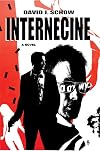
Conrad Maddox is the Vice President in charge of development for Kroeger Concepts, Ltd.
He’s an ad man who specializes in selling our dreams and desires back to us at a steep price. On his return from a business trip, he discovers a key in his rental car. The key belongs to a locker that contains a Halliburton-style briefcase. The briefcase contains fake IDs, cash, a cell phone and several guns. Conrad calls the number on the cell phone. As they say, hilarity ensues.
David J. Schow, the show more Hollywood scribe who wrote Critters 3, Critters 4 and The Crow, has created a propulsive thriller filled with shoot-outs, car chases and shadowy cabals. Imagine Don Draper from Mad Men shoved into the Seventies paranoia funhouse world of The Parallax View. Now imagine it with jokes and observations about society that drip with cynicism and snark.
For the rest of the review, check it out here:
http://www.joebobbriggs.com/index.php?/internecine-book-review.html show less
He’s an ad man who specializes in selling our dreams and desires back to us at a steep price. On his return from a business trip, he discovers a key in his rental car. The key belongs to a locker that contains a Halliburton-style briefcase. The briefcase contains fake IDs, cash, a cell phone and several guns. Conrad calls the number on the cell phone. As they say, hilarity ensues.
David J. Schow, the show more Hollywood scribe who wrote Critters 3, Critters 4 and The Crow, has created a propulsive thriller filled with shoot-outs, car chases and shadowy cabals. Imagine Don Draper from Mad Men shoved into the Seventies paranoia funhouse world of The Parallax View. Now imagine it with jokes and observations about society that drip with cynicism and snark.
For the rest of the review, check it out here:
http://www.joebobbriggs.com/index.php?/internecine-book-review.html show less
Lists
Awards


You May Also Like


Associated Authors
Statistics
- Works
- 76
- Also by
- 107
- Members
- 1,285
- Popularity
- #19,953
- Rating
- 3.6
- Reviews
- 13
- ISBNs
- 76
- Languages
- 3
- Favorited
- 5