
Lierre Keith
Author of The Vegetarian Myth: Food, Justice, and Sustainability
About the Author
Image credit: Lierre Keith
Works by Lierre Keith
Associated Works
Tagged
Common Knowledge
- Birthdate
- 20th Century
- Gender
- female
- Short biography
- Lierre Keith is a writer, a farmer, and a feminist activist. She is the author of The Vegetarian Myth: Food, Justice, and Sustainability, and the novels Conditions of War and Skyler Gabriel. She splits her time between Northampton, Massachusetts and Humboldt, California.
- Nationality
- USA
- Associated Place (for map)
- USA
Members
Reviews

To say that I hated this book would be incorrect. It's not that there's much in this book to hate, it's too vacillating, confusing, and utterly contradictory for that. Simply put, this book is under-researched and laden with unsupported statements, speculations and anecdotes. The only thing to hate about this book is that people will read it, trusting Keith to have given them good, true, useful information, and go on to make bad dietary choices.
The first problem with this book is that it show more almost never attacks veganism. It does attack many things: agriculture, big corporations, industrialization, environmental destruction, factory farms, and low fat diets (to name just a few). I think you'd be hard pressed to find any veg*ns who don't also believe that most, if not all, of the above mentioned have terrible ramifications and should be prevented. While not all US veg*ns are committed to ending the destruction of our planet, I think that many become enlightened as to the problems with many of the systems of our US culture and become committed to ending them.
So really, this book could have been called "The Agriculture Myth," but that wouldn't have generated as much shock value or sold as many books.
Keith does a makes a lot of radical statements, and then goes on to list many unrelated (and mostly un-referenced) "facts" that don't substantiate that claim, implying that the "facts" directly support her radical statements. For example, she states that veg*ns eat grains, grains are made out of carbohydrates which are turned into glucose and lead to diabetes. This implies that all veg*ns are at high risk of developing diabetes. Is there any peer-reviewed study referenced that makes this statement directly? Of course not. She leaves it to you to jump the gaps between her unsupported statements to make your own conclusions.
Keith also likes to take facts to their logical extremes. Eating plants destroys microorganisms and insects, therefore veg*nism is a product of death. So you may as well eat meat. Annual grains destroy soil and lead to monocrops of annual plants. Hence anybody who eats grains is directly causing the destruction of topsoil. Humans can't eat cellulose, and cows can, therefore humans should eat cows and not plants. I would say that this is a faulty philosophical system at best. It's also a great way to build up big straw-person arguments to support a point.
The "Nutritional" chapter of this book was really the worst of it, and here's why. According to Keith - who assumes that the plural of anecdote is data - here are approximately some of the problems I, a vegan, should be suffering from:
memory loss, depression, anorexia, diabetes, vitamin defficiency, "holes in [my] brain", exhaustion, breast cancer, Alzheimer's, bad teeth, digestive inflammation, rage, bone and joint problems, menstrual problems, fibroids, cysts, giving birth to babies with birth defects, thyroid problems, coldness, dry skin, early death and suicide
Whew. Unfortunately for her thesis (and fortunately for me), I do not and have not suffered from any of the above ailments. I'm sorry that Keith suffers from terrible health issues, but to assume that everybody has the same life experiences as her is incorrect. To assume that her health issues were directly related to veganism is also probably incorrect, but not being a doctor or nutritionist, I'm not qualified to make that claim. (Nor is she.)
Keith also drags out a lot of those tired, old, debunked stereotypes about veg*ns. You've heard them. We don't eat any fat or protein. We're sick all the time. Male veg*ns grow boobs because they eat too much soy. Really?
At one point Keith rails against conflating correlation and causation, on approximately page 164. I agree. I'm a scientist and a natural skeptic, and I know a thing or two about statistics. Rewind to page 151: "[E]pidemiologists do know that multiple sclerosis... is most prevalent in cultures where wheat and rye are staple foods." Did you catch the correlation being confused for causation in that statement? It's not blatant, but subtle and implied. Fast forward to page 172: "The past fifteen years have seen a reduction in fat consumption of almost 25 percent... Did you get healthier? Or did you notice that the incidence of diseases commonly blamed on animal products has gone from high to epidemic?" Maybe Keith just doesn't realize that those correlated facts aren't necessarily directly related, but she goes through such great pains to tell us how smart and enlightened she is that I'm sure she realizes it.
There are some truly baffling statements in this book. "Anorexics have holes in their brains; so do eaters of soy." Needless to say, that statement wasn't followed up by a reference. Also, "remember the many happy endings provided by another estrogen mimic [she is referring to soy isoflavones], diethylstilbestrol, aka DES." Soy products aren't synthetic estrogens, so why compare them like this?
Keith also imparts on veg*ns the mindset of the naive, the hopelessly child-like and the ignorant. Such a patronizing attitude is insulting and hostile. I don't know what Keith hopes to gain from making such an attack, and it is clearly not backed up by any peer reviewed scientific research, but Keith's own prejudices.
This book is just plain bad. There is no general thesis, no cohesion, just a long, rant-filled look at how terrible veg*nism (but more likely, Big Ag) is. If you were to take the points in this book to their logical conclusion, you would have to eat a diet composed entirely of raw meat that you hunted yourself from indigenous animals that forage on polycultures of perennials. Good luck with that. show less
The first problem with this book is that it show more almost never attacks veganism. It does attack many things: agriculture, big corporations, industrialization, environmental destruction, factory farms, and low fat diets (to name just a few). I think you'd be hard pressed to find any veg*ns who don't also believe that most, if not all, of the above mentioned have terrible ramifications and should be prevented. While not all US veg*ns are committed to ending the destruction of our planet, I think that many become enlightened as to the problems with many of the systems of our US culture and become committed to ending them.
So really, this book could have been called "The Agriculture Myth," but that wouldn't have generated as much shock value or sold as many books.
Keith does a makes a lot of radical statements, and then goes on to list many unrelated (and mostly un-referenced) "facts" that don't substantiate that claim, implying that the "facts" directly support her radical statements. For example, she states that veg*ns eat grains, grains are made out of carbohydrates which are turned into glucose and lead to diabetes. This implies that all veg*ns are at high risk of developing diabetes. Is there any peer-reviewed study referenced that makes this statement directly? Of course not. She leaves it to you to jump the gaps between her unsupported statements to make your own conclusions.
Keith also likes to take facts to their logical extremes. Eating plants destroys microorganisms and insects, therefore veg*nism is a product of death. So you may as well eat meat. Annual grains destroy soil and lead to monocrops of annual plants. Hence anybody who eats grains is directly causing the destruction of topsoil. Humans can't eat cellulose, and cows can, therefore humans should eat cows and not plants. I would say that this is a faulty philosophical system at best. It's also a great way to build up big straw-person arguments to support a point.
The "Nutritional" chapter of this book was really the worst of it, and here's why. According to Keith - who assumes that the plural of anecdote is data - here are approximately some of the problems I, a vegan, should be suffering from:
memory loss, depression, anorexia, diabetes, vitamin defficiency, "holes in [my] brain", exhaustion, breast cancer, Alzheimer's, bad teeth, digestive inflammation, rage, bone and joint problems, menstrual problems, fibroids, cysts, giving birth to babies with birth defects, thyroid problems, coldness, dry skin, early death and suicide
Whew. Unfortunately for her thesis (and fortunately for me), I do not and have not suffered from any of the above ailments. I'm sorry that Keith suffers from terrible health issues, but to assume that everybody has the same life experiences as her is incorrect. To assume that her health issues were directly related to veganism is also probably incorrect, but not being a doctor or nutritionist, I'm not qualified to make that claim. (Nor is she.)
Keith also drags out a lot of those tired, old, debunked stereotypes about veg*ns. You've heard them. We don't eat any fat or protein. We're sick all the time. Male veg*ns grow boobs because they eat too much soy. Really?
At one point Keith rails against conflating correlation and causation, on approximately page 164. I agree. I'm a scientist and a natural skeptic, and I know a thing or two about statistics. Rewind to page 151: "[E]pidemiologists do know that multiple sclerosis... is most prevalent in cultures where wheat and rye are staple foods." Did you catch the correlation being confused for causation in that statement? It's not blatant, but subtle and implied. Fast forward to page 172: "The past fifteen years have seen a reduction in fat consumption of almost 25 percent... Did you get healthier? Or did you notice that the incidence of diseases commonly blamed on animal products has gone from high to epidemic?" Maybe Keith just doesn't realize that those correlated facts aren't necessarily directly related, but she goes through such great pains to tell us how smart and enlightened she is that I'm sure she realizes it.
There are some truly baffling statements in this book. "Anorexics have holes in their brains; so do eaters of soy." Needless to say, that statement wasn't followed up by a reference. Also, "remember the many happy endings provided by another estrogen mimic [she is referring to soy isoflavones], diethylstilbestrol, aka DES." Soy products aren't synthetic estrogens, so why compare them like this?
Keith also imparts on veg*ns the mindset of the naive, the hopelessly child-like and the ignorant. Such a patronizing attitude is insulting and hostile. I don't know what Keith hopes to gain from making such an attack, and it is clearly not backed up by any peer reviewed scientific research, but Keith's own prejudices.
This book is just plain bad. There is no general thesis, no cohesion, just a long, rant-filled look at how terrible veg*nism (but more likely, Big Ag) is. If you were to take the points in this book to their logical conclusion, you would have to eat a diet composed entirely of raw meat that you hunted yourself from indigenous animals that forage on polycultures of perennials. Good luck with that. show less
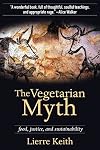
Напоследък стана много модерно да си здравословен, да се храниш природосъобразно и здравословно. Колкото хора има, толкова и идеи за това какво е здравословно хранене съществуват, но особено разпространено е вярването, че месото е вредно и най-добре е да се избягва. show more Вегетарианците са много, сила набират и веганите - които никакви животински продукти не употребяват, за да са здрави и да спасят планетата.
Авторката 20 години е била запален веган-активист, при което липсата на незаменими аминокиселини нанася непоправими вреди на организма й - костната и нервна система. Когато болките от заболяването й стават по-силни от идеологичните убеждения, тя започва да чете научни книги и материали, да изучава човешката физиология и хранене и разбира, че животинските продукти (протеини и мазнини) са жизненоважни за човека.
По-интересното в книгата обаче са представените факти и изводите относно еволюцията на някои растителни видове, по-специално зърнените култури и реакцията на човешкия организъм спрямо някои произвеждани от тях вещества. Накратко казано, авторката извежда тезата, че зърнените храни предизвикват у хората лека наркотична зависимост и именно затова е толкова трудно да се откажем от топлия хляб примерно.
Изключително забавна част от книгата пък са описанията и изводите относно вегетарианската и веганската част от населението, към която авторката се е причислявала толкова време. Става ясно, че това са хора които са изцяло движени от идеология (да спасим планетата, да не убиваме животни, да сме едно с природата) и вижданията им за природата и екологията са на елементарно, детско ниво, без почти никакви реални знания.
Частта относно индустриалното фермерство е особено информативна, за това как то разрушава почвения слой и екосистемите на Земята. Изводът на авторката е че изходът е в устойчивото фермерство, където животни и растения се отглеждат така, както едно време прабаба ти го е правила - телетата ядеш, а с тора им наторяваш градината. Което не е зле като идея, ако можеш да си позволиш с това да се занимаваш.
Като цяло, книгата засяга изключително широк кръг от теми, вкл. феминистични и социалистическите виждания на авторката, с които не съм съгласен, но е толкова добра в обяснението на мита за полезното вегетарианство, че я смятам за една от задължителните за прочитане книги, които препоръчвам на всичките си познати. show less
Авторката 20 години е била запален веган-активист, при което липсата на незаменими аминокиселини нанася непоправими вреди на организма й - костната и нервна система. Когато болките от заболяването й стават по-силни от идеологичните убеждения, тя започва да чете научни книги и материали, да изучава човешката физиология и хранене и разбира, че животинските продукти (протеини и мазнини) са жизненоважни за човека.
По-интересното в книгата обаче са представените факти и изводите относно еволюцията на някои растителни видове, по-специално зърнените култури и реакцията на човешкия организъм спрямо някои произвеждани от тях вещества. Накратко казано, авторката извежда тезата, че зърнените храни предизвикват у хората лека наркотична зависимост и именно затова е толкова трудно да се откажем от топлия хляб примерно.
Изключително забавна част от книгата пък са описанията и изводите относно вегетарианската и веганската част от населението, към която авторката се е причислявала толкова време. Става ясно, че това са хора които са изцяло движени от идеология (да спасим планетата, да не убиваме животни, да сме едно с природата) и вижданията им за природата и екологията са на елементарно, детско ниво, без почти никакви реални знания.
Частта относно индустриалното фермерство е особено информативна, за това как то разрушава почвения слой и екосистемите на Земята. Изводът на авторката е че изходът е в устойчивото фермерство, където животни и растения се отглеждат така, както едно време прабаба ти го е правила - телетата ядеш, а с тора им наторяваш градината. Което не е зле като идея, ако можеш да си позволиш с това да се занимаваш.
Като цяло, книгата засяга изключително широк кръг от теми, вкл. феминистични и социалистическите виждания на авторката, с които не съм съгласен, но е толкова добра в обяснението на мита за полезното вегетарианство, че я смятам за една от задължителните за прочитане книги, които препоръчвам на всичките си познати. show less

As with most books by this trio of authors, I disliked Deep Green Resistance. First, let me explain the layout of the book. The first section (mostly written by Lierre Keith) is centered on the philosophy and motivation behind the book. Section two (written by Aric McBay) is actually quite good and is all about building a movement -- and I would suggest these few chapters for those interested in doing so. The last section is just a quick wrap-up (again by Lierre Keith).
Now I will tell you show more the fundamental problem I have with this book, and with anything else written by Derrick Jensen or his buddies. The purpose of this book is to completely dismantle civilization, and to go back to pre-agricultural societies. Let that set in for a second. The authors think to themselves "where did this planet start going to hell?", they picked a date approximately 10,000 years ago, and went with that. Unfortunately, the authors do not provide their vision of an ideal future in this book. Actually, they sort of do, but it doesn't explain the part where BILLIONS of people die (population of the world pre-agriculture: way less than half of one billion, and the authors state that 20,000 humans would be a nice number), electricity and running water are things of the past, medications (not to mention birth control!) that we use today are no longer manufactured, and we all hunt and gather to eat. For some reason, the idea of going back to an age where a simple infected cut could kill me isn't too exciting. I also like taking hot showers and not freezing to death in the winter. I'm also not sure where humans can go to hunt and gather these days. Farms? But that would defeat the point!
The authors also make the somewhat ignorant conclusion that "civilization" and "indigenous societies" are mutually exclusive categories. They do not explain how a population reduction might occur (but state that it is necessary), except for one mention of the one-child policy (this stated by a so-called feminist), and mention that when "society inevitably collapses" the population reduction will occur anyway. If you think that through, you can imagine that the people that Jensen, et. al., would least like to remain on the planet will be those with the most resources to ensure that they aren't the ones to kick it when the planet goes to hell. That's not a great philosophy to live by if you're a member of the global poor. The authors also mention that "[o]ur goal is not to bring down the US government or any government," which is probably necessary to say to cover their asses, but is entirely antithetical to the idea of bringing down civilization as we know it.
Deep Green Resistance, and most of Jensen's books, employ many rhetorical devices without a lot of facts, relevant citations or follow-up. For example, I'm sure I heard the cutting-off-the-fingers anecdote in at least Endgame. And the authors certainly make sure to state that 200 species a day are kicking the bucket AS YOU READ THIS BOOK. So please go out and... blow something up? Maybe? The authors aren't really too specific about that. They are too busy being authors to start the resistance movement, hence this book -- to get you to do it instead!
Many of the issues I have with this book center around author Lierre Keith. I certainly hated the book The Vegetarian Myth: Food, Justice, and Sustainability because of it's abundant lack of facts and absurd stereotypes and generalizations about vegans and vegetarians. Keith goes to great lengths in this book to discuss that she is a feminist. Now, I'm a feminist, and I completely agree that any movements that call themselves radical need to have a feminist/womanist perspective to avoid the numerous pitfalls of many previous movements in history. However, Keith is also adamantly anti-porn, is pro one-child policy (so much for choice!) and seems to believe in biological determinism (she mentions that the "starving boyfriends" of her stupid vegan female friends are always pining for some dead cow soup that she serves at potlucks). Also, when mentioning rapists in the counter-culture, she only mentioned black activists... I'm sure she could have mentioned that rapists come in all skin colors. She also uses a lot of ableist language which I find to be distinctly alienating, as at times she literally equates the term "insane" with "sociopath."
And honestly, I don't know why a book about environmental radical movements needs to be so vehemently anti-vegan. I have a hard time taking somebody who contributes to the slaughter of 25 BILLION animals per year (in the US alone) seriously when they say they're sad that animal species are going extinct, or that they wonder why overfishing occurs. I also can't take her seriously when I assume from The Vegetarian Myth that she only ever ate bread and lettuce while vegan when she says things like veganism causes "general lassitude" or that "[a] food ethic stripped of protein and fat may meet ideological needs, but it will not meet the biological needs of the human template." Dear Lierre Keith, vegans actually do eat enough protein and fat. See, for example, quinoa or avocados. It's not that hard. She also rails against industrial agriculture, global warming, and deforestation in the Amazon when vegans are hoping to help avoid those things by turning down animal products!! And I love her view of the future where "[p]eople who bring soy products to permaculture potlucks start getting funny looks." Technically, soybeans are a major ingredient in livestock feed so anybody who brings burgers should probably get funny looks too!
Another thing that seemed counter to Keith's feminism was the fat-shaming statements of people being obese when they eat "bad" food, as if refined carbohydrates are the only things leading to adiposity, and as if being fat is a horrible thing. "Fat people are probably the most exhausted humans on the planet, as minute to minute their bodies cannot access the energy they need to function." What? Please tell that to all of the athletic fat people, or non-athletic fat people who are not continuously exhausted. Finally, Keith wraps up this section stating that "[f]ood should be a nourishing and nurturing part of our culture" but clearly not when people are so afraid of being fat that they spend the better part of their lives dieting and hating their bodies.
Lierre Keith also had some kind of amazing time during the northeast blackouts of 2003, saying that she didn't see any drawbacks to it. I remember the blackout well because my family's house was out of power for over a week. We didn't go without electricity or using our cars as we had to eat, go to work, and do all sorts of other things that humans do. We did what many people did, and used a diesel powered generator to cook food, run the fridge so our food didn't spoil, and take showers. The fact that the power went out for a while in 2003 doesn't give us any indication of what a future without fossil fuels will look like. And considering that all of the authors of this book are against solar, wind and geothermal power, that future (according to them) will be completely lacking in electricity.
And to wrap up my thoughts about Lierre Keith, I wonder why she has such stupid (according to her) friends. Every anecdote about her friends inevitably leads to some stupid thing they did that made her feel like she was so much better than everyone else. I guess she just has an inferiority complex which leads her to hang out with vegans, new-agers and yoga aficionados.
This book criticizes nearly every radical and counter-cultural movement in the past, with a few exceptions. Lierre Keith made a progression something like teenager's brains aren't fully formed (according to some fishy MRI study), the 60s counter-culture was mostly made of young people, and Timothy Leary sucked, QED. I really wonder what they would say about Occupy, except I think they'd probably find a way to hate them too!
Finally, the authors of this book seem to hate fascism, but without any kind of clear road to the future, which by necessity has to include a political viewpoint, is going to lead in that direction. Especially when the future radicals are armed with ideas like the population has to be reduced by about 90%, vegans are braindead, and people are only allowed to have one child. Aric McBay also mentioned that people who commit environmental crimes should be executed. I certainly wouldn't want him to be in charge of deciding who gets hung in the future. (I'm certainly anti-death penalty, and I thought most true radicals were!) show less
Now I will tell you show more the fundamental problem I have with this book, and with anything else written by Derrick Jensen or his buddies. The purpose of this book is to completely dismantle civilization, and to go back to pre-agricultural societies. Let that set in for a second. The authors think to themselves "where did this planet start going to hell?", they picked a date approximately 10,000 years ago, and went with that. Unfortunately, the authors do not provide their vision of an ideal future in this book. Actually, they sort of do, but it doesn't explain the part where BILLIONS of people die (population of the world pre-agriculture: way less than half of one billion, and the authors state that 20,000 humans would be a nice number), electricity and running water are things of the past, medications (not to mention birth control!) that we use today are no longer manufactured, and we all hunt and gather to eat. For some reason, the idea of going back to an age where a simple infected cut could kill me isn't too exciting. I also like taking hot showers and not freezing to death in the winter. I'm also not sure where humans can go to hunt and gather these days. Farms? But that would defeat the point!
The authors also make the somewhat ignorant conclusion that "civilization" and "indigenous societies" are mutually exclusive categories. They do not explain how a population reduction might occur (but state that it is necessary), except for one mention of the one-child policy (this stated by a so-called feminist), and mention that when "society inevitably collapses" the population reduction will occur anyway. If you think that through, you can imagine that the people that Jensen, et. al., would least like to remain on the planet will be those with the most resources to ensure that they aren't the ones to kick it when the planet goes to hell. That's not a great philosophy to live by if you're a member of the global poor. The authors also mention that "[o]ur goal is not to bring down the US government or any government," which is probably necessary to say to cover their asses, but is entirely antithetical to the idea of bringing down civilization as we know it.
Deep Green Resistance, and most of Jensen's books, employ many rhetorical devices without a lot of facts, relevant citations or follow-up. For example, I'm sure I heard the cutting-off-the-fingers anecdote in at least Endgame. And the authors certainly make sure to state that 200 species a day are kicking the bucket AS YOU READ THIS BOOK. So please go out and... blow something up? Maybe? The authors aren't really too specific about that. They are too busy being authors to start the resistance movement, hence this book -- to get you to do it instead!
Many of the issues I have with this book center around author Lierre Keith. I certainly hated the book The Vegetarian Myth: Food, Justice, and Sustainability because of it's abundant lack of facts and absurd stereotypes and generalizations about vegans and vegetarians. Keith goes to great lengths in this book to discuss that she is a feminist. Now, I'm a feminist, and I completely agree that any movements that call themselves radical need to have a feminist/womanist perspective to avoid the numerous pitfalls of many previous movements in history. However, Keith is also adamantly anti-porn, is pro one-child policy (so much for choice!) and seems to believe in biological determinism (she mentions that the "starving boyfriends" of her stupid vegan female friends are always pining for some dead cow soup that she serves at potlucks). Also, when mentioning rapists in the counter-culture, she only mentioned black activists... I'm sure she could have mentioned that rapists come in all skin colors. She also uses a lot of ableist language which I find to be distinctly alienating, as at times she literally equates the term "insane" with "sociopath."
And honestly, I don't know why a book about environmental radical movements needs to be so vehemently anti-vegan. I have a hard time taking somebody who contributes to the slaughter of 25 BILLION animals per year (in the US alone) seriously when they say they're sad that animal species are going extinct, or that they wonder why overfishing occurs. I also can't take her seriously when I assume from The Vegetarian Myth that she only ever ate bread and lettuce while vegan when she says things like veganism causes "general lassitude" or that "[a] food ethic stripped of protein and fat may meet ideological needs, but it will not meet the biological needs of the human template." Dear Lierre Keith, vegans actually do eat enough protein and fat. See, for example, quinoa or avocados. It's not that hard. She also rails against industrial agriculture, global warming, and deforestation in the Amazon when vegans are hoping to help avoid those things by turning down animal products!! And I love her view of the future where "[p]eople who bring soy products to permaculture potlucks start getting funny looks." Technically, soybeans are a major ingredient in livestock feed so anybody who brings burgers should probably get funny looks too!
Another thing that seemed counter to Keith's feminism was the fat-shaming statements of people being obese when they eat "bad" food, as if refined carbohydrates are the only things leading to adiposity, and as if being fat is a horrible thing. "Fat people are probably the most exhausted humans on the planet, as minute to minute their bodies cannot access the energy they need to function." What? Please tell that to all of the athletic fat people, or non-athletic fat people who are not continuously exhausted. Finally, Keith wraps up this section stating that "[f]ood should be a nourishing and nurturing part of our culture" but clearly not when people are so afraid of being fat that they spend the better part of their lives dieting and hating their bodies.
Lierre Keith also had some kind of amazing time during the northeast blackouts of 2003, saying that she didn't see any drawbacks to it. I remember the blackout well because my family's house was out of power for over a week. We didn't go without electricity or using our cars as we had to eat, go to work, and do all sorts of other things that humans do. We did what many people did, and used a diesel powered generator to cook food, run the fridge so our food didn't spoil, and take showers. The fact that the power went out for a while in 2003 doesn't give us any indication of what a future without fossil fuels will look like. And considering that all of the authors of this book are against solar, wind and geothermal power, that future (according to them) will be completely lacking in electricity.
And to wrap up my thoughts about Lierre Keith, I wonder why she has such stupid (according to her) friends. Every anecdote about her friends inevitably leads to some stupid thing they did that made her feel like she was so much better than everyone else. I guess she just has an inferiority complex which leads her to hang out with vegans, new-agers and yoga aficionados.
This book criticizes nearly every radical and counter-cultural movement in the past, with a few exceptions. Lierre Keith made a progression something like teenager's brains aren't fully formed (according to some fishy MRI study), the 60s counter-culture was mostly made of young people, and Timothy Leary sucked, QED. I really wonder what they would say about Occupy, except I think they'd probably find a way to hate them too!
Finally, the authors of this book seem to hate fascism, but without any kind of clear road to the future, which by necessity has to include a political viewpoint, is going to lead in that direction. Especially when the future radicals are armed with ideas like the population has to be reduced by about 90%, vegans are braindead, and people are only allowed to have one child. Aric McBay also mentioned that people who commit environmental crimes should be executed. I certainly wouldn't want him to be in charge of deciding who gets hung in the future. (I'm certainly anti-death penalty, and I thought most true radicals were!) show less
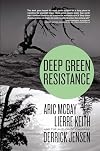
This is an intensely frustrating book. I just concluded my 2nd attempt to get through it.
Let me say that I am passionately in agreement with the authors' contentions. I just think this book shoots itself in the foot.
The first time I tried reading it, I put it down because I was starting to feel hectored/harangued. The general tenor of my reaction was "look, I agree with you, I'm a member of the choir, why are you shouting at me?" And so based on that experience, my capsule review would show more have said the main problem with the book was one of tone.
But it has worse problems. I got through more of the book this time, but reached a point where I was thinking "okay -- there've been 150+ pages about why this or that approach is misguided or is not enough. I'm gonna make it to the next section and hope against hope there is some sort of specific instruction regarding what DOES work." And then I got to the next chapter, "Other Plans" ("'other' plans?" I thought -- "you haven't presented ANY plans yet"), and on page 195 author Keith started in on another list of three approaches that don't work. I put the book down.
The writing here is passionate and, in a surface sense, "good." There is not much wrong with it qua writing -- and I certainly nodded along vigorously, although I think I was told six times that 200 species died today (PLEASE don't take this as my saying that that fact is not catastrophic -- it is). But FFS, DGR friends, you can't just tell me that "we have to stop using fossil fuels NOW" without providing concrete HOWTOs for the kind of resistance you're envisioning. Yes, okay, "classical liberalism" is too personality-based ... but you keep telling us what DOESN'T work and haven't told us what DOES. Surely in the first 200 pages there should have been some hint. Maybe I missed it.
I hate to single out author Lierre Keith for the blame, here, but the bulk of those 195 pages are hers. It's shitty of me to say, but how many species died while I was trying to get to the part of this book that recommends specific actions? show less
Let me say that I am passionately in agreement with the authors' contentions. I just think this book shoots itself in the foot.
The first time I tried reading it, I put it down because I was starting to feel hectored/harangued. The general tenor of my reaction was "look, I agree with you, I'm a member of the choir, why are you shouting at me?" And so based on that experience, my capsule review would show more have said the main problem with the book was one of tone.
But it has worse problems. I got through more of the book this time, but reached a point where I was thinking "okay -- there've been 150+ pages about why this or that approach is misguided or is not enough. I'm gonna make it to the next section and hope against hope there is some sort of specific instruction regarding what DOES work." And then I got to the next chapter, "Other Plans" ("'other' plans?" I thought -- "you haven't presented ANY plans yet"), and on page 195 author Keith started in on another list of three approaches that don't work. I put the book down.
The writing here is passionate and, in a surface sense, "good." There is not much wrong with it qua writing -- and I certainly nodded along vigorously, although I think I was told six times that 200 species died today (PLEASE don't take this as my saying that that fact is not catastrophic -- it is). But FFS, DGR friends, you can't just tell me that "we have to stop using fossil fuels NOW" without providing concrete HOWTOs for the kind of resistance you're envisioning. Yes, okay, "classical liberalism" is too personality-based ... but you keep telling us what DOESN'T work and haven't told us what DOES. Surely in the first 200 pages there should have been some hint. Maybe I missed it.
I hate to single out author Lierre Keith for the blame, here, but the bulk of those 195 pages are hers. It's shitty of me to say, but how many species died while I was trying to get to the part of this book that recommends specific actions? show less
Lists
You May Also Like


Associated Authors
Statistics
- Works
- 5
- Also by
- 1
- Members
- 616
- Popularity
- #40,814
- Rating
- 3.8
- Reviews
- 29
- ISBNs
- 24
- Languages
- 4
- Favorited
- 2