
Conrad Ferdinand Meyer (1825–1898)
Author of Das Amulett
About the Author
Series
Works by Conrad Ferdinand Meyer
Das Amulett und andere Novellen 4 copies
Sämtliche Werke : in vier Bänden 2 copies
Werke Band III : Gedichte / Engelberg / Huttens letzte Tage — Author — 2 copies
Conrad Ferdinand Meyer - Werke Band 2 — Author — 2 copies
C. F. Meyer Sämtliche Werke 1-2 2 copies
Kleinere Novellen 2 copies
C. F. Meyers Werke 1 copy
le saint 1 copy
Der Golden Bogen 1 copy
Elektitaj Poemoj 1 copy
C.F. Meyers Werke 1 copy
C.F. Meyers Werke Bd. 2. Der Schuß von der Kanzel : der Heilige ; Plautus im Nonnenkloster ... 1 copy
Pescara megkísértetése 1 copy
Svatba mnichova 1 copy
Jürg Jentasch. Das Amulett 1 copy
Conrad Ferdinand Meyer's Sämtliche Werke in zwei Bänden - Band 2 (Dieterich'sche Verlagsbuchhandlung) (1956) — Author — 1 copy
Conrad Ferdinand Meyer's Sämtliche Werke in zwei Bänden - Band 1 (Dieterich'sche Verlagsbuchhandlung) (1956) — Author — 1 copy
Gedichte 1 copy
Novellen. Zweiter Band 1 copy
Novellen. Erster Band 1 copy
Conrad Ferdinand Meyer Werke 1 copy
Meyer, Conrad Ferdinand: Sämtliche Werke Band 3 (Novellen: Das Amulett, Der Schuß von der Kanzel...) (1911) 1 copy
Romanzen und Bilder 1 copy
Novellen (2 Bände) 1 copy
Der Schuss von der Kanzel und andere Novellen — Author — 1 copy
Erzählungen und Novellen 2 1 copy
Novelle Le nozze del monaco La tentazione del Pescara Angela Borgia — Author — 1 copy
Munkin häät 1 copy
Gustav Adolfs Page Angela Borgia — Author — 1 copy
Werke Bd. 1. Gedichte 1 copy
Sämtliche Werke. Historisch-kritische Ausgabe. Band 2: Gedichte: Bericht des Herausgebers (1964) 1 copy
Associated Works
German Novellas of Realism II : Ebner-Eschenbach, Heyse, Raabe, Storm, Meyer, Hauptmann (1989) — Author — 16 copies
Deutsche Novellen von Tieck bis Hauptmann — Contributor — 8 copies
The Masterpiece Library of Short Stories Vol. VI: French & Belgian — Contributor — 4 copies
Lebensgut — Ein deutsches Lesebuch für Mädchen — 5. Teil (9. Schuljahr) — Contributor — 1 copy
Tagged
Common Knowledge
- Canonical name
- Meyer, Conrad Ferdinand
- Birthdate
- 1825-10-11
- Date of death
- 1898-11-28
- Gender
- male
- Education
- Gymnasium
- Occupations
- short story writer
poet - Organizations
- Pegnesischer Blumenorden
- Nationality
- Switzerland
- Birthplace
- Zürich, Switzerland
- Places of residence
- Zurich, Switzerland
Lausanne, Switzerland
Kuesnacht, Switzerland
Kilchberg, Switzerland
Meilen, Switzerland
Paris, France - Place of death
- Kilchberg, Switzerland
- Associated Place (for map)
- Switzerland
Members
Reviews
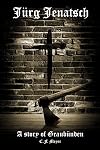
Many histories of the Thirty Years War note the importance of a ‘Swiss-controlled’ valley known as the Valtellina, which formed a crucial passage allowing Spanish-Austrian troops to cross from Italy to the Empire. I put ‘Swiss-controlled’ in inverted commas because it's anachronistic: Graubünden, the area within which the Valtellina fell, is now a Swiss canton but was then an independent state of considerable historical interest known as the Three Leagues.
The Three Leagues were show more allied with the Swiss confederacy, but independent from it. Their leaders (in Chur, Davos and Ilanz) were under enormous pressure from France and Spain to close the Alpine passes to one or other of the great powers, and during the war there were periodic uprisings in both directions.
This politico-religious upheaval has become associated in Switzerland above all with one name – Jürg Jenatsch. A Protestant preacher – and therefore inherently anti-Empire – he murdered the leader of the local Austro-Spanish party and helped the French to gain local control in hopes of winning regional independence in return. But, realising that Richelieu had no intention of relinquishing his own hold on the Valtellina, Jenatsch converted to Catholicism, betrayed his French partners, and led secret negotiations with the Spanish and Austrians which ultimately succeeded in restoring the Valtellina to the Three Leagues (greatly aiding the Imperial war effort in the process).
He was murdered in 1639 by someone dressed as a bear. That's the sort of thing that happened to you in those days.
Jenatsch's name is known in its current form primarily thanks to this novel, which in its time was extremely popular. (Meyer plumped for the north German form ‘Jürg’, though Jenatsch was actually more usually known as Georg or Giorgio, and in his native language Romansh he called himself Zoartz.) Despite the historical context, which is fascinating, the novel has not aged well, and it reads now like a typical sub-Walter Scott stodgy historical romance, with the irritating habit of contriving for all its most dramatic moments to happen off-stage and be related to us at second hand.
There is no English translation available from a serious publisher – I tracked down this self-published version which, sadly, never rises above the mediocre and is often frankly dreadful. The punctuation is random and inconsistent, apostrophes are poorly understood, and the translators have an unfortunate tendency to be misled by homophones (so that, for instance, we hear of two people meeting in the ‘central isle’ of a church). Even worse is the ignorance of standard English idioms for many of the historical details: German Pfalzgraf (I assume) is translated as ‘count of Pfalz’ when it should be ‘count palatine’; the Three Leagues is given as the ‘three confederacies’ or the ‘three Bünden’; and while it might perhaps be just barely defensible to call the head of the Holy Roman Empire the Kaiser, instead of the Emperor as is normal, to give the name of the King of France as ‘Ludwig XIII’ shows a total departure from any common sense.
It's a shame because I very much respect the efforts of individual people to put translations like this out on their own account, and without this father-and-son team I would never have been able to engage with the text at all. But I can't lie, it's not great. Still, I suspect that even in the most fluent translation, this novel's interest is primarily historical rather than artistic. show less
The Three Leagues were show more allied with the Swiss confederacy, but independent from it. Their leaders (in Chur, Davos and Ilanz) were under enormous pressure from France and Spain to close the Alpine passes to one or other of the great powers, and during the war there were periodic uprisings in both directions.
This politico-religious upheaval has become associated in Switzerland above all with one name – Jürg Jenatsch. A Protestant preacher – and therefore inherently anti-Empire – he murdered the leader of the local Austro-Spanish party and helped the French to gain local control in hopes of winning regional independence in return. But, realising that Richelieu had no intention of relinquishing his own hold on the Valtellina, Jenatsch converted to Catholicism, betrayed his French partners, and led secret negotiations with the Spanish and Austrians which ultimately succeeded in restoring the Valtellina to the Three Leagues (greatly aiding the Imperial war effort in the process).
He was murdered in 1639 by someone dressed as a bear. That's the sort of thing that happened to you in those days.
Jenatsch's name is known in its current form primarily thanks to this novel, which in its time was extremely popular. (Meyer plumped for the north German form ‘Jürg’, though Jenatsch was actually more usually known as Georg or Giorgio, and in his native language Romansh he called himself Zoartz.) Despite the historical context, which is fascinating, the novel has not aged well, and it reads now like a typical sub-Walter Scott stodgy historical romance, with the irritating habit of contriving for all its most dramatic moments to happen off-stage and be related to us at second hand.
There is no English translation available from a serious publisher – I tracked down this self-published version which, sadly, never rises above the mediocre and is often frankly dreadful. The punctuation is random and inconsistent, apostrophes are poorly understood, and the translators have an unfortunate tendency to be misled by homophones (so that, for instance, we hear of two people meeting in the ‘central isle’ of a church). Even worse is the ignorance of standard English idioms for many of the historical details: German Pfalzgraf (I assume) is translated as ‘count of Pfalz’ when it should be ‘count palatine’; the Three Leagues is given as the ‘three confederacies’ or the ‘three Bünden’; and while it might perhaps be just barely defensible to call the head of the Holy Roman Empire the Kaiser, instead of the Emperor as is normal, to give the name of the King of France as ‘Ludwig XIII’ shows a total departure from any common sense.
It's a shame because I very much respect the efforts of individual people to put translations like this out on their own account, and without this father-and-son team I would never have been able to engage with the text at all. But I can't lie, it's not great. Still, I suspect that even in the most fluent translation, this novel's interest is primarily historical rather than artistic. show less

Julian, pupil of a Jesuit College, is chastised for reason of a misunderstanding. The disgrace causes a fever of undetermined origin, of which the boy dies. As one of the first writers, C. F. Meyer raises the question in this brilliant short novel, which takes place under the reign of Louis XIV, if legal corporal punishment is an appropriate disciplinary measure.

"Es lohnt sich, daraufhin, Conrad Ferdinand Meyers Darstellung von Karl in ‚Das Amulett‚ zu lesen. Da fand ich die Balkonszene besonders beeindruckend, und auch Meyer gesteht Karl zu, das Grauenvolle verhindern zu wollen.
Ein großes Thema ist die Rolle der Religion im Kriegen und Morden. Auch da gibt es Parallelen bei Meyer und Mann. ‚Das Amulett‘ ist sowieso unbedingt lesenswert in seiner Dichte und sprachlichen Schärfe." in: Heinrich Mann, Henri IV und das Kapitel ‚Margot‘
Ein großes Thema ist die Rolle der Religion im Kriegen und Morden. Auch da gibt es Parallelen bei Meyer und Mann. ‚Das Amulett‘ ist sowieso unbedingt lesenswert in seiner Dichte und sprachlichen Schärfe." in: Heinrich Mann, Henri IV und das Kapitel ‚Margot‘
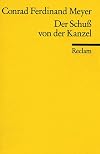
Ein sehr schönes Büchlein. War ein Zufallsgriff im Geschäft und macht nun Lust auf mehr.
Lists
Awards

You May Also Like


Associated Authors
Statistics
- Works
- 144
- Also by
- 11
- Members
- 794
- Popularity
- #32,082
- Rating
- 3.6
- Reviews
- 7
- ISBNs
- 144
- Languages
- 8
- Favorited
- 4