
Anthony DePalma
Author of Here: A Biography of the New American Continent
About the Author
Anthony DePalma has been a correspondent and reporter at the New York Times for almost twenty years.
Disambiguation Notice:
There are probably at least two different people here.
Image credit: By Depalman - Own work, CC BY-SA 3.0, https://commons.wikimedia.org/w/index.php?curid=26538602
Works by Anthony DePalma
The Man Who Invented Fidel: Castro, Cuba, and Herbert L. Matthews of The New York Times (2006) 64 copies, 2 reviews
Associated Works
Tagged
Common Knowledge
- Gender
- male
- Occupations
- reporter (New York Times)
- Awards and honors
- National Education Writers Association (1993)
- Nationality
- USA
- Places of residence
- Mexico City, Mexico
- Disambiguation notice
- There are probably at least two different people here.
- Associated Place (for map)
- Mexico City, Mexico
Members
Reviews
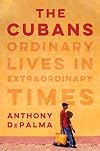
This non fiction account of various families living in a Havana neighborhood from the years of the revolution to present time reads like a good novel. It is a fascinating, engrossing, in depth narrative. Having spent some time in Cuba, I felt that DePalma
captured the vibrancy, frustration, dashed feeling of possibilities, and character of some of the people I met there. My hope for this book is that it may help some people realize that our most recent treatment of Cuba has not affected the show more government there, but has had a significant impact on the lives of everyday people. I understand the hatred of Castro and the revolution among those who live here, but cannot understand how they can put embargos in place that hurt people…many of whom have no first hand memory of the revolution. The cruelty is unimaginable. show less
captured the vibrancy, frustration, dashed feeling of possibilities, and character of some of the people I met there. My hope for this book is that it may help some people realize that our most recent treatment of Cuba has not affected the show more government there, but has had a significant impact on the lives of everyday people. I understand the hatred of Castro and the revolution among those who live here, but cannot understand how they can put embargos in place that hurt people…many of whom have no first hand memory of the revolution. The cruelty is unimaginable. show less
A fascinating exploration of the history of Cuba in the twentieth and twenty-first centuries, as seen through the eyes of five families living in the rough-and-tumble Havana suburb of Guanabacoa. Anthony DePalma, a former foreign correspondent in Cuba, draws on his professional and personal connections to produce a piece of reportage that's full of human interest and sharply observed detail. You won't come away from this with a deeper understanding of the intricacies of Cuban internal show more politics or its place in broader geopolitics—and DePalma's failure to really grapple with the horrors of the Batista regime or the consequences of American imperialism is the biggest flaw with the book—but The Cubans will leave you with a much better sense of cubanidad. show less
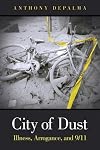
Not all the victims of 9/11 died on 9/11/2001.
I read an article about how three FDNY firefighters died in one day last week, of illnesses linked to their work at Ground Zero. It was a timely piece of news while reading this account of the health effects (known and/or suspected) of the dust people were exposed to as a result of the 9/11 attack on the World Trade Center.
The Twin Towers collapsed with such force that building materials, office contents, and victims were largely pulverized into show more a massive cloud of dust that blotted out the sun and choked all the people in its path -- emergency responders and civilians -- as it plumed outward from Ground Zero. As the dust settled, it penetrated nearby office and residential buildings. The dust was caustic, and contained toxins such as asbestos (from fireproofing) and lead (from thousands of pulverized computer monitors). Those working on "the pile" at Ground Zero, first in desperate rescue attempts and then in the recovery/cleanup process that followed, were exposed in large doses for long periods of time. People who lived and worked in the area were exposed, too, finding bits of Ground Zero dust in their residences and offices for years as furniture was moved or ductwork was renovated.
Anthony DePalma explores the messages put out by city and federal officials about the safety of the air near Ground Zero, the issue of safety precautions (or lack thereof) for those working the rescue/recovery effort, and the health issues which soon began to crop up among those exposed to the dust. It is a complex book because it is a complex subject. I think he did a fairly even-handed job, on the one hand arguing that the message given out regarding the safety of the air was deceptive, but also that workers often shirked safety equipment when such equipment was offered (and explains the complex reasons why).
He shows that, clearly, many workers suffered serious health issues as a result of the dust, while pointing out that not every Ground Zero worker who got sick was necessarily sick as a result of work at Ground Zero. He reminds us that that many of the illnesses caused by environmental exposures don't show up until many years later, which creates ongoing fear for those at risk. He explores the difficulty of linking cause and effect in diseases like cancer. He introduces us to the doctors who struggled to provide appropriate screening and care to those who needed it. He unravels the bureaucratic wrangling which had the government talking out of both sides of its mouth, so to speak, as they dealt with the environmental impact of 9/11; and the legal wrangling that stretched on for a decade and probably is still going on. It's a thought-provoking, frustrating piece of journalism. show less
I read an article about how three FDNY firefighters died in one day last week, of illnesses linked to their work at Ground Zero. It was a timely piece of news while reading this account of the health effects (known and/or suspected) of the dust people were exposed to as a result of the 9/11 attack on the World Trade Center.
The Twin Towers collapsed with such force that building materials, office contents, and victims were largely pulverized into show more a massive cloud of dust that blotted out the sun and choked all the people in its path -- emergency responders and civilians -- as it plumed outward from Ground Zero. As the dust settled, it penetrated nearby office and residential buildings. The dust was caustic, and contained toxins such as asbestos (from fireproofing) and lead (from thousands of pulverized computer monitors). Those working on "the pile" at Ground Zero, first in desperate rescue attempts and then in the recovery/cleanup process that followed, were exposed in large doses for long periods of time. People who lived and worked in the area were exposed, too, finding bits of Ground Zero dust in their residences and offices for years as furniture was moved or ductwork was renovated.
Anthony DePalma explores the messages put out by city and federal officials about the safety of the air near Ground Zero, the issue of safety precautions (or lack thereof) for those working the rescue/recovery effort, and the health issues which soon began to crop up among those exposed to the dust. It is a complex book because it is a complex subject. I think he did a fairly even-handed job, on the one hand arguing that the message given out regarding the safety of the air was deceptive, but also that workers often shirked safety equipment when such equipment was offered (and explains the complex reasons why).
He shows that, clearly, many workers suffered serious health issues as a result of the dust, while pointing out that not every Ground Zero worker who got sick was necessarily sick as a result of work at Ground Zero. He reminds us that that many of the illnesses caused by environmental exposures don't show up until many years later, which creates ongoing fear for those at risk. He explores the difficulty of linking cause and effect in diseases like cancer. He introduces us to the doctors who struggled to provide appropriate screening and care to those who needed it. He unravels the bureaucratic wrangling which had the government talking out of both sides of its mouth, so to speak, as they dealt with the environmental impact of 9/11; and the legal wrangling that stretched on for a decade and probably is still going on. It's a thought-provoking, frustrating piece of journalism. show less
The Man Who Invented Fidel: Castro, Cuba, and Herbert L. Matthews of The New York Times by Anthony DePalma
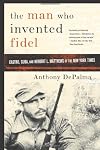
Well written historical overview and general biographical sketch of Herbert Matthews, the reporter from the New York Times who climbed into the Sierra to interview Fidel Castro on 17 February 1957. The front-page interview, photograph of Matthews and Castro, and facsimile of Castro Ruz's signature gave lie to the Batista government's claim that Castro had been killed. That propelled the barbudos into the maelstrom of history that saw them walk into Havana in January 1959; De Palma makes the show more point that barring that interview 'Castro could have triumphed without Matthews, but then history would have been different. What Matthews did was invent the image of Fidel Castro that at first captivated and then infuriated most Americans. Before Matthews showed up, Castro was a man, a rebel, a hero. What Matthews did was invent Fidel as an idea, a conception that could remain elusive, always changing, unknowable, unfathomable, and, therefore, in the end, undefeatable.' [p.281]
De Palma writes well. In this book, he has written a serious study of an important historical figure that has remained a peripheral, yet necessarily included, part of the Castro story and the Cuban saga. Herbert Matthews reported on the Italian invasion of Abyssinia in 1935, on the Spanish Civil War, on WW2 (he had been detained by Mussolini's government at the War's outbreak, and returned to report on the Allied invasion of Italy). His stories on Castro's guerrillas (three were printed) were sensations.
For the rest of his life, until 1977, Matthews was hounded by his coverage of, and reporting on, Cuba. He was blamed for helping Castro to power (wrongly); he was condemned for being sympathetic to Castro (correctly: he was sympathetic); he was cursed for being a Communist sympathizer (inaccurately; De Palma shows that rather than becoming a Communist Castro forced Cuba's and other Communists to become Castroites).
Over time the Times exiled Matthews from the news pages, eventually forced him out of the paper by eliminating his usefulness (at one point Matthews was both a reporter and an editor), and let him walk away from 44 years of employment as silently as possible. De Palma shows how both the Times and Matthews were actors in this tragedy, never failing to show that Castro was also an actor in the banishing of Matthews from fame and acclaim. Castro has tried to depict his fooling Matthews into thinking the guerrillas had hundreds of soldiers, rather than the couple of dozen or so they actually had. Fidel Castro, as much as the New York Times, used Matthews for his own purposes.
A fascinating historical narrative, this book deserves the fame it, and others of its kind, never receive. show less
De Palma writes well. In this book, he has written a serious study of an important historical figure that has remained a peripheral, yet necessarily included, part of the Castro story and the Cuban saga. Herbert Matthews reported on the Italian invasion of Abyssinia in 1935, on the Spanish Civil War, on WW2 (he had been detained by Mussolini's government at the War's outbreak, and returned to report on the Allied invasion of Italy). His stories on Castro's guerrillas (three were printed) were sensations.
For the rest of his life, until 1977, Matthews was hounded by his coverage of, and reporting on, Cuba. He was blamed for helping Castro to power (wrongly); he was condemned for being sympathetic to Castro (correctly: he was sympathetic); he was cursed for being a Communist sympathizer (inaccurately; De Palma shows that rather than becoming a Communist Castro forced Cuba's and other Communists to become Castroites).
Over time the Times exiled Matthews from the news pages, eventually forced him out of the paper by eliminating his usefulness (at one point Matthews was both a reporter and an editor), and let him walk away from 44 years of employment as silently as possible. De Palma shows how both the Times and Matthews were actors in this tragedy, never failing to show that Castro was also an actor in the banishing of Matthews from fame and acclaim. Castro has tried to depict his fooling Matthews into thinking the guerrillas had hundreds of soldiers, rather than the couple of dozen or so they actually had. Fidel Castro, as much as the New York Times, used Matthews for his own purposes.
A fascinating historical narrative, this book deserves the fame it, and others of its kind, never receive. show less
You May Also Like


Associated Authors
Statistics
- Works
- 10
- Also by
- 1
- Members
- 296
- Popularity
- #79,167
- Rating
- 3.7
- Reviews
- 8
- ISBNs
- 22
- Languages
- 2