
Carrie Gibson
Author of El Norte: The Epic and Forgotten Story of Hispanic North America
About the Author
Carrie Gibson is the author of the acclaimed Empire's Crossroads: A History of the Caribbean From Columbus to the Present Day. She received a PhD from Cambridge University, focusing on the Spanish Caribbean in the era of the Haitian Revolution, and has worked as a journalist for the Guardian and show more contributed to other publications, as well as the BBC. She has done research across Mexico, the West Indies, and the United States. She lives in London. show less
Works by Carrie Gibson
Empire's Crossroads: A History of the Caribbean from Columbus to the Present Day (2014) 230 copies, 7 reviews
Tagged
Common Knowledge
- Birthdate
- 1976
- Gender
- female
- Education
- The University of Georgia (ABJ | 1998)
Birbeck College, University of London (MA | 2005 | History - Imperialism and Post-Colonial Societies)
Peterhouse College, University of Cambridge (Ph.D | 2010 | History) - Occupations
- writer
journalist
historian - Organizations
- The Guardian
- Agent
- Bill Hamilton (A. M. Heath Literary Agents)
- Nationality
- USA
- Birthplace
- USA
- Places of residence
- London, England, UK
- Associated Place (for map)
- England, UK
Members
Reviews
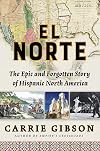
If you need a sweeping history of how the Spanish influence and conquest of this continent went down, whether for yourself or for students, this would be it. Like many history textbooks, there is so much that the ability to hone in on details is limited, despite the chapter titles referencing specific places. That's the early part of this book. After the 19th century, though, the author picked and chose places and events that would be representative Hispano communities, and that's probably show more the most realistic way to write a history like this. But by this point there is so much to cover that she couldn't possibly get it all, and I thought the inability to revisit some of the places (Santa Fe, St. Augustine, the early Texas missions) that appeared earlier in the book left it incomplete. show less
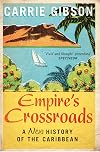
Many of us at some point have visited one of the many idyllic islands in the Caribbean to enjoy a nice getaway; to soak up the sun and dip our feet into the warm white sands. We swam in the warm waters of the turquoise-blue Caribbean Ocean and have downed a glass of cold rum. Maybe sipped on a fancy drink that had a little umbrella resting on the glass rim. We enjoyed our new tans and flew back home feeling rested and already counting down the days for our next vacation.
Then author Carrie show more Gibson demolished that dreamy, sublime picture of the Caribbean and replaced it with a scene of constant destruction, exploitation, war, slavery and racism that permeated the region for centuries. Once Christopher Columbus landed on the shores of San Salvador, in present-day Bahamas, the world changed forever.
The Spanish, British, French, Dutch and Danish had a continual tug-of-war with the islands. When the rest of Europe saw how prosperous Spain was becoming after the “discovery” of the New World, other countries jumped in on the action and began sending their own ships to collect their share of the riches and splendor. Soon tobacco, sugar, coffee, and rum began to satiate the appetite of the deprived masses of North America and Europe. The hunger and thirst for these vices were first supplied by the blood, sweat and tears of the indigenous and once their population dwindled from disease and brutality African slaves were shipped in.
Gibson details the politics and history of the region like Castro’s Cuba or the tumultuous relationship of Haiti/Dominican Republic. She does a great job at stuffing such a heavy and numerous history into 400 or so pages. The book also offers an extensive bibliography, notes and index section and Gibson does a great job at listing her sources. There are also about 20 or so full color pictures that wonderfully add to the narrative.
I recommend this book to those who are interested in the turbulent and explosive history of the Caribbean. The term “paradise” is a façade and when we can look beyond the fog made by the cruise ships and the all-inclusive resorts then one can view the unfortunate poverty and crime that the tourists don’t see. show less
Then author Carrie show more Gibson demolished that dreamy, sublime picture of the Caribbean and replaced it with a scene of constant destruction, exploitation, war, slavery and racism that permeated the region for centuries. Once Christopher Columbus landed on the shores of San Salvador, in present-day Bahamas, the world changed forever.
The Spanish, British, French, Dutch and Danish had a continual tug-of-war with the islands. When the rest of Europe saw how prosperous Spain was becoming after the “discovery” of the New World, other countries jumped in on the action and began sending their own ships to collect their share of the riches and splendor. Soon tobacco, sugar, coffee, and rum began to satiate the appetite of the deprived masses of North America and Europe. The hunger and thirst for these vices were first supplied by the blood, sweat and tears of the indigenous and once their population dwindled from disease and brutality African slaves were shipped in.
Gibson details the politics and history of the region like Castro’s Cuba or the tumultuous relationship of Haiti/Dominican Republic. She does a great job at stuffing such a heavy and numerous history into 400 or so pages. The book also offers an extensive bibliography, notes and index section and Gibson does a great job at listing her sources. There are also about 20 or so full color pictures that wonderfully add to the narrative.
I recommend this book to those who are interested in the turbulent and explosive history of the Caribbean. The term “paradise” is a façade and when we can look beyond the fog made by the cruise ships and the all-inclusive resorts then one can view the unfortunate poverty and crime that the tourists don’t see. show less
An interesting read on an area of the world whose history I know very little about. As with books covering vast amounts of time and geography, at times it was a little dry, because of this it took me quite a time to finish it and I read other books in between.
Definitely a good starting point for anyone who wants a little more background on the region. The book is also thought provoking in a number of ways, from historical exploitation of slaves and resources right up to the difficult modern show more day relationship with tourism.
Don't expect a thrill ride, but do expect to be educated. show less
Definitely a good starting point for anyone who wants a little more background on the region. The book is also thought provoking in a number of ways, from historical exploitation of slaves and resources right up to the difficult modern show more day relationship with tourism.
Don't expect a thrill ride, but do expect to be educated. show less
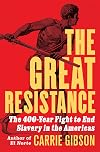
The Great Resistance by Carrie Gibson
The Four Hundred Year Fight to End Slavery in the Americas
~ Deep dive into the dark depths of slavery that existed throughout the Americas and how it took centuries to finally legally abolish it ~
What I liked:
* The research that was obvious while reading and also credited in footnotes, bibliography, and author’s notes
* That it was easy to read for a layperson though perhaps not easy to retain due to the vastness of the information shared
* The empathy show more I felt for the enslaved and what they endured
* Being made aware of how many European countries were involved in the slave trade not only selling but procuring and using the slaves to enrich their countries
* Learning why some slaves preferred to jump overboard or commit suicide rather than remain slaves
* Being able to question why rulers, popes, and commoners were so willing to capture free men for their own purposes and enrich themselves for doing so
* Realizing that slavery has probably always existed and being reminded of why some have justified it – I cannot accept their reasoning as justifiable
* Believing that this is a book that would appeal to those that would like to read more about this topic and that the information and writing style will make the information easy to understand if not easy to digest
* Thinking this is a book that one should probably tackle a chapter at a time over a period of time rather than in one sitting
What I didn’t like:
* The emotions that were stirred up within me as I read how many millions were sold and enslaved
* Thinking about how one human can do to another what was done to the enslaved
* That even though I know that slavery is illegal in the Americas now, I do not believe it is completely finished for all
Did I like this book? Yes, for the information and because it made me think
Would I read more by this author? Yes, if the topic interested me
Thank you to NetGalley and Grove Atlantic for the ARC – This is my honest review.
5 Stars show less
The Four Hundred Year Fight to End Slavery in the Americas
~ Deep dive into the dark depths of slavery that existed throughout the Americas and how it took centuries to finally legally abolish it ~
What I liked:
* The research that was obvious while reading and also credited in footnotes, bibliography, and author’s notes
* That it was easy to read for a layperson though perhaps not easy to retain due to the vastness of the information shared
* The empathy show more I felt for the enslaved and what they endured
* Being made aware of how many European countries were involved in the slave trade not only selling but procuring and using the slaves to enrich their countries
* Learning why some slaves preferred to jump overboard or commit suicide rather than remain slaves
* Being able to question why rulers, popes, and commoners were so willing to capture free men for their own purposes and enrich themselves for doing so
* Realizing that slavery has probably always existed and being reminded of why some have justified it – I cannot accept their reasoning as justifiable
* Believing that this is a book that would appeal to those that would like to read more about this topic and that the information and writing style will make the information easy to understand if not easy to digest
* Thinking this is a book that one should probably tackle a chapter at a time over a period of time rather than in one sitting
What I didn’t like:
* The emotions that were stirred up within me as I read how many millions were sold and enslaved
* Thinking about how one human can do to another what was done to the enslaved
* That even though I know that slavery is illegal in the Americas now, I do not believe it is completely finished for all
Did I like this book? Yes, for the information and because it made me think
Would I read more by this author? Yes, if the topic interested me
Thank you to NetGalley and Grove Atlantic for the ARC – This is my honest review.
5 Stars show less
Lists
Awards


You May Also Like


Associated Authors
Statistics
- Works
- 7
- Members
- 544
- Popularity
- #45,826
- Rating
- 3.7
- Reviews
- 10
- ISBNs
- 19
- Languages
- 1
- Favorited
- 1