
Matthew Parker (1)
Author of Panama Fever: The Epic Story of One of the Greatest Human Achievements of All Time-- the Building of the Panama Canal
For other authors named Matthew Parker, see the disambiguation page.
About the Author
Matthew Parker is the author of three previous non-fiction books, Monte Cassino: The Hardest-Fought Battle of World War II; the Los Angeles Times bestseller Panama Fever, and The Sugar Barons, which was an Economist Book of the Year. He lives in England.
Works by Matthew Parker
Panama Fever: The Epic Story of One of the Greatest Human Achievements of All Time-- the Building of the Panama Canal (2007) 358 copies, 8 reviews
The Sugar Barons: Family, Corruption, Empire, and War in the West Indies (2011) 238 copies, 2 reviews
The Battle of Britain, July-October 1940: An Oral History of Britain's Finest Hour (2000) 55 copies, 1 review
Tagged
Common Knowledge
- Birthdate
- 1970
- Gender
- male
- Education
- University of Oxford
- Occupations
- Archbishop of Canterbury (#2)
- Organizations
- Church of England (#2)
- Nationality
- UK
- Places of residence
- Central America
West Indies
East London, England
Members
Reviews
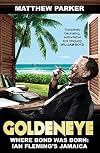
Absolutely superb, fun, easily accessible history of what happened both at Goldeneye, and the books themselves that defined James Bond & his character. In many ways, like its subject. This is multi layered, looking at history, colonialism, politics, The Great Ppwers, Espionage, Britains declining role in the world, and the loss of her Empire. Yet it also remains an analysis of the deterioration of a marriage of two fundamentally flawed, incompatible people. Admirable, engaging & wistful. One show more can't help but be nostalgic for a time, place & person that have now faded from memory leaving an incredible legacy that often belies its tragic development. Recommended. show less
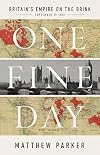
On September 29, 1923, the League of Nations’ Mandate of Palestine became law. The Mandate formally transferred the regions of Palestine and Transjordan to the UK from the Ottoman Empire, which had ceded them at the end of World War I. On that date the British Empire reached its maximum extent. The Empire covered a quarter of the world’s landmass at 14 million square miles of land. It was home to four hundred and sixty million people - a fifth of the world’s population at the time - show more all subjects of His Majesty King George V.
British historian Matthew Parker has built his book One Fine Day around the state of affairs inside the Empire on that day. While the British had achieved the largest Empire ever known, there were cracks apparent in 1923 that would lead to its eventual dissolution.
The book is a collection of stories about British colonies. Ocean Island in the Pacific, India, Malaya, Burma, Kenya and West Africa are the main focus. As the author’s sights shift to each colony, he provides the history and context leading up to the events of September 1923. The result is a rich and in-depth picture of the Empire at its height, with an amazingly wide range of characters.
The whole point of the Empire was for the colonies to provide resources to (in other words increase the wealth of) the Mother Country. The exploitation of the colonies’ resources and people was baldly excessive. Much of the picture that Parker paints is not pretty. There are some dark, tragic stories covered in this book, like the massacre in Amritsar, India in 1919.
Ocean Island ends up uninhabitable due to the removal of the island’s phosphate stores. Hundreds and thousands of tons of the island itself - the very ground under the natives’ feet - were removed to provide fertilizer for the farm fields of Australia.
The chapters on Kenya casts a dark shadow as well, with systematic exploitation (slavery in all but name) of the local population to work the fields of the Europeans who had taken their land.
Of course, the picture varied from place to place. The Dominions were self-governing, largely white colonies - places like Canada, Australia and New Zealand. In those places in 1923 the people were mostly happy with their lot within the Empire.
In other places where the dominant races were not white, and where the hand of Empire was keeping the local populace working on behalf of their white rulers, there was much discontent. The end of World War I only exacerbated tensions. Returning veterans of the native populations were treated poorly in contrast with their white counterparts.
The social impacts of the end of the Great War were one factor weighing against Empire, but there were others. Economically Britain had not kept up. Built on railroads, steel, coal and textiles the Empire had failed to modernize and could not compete on things like oil, refrigerators, radios and automobiles. In Malaya, the Empire’s richest colony, Parker points out that in 1923 only a sixteenth of the colony’s international purchases came from Britain.
The whole model of Empire was now in question. If the Empire wasn’t going to make the UK rich, then what was it good for? This was the question hanging in the air on September 29, 1923.
RATING: Four Stars ⭐⭐⭐⭐
Rating Comment: One Fine Day circles to globe 100 years ago at the height of the British Empire. It highlights the challenges and contradictions that will ultimately lead to the Empire’s demise. A hefty, well researched and enlightening book.
NOTE: I read an advanced review copy courtesy of NetGalley and the publisher PublicAffairs. The book will be generally available next Tuesday, September 26, 2023. show less
British historian Matthew Parker has built his book One Fine Day around the state of affairs inside the Empire on that day. While the British had achieved the largest Empire ever known, there were cracks apparent in 1923 that would lead to its eventual dissolution.
The book is a collection of stories about British colonies. Ocean Island in the Pacific, India, Malaya, Burma, Kenya and West Africa are the main focus. As the author’s sights shift to each colony, he provides the history and context leading up to the events of September 1923. The result is a rich and in-depth picture of the Empire at its height, with an amazingly wide range of characters.
The whole point of the Empire was for the colonies to provide resources to (in other words increase the wealth of) the Mother Country. The exploitation of the colonies’ resources and people was baldly excessive. Much of the picture that Parker paints is not pretty. There are some dark, tragic stories covered in this book, like the massacre in Amritsar, India in 1919.
Ocean Island ends up uninhabitable due to the removal of the island’s phosphate stores. Hundreds and thousands of tons of the island itself - the very ground under the natives’ feet - were removed to provide fertilizer for the farm fields of Australia.
The chapters on Kenya casts a dark shadow as well, with systematic exploitation (slavery in all but name) of the local population to work the fields of the Europeans who had taken their land.
Of course, the picture varied from place to place. The Dominions were self-governing, largely white colonies - places like Canada, Australia and New Zealand. In those places in 1923 the people were mostly happy with their lot within the Empire.
In other places where the dominant races were not white, and where the hand of Empire was keeping the local populace working on behalf of their white rulers, there was much discontent. The end of World War I only exacerbated tensions. Returning veterans of the native populations were treated poorly in contrast with their white counterparts.
The social impacts of the end of the Great War were one factor weighing against Empire, but there were others. Economically Britain had not kept up. Built on railroads, steel, coal and textiles the Empire had failed to modernize and could not compete on things like oil, refrigerators, radios and automobiles. In Malaya, the Empire’s richest colony, Parker points out that in 1923 only a sixteenth of the colony’s international purchases came from Britain.
The whole model of Empire was now in question. If the Empire wasn’t going to make the UK rich, then what was it good for? This was the question hanging in the air on September 29, 1923.
RATING: Four Stars ⭐⭐⭐⭐
Rating Comment: One Fine Day circles to globe 100 years ago at the height of the British Empire. It highlights the challenges and contradictions that will ultimately lead to the Empire’s demise. A hefty, well researched and enlightening book.
NOTE: I read an advanced review copy courtesy of NetGalley and the publisher PublicAffairs. The book will be generally available next Tuesday, September 26, 2023. show less
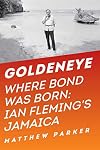
Jamaica was a British colony in the 1950s. It was also one of the world's hot spots for the rich and famous, before mass tourism arrived. It's been compared to Happy Valley in Kenya with British expatriates letting lose. In this setting Ian Fleming owned a reclusive bungalow where, when not swimming naked on his private beach and drinking copious amounts of gin and vodka, he wrote the Bond novels. Matthew Parker weaves this story around other local characters such as Noel Coward and the show more partying jet set who are continually coming and going, and Flemming's affairs and rocky marriage.
Not sure how I much I admire Flemming as a person, but he is an interesting subject and there is enough humor in his books to be forgivable and not taken too seriously. As a useful bit of information the author recommends the best four: Dr. No, Thunderball and two others. I once tried reading the first one published Casino Royal, but it's not his best while he was still working out the formula, the other four are more canonical.
The author Matthew Parker is fantastic, maybe even too good for this topic. He reminds me of William Dalrymple able to weave a deft story around a British colony. This is not a book full of trivia about Bond and Flemming, it tells a bigger story. Come for Bond but stay for the story of Jamaica and colonialism. Look forward to reading Parker's history of sugar barons in the same region which takes the history of Jamaica further back. show less
Not sure how I much I admire Flemming as a person, but he is an interesting subject and there is enough humor in his books to be forgivable and not taken too seriously. As a useful bit of information the author recommends the best four: Dr. No, Thunderball and two others. I once tried reading the first one published Casino Royal, but it's not his best while he was still working out the formula, the other four are more canonical.
The author Matthew Parker is fantastic, maybe even too good for this topic. He reminds me of William Dalrymple able to weave a deft story around a British colony. This is not a book full of trivia about Bond and Flemming, it tells a bigger story. Come for Bond but stay for the story of Jamaica and colonialism. Look forward to reading Parker's history of sugar barons in the same region which takes the history of Jamaica further back. show less
Panama Fever: The Epic Story of One of the Greatest Human Achievements of All Time-- the Building of the Panama Canal by Matthew Parker
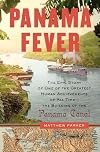
Having been all the way through the canal within the past few months, I picked up this book to try to get a feel for how this marvel of engineering came about. Parker's book is very well written and does a fine job of explaining the history of the building of the canal so that non-technical people like myself can understand it. He begins in the time of the Spanish explorers, when Balboa was able to walk from ocean to ocean over the narrow isthmus of land there, through the French efforts and show more debacle under the aegis of Ferdinand deLesseps, the builder of the Suez Canal, through the Americans time there and their ultimate completion of the Canal. What Parker manages to convey is that the story of how America got its foothold in Panama is not a pretty one. Nor was the story of its construction -- the death tolls were staggering. Another plus of this book is that Parker avoids telling the story from solely the views of American white men; he takes a lot of his information from journals and stories left behind by workers from Jamaica and Barbados, whose treatment as minorities was unequal to say the very least. African-American workers looking for work there were soon disillusioned as well. Even though the people from the West Indies were lauded by the engineers as being the best workers, their treatment was deplorable. Parker also looks at the toll taken by diseases (yellow fever, malaria) and how the US Government at first pooh-poohed the efforts of Dr. William C. Gorgas, later Surgeon General of the US in his advocating of the eradication of conditions that were conducive to the spread of these diseases. The author's look at US intervention in Panamanian politics was eye-opening as well.
Overall, it was a fine book; a bit rushed toward the end but still quite good. I would have liked to have read more about the effects of the canal-building effort on the environment, but I suppose that's another volume unto itself.
Recommended for people who like a well-written and easily accessible history; also for people who are interested in the topic. Beware -- it's a weighty book but imho, well worth every second spent reading it. show less
Overall, it was a fine book; a bit rushed toward the end but still quite good. I would have liked to have read more about the effects of the canal-building effort on the environment, but I suppose that's another volume unto itself.
Recommended for people who like a well-written and easily accessible history; also for people who are interested in the topic. Beware -- it's a weighty book but imho, well worth every second spent reading it. show less
Lists
Awards


You May Also Like


Associated Authors
Statistics
- Works
- 7
- Members
- 1,213
- Popularity
- #21,165
- Rating
- 3.8
- Reviews
- 26
- ISBNs
- 90
- Languages
- 8