
Ada Ferrer
Author of Cuba: An American History
About the Author
Ada Ferrer is Julius Silver Professor of History and Latin American and Caribbean Studies at New York University, where she has taught since 1995. She is the author of Insurgent Cuba: Race, Nation, and Revolution, 1868-1898, winner of the Berkshire Book Prize, and Freedom's Mirror: Cuba and Haiti show more in the Age of Revolution, which won the Frederick Douglass Book Prize as well as multiple prizes from the American Historical Association. Born in Cuba and raised in the United States, she has been traveling to and conducting research on the island since 1990. show less
Image credit: via author's website
Works by Ada Ferrer
Tagged
Common Knowledge
- Canonical name
- Ferrer, Ada
- Birthdate
- 1963-06-17
- Gender
- female
- Education
- University of Michigan (PhD|1995)
- Occupations
- historian
university professor - Organizations
- New York University
- Map Location
- Cuba
Members
Reviews

Nonfiction/family memoir - aided by stacks of letters and historical documents collected from her late parents (and her own skills in researching and organizing details into a very readable narrative), a Pulitzer-winning author delves into her Cuban-American family history, with special interest in the life of her half-brother Poly (Hipolito), whose father wouldn't let him leave Cuba and was subsequently left behind to stay with his grandmother and aunt when the rest of the family fled to show more the US in 1963. (The trauma of being separated from his mother at the age of 9 likely contributed to his difficulties in school and mental health troubles that would later surface as schizophrenia.)
As Ferrer finds out early on in her work, her family's experiences don't fit neatly into the chapters of published Cuban history, yet she is able to present these stories with a vulnerable tenderness and a respectful attention to detail. Very well done, would recommend. show less
As Ferrer finds out early on in her work, her family's experiences don't fit neatly into the chapters of published Cuban history, yet she is able to present these stories with a vulnerable tenderness and a respectful attention to detail. Very well done, would recommend. show less

It sounds like overkill to call an academic history "brilliant," but this book blew me away. It's an examination of slavery and the plantation economy in Cuba in the light of the Haitian Revolution. You do have to read it carefully, but it's also filled with fascinating anecdotes and characters. Highly recommended if you're at all interested in Haiti, or Cuba, or the history of slavery and abolition in general. (And seeing Black Panther while reading this book made me wish so much for a big show more splashy Hollywood epic about Toussaint Louverture.) show less
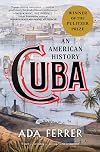
In thirty-three insightful and nuanced chapters, Ada Ferrer presents the history of Cuba spanning more than five centuries, beginning with the Spanish arrival on the island and concluding with President Obama’s visit in 2016. The author highlights the cultural, economic, and political ties between Cuba and the United States. As she shows, each country’s earliest history was strongly influenced by the weight of colonialism, and the lasting legacy of slavery as well. The Cuban government show more did not abolish slavery until 1881, and many Americans set up sugar plantations on the island to take advantage of this workforce even after it had ended in the US.
Ferrer, a Cuban American historian, has strong Cuban ties. Her parents fled Havana for Miami in 1963 when she was a baby, after Castro’s implementation of state run socialism. Throughout her professional career, she has focused her research on the island’s history. While all of the country’s eras are touched upon, the one that receives the most attention is the epoch surrounding the Fidel Castro led revolution and his leadership during the second half of the 20th century.
Two events are explored in depth: the Bay of Pigs Invasion and the Cuban Missile Crisis. While this book serves as an excellent introduction to the country’s history, just as well done is the exploration of the relationship between Cuba and the United States over five centuries. While Ferrer clearly has empathy with the Cuban people, as a historian she does not favor one country over the other, but lets the facts speak for themselves. show less
Ferrer, a Cuban American historian, has strong Cuban ties. Her parents fled Havana for Miami in 1963 when she was a baby, after Castro’s implementation of state run socialism. Throughout her professional career, she has focused her research on the island’s history. While all of the country’s eras are touched upon, the one that receives the most attention is the epoch surrounding the Fidel Castro led revolution and his leadership during the second half of the 20th century.
Two events are explored in depth: the Bay of Pigs Invasion and the Cuban Missile Crisis. While this book serves as an excellent introduction to the country’s history, just as well done is the exploration of the relationship between Cuba and the United States over five centuries. While Ferrer clearly has empathy with the Cuban people, as a historian she does not favor one country over the other, but lets the facts speak for themselves. show less

I knew little about Cuba before I read this book. I remember the Cuban missle crisis and the fear that permeated our lives, but I do not remember the Bay of Pigs fiasco. What surprised me most was how much the US and US businesses had their tentacles wrapped in, around, and through Cuba, even to the point that the Cuban government could do nothing without approval from the US. The US never having any imperialstic goals is shown clearly to be mythology.
I thought this was an incredibly well show more written book, an intriguing story to follow. Highly recommended, it certainly deserved the Pulitzer Prize. show less
I thought this was an incredibly well show more written book, an intriguing story to follow. Highly recommended, it certainly deserved the Pulitzer Prize. show less
Lists
Awards


You May Also Like


Statistics
- Works
- 4
- Members
- 737
- Popularity
- #34,455
- Rating
- 4.3
- Reviews
- 11
- ISBNs
- 20
- Languages
- 1
- Favorited
- 1