
L. M. Elliott
Author of Under a War-Torn Sky
About the Author
Laura Malone Elliott was a staff reporter for the Washingtonian Magazine and wrote two adult non-fiction books before turning to children's books. She writes historical novels under the name L. M. Elliott and writes picture books illustrated by Lynn Munsinger under her full name. Her books written show more as L. M. Elliott include A Troubled Peace, Across a War-Tossed Sea, Give Me Liberty, Flying South, and Da Vinci's Tiger. Under a War-Torn Sky won the Borders' Original Voices Award. Her picture books written as Laura Malone Elliott include Hunter's Best Friend at School, Hunter and Stripe and the Soccer Showdown, Hunter's Big Sister, A String of Hearts, and Thanksgiving Day Thanks. (Bowker Author Biography) show less
Works by L. M. Elliott
Tagged
Common Knowledge
- Legal name
- Elliott, Laura Malone
- Birthdate
- 1957-09-17
- Gender
- female
- Education
- Wake Forest University
University of North Carolina, Chapel Hill (MA|Journalism) - Occupations
- author
- Nationality
- USA
- Places of residence
- Richmond, Virginia, USA
- Associated Place (for map)
- Virginia, USA
Members
Reviews
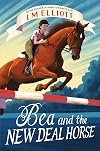
Beatrice and her little sister Vivian wake up in a hayloft to find that their father - formerly a banker - has left them with a note to ask the woman whose Virginia estate they're on to take them in, as she's the mother of their mother's college roommate. Bea observes Mrs. Scott from afar, sees no evidence of her daughter Marjorie, and decides to keep the note a secret, but offer her and her sister's services to help pick peaches and weed the vegetable patch - and help with the horses. Mrs. show more Scott is stern but kind, and allows the girls to stay, even when Viv makes a mistake that hurts stablehand Ralph. Now it's up to Bea to make up for her sister's mistake - Mrs. Scott will train her to ride in an upcoming horse show for the prize money. Bea forms an unlikely bond with a fiery chestnut horse that Mrs. Scott seems to hate, and the two become a remarkable team - but will their victory result in their separation?
Set convincingly in Depression-era Virginia during a summer of drought, with a stubborn, savvy, scrappy heroine, and developed secondary characters (Malachi is nearly blind, not from his service in the Great War but because he was attacked by whites during a veterans' parade; Mrs. Scott's two sons were killed in the war, and her daughter didn't share her love of horses; Ralph knows the family inside and out and gives Bea good advice), Bea and the New Deal Horse is perfect for horse people and historical fiction readers.
See also: Three Strike Summer by Skyler Schrempp, A Place to Hang the Moon by Kate Albus, The War That Saved My Life by Kimberly Brubaker Bradley
You have to mean what you say with a child. Adults seem to forget that. (49)
I was coming to realize Daddy just wasn't any good at the hard part of parenting. (57)
Seemed to be an awful lot of sad mysteries hanging about these folks, like a thick fog that is near impossible to navigate without tripping and busting something. (105)
"That's the thing about Mrs. Scott - if people dare her, or demean her, or she sees them being cruel, she's going to stand up to them. To her own detriment." (Malachi to Bea, 155)
But I was so tired of adults knowing things I didn't. Their keeping secrets or making decisions about me without asking what I might think. (188)
The terrible responsibilities he had shoveled onto me... (207)
"Parents sometimes do the absolute worst, most foolish things," she whispered, "thinking they are doing what's best for their children." (Mrs. Scott to Bea, 220)
No one had warned me that life could turn on a dime and with the force of an earthquake. (303)
Stubbornness? Was that all bad? If it meant staying strong in the face of terrible things and not giving up, it seemed a pretty good trait to me. (319)
"Sometimes life hands us family that has nothing to do with blood ties, Beatrice." (343) show less
Set convincingly in Depression-era Virginia during a summer of drought, with a stubborn, savvy, scrappy heroine, and developed secondary characters (Malachi is nearly blind, not from his service in the Great War but because he was attacked by whites during a veterans' parade; Mrs. Scott's two sons were killed in the war, and her daughter didn't share her love of horses; Ralph knows the family inside and out and gives Bea good advice), Bea and the New Deal Horse is perfect for horse people and historical fiction readers.
See also: Three Strike Summer by Skyler Schrempp, A Place to Hang the Moon by Kate Albus, The War That Saved My Life by Kimberly Brubaker Bradley
You have to mean what you say with a child. Adults seem to forget that. (49)
I was coming to realize Daddy just wasn't any good at the hard part of parenting. (57)
Seemed to be an awful lot of sad mysteries hanging about these folks, like a thick fog that is near impossible to navigate without tripping and busting something. (105)
"That's the thing about Mrs. Scott - if people dare her, or demean her, or she sees them being cruel, she's going to stand up to them. To her own detriment." (Malachi to Bea, 155)
But I was so tired of adults knowing things I didn't. Their keeping secrets or making decisions about me without asking what I might think. (188)
The terrible responsibilities he had shoveled onto me... (207)
"Parents sometimes do the absolute worst, most foolish things," she whispered, "thinking they are doing what's best for their children." (Mrs. Scott to Bea, 220)
No one had warned me that life could turn on a dime and with the force of an earthquake. (303)
Stubbornness? Was that all bad? If it meant staying strong in the face of terrible things and not giving up, it seemed a pretty good trait to me. (319)
"Sometimes life hands us family that has nothing to do with blood ties, Beatrice." (343) show less
 This review was written for LibraryThing Early Reviewers.
First sentence: I woke up in a billowing pile of fresh-cut hay, wrapped in its miraculous smells--of buttercups, of those miniature fuzzy wild daisies, of grasshoppers. Not the big, prickly legged locusts that spit tobacco juice but the sweet little sliver of green grasshoppers that look like tiny blades of grass. No needles of dried-up, dead-yellow straw sticking and tickling either. Soft, like sleeping on a little mountain of emerald-colored lace.
Premise/plot: Bea and Vivian are abandoned show more (essentially) by their father and left in the barn of their mother's college roommate's mother's Virginia horse farm. He leaves a note to his eldest, Bea, explaining just why he's leaving them there. (Not why he's leaving perhaps, but why there.) The novel is set during the early years of the Depression. (FDR is not president yet, though an election year is coming up). Their father, a banker, has lost everything--including hope that he can take care of his two little girls. Mrs. Scott, who owns the horse farm, is on hard times herself; she may lose everything too. Bea doesn't reveal all, but she does her best to prove useful to Mrs. Scott. Her and Vivian will do their best to contribute enough to the house to stay welcome. Bea's usefulness with horses comes in handy.
My thoughts: I do not like horse books. Usually. I did LOVE, LOVE, LOVE this horse book, however. It's good to know there are exceptions to the rule. (Black Beauty also comes to mind as an exception.) I really loved the characters--both major and minor characters. The story was engaging. I didn't think I could care about horses and horse competitions, but, I was very invested in the outcome. show less
Premise/plot: Bea and Vivian are abandoned show more (essentially) by their father and left in the barn of their mother's college roommate's mother's Virginia horse farm. He leaves a note to his eldest, Bea, explaining just why he's leaving them there. (Not why he's leaving perhaps, but why there.) The novel is set during the early years of the Depression. (FDR is not president yet, though an election year is coming up). Their father, a banker, has lost everything--including hope that he can take care of his two little girls. Mrs. Scott, who owns the horse farm, is on hard times herself; she may lose everything too. Bea doesn't reveal all, but she does her best to prove useful to Mrs. Scott. Her and Vivian will do their best to contribute enough to the house to stay welcome. Bea's usefulness with horses comes in handy.
My thoughts: I do not like horse books. Usually. I did LOVE, LOVE, LOVE this horse book, however. It's good to know there are exceptions to the rule. (Black Beauty also comes to mind as an exception.) I really loved the characters--both major and minor characters. The story was engaging. I didn't think I could care about horses and horse competitions, but, I was very invested in the outcome. show less
What a gem! Set in the great depression it follows Bea mainly. A young girl who's father has left her and her younger sister behind to look for work. Leaving a note he tells them to go see their deceased mother's best friend and her mother; Mrs. Scott. Bea realizes their father left them at Mrs. Scott's horse stables. Mrs. Scott is such a fully developed character, in my head she's Colleen Dewhurst when she played Marilla Cuthbert. She appears very tough and is a good disciplarian but she is show more very devoted to her friends and others who are wronged. Including animals, which is how she ended up with the New Deal Horse. The horse that she bought the day the world stopped. We find out Mrs. Scott's family life has been very frayed by the war and that horse. Bea is the only one that can calm her, and given the enormous debt Mrs. Scott is in she trains Bea for the horse show. The narrative and pacing is very well paced and centered. The characters are developed and you can quickly see why they have those reactions to certain things. Bea is a great main character, she's very observant and uses that to help understand how to speak to Mrs. Scott. The author reminds us how very bleak it was for others during the Great Depression. How people had to sell off everything they loved, including sending their children away to family members who were a little better off so they wouldn't starve. Everything depended on good crops, rain is needed. There's a hilarious part where a rainmaker tries to appease to Mrs. Scott and a great line her stating 'rich people think they can buy everything even the rain'. We see racial injustice, as well. Doctors who are black can't admit patients, soldiers coming home from war still not seen worthy. The closer we get to the race the more hope you feel for the characters which leads to a satisfying ending. I am definitely going to read more from L.M Elliot, she really put a lot of thought and heart in this novel. I would love a sequel. show less
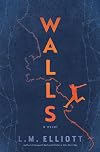
Walls offers a compelling glimpse into the tense world of Cold War Berlin just before the Berlin Wall’s sudden construction in 1961. Told through the eyes of Drew, an American military brat and promising athlete, and his cousin Matthias, who lives in East Berlin under communist rule, the novel explores the ideological and emotional divides that separated families and nations.
Elliott does an excellent job showing both sides of this divided city, presenting the complex realities of life in show more East and West Berlin through the nuanced friendship that grows between Drew and Matthias. Their debates over capitalism, socialism, the civil rights movement, and the allure of forbidden rock ’n’ roll music illustrate the clash of ideas that shaped the era. The threat of the Stasi and the harsh consequences Matthias faces for his friendship with Drew add genuine tension and urgency.
The book’s historical detail—enhanced by real photographs and headlines—helps bring the time period to life in an accessible way for younger readers. It’s refreshing to see a story that doesn’t simplify the Cold War into “good guys vs. bad guys” but rather presents both sides with empathy and complexity.
Overall, Walls is a well-crafted and thoughtful historical fiction that balances personal drama with larger political tensions. It’s an engaging read that educates while telling a story of loyalty, courage, and the hope for understanding across divides. show less
Elliott does an excellent job showing both sides of this divided city, presenting the complex realities of life in show more East and West Berlin through the nuanced friendship that grows between Drew and Matthias. Their debates over capitalism, socialism, the civil rights movement, and the allure of forbidden rock ’n’ roll music illustrate the clash of ideas that shaped the era. The threat of the Stasi and the harsh consequences Matthias faces for his friendship with Drew add genuine tension and urgency.
The book’s historical detail—enhanced by real photographs and headlines—helps bring the time period to life in an accessible way for younger readers. It’s refreshing to see a story that doesn’t simplify the Cold War into “good guys vs. bad guys” but rather presents both sides with empathy and complexity.
Overall, Walls is a well-crafted and thoughtful historical fiction that balances personal drama with larger political tensions. It’s an engaging read that educates while telling a story of loyalty, courage, and the hope for understanding across divides. show less
Lists
Awards


You May Also Like


Associated Authors
Statistics
- Works
- 21
- Members
- 3,527
- Popularity
- #7,200
- Rating
- 3.9
- Reviews
- 94
- ISBNs
- 133
