
Brian Stableford (1948–2024)
Author of The Empire of Fear
About the Author
Author Brian M. Stableford was born in Shipley, Yorkshire, U. K. on July 25, 1948. He received an undergraduate degree in biology from the University of York in 1969 and a Ph.D. in sociology in 1979. Before becoming a full-time writer in 1988, he taught sociology at the University of Reading. He show more has published over 100 books, including science fiction and fantasy works, non-fiction, translations, and learned articles. He has written under the pseudonym of Brian Craig as well as under Brian Stableford and Brian M. Stableford. He has received numerous awards for both fiction and non-fiction including the British Science Fiction Award (1995), the Distinguished Scholarship Award of the International Association for the Fantastic in the Arts (1987), the J. Lloyd Eaton Award (1987), the Science Fiction Research Association's (SFRA) Pioneer Award (1996), and the SFRA's Pilgrim Award (1999). (Bowker Author Biography) show less
Series
Works by Brian Stableford
Writing Fantasy & Science Fiction: And Getting Published (Teach Yourself) (1997) 82 copies, 1 review
The Second Dedalus Book of Decadence (The Black Forrest) (v. 2) (1992) — Editor — 60 copies, 3 reviews
The Dedalus Book of British Fantasy: 19th Century (European Literary Fantasy Anthologies) (1991) — Editor — 47 copies
Tales of the Wandering Jew: A Collection of Contemporary and Classic Stories (1991) — Editor; Contributor — 29 copies
Scientific Romance: An International Anthology of Pioneering Science Fiction (2016) — Editor — 20 copies, 2 reviews
Mortimer Gray's History Of Death 10 copies
The House of Mourning {short story} 7 copies
The Pipes of Pan {novelette} 7 copies
The Sociology of Science Fiction (I.O. Evans Studies in the Philosophy & Criticism of Literatu) (1987) 6 copies
The Plurality of Imaginary Worlds: The Evolution of French Roman Scientifique (2016) 6 copies, 1 review
Snowball in Hell 3 copies
Weird Fiction in France: A Showcase Anthology of Its Origins and Development (2020) — Editor — 3 copies
The Engineer and the Executioner 3 copies
The Highway Code 3 copies
After the Stone Age 3 copies
The Age of Innocence 3 copies
Once Upon a Future — Contributor — 2 copies
Days of Glory (Dies Irae, #1) 2 copies
O Império do Medo Livro 1 2 copies
Totentanz 2 copies
The Way of the Witchfinder 2 copies
The Phantom of Yremy 2 copies
The Road to Damnation 2 copies
A Gardener in Parravon 2 copies
Taking the Piss 2 copies
The Poisoned Chalice 2 copies
The Sun's Tears [short story] 2 copies
To The Bad 2 copies
Some Like It Hot [short fiction] 2 copies
Chanterelle 2 copies
Nectar 2 copies
Hot Blood 2 copies
THE DAVID LYDYARD TRILOGY: Book (1) One: The Werewolves of London; Book (2) Two: The Angel of Pain; Book (3) Three: The (1994) 2 copies
Art in the Blood 2 copies
Curiouser and Curioser 2 copies
Rogue Terminator 2 copies
The Oedipus Effect 2 copies
The Invisible Worm 2 copies
The Path of Progress 2 copies
Ashes and Tombstones {short story} 2 copies
The Picture 1 copy
The Lost Romance 1 copy
Lucifer's Comet 1 copy
The Philosopher's Stone 1 copy
The Age of Lead 1 copy
The People of the Pole 1 copy
The Tyranny of the Word 1 copy
News From The Moon 1 copy
THE TRIAL 1 copy
The Storyteller's Tale 1 copy
Sortilege and Serendipity 1 copy
The Child-Stealers [The Empire Of The Necromancers 2 of 2] [Cagliostro; John Devil; Gregory Temple] 1 copy
Casualty 1 copy
Busy Dying 1 copy
Sheena 1 copy
Out Of Touch 1 copy
Judas Story 1 copy
The Milk Of Human Kindness 1 copy
The Facts of Life 1 copy
What Can Chloë Want? 1 copy
The Temptation of St Anthony 1 copy
The Mandrake Garden 1 copy
Behind The Wheel 1 copy
In The Flesh 1 copy
The Elixir of Youth 1 copy
Tread Softly 1 copy
Il giogo del tempo 1 copy
The Face Of An Angel 1 copy
The Miracle Of Zunderburg 1 copy
The Sinister Madame Atomos 1 copy
The Truth About Pickman 1 copy
The End 1 copy
The Holocaust Of Ecstasy 1 copy
The Innsmouth Heritage 1 copy
The Power of Prayer 1 copy
Creators of Science Fiction: Essays on Authors, Editors, and Publishers Who Shaped Science Fiction (2010) 1 copy
The Skin Trade 1 copy
O For A Fiery Gloom And Thee 1 copy
The Return Of The Djinn 1 copy
Reconstruction 1 copy
The Shepherd's Daughter 1 copy
Kalamada's Blessing 1 copy
Aphrodite And The Ring 1 copy
The Cult Of Selene 1 copy
Worse Than The Disease 1 copy
The Haunted Nursery 1 copy
The Cosmic Perspective 1 copy
The Great Armada 1 copy
A Career in Sexual Chemistry 1 copy
Space, Time, and Infinity: Essays on Fantastic Literature (I.O. Evans Studies in the Philosophy and Criticism of Litera) (2006) 1 copy
The Phantom Of Teirbrun 1 copy
Quality Control 1 copy
Self-sacrifice 1 copy
Ice And Fire 1 copy
Custer's Last Stand 1 copy
Plastic Man 1 copy
The Beauty Contest 1 copy
Nephthys 1 copy
Black Nectar 1 copy
Mens Sana In Corpore Sano 1 copy
A Saint's Progress 1 copy
Enlightenment 1 copy
An Offer Of Oblivion 1 copy
Fans From Hell 1 copy
Murphy's Grail 1 copy
The Requiem Masque 1 copy
Shadows Of The Past 1 copy
Associated Works
The Thackery T. Lambshead Pocket Guide to Eccentric and Discredited Diseases (2003) — Contributor — 809 copies, 20 reviews
The Encyclopedia of Science Fiction (1993) — Contributing Editor, Contributor — 597 copies, 10 reviews
The Year's Best Science Fiction: Twenty-Fifth Annual Collection (2008) — Contributor — 511 copies, 3 reviews
The Year's Best Science Fiction: Eighteenth Annual Collection (2001) — Contributor — 504 copies, 2 reviews
The Year's Best Science Fiction: Fifteenth Annual Collection (1998) — Contributor — 468 copies, 2 reviews
The Year's Best Science Fiction: Thirteenth Annual Collection (1996) — Contributor — 454 copies, 4 reviews
The Best of the Best: 20 Years of the Year's Best Science Fiction (2005) — Contributor — 437 copies, 20 reviews
Sirens and Other Daemon Lovers: Magical Tales of Love and Seduction (1998) — Contributor — 374 copies, 7 reviews
The Year's Best Science Fiction: Seventh Annual Collection (1990) — Contributor — 310 copies, 2 reviews
The Vampire Archives: The Most Complete Volume of Vampire Tales Ever Published (2007) — Contributor — 216 copies, 5 reviews
Nightmares of an Ether-Drinker (1895) — Introduction/Translator, some editions — 143 copies, 3 reviews
The Chronicles of the Holy Grail: The Ultimate Quest from the Age of Arthurian Literature (1996) — Contributor — 79 copies, 1 review
Vampire City (1875) — adaptor, translator, annotator, introduction, some editions — 68 copies, 3 reviews
Five Novels: Madame Bovary / Salammbô / Sentimental Education / The Temptation of Saint Anthony / Bouvard and Pécuchet (2007) — Introduction — 65 copies, 1 review
The Eagle Has Landed: 50 Years of Lunar Science Fiction (2019) — Contributor; Contributor — 45 copies, 2 reviews
The Steampunk Megapack: 26 Modern and Classic Steampunk Stories (2013) — Contributor — 43 copies, 1 review
Dislocations: Nine Stories of Speculation and Imagination (2007) — Contributor — 38 copies, 2 reviews
Celebration: Commemorating the 50th Anniversary of the British Science Fiction Association (2008) — Contributor — 37 copies, 1 review
Grave Predictions: Tales of Mankind’s Post-Apocalyptic, Dystopian and Disastrous Destiny (2016) 35 copies, 7 reviews
Science Fiction Writers: Critical Studies of the Major Authors From the Early Nineteenth Century to the Present Day (1982) — Contributor — 33 copies
Searchers After Horror: New Tales of the Weird and Fantastic (2014) — Contributor — 30 copies, 3 reviews
The Freedom of Fantastic Things: Selected Criticism on Clark Ashton Smith (2006) — Contributor — 26 copies
The Crocodile, or the War Between Good and Evil (1996) — Adapter, some editions — 22 copies, 3 reviews
Postscripts Magazine, Issue 15: Worldcon 2008 Special (2008) — Contributor, some editions — 15 copies
Extreme Planets: A Science Fiction Anthology of Alien Worlds (Chaosium fiction) (2014) — Contributor — 15 copies, 1 review
The Magazine of Fantasy and Science Fiction August 1988, Vol. 75, No. 2 (1988) — Contributor — 13 copies
Isaac Asimov's Science Fiction Magazine: Vol. 14, No. 13 [December 1990] (1990) — Contributor — 12 copies
Vampires: Classic Tales (Dover Mystery, Detective, Ghost Stories and Other Fiction) (2011) — Contributor — 12 copies
Choice Words: The Borgo Press Book of Writers Writing About Writing (2009) — Contributor — 9 copies, 1 review
The Story of the King of Bohemia and his Seven Castles (2023) — Translator, some editions — 6 copies
Contes philosophiques et moraux de Jonathan le visionnaire (2015) — Adapter, some editions — 4 copies
Once Upon a Future: The Third Borgo Press Book of Science Fiction Stories (2011) — Contributor — 2 copies, 1 review
Penthesilea — Translator, some editions — 2 copies
Tagged
Common Knowledge
- Legal name
- Stableford, Brian Michael
- Other names
- Craig, Brian
Amery, Francis - Birthdate
- 1948-07-25
- Date of death
- 2024-02-24
- Gender
- male
- Education
- University of York (BA|1969|Ph.D|1979)
- Occupations
- writer
editor
translator - Organizations
- University of Reading
- Awards and honors
- Guest of Honour, Eastercon, UK (2002)
SFRA Pilgrim Award (1999)
IAFA Distinguished Scholarship (1987)
British Science Fiction Award (1995)
J. Lloyd Eaton Award (1987) - Nationality
- UK
- Birthplace
- Shipley, Yorkshire, England, UK
- Map Location
- England, UK
Members
Discussions
Found: Sci-Fi/Dystopia/Horror/Adventure novel published in '00s, I think. in Name that Book (January 1)
SF : characters include a Mouse and a Librarian in Name that Book (April 2009)
Reviews
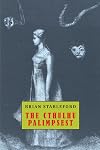
“I hesitated for a long time over the possibility of producing the long-projected final volume, in spite of the nagging dissatisfaction of its incompletion, but, still having to fill in time after my supposed retirement from writing, occasioned by old age and ill-health, I finally decided to make the attempt. The race against dementia and death was a close-run affair, and the margin of victory not much more than a short head, but I limped to the finish line, sustained by bloody-mindedness show more and the closeness of the Necronomicon to my stubborn heart . . . and if I have contrived to persuade someone to publish it posthumously, here it is.”
No, it’s not a fictional narrator opening some Lovecraftian narration. That is the conclusion of the late Stableford’s introduction, “The Back Story”, to his final work. It is indeed the capstone of his Auguste Dupin series that opened with The Legacy of Erich Zann. Not only does the series pay homage to Stableford’s literary hero Edgar Allan Poe and H. P. Lovecraft’s Cthulhu Mythos but works in various historical figures from early 18th century France and elements from various 19th century works of the occult and weird fiction. These are “metaphysical fantasies” and dense works. I won’t say they are totally unique. I haven’t read every book ever written in various languages. But they are like nothing I’ve read. The series works in many of Stableford’s late career interests besides Poe and Lovecraft: evolutionary processes, French literature and culture, early scientific theories, and the effects of art on human consciousness.
Unsurprisingly, Stableford says the series has “sold miserably” in English, but it has done considerably better in French translations, and Stableford dedicates the work to the late Robert Reginald and his Borgo Press that first published the work.
While Stableford’s introduction provides a synopsis of the plots and characters of the previous seven installments, I wouldn’t advise reading this novel before them. (And why deprive yourself the pleasure of doing that?) I was glad it thematically incorporated the events of the sixth installment, Journey to the Core of Creation, which always seemed a bit of an outlier.
It’s February 1848 in Paris, and revolution is in the air with the overthrow of the monarchy and the beginning of the Second Republic mere weeks away.
It’s not entirely unforeseen. The late statistician Blaise Thibodeaux, with his theory of cycles in history, predicted years ago the upcoming regime change. The secret police are in disarray with shifting loyalties. Dupin’s friend, the Prefect of Police, has resigned, and no one knows his whereabouts.
But others have their eye on something much more revolutionary: raising mysterious Cthulhu sleeping, “encrypted”, in R’lyaieh.
They will include a scholar interested in “diabolical harmonies” which he thinks are linked to Erich Zann’s composition. A palimpsest that may be that music has been found, undiscovered on the back of a painting seized decades ago in the French Revolution. It also indicates 1848 is a significant time. Lovecraft, in “The Music of Eric Zann” and “The Dunwich Horror” suggested the importance of music and sound in dealing with his entities, but this series uses the idea much more heavily.
Our narrator, as always, is Samuel Reynolds. (Poe aficionados will recognize the name Reynolds as one shouted by Poe in the delirium of his dying days.) On his doorstep, a “Child of the Ocean” is presented to him by Jacob Pym, cousin of Arthur Gordon Pym (hero of Poe’s eponymous novel, of course, and Arthur puts in an appearance too). She was found on an island. On her back is a tattoo which may provide another way to “de-encrypt” Cthulhu. At least, Dupin’s housekeeper thinks so. She has her own secrets which include membership in an order of Breton sorcerers. She whisks the girl away from the house and the eyes of Comte St. Germain – whose claim to be an immortal still has not been resolved. Also interested is a mesmerist that St. Germain claims is one of the Nine Immortals who allegedly dedicate themselves to stopping occultist from going too far.
Earlier, on a cold night, Dupin and Reynolds investigate the music coming from a deserted house. Is it someone playing “diabolical harmonies”?
And what is Cthulhu? The devil, the Beast whose return is prophesized by a heretical Christian sect? An extraterrestrial? A product of evolution on Earth? Can he influence people? If so, how? Does he entirely exist in our dimension? And would raising him, even if it was catastrophic, be a good thing? Think of the knowledge, and isn’t knowledge always good?
And can insignificant humans make a contribution to the “symphony of eternity”?
Reynolds will encounter ghosts of several varieties including ghost pirates and their spectral ship, an Indian revolutionary, a vampire, and several occultists. Always the eternal observer, a man who, St. Germain sneers, always has to consult Auguste Dupin to know what to think, will finally play a pivotal role.
Dazzling and dense, this is a fine novel and ending to the series.
And, on the last page, Stableford leaves us with some of his sardonic humor.
The ghost of Jana Valdemar, a woman Reynolds seems to have been intimate with, tells Reynolds “You’d be wiser to forget me, but you probably won’t.”
He replies, “Probably not . . . but there’s always hope in dementia and death.” show less
No, it’s not a fictional narrator opening some Lovecraftian narration. That is the conclusion of the late Stableford’s introduction, “The Back Story”, to his final work. It is indeed the capstone of his Auguste Dupin series that opened with The Legacy of Erich Zann. Not only does the series pay homage to Stableford’s literary hero Edgar Allan Poe and H. P. Lovecraft’s Cthulhu Mythos but works in various historical figures from early 18th century France and elements from various 19th century works of the occult and weird fiction. These are “metaphysical fantasies” and dense works. I won’t say they are totally unique. I haven’t read every book ever written in various languages. But they are like nothing I’ve read. The series works in many of Stableford’s late career interests besides Poe and Lovecraft: evolutionary processes, French literature and culture, early scientific theories, and the effects of art on human consciousness.
Unsurprisingly, Stableford says the series has “sold miserably” in English, but it has done considerably better in French translations, and Stableford dedicates the work to the late Robert Reginald and his Borgo Press that first published the work.
While Stableford’s introduction provides a synopsis of the plots and characters of the previous seven installments, I wouldn’t advise reading this novel before them. (And why deprive yourself the pleasure of doing that?) I was glad it thematically incorporated the events of the sixth installment, Journey to the Core of Creation, which always seemed a bit of an outlier.
It’s February 1848 in Paris, and revolution is in the air with the overthrow of the monarchy and the beginning of the Second Republic mere weeks away.
It’s not entirely unforeseen. The late statistician Blaise Thibodeaux, with his theory of cycles in history, predicted years ago the upcoming regime change. The secret police are in disarray with shifting loyalties. Dupin’s friend, the Prefect of Police, has resigned, and no one knows his whereabouts.
But others have their eye on something much more revolutionary: raising mysterious Cthulhu sleeping, “encrypted”, in R’lyaieh.
They will include a scholar interested in “diabolical harmonies” which he thinks are linked to Erich Zann’s composition. A palimpsest that may be that music has been found, undiscovered on the back of a painting seized decades ago in the French Revolution. It also indicates 1848 is a significant time. Lovecraft, in “The Music of Eric Zann” and “The Dunwich Horror” suggested the importance of music and sound in dealing with his entities, but this series uses the idea much more heavily.
Our narrator, as always, is Samuel Reynolds. (Poe aficionados will recognize the name Reynolds as one shouted by Poe in the delirium of his dying days.) On his doorstep, a “Child of the Ocean” is presented to him by Jacob Pym, cousin of Arthur Gordon Pym (hero of Poe’s eponymous novel, of course, and Arthur puts in an appearance too). She was found on an island. On her back is a tattoo which may provide another way to “de-encrypt” Cthulhu. At least, Dupin’s housekeeper thinks so. She has her own secrets which include membership in an order of Breton sorcerers. She whisks the girl away from the house and the eyes of Comte St. Germain – whose claim to be an immortal still has not been resolved. Also interested is a mesmerist that St. Germain claims is one of the Nine Immortals who allegedly dedicate themselves to stopping occultist from going too far.
Earlier, on a cold night, Dupin and Reynolds investigate the music coming from a deserted house. Is it someone playing “diabolical harmonies”?
And what is Cthulhu? The devil, the Beast whose return is prophesized by a heretical Christian sect? An extraterrestrial? A product of evolution on Earth? Can he influence people? If so, how? Does he entirely exist in our dimension? And would raising him, even if it was catastrophic, be a good thing? Think of the knowledge, and isn’t knowledge always good?
And can insignificant humans make a contribution to the “symphony of eternity”?
Reynolds will encounter ghosts of several varieties including ghost pirates and their spectral ship, an Indian revolutionary, a vampire, and several occultists. Always the eternal observer, a man who, St. Germain sneers, always has to consult Auguste Dupin to know what to think, will finally play a pivotal role.
Dazzling and dense, this is a fine novel and ending to the series.
And, on the last page, Stableford leaves us with some of his sardonic humor.
The ghost of Jana Valdemar, a woman Reynolds seems to have been intimate with, tells Reynolds “You’d be wiser to forget me, but you probably won’t.”
He replies, “Probably not . . . but there’s always hope in dementia and death.” show less
Don’t ever do that again.
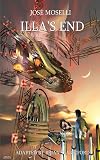
That, speculates Brian Stableford in his “Introduction”, is what Moselli’s usual publisher, Maison Offenstadt, told him after reading this “recklessly ultra-violent” story serialized as La Fin d’Illa in 1925 in Sciences et Voyages. It may, speculates Jean-Marc and Randy Lofficier in The Handbook of French Science Fiction, also be one of the reasons the publisher lost a court case in 1925The Frenetic People and Renee Dunan’s The Ultimate Pleasure. show more Unlike those stories, though, Moselli’s novel takes place in the distant past in the lost land of Gondawanaland.
The prologue starts in 1875 with the discovery, on a deserted Pacific Island, of a strange manuscript written on metallic sheets and an odd stone ball. The ship’s captain doesn’t end up selling them for the amount he hoped, and they end up being sold for a pittance to an antique dealer. Eventually, they are bought by a medical doctor, Akinson, in San Francisco who, in 1905, mails his translation of that manuscript to a friend in Washington D.C. Shortly afterwards, Akinson’s housemaid throws that stone balls in the fire – and the San Francisco Earthquake of 1905 results.
That manuscript is the account of one Xié, a general of Illa, one of two cities in the distant past on Gondwanaland. It’s the account of a dying, rather psychopathic, boastful man. He’s not much of a sympathetic character, but he’s determined, in the slim hope his writing will be found, that the future know of the ignoble Rair and that he, Xié, was the savior of Illa. Except, almost right from the beginning, we know he was the destroyer of Illa.
Illa is a city, a massive cylinder with its government on top and the earth beneath the domain of apes and food processing plants. Stableford speculates that this book is a response to Henri Allorge’s The Great Cataclysm from 1922 which may have irked Moselli by its literary acclaim and pacificist message. And there are similarities.
Allorge’s novel, taking up a motif of many French science fiction stories I’ve read, has artificial food in it. Not really food as we know it but liquors and pastes. Moselli’s Illans have gone a step further. They don’t even eat. Rather, massive amounts of pigs and apes are killed and converted into a nourishing radiation that feeds the Illans. Only the brutish head overseer of the apes eats what we would call food.
And those apes aren’t really apes, but Africans. Through “appropriate nourishment and cleverly designed exercises”, their mental abilities have been deliberately degraded while their strength has been increased. They have also been bred to have four hands. In Allorge’s novel, intelligent apes are domestic and tranquil servants who only cause trouble towards the end of that novel. Here they are brutal miners and the enforcers, armed with poison gas grenades and matter disintegrators, for Limm, head of the secret police.
And, like Allorge’s novel, Illa has an enemy, the much larger city of Nour.
Apart from those ape policeman, is Illa a good place to live? Well, Xié tells us the “Queen of the World” is a happy if monotonous place. But Xié is a warrior. We learn almost nothing about Illa’s culture or arts or if it even has any.
But we learn a lot about its intrigues and factions which are reminiscent of real ones that would arise in the Soviet Union and Nazi Germany.
Illa is another argument, like Dunan and Pérochon’s novels, that you don’t want scientists running things. Here, that’s Rair, Illa’s head scientist, inventor of torture devices and also that elaborate process of converting flesh to nourishing radiation.
Like Dunan’s head scientist, Broun, Rair is concerned with matters of health. He’s decided that he can improve his food plants by using humans instead of pigs or apes. That will extend the lifespans of Illans. And he knows just the place to get the food: Nour. And, to prove a point, he’s not even going to bother getting the Supreme Council’s approval to launch a war on Nour to force an annual tribute of suitable foodstock in the form of its citizens.
Xié is asked to lead the military effort. He’s not pleased. He despises Rair, doesn’t like his usurption of authority, and seems to have moral qualms about using Nourans as food.
But Rair has his methods of persuasion, those torture chambers and thorough surveillance of key political figures like Xié and his friends, and Limm is utterly loyal to Rair. In fact, one of his apes stabs Xié’s daughter at the novel’s beginning in a not so subtle intimidation. The daughter is in love with Rair’s grandson, and Xié likes his perspective son-in-law.
But, for not entirely clear reasons, Xié does participate in that attack which brings on the beginning of the end.
Multiple imprisonments, escapes, attack and counterattack, war in the air and underground, a brutal ape revolt, flight, and a whole lot of dead people are the result.
In the violent climax, Xié will ponder if he’s become a bit of a brute himself. But that doesn’t stop him from setting Illa’s ultimate weapon, the zero stone, the very same material that caused an earthquake in 1905, to detonate. That’s the great savior of Illa.
Stableford, in his introduction and, unusually, in an “Afterward”, speculates on Moselli’s motives — boredom or to make a moral or aesthetic point or an extreme example of “melodramatic inflation” – in writing such a violent, brutal, and, (for the time) disgusting story. With unusual caustic irony, Stableford talks about how the story calls into question the morality of the revenge tale, our automatic identification with a first-person narrator (which Mosselli rarely employed), and fiction writers pandering to readers’ love of disgust and danger.
There’s no doubt that Moselli’s short novel is lively, exciting, and has a breakneck pace. No other French writer did anything like it before. And neither Moselli – or anyone else – did something like it again. show less
That, speculates Brian Stableford in his “Introduction”, is what Moselli’s usual publisher, Maison Offenstadt, told him after reading this “recklessly ultra-violent” story serialized as La Fin d’Illa in 1925 in Sciences et Voyages. It may, speculates Jean-Marc and Randy Lofficier in The Handbook of French Science Fiction, also be one of the reasons the publisher lost a court case in 1925The Frenetic People and Renee Dunan’s The Ultimate Pleasure. show more Unlike those stories, though, Moselli’s novel takes place in the distant past in the lost land of Gondawanaland.
The prologue starts in 1875 with the discovery, on a deserted Pacific Island, of a strange manuscript written on metallic sheets and an odd stone ball. The ship’s captain doesn’t end up selling them for the amount he hoped, and they end up being sold for a pittance to an antique dealer. Eventually, they are bought by a medical doctor, Akinson, in San Francisco who, in 1905, mails his translation of that manuscript to a friend in Washington D.C. Shortly afterwards, Akinson’s housemaid throws that stone balls in the fire – and the San Francisco Earthquake of 1905 results.
That manuscript is the account of one Xié, a general of Illa, one of two cities in the distant past on Gondwanaland. It’s the account of a dying, rather psychopathic, boastful man. He’s not much of a sympathetic character, but he’s determined, in the slim hope his writing will be found, that the future know of the ignoble Rair and that he, Xié, was the savior of Illa. Except, almost right from the beginning, we know he was the destroyer of Illa.
Illa is a city, a massive cylinder with its government on top and the earth beneath the domain of apes and food processing plants. Stableford speculates that this book is a response to Henri Allorge’s The Great Cataclysm from 1922 which may have irked Moselli by its literary acclaim and pacificist message. And there are similarities.
Allorge’s novel, taking up a motif of many French science fiction stories I’ve read, has artificial food in it. Not really food as we know it but liquors and pastes. Moselli’s Illans have gone a step further. They don’t even eat. Rather, massive amounts of pigs and apes are killed and converted into a nourishing radiation that feeds the Illans. Only the brutish head overseer of the apes eats what we would call food.
And those apes aren’t really apes, but Africans. Through “appropriate nourishment and cleverly designed exercises”, their mental abilities have been deliberately degraded while their strength has been increased. They have also been bred to have four hands. In Allorge’s novel, intelligent apes are domestic and tranquil servants who only cause trouble towards the end of that novel. Here they are brutal miners and the enforcers, armed with poison gas grenades and matter disintegrators, for Limm, head of the secret police.
And, like Allorge’s novel, Illa has an enemy, the much larger city of Nour.
Apart from those ape policeman, is Illa a good place to live? Well, Xié tells us the “Queen of the World” is a happy if monotonous place. But Xié is a warrior. We learn almost nothing about Illa’s culture or arts or if it even has any.
But we learn a lot about its intrigues and factions which are reminiscent of real ones that would arise in the Soviet Union and Nazi Germany.
Illa is another argument, like Dunan and Pérochon’s novels, that you don’t want scientists running things. Here, that’s Rair, Illa’s head scientist, inventor of torture devices and also that elaborate process of converting flesh to nourishing radiation.
Like Dunan’s head scientist, Broun, Rair is concerned with matters of health. He’s decided that he can improve his food plants by using humans instead of pigs or apes. That will extend the lifespans of Illans. And he knows just the place to get the food: Nour. And, to prove a point, he’s not even going to bother getting the Supreme Council’s approval to launch a war on Nour to force an annual tribute of suitable foodstock in the form of its citizens.
Xié is asked to lead the military effort. He’s not pleased. He despises Rair, doesn’t like his usurption of authority, and seems to have moral qualms about using Nourans as food.
But Rair has his methods of persuasion, those torture chambers and thorough surveillance of key political figures like Xié and his friends, and Limm is utterly loyal to Rair. In fact, one of his apes stabs Xié’s daughter at the novel’s beginning in a not so subtle intimidation. The daughter is in love with Rair’s grandson, and Xié likes his perspective son-in-law.
But, for not entirely clear reasons, Xié does participate in that attack which brings on the beginning of the end.
Multiple imprisonments, escapes, attack and counterattack, war in the air and underground, a brutal ape revolt, flight, and a whole lot of dead people are the result.
In the violent climax, Xié will ponder if he’s become a bit of a brute himself. But that doesn’t stop him from setting Illa’s ultimate weapon, the zero stone, the very same material that caused an earthquake in 1905, to detonate. That’s the great savior of Illa.
Stableford, in his introduction and, unusually, in an “Afterward”, speculates on Moselli’s motives — boredom or to make a moral or aesthetic point or an extreme example of “melodramatic inflation” – in writing such a violent, brutal, and, (for the time) disgusting story. With unusual caustic irony, Stableford talks about how the story calls into question the morality of the revenge tale, our automatic identification with a first-person narrator (which Mosselli rarely employed), and fiction writers pandering to readers’ love of disgust and danger.
There’s no doubt that Moselli’s short novel is lively, exciting, and has a breakneck pace. No other French writer did anything like it before. And neither Moselli – or anyone else – did something like it again. show less
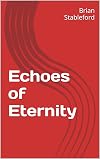
It’s 1830 in Paris and 11 PM in the Cathedral of Notre Dame Cathedral at the end of the octave of Easter.
Brother Barnabas, a Dominican monk, is making the rounds. He’s a learned man, a sometime agent of the Inquisition who goes to literary salons. He’s surprised to see one Doctor Prospero there. He knows the Englishman behind that pseudonym is one of the occultist he spies on in those salons. He’s somewhat ambivalent about seeing Prospero. Perhaps he can save Prospero’s soul from show more damnation unlike Erich Zann’s.
Prospero plays violin in various Parisian theaters and has been looking for Zann’s music and doesn’t buy Barnabas’ claim the man’s music and violin disappeared after his death. He’s also interested in finding the real Harmonies de l’Enfer. But Prospero isn’t in the cathedral at this late hour for religious instruction or solace.
He’s there to hear the Quasimodo Peal. That was the ringing of the bells every Sunday, including Quasimodo Sunday – the Sunday following Easter.
That can’t be done, says Barnabas. After the French Revolution, nine of the cathedral’s ten bells were melted down for cannon. Only one, Emmanuel, remains. The Peal will never be heard again. Furthermore, even when the bells were there, the peal wasn’t identical each time given the variations introduced by the bellringers. Barnabas heard the peal many times when young.
The matter of the Peal came up in a discussion among three writers recently. Victor Hugo, who is starting to make a reputation, is interested in Notre Dame. Paul Lacroix is interested in tracing the occult and esoteric origins of the legend of the danse macabre. Blaise Thibodeaux (like Lacroix, he appears in the Dupin series) is a statistician whose theory concerns cycles in history, “temporal resonance”, of which music is a part.
Barnabas thinks Thibodeaux is a “fabricator of nonsense, like so many modern so-called scientists.” He is well aware of Thibodeaux’s theory of thirteen year cycles. The crucial dates, says Prospero, are when the peal had a “dire effect”. They are, to Prospero, perhaps linked to the “harmonies of Hell” he seeks.
Books like the Harmonies de l’Enfer can open the way, says Prospero.
“’The truth, however, is that the world is vaster, stranger and more ominous than we imagine—vaster, stranger and more ominous than we can imagine, except in brief moments of terrible enlightenment, mostly experienced in dreams or trances, when we sense the true powers that lie behind the paltry stage of everyday life.’
“’Dormant Cthulhu, dreaming in his house beneath the sea, you mean? Azathoth, the boundless and the nucleus? Nyarlathotep, the crawling chaos?’
. . .
“’The walls of consciousness endeavor keep such monsters at bay, Brother Barnabas, but you, of all people, ought to know that those walls are paper-thin, and scratched with graffiti. They can be breached, if one can find the proper formulae. The way can be opened.’”
Why would he want to, asks Barnabas?
“I want to know the truth. Even if it is too terrible to bear, it is preferable to the lie. That is why people persist in wanting to open the way, even when they’re aware of its perils.”
Barnabas recounts the legend from his seminary days that the Peal is the “mocking laughter of the Devil”, an idea that’s antithetical to him given the cathedral is sort of a “Gothic Testament” in stone.
Thibodeaux is convinced 1830 is an ominous year. And, indeed, it is. The monarchy will be overthrown later in the year. There’s a cholera epidemic in the city. The Peal this year will be a “testimony” to upcoming disaster the statistician says.
Hugo, Lacroix, and Thibodeaux show up to listen for the ghostly echoes of the Peal when the bell is rung at midnight. Thibodeaux thinks it important that, since he and Barnabas heard the Peal before, they will be open to any “temporal resonance”.
But midnight comes. The bell is rung, and the experiment seems a failure. None of the five men hear anything special.
But what if the resonances of time are felt in other ways? Over the next 24 hours, each of the characters will realize they have been affected somehow by something. One will die. There will be disaster.
Like many of Stableford’s later works, the novel is also concerned with the unconscious and its connection to art. Despite the name dropping from the Cthulhu Mythos, those entities are not really a concern here. Like the Dupin series, there is a great deal of philosophical conversation and philosophizing.
Thibeodeaux muses:
“Statistics and science can’t deal with the substance of the unconscious mind…or even the substance of the conscious mind. It can’t be reliably measured or firmly grasped. Anecdotal evidence is really no evidence at all. At the end of the day, symptoms are all that can be counted, because they’re all that are objectively observable”
Hugo says
“It’s impossible to exclude the irrational from an understanding of the world . . . if only because the existence and operation of the irrational itself requires understanding.”
Prospero says
“it is in the realm of ideas where the most interesting patterns and rhythms lie. Those patterns and rhythms are the most mysterious and the most frustrating, but it is partly for that reason that they are the most interesting.”
That concern with patterns and rhythms ties into Stableford’s interest in evolutionary processes.
The novel’s third person narrative ends with Stableford’s characteristic optimism and celebration of the value of knowledge, but it also ends on a somewhat sorrowful note.
Those who have read the Dupin series will definitely want to read this though, like it, this novel’s themes and flavor may give it a limited appeal. show less
Brother Barnabas, a Dominican monk, is making the rounds. He’s a learned man, a sometime agent of the Inquisition who goes to literary salons. He’s surprised to see one Doctor Prospero there. He knows the Englishman behind that pseudonym is one of the occultist he spies on in those salons. He’s somewhat ambivalent about seeing Prospero. Perhaps he can save Prospero’s soul from show more damnation unlike Erich Zann’s.
Prospero plays violin in various Parisian theaters and has been looking for Zann’s music and doesn’t buy Barnabas’ claim the man’s music and violin disappeared after his death. He’s also interested in finding the real Harmonies de l’Enfer. But Prospero isn’t in the cathedral at this late hour for religious instruction or solace.
He’s there to hear the Quasimodo Peal. That was the ringing of the bells every Sunday, including Quasimodo Sunday – the Sunday following Easter.
That can’t be done, says Barnabas. After the French Revolution, nine of the cathedral’s ten bells were melted down for cannon. Only one, Emmanuel, remains. The Peal will never be heard again. Furthermore, even when the bells were there, the peal wasn’t identical each time given the variations introduced by the bellringers. Barnabas heard the peal many times when young.
The matter of the Peal came up in a discussion among three writers recently. Victor Hugo, who is starting to make a reputation, is interested in Notre Dame. Paul Lacroix is interested in tracing the occult and esoteric origins of the legend of the danse macabre. Blaise Thibodeaux (like Lacroix, he appears in the Dupin series) is a statistician whose theory concerns cycles in history, “temporal resonance”, of which music is a part.
Barnabas thinks Thibodeaux is a “fabricator of nonsense, like so many modern so-called scientists.” He is well aware of Thibodeaux’s theory of thirteen year cycles. The crucial dates, says Prospero, are when the peal had a “dire effect”. They are, to Prospero, perhaps linked to the “harmonies of Hell” he seeks.
Books like the Harmonies de l’Enfer can open the way, says Prospero.
“’The truth, however, is that the world is vaster, stranger and more ominous than we imagine—vaster, stranger and more ominous than we can imagine, except in brief moments of terrible enlightenment, mostly experienced in dreams or trances, when we sense the true powers that lie behind the paltry stage of everyday life.’
“’Dormant Cthulhu, dreaming in his house beneath the sea, you mean? Azathoth, the boundless and the nucleus? Nyarlathotep, the crawling chaos?’
. . .
“’The walls of consciousness endeavor keep such monsters at bay, Brother Barnabas, but you, of all people, ought to know that those walls are paper-thin, and scratched with graffiti. They can be breached, if one can find the proper formulae. The way can be opened.’”
Why would he want to, asks Barnabas?
“I want to know the truth. Even if it is too terrible to bear, it is preferable to the lie. That is why people persist in wanting to open the way, even when they’re aware of its perils.”
Barnabas recounts the legend from his seminary days that the Peal is the “mocking laughter of the Devil”, an idea that’s antithetical to him given the cathedral is sort of a “Gothic Testament” in stone.
Thibodeaux is convinced 1830 is an ominous year. And, indeed, it is. The monarchy will be overthrown later in the year. There’s a cholera epidemic in the city. The Peal this year will be a “testimony” to upcoming disaster the statistician says.
Hugo, Lacroix, and Thibodeaux show up to listen for the ghostly echoes of the Peal when the bell is rung at midnight. Thibodeaux thinks it important that, since he and Barnabas heard the Peal before, they will be open to any “temporal resonance”.
But midnight comes. The bell is rung, and the experiment seems a failure. None of the five men hear anything special.
But what if the resonances of time are felt in other ways? Over the next 24 hours, each of the characters will realize they have been affected somehow by something. One will die. There will be disaster.
Like many of Stableford’s later works, the novel is also concerned with the unconscious and its connection to art. Despite the name dropping from the Cthulhu Mythos, those entities are not really a concern here. Like the Dupin series, there is a great deal of philosophical conversation and philosophizing.
Thibeodeaux muses:
“Statistics and science can’t deal with the substance of the unconscious mind…or even the substance of the conscious mind. It can’t be reliably measured or firmly grasped. Anecdotal evidence is really no evidence at all. At the end of the day, symptoms are all that can be counted, because they’re all that are objectively observable”
Hugo says
“It’s impossible to exclude the irrational from an understanding of the world . . . if only because the existence and operation of the irrational itself requires understanding.”
Prospero says
“it is in the realm of ideas where the most interesting patterns and rhythms lie. Those patterns and rhythms are the most mysterious and the most frustrating, but it is partly for that reason that they are the most interesting.”
That concern with patterns and rhythms ties into Stableford’s interest in evolutionary processes.
The novel’s third person narrative ends with Stableford’s characteristic optimism and celebration of the value of knowledge, but it also ends on a somewhat sorrowful note.
Those who have read the Dupin series will definitely want to read this though, like it, this novel’s themes and flavor may give it a limited appeal. show less

In this first novel of the 'Hooded Swan' stories, the space pilot Grainger is rescued from a deserted planet after an accident which left him marooned and his engineer dead. And in the meantime, Grainger has picked up an alien mind parasite who, during the course of the novel, begins to get as sardonic as Grainger is cynical.
After his rescue (which he ends up liable for the costs of), Grainger is manouevered into taking a job piloting a new type of starship on a hazardous mission. Along the show more way, we find out much more about Grainger, the various people who form his small crew, and the interesting - if resolutely Seventies - galaxy they inhabit.
I read this novel as a part of an omnibus edition of all six 'Hooded Swan' novels, 'Swan Songs', from the now defunct UK small press publisher Big Engine. Stableford contributes an introduction which sets the writing of these novels and their publication into context, both with his life at the time and with the SF publishing scene. Nowadays, this novel would probably have been straight to ebook publication; but back in the Seventies, there were some publishers out there with a schedule to meet and a target of books to publish. Those were the days, and there were plenty of writers who got their start in professional writing that way.
As a journeyman work, 'Halcyon Drift' shows promise, as long as you aren't looking for star smashing adventure. Stableford had an interesting line in technobabble - as a biologist turned sociologist, he had a sufficiently broad education in the soft sciences to lace the sciencey talk with terminology that for once did not come out of physics - and his view of the various races in the galaxy is at the same time both hard-boiled but sympathetic. His hero, Grainger ("...we never knew his first name, but then again he wasn't the sort of man to have one", as Peter Tinniswood once said) is a cynical, hard-boiled sociopath with a penchent for dry one-liners, straight out of Central Casting. Still, it made a change from the super-competant heroes of most space operas. And the descriptions of the Drift itself, as well as some of the other worlds encountered, sometimes veer off into the surreal.
It is these things that make 'Halcyon Drift' a most unusual space opera, and these are the things that will keep me reading on into the second novel in the sequence. show less
After his rescue (which he ends up liable for the costs of), Grainger is manouevered into taking a job piloting a new type of starship on a hazardous mission. Along the show more way, we find out much more about Grainger, the various people who form his small crew, and the interesting - if resolutely Seventies - galaxy they inhabit.
I read this novel as a part of an omnibus edition of all six 'Hooded Swan' novels, 'Swan Songs', from the now defunct UK small press publisher Big Engine. Stableford contributes an introduction which sets the writing of these novels and their publication into context, both with his life at the time and with the SF publishing scene. Nowadays, this novel would probably have been straight to ebook publication; but back in the Seventies, there were some publishers out there with a schedule to meet and a target of books to publish. Those were the days, and there were plenty of writers who got their start in professional writing that way.
As a journeyman work, 'Halcyon Drift' shows promise, as long as you aren't looking for star smashing adventure. Stableford had an interesting line in technobabble - as a biologist turned sociologist, he had a sufficiently broad education in the soft sciences to lace the sciencey talk with terminology that for once did not come out of physics - and his view of the various races in the galaxy is at the same time both hard-boiled but sympathetic. His hero, Grainger ("...we never knew his first name, but then again he wasn't the sort of man to have one", as Peter Tinniswood once said) is a cynical, hard-boiled sociopath with a penchent for dry one-liners, straight out of Central Casting. Still, it made a change from the super-competant heroes of most space operas. And the descriptions of the Drift itself, as well as some of the other worlds encountered, sometimes veer off into the surreal.
It is these things that make 'Halcyon Drift' a most unusual space opera, and these are the things that will keep me reading on into the second novel in the sequence. show less
Lists
Awards


You May Also Like


Associated Authors
Statistics
- Works
- 396
- Also by
- 330
- Members
- 8,055
- Popularity
- #3,007
- Rating
- 3.7
- Reviews
- 163
- ISBNs
- 543
- Languages
- 10
- Favorited
- 8