
Sappho
Author of If Not, Winter: Fragments of Sappho
About the Author
Sappho, whom Plato (see Vols. 3 and 4) called "the tenth Muse," was the greatest of the early Greek lyric poets. She was born at Mytilene on Lesbos and was a member---perhaps the head---of a group of women who honored the Muses and Aphrodite. Her family was aristocratic; it is said that she was show more married and had a daughter. Her brilliant love lyrics, marriage songs, and hymns to the gods are written in Aeolic dialect in many meters, one of which is named for her---the Sapphic. Mostly fragments survive of the nine books she is thought to have authored. Her verse is simple and direct, exquisitely passionate and vivid. Catullus, Ovid, and Swinburne (see Vol. 1) were among the many later poets she influenced. (Bowker Author Biography) show less
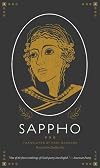
Image credit: Modern copy (16th–18th centuries) after a Greek original,
Museo Nazionale Romano, Rome, Italy
(Credit: Marie Lan-Nguyen, 2006)
Museo Nazionale Romano, Rome, Italy
(Credit: Marie Lan-Nguyen, 2006)
Works by Sappho
Oden en fragmenten van Sapfo 7 copies
Poesie 5 copies
Alcée, Sapho 3 copies
Afrodita y Otros Poemas a la Diosa del Amor (Clasicos de Bolsillo) (Spanish Edition) (2002) 3 copies
The poems of Sappho containing nearly all the fragments printed from the restored Greek texts (1954) 3 copies
Gedichten / druk 2 2 copies
Şiirler 2 copies
The Complete Works of Sappho 2 copies
Sappho et Alcaeus Fragmenta 2 copies
The Poem of Sappho - 122 Ancient Poems from the greatest lyric poet of Greece (Annotated Note to Reader: Sappho Biography) (2012) 2 copies
Líricas em Fragmentos 1 copy
Long ago 1 copy
Poesie 1 copy
Lyra Graeca 1 copy
Pieśni miłosne 1 copy
Básně 1 copy
Písně z Lesbu 1 copy
Poesie Introduzione di Vincenzo di Benedetto Traduzione e note di Franco Ferrari (stampa 1994) (1900) 1 copy
POESIE 1 copy
Poesie — Author — 1 copy
Safo Poemas 1 copy
Lo que dispersó la aurora 1 copy
Safo de Lesbos 1 copy
Sabrene pesme i fragmenti 1 copy
Lieder der Sappho 1 copy
Sappho Archive 1 copy
Sappho: The Queen of Song 1 copy
Sappho: One Hundred Lyrics 1 copy
Sappho: The Second Ode 1 copy
Some poems of Sappho 1 copy
Saphous melē 1 copy
The songs of Sappho 1 copy
Adım Hiç Unutulmayacak 1 copy
Selected poems 1 copy
Schöner Jüngling, mich lüstet Dein : Liebesgedichte von Frauen ; e. Wegweiser durch d. Irrgarten d. Liebe von Sappho (1988) 1 copy
Family Classical Library No XXX Hesiod, Bion and Moschus, Sappho, Musaeus and Lycophron (1832) 1 copy
Sappho - Seçme Şiirler 1 copy
Tutkunun Kanatlarında 1 copy
Liebeslieder 1 copy
Sappho: pt. 1: Midnight 1 copy
Sappho, the Queen of Song 1 copy
iirler 1 copy
Associated Works
World Poetry: An Anthology of Verse from Antiquity to Our Time (1998) — Contributor — 497 copies, 2 reviews
Women in Praise of the Sacred: 43 Centuries of Spiritual Poetry by Women (1994) — Contributor — 384 copies, 5 reviews
The Graphic Canon, Vol. 1: From the Epic of Gilgamesh to Shakespeare to Dangerous Liaisons (2012) — Contributor — 307 copies, 7 reviews
Wise Women: Over Two Thousand Years of Spiritual Writing by Women (1996) — Contributor — 229 copies, 1 review
Queer: A Collection of LGBTQ Writing from Ancient Times to Yesterday (2021) — Contributor, some editions — 64 copies
Games of Venus: An Anthology of Greek and Roman Erotic Verse from Sappho to Ovid (The New Ancient World) (1991) — Contributor — 55 copies, 1 review
Van Homerus tot Van Lennep : Griekse en Latijnse literatuur in Nederlandse vertaling (1992) — Author — 7 copies
Griekse varia : bloemlezing uit de werken van een vijftiental Griekse dichters en prozaschrijvers (1956) — Contributor — 5 copies
Ode to Boy: An Anthology of Same-Sex Attraction in Literature, Volume One: From Antiquity Through the Eighteenth Century (2014) — Contributor — 3 copies
American Aphrodite: A Quarterly for the Fancy-Free Volume 2 Number 8 (1952) — Contributor — 3 copies
All Acts of Love & Pleasure : a Journal of Wiccan and Pagan Erotica, Vol. 1 — Contributor — 3 copies
Grieksche lyriek in Nederlandsche verzen — Contributor — 3 copies
Dark Ages Clasp the Daisy Root #4 — Contributor — 1 copy
Tagged
Common Knowledge
- Other names
- Psappho
- Birthdate
- 630 - 612 BCE circa
- Date of death
- 570 BCE circa
- Gender
- female
- Occupations
- poet
- Nationality
- Lesbos
- Birthplace
- Lesbos
- Places of residence
- Mytilene, Lesbos
Eresos, Lesbos (perhaps birth)
Sardis, Lydia
Syracuse, Sicily (ancient Greek city on Sicily) - Map Location
- Greece
Members
Discussions
Sappho - If Not, Winter in Folio Society Devotees (January 2024)
New poems by Sappho in Ancient History (February 2014)
Recommendations for books on Sappho in Ancient History (January 2009)
Reviews

No matter how good the translation, there is always going to be something lost when modern readers attempt to tackle the classics from ancient Greece, or Rome, or wherever. This is true even of well-known, substantial works like Homer's Odyssey, and is doubly apparent when the work is as sparse as what remains of Sappho's. This collection is accurately subtitled 'Poems and Fragments', for little of Sappho's work survives today, and much of what does is missing stanzas, words or context. The show more introduction to this collection notes the surprising ways in which Sapphic fragments have come to light, including as scraps of paper used as stuffing in coffins and mummified remains.
The lack of a really substantial body of Sappho's work inhibits one's appreciation for the poet's prowess, but thanks to the efforts of the likes of Aaron Poochigian (who translates the poems in this collection and provides illuminating analysis), one can still marvel at what little remains. Sappho's fragments hint at a poet of great versatility; whilst she is mostly known today for the erotic homosexuality of some of her lyrics, Poochigian's selections demonstrate her true range. She is predominantly concerned with youth and innocence, emotion and hope, of which love and eroticism represent just a small but significant part. Indeed, it is remarkable just how ably she intermixes eroticism with innocence in a way which, due to the morals of modern society, would not be possible for today's poets.
As I have said, some of Sappho's power is bound to be lost in translation, but it is a sign of her greatness that what remains still speaks so strongly; as Carol Ann Duffy puts it in her preface, one is impressed by 'how much life is conveyed by so little'. I came to the poems of Sappho as a complete novice (the only time I'd heard of her was a passing mention in the lyrics of a Nick Cave song), but even I was struck by some of the poems on offer here, even the fragmentary ones. There is enough here to suggest that Sappho was indeed a great poet, but all we have are fragments, hints, questions. As Poochigian explains, with most things Sappho 'we must content ourselves with probabilities' and accept the limitations. But whilst much of her poetry is gone, her legacy is secured. The roll-call of poets throughout the centuries who venerate Sappho is impressive, and her influence on those who followed in her footsteps never in doubt. It is just rather tragic that this slim volume comprises just about all we have left of her. show less
The lack of a really substantial body of Sappho's work inhibits one's appreciation for the poet's prowess, but thanks to the efforts of the likes of Aaron Poochigian (who translates the poems in this collection and provides illuminating analysis), one can still marvel at what little remains. Sappho's fragments hint at a poet of great versatility; whilst she is mostly known today for the erotic homosexuality of some of her lyrics, Poochigian's selections demonstrate her true range. She is predominantly concerned with youth and innocence, emotion and hope, of which love and eroticism represent just a small but significant part. Indeed, it is remarkable just how ably she intermixes eroticism with innocence in a way which, due to the morals of modern society, would not be possible for today's poets.
As I have said, some of Sappho's power is bound to be lost in translation, but it is a sign of her greatness that what remains still speaks so strongly; as Carol Ann Duffy puts it in her preface, one is impressed by 'how much life is conveyed by so little'. I came to the poems of Sappho as a complete novice (the only time I'd heard of her was a passing mention in the lyrics of a Nick Cave song), but even I was struck by some of the poems on offer here, even the fragmentary ones. There is enough here to suggest that Sappho was indeed a great poet, but all we have are fragments, hints, questions. As Poochigian explains, with most things Sappho 'we must content ourselves with probabilities' and accept the limitations. But whilst much of her poetry is gone, her legacy is secured. The roll-call of poets throughout the centuries who venerate Sappho is impressive, and her influence on those who followed in her footsteps never in doubt. It is just rather tragic that this slim volume comprises just about all we have left of her. show less
You may forget but
let me tell you
this: someone in
some future time
will think of us
This really is the year of me learning the Greeks may have been onto something with this literature thing, huh? It's completely wrecked my y-axis on publication date stats, I can tell you that. So long, 19th-century accuracy:
I'm currently in the process of writing a research paper on the wonderfully obscure, decadent, belle époque lesbian poet Renée Vivien. My thesis is simple: how Vivien viewed her show more sexuality in analogous themes and styles to Sappho. Her poetry is arguably the most influential aspect of Vivien's poetry, inspiring her enough to learn Greek in order to translate it into French.
For most of my queer life though, even the word Sappho grated on my ears. I associated it something a bit too ridiculous for my attention span, something mocked at more than admired. I still think modern feminists love downplaying queer women's contribution to the movement they've practically taken from them, and I for one fell for it. "Not all feminists are bra-burning lesbians!", I'm still told, reminding me that this is still the image that permeates straight women's minds. My image of lesbianism was thus doomed to theirs; a scourge of non-feminine, angry, man-hating banshees.
I think the works of Sappho dismantle that. Her work is reserved while at the same time being passionate; it is as touching as it is somber; it shows men as objects capable of as much love and desire as women too. There is nothing ridiculous about her work. Take one of my favorite poems, one of the most complete of her fragments where she speaks of an old pupil who had gone away to another teacher:
It was you, Atthis, who said
"Sappho, if you will not get
up and let us look at you
I shall never love you again!
"Get up, unleash your suppleness,
lift off your Chian nightdress
and, like a lily leaning into
"a spring, bathe in the water.
Cleis is bringing your best
purple frock and the yellow
"tunic down from the clothes chest;
you will have a cloak thrown over
you and flowers crowning your hair...
"Praxinoa, my child, will you please
roast nuts for our breakfast? One
of the gods is being good to us:
"today we are going at last
into Mitylene, our favorite
city, with Sappho, loveliest
"of its women; she will walk
among us like a mother with
all her daughters around her
"when she comes home from exile..."
But you forget everything
There is something so sensory about the descriptions of their past life together I can't get over, the gut-punch at the end making it so much more real than I thought was possible for something 2600 years old. The human condition really is invariable from time.
I see why Renée Vivien took to the work of Sappho beyond the obvious. Sappho showed the passion, the heartbreak, and the beauty in the transmutation of these feelings to so many symbols. Vivien's life was painful and tragic, the ravages of mental illness taking away much of her potential. It ruined her relationships, it ruined her body, and it ruined her mind, but still she felt fervently for every capacity of living. Sappho speaks to that I think, and I'm sure Vivien finally found her muse.
I am not a lesbian, but I may be lucky enough to love a woman one day, and Sappho's poetry reminded me that the love between women is pure. So often satirized, sensationalized, and ridiculed, those years of microaggressions actually stopped me from reading this earlier, and I'm angry. Queer men have been able to reclaim the image of eroticism for hundreds of years — from the Hellenism of the 19th century to the exaltations of Wilde and Whitman — queer women have always had much less to work with. Still so often the object of men, Sappho writes about women for women, and it shows. Every lightness, every perfumed vision remains celebrated in the psyche of women who love women to this day. Sappho lived as we do: passionate, feeling, and real. I thank her. I can only hope to love as deeply as she once did. show less

How spellbinding and redolent Sappho's fragments are. In their spaces, incompleteness, and briefness lie the beauty of a thousand interpretations and perceptions. Indeed, it's quite a waste to think that most of her works are lost forever and that we must rely on our imagination in envisioning this stunning arrangement of words ("sweetworded desires", "goldsandaled Dawn", "piercing breezes") sung accompanied by the gentleness of the lyre — wooing, proclaiming, praising. Other than Sappho's show more indubitable genius as a poet, Anne Carson's translation is not to be missed. Each "]" that designates parts of a papyrus indecipherable / destroyed hints of a much grandeur whole. All is felt and guessed. Moreover, Carson's section for Notes provides fascinating insight on some of her literary decisions regarding the translation, some points theorise for what / for whom perhaps a certain fragment is for. I also marvelled on some of the influences included.
"I don't know what to do
two states of mind in me"
— FRAGMENT 51
"you came and I was crazy for you
and you cooled my mind that burned with longing"
— FRAGMENT 48
Throughout the course of reading this, I tend to forget what's missing due to their sheer brilliance alone ("mingled with all kinds of colors", "both you and my servant Eros", "may you sleep on the breast of your delicate friend"). I'd like to think the lost / destroyed papyri have been sieved; a matrimony with the earth. Oh how much more in their wholeness? Currently, this book is resting on my bed and I sleep beside it. All these nights I leaf through it, more so when sleep would not come, comforting myself with pictures they form in my head; an intimate commune I built for Sappho and me. What an experience. show less
"I don't know what to do
two states of mind in me"
— FRAGMENT 51
"you came and I was crazy for you
and you cooled my mind that burned with longing"
— FRAGMENT 48
Throughout the course of reading this, I tend to forget what's missing due to their sheer brilliance alone ("mingled with all kinds of colors", "both you and my servant Eros", "may you sleep on the breast of your delicate friend"). I'd like to think the lost / destroyed papyri have been sieved; a matrimony with the earth. Oh how much more in their wholeness? Currently, this book is resting on my bed and I sleep beside it. All these nights I leaf through it, more so when sleep would not come, comforting myself with pictures they form in my head; an intimate commune I built for Sappho and me. What an experience. show less
"I declare
That later on,
Even in an age unlike our own,
Someone will remember who we are."
A 2500-year-old fragment sparks a connection between a poet and her reader.
Sappho's world is one of honey, blossoms, sweet longing and glittering sunlight. Perhaps 90% of her work has been lost, and what remains is in fragments. Yet in a way even its fragmentary nature seems to enhance it, as if by clutching these tatters we can catch a glimpse of something beautiful.
Sappho is the first recorded female show more poet in western history, she was said to have invented a type of lyre and the plectrum, and her fame is such that the words "sapphic" and "lesbian" are still used today. In fact, the use of the term "Lesbian" in this book to actually refer to someone from Lesbos conjured some strange images in my mind. The "Lesbian dialect", for example, seems most intriguing!
The translation of one of Sappho's most famous fragments here to indicate the poetess is longing for "a boy" is a little controversial, and I think we could have done with a note to explain that the original word was not gendered. We do not know whether Sappho longed for a boy or a girl in that fragment, but in many others she very much longs for female intimacy. show less
That later on,
Even in an age unlike our own,
Someone will remember who we are."
A 2500-year-old fragment sparks a connection between a poet and her reader.
Sappho's world is one of honey, blossoms, sweet longing and glittering sunlight. Perhaps 90% of her work has been lost, and what remains is in fragments. Yet in a way even its fragmentary nature seems to enhance it, as if by clutching these tatters we can catch a glimpse of something beautiful.
Sappho is the first recorded female show more poet in western history, she was said to have invented a type of lyre and the plectrum, and her fame is such that the words "sapphic" and "lesbian" are still used today. In fact, the use of the term "Lesbian" in this book to actually refer to someone from Lesbos conjured some strange images in my mind. The "Lesbian dialect", for example, seems most intriguing!
The translation of one of Sappho's most famous fragments here to indicate the poetess is longing for "a boy" is a little controversial, and I think we could have done with a note to explain that the original word was not gendered. We do not know whether Sappho longed for a boy or a girl in that fragment, but in many others she very much longs for female intimacy. show less
Lists
Poetry Corner (2)
Reading list (1)
Literary Witches (1)
A Reading List (1)
Female Author (1)
Western Canon (1)
Lectuurlijst (1)
Awards


You May Also Like


Associated Authors
Statistics
- Works
- 206
- Also by
- 32
- Members
- 6,688
- Popularity
- #3,658
- Rating
- 4.0
- Reviews
- 124
- ISBNs
- 262
- Languages
- 18
- Favorited
- 45


