
Nelleke Noordervliet
Author of De naam van de vader
About the Author
Works by Nelleke Noordervliet
Begoochelingen 23 copies
Gezichtsbedrog 4 copies
Lairesse's nacht 3 copies
Het middel van de man 2 copies
De erfenis 2 copies
Zoemen in Haarlem 1 copy
De Buthe 1 copy
Associated Works
De verdieping van Nederland : duizend jaar Nederland aan de hand van topstukken uit de Koninklijke Bibliotheek en het Nationaal Archief = Legacy of the Netherlands : a thousand… (2005) — Contributor — 27 copies
Leve de boekhandel! nieuwe verhalen over het theater van de literatuur (2021) — Contributor — 14 copies
Breekbare dagen 4 en 5 mei door de jaren heen — Contributor — 5 copies
Bilbao : het debuut van Mirjam Boelsums, Hans Fels, Frans Kingma, Nausicaa Marbe & Hermine de Graaf, Oek de Jong, Ma (1998) — Contributor — 2 copies
Over X-jes, de zandloper en de herenbobbel. Een handleiding tot de kunsten voor Maarten Asscher (1998) — Contributor — 1 copy
Tagged
Common Knowledge
- Canonical name
- Noordervliet, Nelleke
- Legal name
- Noordervliet-Bol, Petronella Maria
- Birthdate
- 1945-11-06
- Gender
- female
- Education
- University of Leiden
- Occupations
- writer
- Awards and honors
- Gouden Ganzenveer (2022)
Constantijn Huygensprijs (2018) - Nationality
- Netherlands
- Birthplace
- Rotterdam, Netherlands
- Associated Place (for map)
- Rotterdam, Netherlands
Members
Reviews

Paleis op wielen. Een treinreis is a short travel story. The book deceptively starts as a travelogue, suggesting the narrator is like the idealized traveller who is not a tourist, but who is more like an expat. The foreigner who lives among the local people, not the charter flight, sightseeing nit-wit.
This introduction is deceptive, currying favour with the reader. In fact, the subsequent story is just that of incidental tourists and their exploits while travelling in India on a famous show more train.
The story is enjoyable if you like the genre, but it is not particularly good. An given the weird introduction, it doesn't at all sound sincere. show less
This introduction is deceptive, currying favour with the reader. In fact, the subsequent story is just that of incidental tourists and their exploits while travelling in India on a famous show more train.
The story is enjoyable if you like the genre, but it is not particularly good. An given the weird introduction, it doesn't at all sound sincere. show less

Millemorti is a novel about coming to terms with one's frustration and adapting to the peaceful ways of nature. The Dutch art historian Anna Arents travels to the small village of Chiavalle in Italy to spend a half-year sabbatical there, working on her research. Her mood swings from anxiety to frustration and finally to peace, as the books which she needs for her work and which she had sent herself never arrive, but for the last moment. It means that throughout her six-month stay, she cannot show more work on her research, the reason why she had come to Chiavalle in the first place.
Instead of doing her work, she has nothing else to do but settle in the community with resignation. From the beginning, the somewhat eccentric postman, Daniele Puccio, who send himself letters, takes care of her well-being, helping her wherever he can. Anna becomes involved with a Dutch artist, Hans Hartog, a sculptor who seems to fit wonderfully well into the small Italian community. While Anna lives there for half a year, she observes various events in the life of the village community, a disappearance, a natural disaster (avalanche) which is probably malevolently triggered, arson in Hartog's studio, destroying all his wood sculptures, happiness and misery, and local politics, etc. Whatever befalls the members of this community, they solve their problems together. They seem to be endlessly patient and forgiving. While Hans Hartog fits in, and stays on, Anna Arents cannot, and leaves after her time is up.
Chiavalle is the birthplace of Maria Montessori. On the way to Chiavalle, Anna Arents meets a physically handicapped blind and deaf young man and his patient mother who guides him. Their passage through the Alps and a tunnel, represents Anna's transition from the world of the rational intellect to the world of sensation and intuition, a transition which, eventually, she cannot complete. show less
Instead of doing her work, she has nothing else to do but settle in the community with resignation. From the beginning, the somewhat eccentric postman, Daniele Puccio, who send himself letters, takes care of her well-being, helping her wherever he can. Anna becomes involved with a Dutch artist, Hans Hartog, a sculptor who seems to fit wonderfully well into the small Italian community. While Anna lives there for half a year, she observes various events in the life of the village community, a disappearance, a natural disaster (avalanche) which is probably malevolently triggered, arson in Hartog's studio, destroying all his wood sculptures, happiness and misery, and local politics, etc. Whatever befalls the members of this community, they solve their problems together. They seem to be endlessly patient and forgiving. While Hans Hartog fits in, and stays on, Anna Arents cannot, and leaves after her time is up.
Chiavalle is the birthplace of Maria Montessori. On the way to Chiavalle, Anna Arents meets a physically handicapped blind and deaf young man and his patient mother who guides him. Their passage through the Alps and a tunnel, represents Anna's transition from the world of the rational intellect to the world of sensation and intuition, a transition which, eventually, she cannot complete. show less

In 2001, when Rotterdam was celebrated as the European Cultural capital, the city of Rotterdam took the initiative of instituting the "Rotterdams Leescadeau", a free book publication, or a par with the national Boekenweekgeschenk, the literary book publication distributed for free during the National celebration of Books. In 2004, the Rotterdam Leescadeau was written by Nelleke Noordervliet. For the occasion she wrote the short novella Miss Blanche.
Nelleke Noordervliet was born in Rotterdam. show more As a historian and novelist, she has cleverly woven part of Rotterdam's history into this short novella. Noordervliet was born in Crooswijk, a part of Rotterdam which is among the oldest areas of the city, its history going back to Roman times, and the name "Krooswijck" first recorded in the Fourteenth Century. Rotterdam is a city with a very long history, home to the humanist thinker Desiderius Erasmus. Unfortunately the old city was destroyed in a bombing at the beginning of the Second World War.
In Miss Blanche, Noordervliet recalls the area of Rotterdam she grew up in. The story is centred around an elderly tobacconist, Herman Hillebrand Wedigh. Old Mr Wedigh is a somewhat somber man, whose business in clearly in decline, but one day he is inspired by a young Turkish woman who walks past his shop. He follows her around, discovers where she works and then books a long, expensive holiday at the travel agent where she works. Soon after, he is robbed and wounded as burglers break into his home, and suspicion falls on the young woman, whom he calls Halina in his imagination.
The novella is short, and seems to relate to the atmosphere of racial tensions in Rotterdam and elsewhere, partly as a possible result of growing unease with Muslim communities in general, following 9-11, and a much longer, simmering uneasiness of criminal suspicion, especially with regard to petty crime, and the tendency, whether justified or not, of Dutch people to think of minorities, especially of Turkish and Moroccan descent in a criminalized context. In fact, the novella captures the Dutch attitude very well: joy and perhaps even erotic interest at first sight, and suspicion when trouble brews. Actually, old Mr Wedigh does not seem to suspect "Halina". As such, the novella is light, and inconclusive, showing the darker side, but also the light and optimistic.
Nelleke Noordervliet has included some interesting cultural references into this short novella. Old Mr Herman Hillebrand Wedigh is a give-away, as the author supplies the reference, and the old man priding himself on a possible family connection with the historical Hermann von Wedigh, whose portrait was painted by Hans Holbein the Younger in 1532. Holbein the Younger made several portraits of Erasmus and illustrated his The Praise of Folly.
More intriguingly, the title of the novella, "Miss Blanche" refers to a brand of cigarettes that was produced in Rotterdam during the first half of the Twentieth Century. In 1916, a Turkish tobacco merchant established a tobacco company in Rotterdam, Vittoria Cigarette Company. His daughter was called Blanche, and he named the brand after her. The complete visual design for the brand Miss Blanche Virginia cigarettes, including packaging, advertising, and point of sale displays, was desingned by the Hungarian painter and designer, Vilmos Huszár, who lived in the Netherlands, and was one of the founding members in 1917 of the art movement De Stijl, together with Piet Mondrian and Theo van Doesburg.
As a work of literature, Miss Blanche is rather light, but the cultural references in relation to Rotterdam, the the connection to its industrial past makes it interesting. Cigarettes and the cultural history of smoking is relatively short, as contested by Richard Klein in Cigarettes are sublime. Since 2003, public advertising for tobacco became illegal in the Netherlands, and it may well be that following smoking bans as they are imposed in public areas virtually world wide, smoking will be looked upon with revulsion, in the near future. show less
Nelleke Noordervliet was born in Rotterdam. show more As a historian and novelist, she has cleverly woven part of Rotterdam's history into this short novella. Noordervliet was born in Crooswijk, a part of Rotterdam which is among the oldest areas of the city, its history going back to Roman times, and the name "Krooswijck" first recorded in the Fourteenth Century. Rotterdam is a city with a very long history, home to the humanist thinker Desiderius Erasmus. Unfortunately the old city was destroyed in a bombing at the beginning of the Second World War.
In Miss Blanche, Noordervliet recalls the area of Rotterdam she grew up in. The story is centred around an elderly tobacconist, Herman Hillebrand Wedigh. Old Mr Wedigh is a somewhat somber man, whose business in clearly in decline, but one day he is inspired by a young Turkish woman who walks past his shop. He follows her around, discovers where she works and then books a long, expensive holiday at the travel agent where she works. Soon after, he is robbed and wounded as burglers break into his home, and suspicion falls on the young woman, whom he calls Halina in his imagination.
The novella is short, and seems to relate to the atmosphere of racial tensions in Rotterdam and elsewhere, partly as a possible result of growing unease with Muslim communities in general, following 9-11, and a much longer, simmering uneasiness of criminal suspicion, especially with regard to petty crime, and the tendency, whether justified or not, of Dutch people to think of minorities, especially of Turkish and Moroccan descent in a criminalized context. In fact, the novella captures the Dutch attitude very well: joy and perhaps even erotic interest at first sight, and suspicion when trouble brews. Actually, old Mr Wedigh does not seem to suspect "Halina". As such, the novella is light, and inconclusive, showing the darker side, but also the light and optimistic.
Nelleke Noordervliet has included some interesting cultural references into this short novella. Old Mr Herman Hillebrand Wedigh is a give-away, as the author supplies the reference, and the old man priding himself on a possible family connection with the historical Hermann von Wedigh, whose portrait was painted by Hans Holbein the Younger in 1532. Holbein the Younger made several portraits of Erasmus and illustrated his The Praise of Folly.
More intriguingly, the title of the novella, "Miss Blanche" refers to a brand of cigarettes that was produced in Rotterdam during the first half of the Twentieth Century. In 1916, a Turkish tobacco merchant established a tobacco company in Rotterdam, Vittoria Cigarette Company. His daughter was called Blanche, and he named the brand after her. The complete visual design for the brand Miss Blanche Virginia cigarettes, including packaging, advertising, and point of sale displays, was desingned by the Hungarian painter and designer, Vilmos Huszár, who lived in the Netherlands, and was one of the founding members in 1917 of the art movement De Stijl, together with Piet Mondrian and Theo van Doesburg.
As a work of literature, Miss Blanche is rather light, but the cultural references in relation to Rotterdam, the the connection to its industrial past makes it interesting. Cigarettes and the cultural history of smoking is relatively short, as contested by Richard Klein in Cigarettes are sublime. Since 2003, public advertising for tobacco became illegal in the Netherlands, and it may well be that following smoking bans as they are imposed in public areas virtually world wide, smoking will be looked upon with revulsion, in the near future. show less
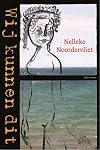
Het boek begon aantrekkelijk, de eerste 100 bladzijden zijn leuk. Maar daarna is het etaleren van gewichtigheid, helaas wat tegenvallend. En uiteindelijk interesseerde het lot van de hoofdpersondn mij maar matig.
Lists
Awards


You May Also Like


Associated Authors
Statistics
- Works
- 50
- Also by
- 11
- Members
- 971
- Popularity
- #26,520
- Rating
- 3.3
- Reviews
- 48
- ISBNs
- 108
- Languages
- 2
- Favorited
- 1
