
Jeremy M. Black
Author of Warfare in the Eighteenth Century
About the Author
Works by Jeremy M. Black
The Power of Knowledge: How Information and Technology Made the Modern World (2014) 69 copies, 3 reviews
The Age of Total War, 1860-1945 (Studies in Military History and International Affairs) (2006) 25 copies
A Military Revolution?: Military Change and European Society, 1550-1800 (Studies in European History) (1991) 23 copies, 1 review
A Brief History of the British Monarchy: From the Iron Age to King Charles III (2023) 15 copies, 1 review
A Brief History of the Mediterranean: Indispensable for Travellers (Brief Histories) (2020) 15 copies
Britain since the Seventies: Politics and Society in the Consumer Age (Reaktion Books - Contemporary Worlds) (2004) 6 copies
America as a Military Power: From the American Revolution to the Civil War (Studies in Military History and International Affairs) (2002) 6 copies
Trade, Empire and British Foreign Policy, 1689-1815: Politics of a Commercial State (War, History and Politics) (2007) 5 copies
The Tory world : deep history and the Tory theme in British foreign policy, 1679-2014 (2016) 3 copies
Mapas de Guerra: Cartografiando Conflictos a Través de los Siglos (Historia Ilustrada) (Spanish Edition) (2008) 2 copies
Atlas Ilustrado de la guerra del Renacimiento / Illustrated Atlas of the Renaissance War (Atlas Ilustrados) (Spanish Edition) (2003) 2 copies
England's Ancien Regime 1 copy
La Seconde guerre mondiale à travers les cartes: Stratégie, reconnaissance, opérations (Édition anniversaire 75 ans) (2020) 1 copy
Atlas - Dünya Tarihi 1 copy
Associated Works
Lost Libraries: The Destruction of Great Book Collections Since Antiquity (2004) — Contributor — 83 copies, 1 review
An Illustrated Encyclopedia of the Uniforms of the Roman World: A Detailed Study of the Armies of Rome and Their Enemies, Including the Etruscans, ... Gauls, Huns, Sassaids,… (2013) — Contributor, some editions — 60 copies
MHQ: The Quarterly Journal of Military History — Spring 1999 (1999) — Author "The Execution of Admiral Byng" — 15 copies
Journeys Through the Market: Travel, Travellers, and the Book Trade (1999) — Contributor — 13 copies
MHQ: The Quarterly Journal of Military History — Summer 2008 (2008) — Author "How the Allies Won World War II" — 12 copies
MHQ: The Quarterly Journal of Military History — Spring 2006 (2006) — Author "Dynasty Forged by Fire" — 11 copies
Technology, Disease and Colonial Conquests, Sixteenth to Eighteenth Centuries: Essays Reappraising the Guns and Germs Theories (2001) — Contributor, some editions — 11 copies, 1 review
MHQ: The Quarterly Journal of Military History — Spring 2005 (2005) — Author "Rethinking the Revolutionary War" — 9 copies
Grandi mappe di città. oltre 70 capolavori che riflettono le aspirazioni e la storia dell'uomo. Ediz. illustrata (2016) — Editor, some editions — 7 copies
MHQ: The Quarterly Journal of Military History — Spring 2010 (2010) — Author "What We Think About When We Think About Waterloo" — 4 copies
Desperta Ferro Moderna. Waterloo 1815. — Contributor — 2 copies
Tagged
Common Knowledge
- Legal name
- Black, Jeremy Martin
- Birthdate
- 1955-10-30
- Gender
- male
- Education
- Durham University (Ph.D|1983)
University of Oxford (Merton)
St. John's College, Oxford University (MA)
Queens' College, University of Cambridge (BA|1978) - Occupations
- historian
professor - Organizations
- University of Exeter
University of Durham - Awards and honors
- Samuel Eliot Morison Prize (2008)
Order of the British Empire (Member, 2000) - Nationality
- UK
- Birthplace
- London, England, UK
- Places of residence
- Exeter, Devon, England, UK
- Map Location
- England, UK
Members
Reviews

The title of the Dutch translation that I recently bought for 1 euro claims that this book is about land battles only (“veldslagen” = “land battles”); but in fact it also contains a good number of contributions on sea battles, air battles, and sieges.
The seventy battle descriptions are brief and, despite the cooperation of some renowned historians, sometimes somewhat flimsy, as are the bibliographical references. But that probably is the format of the series, which also contains show more volumes with abominable Discovery Channel-type titles like The Seventy Great Mysteries of Ancient Egypt. It is more an encyclopedia of battle than a collection of well-researched historical essays for a general audience, such as appeared notably in the 1960s and 1970s. On the positive side, there is the high number of different battles one can browse through.
The focus is on “western” warfare. The addition of a few token “non-western” battles only serves to highlight this. The choice of battles and the understanding of their significance, too, often seems rather traditional, with several exceptions of course, e.g. the good and up-to-date piece on the Battle of Poitiers (732 CE) which challenges the myth that this battle “saved” Europe from Islamic conquest. But looking only at the section on battles in Antiquity, one immediately notices a number of annoying inaccuracies, to say the least. Thus the chapter on the Battle in the Teutoburger Forest (9 CE) repeats the 19th-century nationalistic German myth that because of this battle a “pure” Germanic culture could develop, unpolluted by “Latin” influences. Without the Battle in the Teutoburger Forest, modern Germany would never have come into existence. That of course is pure fantasy.
But what really left me dumbfounded, was the chapter on the Battle of Marathon. The author of the chapter wants us to believe that if the “Greeks” (actually: the Athenians) would have lost the fight, there would have been “no Sophocles, […] no Socrates, no Plato, or Aristotle”. In other words, Marathon saved the West from Oriental despotism: without Marathon no glory that was Greece and no glorious western civilization. That, too, is pure fantasy.
It is really disappointing that the editor, Jeremy Black – who is otherwise known for his non-western approach to the history of warfare, and who is the author of such groundbreaking books as Rethinking Military History – has allowed this bigoted bullshit to be printed. show less
The seventy battle descriptions are brief and, despite the cooperation of some renowned historians, sometimes somewhat flimsy, as are the bibliographical references. But that probably is the format of the series, which also contains show more volumes with abominable Discovery Channel-type titles like The Seventy Great Mysteries of Ancient Egypt. It is more an encyclopedia of battle than a collection of well-researched historical essays for a general audience, such as appeared notably in the 1960s and 1970s. On the positive side, there is the high number of different battles one can browse through.
The focus is on “western” warfare. The addition of a few token “non-western” battles only serves to highlight this. The choice of battles and the understanding of their significance, too, often seems rather traditional, with several exceptions of course, e.g. the good and up-to-date piece on the Battle of Poitiers (732 CE) which challenges the myth that this battle “saved” Europe from Islamic conquest. But looking only at the section on battles in Antiquity, one immediately notices a number of annoying inaccuracies, to say the least. Thus the chapter on the Battle in the Teutoburger Forest (9 CE) repeats the 19th-century nationalistic German myth that because of this battle a “pure” Germanic culture could develop, unpolluted by “Latin” influences. Without the Battle in the Teutoburger Forest, modern Germany would never have come into existence. That of course is pure fantasy.
But what really left me dumbfounded, was the chapter on the Battle of Marathon. The author of the chapter wants us to believe that if the “Greeks” (actually: the Athenians) would have lost the fight, there would have been “no Sophocles, […] no Socrates, no Plato, or Aristotle”. In other words, Marathon saved the West from Oriental despotism: without Marathon no glory that was Greece and no glorious western civilization. That, too, is pure fantasy.
It is really disappointing that the editor, Jeremy Black – who is otherwise known for his non-western approach to the history of warfare, and who is the author of such groundbreaking books as Rethinking Military History – has allowed this bigoted bullshit to be printed. show less
This is an important book covering not only the facts of the history of the Holocaust but also reactions to it in various countries across Europe and wider from the immediate post war period until the 2010s when the revised edition of the book was published. One of the key trends is the argument about the extent of collaboration and co-operation from non-Nazis in various countries in persecuting and killing Jews. In the immediate aftermath of the war, and until the early 1960s, the emphasis show more was on post-war reconstruction, and the priority was the formation of Cold War alliances. In the West, this meant there was a lazy assumption for example that the German people collectively were merely passive victims of a small band of Nazi leaders and the SS. There was a widespread belief that the latter groups were solely responsible for atrocities against Jews and others, rather than the German army being key perpetrators, and collaboration and acquiescence by many ordinary non-Jewish Germans. It also meant much wilful blindness in, for example, France at the role of French police in deporting Jews to their deaths, often without or ahead of any Nazi pressure having been exerted. In the East, Cold War realignments meant that the Soviet Union emphasised their own central role in the anti-Fascist struggle and that Jewish victims of mass killings such as that at Babi Yar in Ukraine were described merely as killings of "peaceful Soviet citizens", denying the anti-Semitic element of the murders.
This situation started to change, at least in the non-communist world, from the 1960s with events such as the Eichmann trial reawakening consciousness of the Holocaust, and the advent of the new 1960s generation questioning the roles of their parents during the war. In Russia and Eastern Europe, this process did not start until after the fall of communism and has been rather more uneven, given the much more virulent historical role of anti-Semitism there and the more active part played by many non-Jewish and non-Nazi people in persecuting and killing Jews.
The book also looks at themes such as the debasing of the terms Holocaust and genocide when they are applied to other violent and killing episodes, often emotively or by states or actors that have a particular political perspective in mind in so doing: "large-scale killing alone, however reprehensible, does not compare with the Holocaust, because the attempt to define and destroy an entire ethnic group and its complete culture represents a different scale and intention of assault, indeed a global assault". It also deals with the role of Holocaust denial or minimisation, the latter of which sometimes overlaps with the relativism mentioned above.
This is a fascinating and obviously horrific book, and makes for very difficult reading in places, not only because of its subject matter, but also it is written in a sometimes overly academic style which can come across as a bit dry. show less
This situation started to change, at least in the non-communist world, from the 1960s with events such as the Eichmann trial reawakening consciousness of the Holocaust, and the advent of the new 1960s generation questioning the roles of their parents during the war. In Russia and Eastern Europe, this process did not start until after the fall of communism and has been rather more uneven, given the much more virulent historical role of anti-Semitism there and the more active part played by many non-Jewish and non-Nazi people in persecuting and killing Jews.
The book also looks at themes such as the debasing of the terms Holocaust and genocide when they are applied to other violent and killing episodes, often emotively or by states or actors that have a particular political perspective in mind in so doing: "large-scale killing alone, however reprehensible, does not compare with the Holocaust, because the attempt to define and destroy an entire ethnic group and its complete culture represents a different scale and intention of assault, indeed a global assault". It also deals with the role of Holocaust denial or minimisation, the latter of which sometimes overlaps with the relativism mentioned above.
This is a fascinating and obviously horrific book, and makes for very difficult reading in places, not only because of its subject matter, but also it is written in a sometimes overly academic style which can come across as a bit dry. show less
Somewhere between an extended essay and a survey of how counterfactual history has been handled over time, Black champions asking the question "what if" as a means of unpacking one's own assumptions, as his general feeling is that the academic practice of history has become too set in its assumptions of authority for its own good, and needs reintroduced to notions of narrative and contingency. On the other hand, Black also has little use for the rhetorical cry "if only" that tends to be the show more foundation of alternative history for the losers; one learns no lessons going down that path. show less
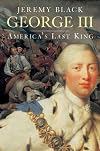
The latest installment in Yale University Press' English Monarchs Series is Exeter University historian Jeremy Black's George III: America's Last King. This first full-scale scholarly biography of George III in many years is a welcome addition to the series as well as a fine example of the biographer's craft. Black has worked diligently (his subtitle notwithstanding) to broaden the focus of George III's life and reign; while the American crisis and the king's later illnesses are covered, show more they form only appropriately-scaled portions of the book, as they should.
Black takes a useful approach here, interspersing narrative chapters on the political machinations and military goings-on with more wide-ranging thematic treatments of different aspects of the monarch's life - his relations with family, his cultural and religious inclinations, his lifestyle and his concerns for how to deal with Hanover, his ancestral continental possession. These thematic chapters were what I enjoyed most about the book - the others, while interesting, were filled to bursting with names and titles and political volleys that I found difficult to keep straight.
George III, Black argues, "instinctually knew what his duty was ... a major weaknes was that this conviction was not always illuminated by careful reflection, and could therefore seem both obtuse and stubborn" (p. 115). It was this commitment to what he perceived as his duty to his country and to his subjects that led him to take such a firm stand against the American crisis (unsuccessfully) and also against Catholic emancipation, parliamentary reform, and Franco-European aggression (more successfully). "George was a nicer man than his two predecessors and he meant well, but his obstinacy helped create serious political difficulties," Black concludes, putting it mildly.
Naturally I was drawn to Black's discussion of George's reading habits: the king accumulated a large working library (some 65,250 books by 1820, plus 19,000 tracts), which later became part of the British Museum. He opened his main library - next to his bedroom - to use by scholars (Samuel Johnson was a frequent visitor), and was known to visit Windsor bookshops. Black writes "George was particularly interested in works on theology, history, jurisprudence, science, the arts and the Classical inheritance, and less so in fiction ... Indeed, George did not really take to novels until he became blind, when one of his daughters read them to him nightly" (p. 170). The king liked to read interesting portions of his books aloud, and preferred "his books unbound for his first reading and afterwards bound to match his other books" (p. 171).
Black's excellently-researched and richly-footnoted study will, I hope, prompt others to take a fresh look at the life of one of Britain's most longest-serving and - frankly - most interesting, monarchs.
http://philobiblos.blogspot.com/2007/09/book-review-george-iii-americas-last.htm... show less
Black takes a useful approach here, interspersing narrative chapters on the political machinations and military goings-on with more wide-ranging thematic treatments of different aspects of the monarch's life - his relations with family, his cultural and religious inclinations, his lifestyle and his concerns for how to deal with Hanover, his ancestral continental possession. These thematic chapters were what I enjoyed most about the book - the others, while interesting, were filled to bursting with names and titles and political volleys that I found difficult to keep straight.
George III, Black argues, "instinctually knew what his duty was ... a major weaknes was that this conviction was not always illuminated by careful reflection, and could therefore seem both obtuse and stubborn" (p. 115). It was this commitment to what he perceived as his duty to his country and to his subjects that led him to take such a firm stand against the American crisis (unsuccessfully) and also against Catholic emancipation, parliamentary reform, and Franco-European aggression (more successfully). "George was a nicer man than his two predecessors and he meant well, but his obstinacy helped create serious political difficulties," Black concludes, putting it mildly.
Naturally I was drawn to Black's discussion of George's reading habits: the king accumulated a large working library (some 65,250 books by 1820, plus 19,000 tracts), which later became part of the British Museum. He opened his main library - next to his bedroom - to use by scholars (Samuel Johnson was a frequent visitor), and was known to visit Windsor bookshops. Black writes "George was particularly interested in works on theology, history, jurisprudence, science, the arts and the Classical inheritance, and less so in fiction ... Indeed, George did not really take to novels until he became blind, when one of his daughters read them to him nightly" (p. 170). The king liked to read interesting portions of his books aloud, and preferred "his books unbound for his first reading and afterwards bound to match his other books" (p. 171).
Black's excellently-researched and richly-footnoted study will, I hope, prompt others to take a fresh look at the life of one of Britain's most longest-serving and - frankly - most interesting, monarchs.
http://philobiblos.blogspot.com/2007/09/book-review-george-iii-americas-last.htm... show less
Lists
Awards


You May Also Like


Associated Authors
Statistics
- Works
- 246
- Also by
- 21
- Members
- 5,448
- Popularity
- #4,567
- Rating
- 3.7
- Reviews
- 35
- ISBNs
- 796
- Languages
- 17
- Favorited
- 1
