
John Myers Myers (1906–1988)
Author of Silverlock
About the Author
Image credit: Myspace
Series
Works by John Myers Myers
Associated Works
Tagged
Common Knowledge
- Canonical name
- Myers, John Myers
- Birthdate
- 1906-01-11
- Date of death
- 1988-10-30
- Gender
- male
- Education
- University of New Mexico
- Occupations
- advertising copywriter
- Organizations
- New York World
San Antonio Evening News - Nationality
- USA
- Birthplace
- Long Island, New York, USA
- Places of residence
- Tempe, Arizona, USA
- Associated Place (for map)
- USA
Members
Reviews

Silverlock is not so much a lost book as one that is constantly being rediscovered. John Meyers Meyers wrote it back in 1949, so this is a fantasy untouched by JRR Tolkien’s genre-redefining work. But it’s been touched by everything else. Like Robinson Crusoe, Silverlock opens with a shipwreck. The wrecked ship is the Naglafar–named for the ship Loki has made of dead men’s nails in Norse mythology. Certainly an ill-omened ship, and A. Clarence Shandon is an ill-omened man. A cynical show more opportunist and fatalist (his opening line is: “If I had cared to live, I would have died.”), he is thoroughly “modern,” “rational,” and unlikable.
Instead of dying (which would have made for a short book), Shandon finds himself cast ashore Gulliver-style in an unknown land, the Commonwealth. It soon becomes apparent the “Commonwealth” is the Commonwealth of Letters–the realm of all of western literature. Here Shandon–dubbed Silverlock by his traveling companion–meets such characters as Circe, Robin Hood, Don Quixote, and many, many more, finds himself swept along on many an adventure, and in the process, becomes a much better man. Being a modern rationalist, Silverlock had no patience for fancy and fable growing up, so he recognizes none of the characters he meets.
Of course the reader does, and that is half the fun. The other half is the story itself–John Meyers Meyers knew how to write–and you’ll find yourself grinning till it hurts, chuckling over page after page, and reveling in Meyer’s prose and poetry. Did I mention he was a poet? My favorite Silverlock poem is Taliesin’s rendition of The Death of Bowie Gizzardsbane (an epic poem of the last stand at the Alamo, in the style of Beowulf).
Each generation rediscovers Silverlock; in my childhood it was found and lauded by Poul Anderson, Larry Niven, and Jerry Pournelle–three of science-fiction’s Great Masters. Today it is available on Amazon.com, in hardback, paperback, and finally on ebook. Now it’s our turn, so if you love stories and want to revisit the wellsprings of our common literary inheritance, come journey with Silverlock. You will be richer for it. show less
Instead of dying (which would have made for a short book), Shandon finds himself cast ashore Gulliver-style in an unknown land, the Commonwealth. It soon becomes apparent the “Commonwealth” is the Commonwealth of Letters–the realm of all of western literature. Here Shandon–dubbed Silverlock by his traveling companion–meets such characters as Circe, Robin Hood, Don Quixote, and many, many more, finds himself swept along on many an adventure, and in the process, becomes a much better man. Being a modern rationalist, Silverlock had no patience for fancy and fable growing up, so he recognizes none of the characters he meets.
Of course the reader does, and that is half the fun. The other half is the story itself–John Meyers Meyers knew how to write–and you’ll find yourself grinning till it hurts, chuckling over page after page, and reveling in Meyer’s prose and poetry. Did I mention he was a poet? My favorite Silverlock poem is Taliesin’s rendition of The Death of Bowie Gizzardsbane (an epic poem of the last stand at the Alamo, in the style of Beowulf).
Each generation rediscovers Silverlock; in my childhood it was found and lauded by Poul Anderson, Larry Niven, and Jerry Pournelle–three of science-fiction’s Great Masters. Today it is available on Amazon.com, in hardback, paperback, and finally on ebook. Now it’s our turn, so if you love stories and want to revisit the wellsprings of our common literary inheritance, come journey with Silverlock. You will be richer for it. show less

https://fromtheheartofeurope.eu/the-harp-and-the-blade-by-john-myers-myers/
The author is a fascinating figure in his own right; the book is a rollicking Dark Ages story of a bard who turns warrior and defender of the vulnerable, which would qualify as straight historical fiction, were it not for the first chapter in which the Little Folk put the protagonist under a geas which compels him to be helpful. As usual, the names are completely wrong, but the story is a decent fist at imagining show more historical France in the 6th or 7th century, and, as mentioned already, it is rollicking good fun. show less
The author is a fascinating figure in his own right; the book is a rollicking Dark Ages story of a bard who turns warrior and defender of the vulnerable, which would qualify as straight historical fiction, were it not for the first chapter in which the Little Folk put the protagonist under a geas which compels him to be helpful. As usual, the names are completely wrong, but the story is a decent fist at imagining show more historical France in the 6th or 7th century, and, as mentioned already, it is rollicking good fun. show less

Crawling for hundreds of miles, near naked and armed only with a razor, to take revenge on the men who left him for dead after he was mauled by a grizzly bear, the story of Hugh Glass is a classic story of survival. It very well might be, as Myers maintains, unique in all the history and legends of the world.
It was a story doubted for a long time. The existence of Hugh Glass is certainly documented. We even have a letter in his hand. But no sources actually verifying the attack seemed to show more exist until one came to light in 1957. Myers spends the first part of this brief book outlining the historiography behind the Glass story and its developments and corruptions by various sources.
It’s a uniquely fascinating life. Glass was a ship’s captain and captured by Jean Lafitte’s pirate gang sometime around 1816. Given the choice to take up piracy or die, Glass seems to have spent about a year as a pirate before escaping Lafitte’s base around Galveston Bay. However, during that escape, he was captured by Pawnee Indians. His companion in the escape was burned alive by the Pawnee, and Glass lived with the tribe, a combination captive and foster son of its chief, until 1822. In 1823, he joined the Rocky Mountain Fur Company expedition up the Missouri River and participated in its somewhat farcical battle with the Arikara Indians a few weeks before his legendary encounter with the bear. Seemingly affected by his many traumatic experiences, Glass preferred a solitary life even by mountain man standards, and he met his end in 1833, aged somewhere in the fifties, fighting Indians.
Myers covers all this in somewhat eccentric prose. A sample sentence: “While Hugh was winning his doctorate in wild country philosophy, much was politically afoot which bore upon the West.” Still, he moves the story along while quoting freely from his primary sources and points out their inconsistencies. An index and maps would have been nice though they probably weren’t in the original edition of this book, a popular history published in 1963 and reprinted by Bison Books.
Still, it’s quite readable and good introduction to the Glass legend. show less
It was a story doubted for a long time. The existence of Hugh Glass is certainly documented. We even have a letter in his hand. But no sources actually verifying the attack seemed to show more exist until one came to light in 1957. Myers spends the first part of this brief book outlining the historiography behind the Glass story and its developments and corruptions by various sources.
It’s a uniquely fascinating life. Glass was a ship’s captain and captured by Jean Lafitte’s pirate gang sometime around 1816. Given the choice to take up piracy or die, Glass seems to have spent about a year as a pirate before escaping Lafitte’s base around Galveston Bay. However, during that escape, he was captured by Pawnee Indians. His companion in the escape was burned alive by the Pawnee, and Glass lived with the tribe, a combination captive and foster son of its chief, until 1822. In 1823, he joined the Rocky Mountain Fur Company expedition up the Missouri River and participated in its somewhat farcical battle with the Arikara Indians a few weeks before his legendary encounter with the bear. Seemingly affected by his many traumatic experiences, Glass preferred a solitary life even by mountain man standards, and he met his end in 1833, aged somewhere in the fifties, fighting Indians.
Myers covers all this in somewhat eccentric prose. A sample sentence: “While Hugh was winning his doctorate in wild country philosophy, much was politically afoot which bore upon the West.” Still, he moves the story along while quoting freely from his primary sources and points out their inconsistencies. An index and maps would have been nice though they probably weren’t in the original edition of this book, a popular history published in 1963 and reprinted by Bison Books.
Still, it’s quite readable and good introduction to the Glass legend. show less
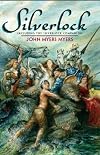
Outrageous fantasy in which the protagonist nearly gets killed about a hundred times in about a hundred different scrapes, assisted or antagonized by every hero or every villain of every fantastic yarn that ever blew your mind or knocked you out of your chair or set your house on fire or killed your dog and ate your cat. Pack a sword or a bazooka with you whenever you have to get up to eat or use the john. You never know who or what is going to jump you when you leave the safety of your show more favorite chair. Duck! you sucker! You're going to like this book. You might even read it twice or maybe seven times! Everybody else does. NOBODY doesn't read Silverlock! show less
Lists
1940s (1)
Awards


You May Also Like


Associated Authors
Statistics
- Works
- 23
- Also by
- 1
- Members
- 2,049
- Popularity
- #12,556
- Rating
- 3.8
- Reviews
- 28
- ISBNs
- 58
- Languages
- 1
- Favorited
- 5