
Amada Irma Pérez
Author of My Diary From Here to There/Mi diario de aqui hasta alla
About the Author
Works by Amada Irma Pérez
Tagged
Common Knowledge
- Gender
- female
Members
Reviews
My Diary from Here to There: Mi diario de aqui hasta alla (English and Spanish Edition) by Amada Irma Perez
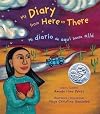
I liked that it was written in both Spanish and English. It showed how how life can be for a family migrating to the US. It showed that the whole family may not all go at once. Sometimes one family member may go alone and try to save up money so that eventually the whole family may come later. It also shows how much someone can miss their home. In her diary, Amada writes about her friend Michi and how much she will miss her. She also writes about leaving her family behind in Mexico. She show more keeps a rock that she took from home so that she always has a piece of Mexico with her. The big idea in this story is that no matter how far away someone or something is, it is always in your heart. show less
My Diary from Here to There: Mi diario de aqui hasta alla (English and Spanish Edition) by Amada Irma Perez
In my opinion, this is a fantastic book for many reasons, including the fact that it is a bilingual book (English and Spanish). First, I like how it incorporates different reactions to immigrating to a new country. For example, when Mama was explaining why they were moving to the United States, Amada was very upset, but her brothers were extremely excited. I enjoyed that because not everyone is going to be excited to move to another country, but not everyone is going to be sad to move to a show more new country. It is important to have students read multiple texts because having one perspective is not always the ‘right’ perspective, but this book contains multiple perspectives. Second, I loved the fact that Amada and her family were relatable characters. Throughout transitioning to a new country, Amada was scared that she was leaving her family, and whether or not she could learn English. Many immigrant families can easily relate to that. My family left India to come to the United States, leaving their family and not speaking English, so I could picture her fears. Also, the book really pushes the readers to think about immigrating to a new country, whether they have or not. In the book, Amada’s father went to Los Angeles to look for a job meaning he had to leave the family for a while. It was easy to imagine how tough it could be to pack up little of your belongings and be separated from your family. I believe that the main message of this story is overcoming obstacles and transitions in life with family. show less
My Diary from Here to There/Mi Diario de Aqui hasta alla (Pura Belpre Honor Book Author (Awards)) (E (Bilingual) [Hardcover] by Amada Irma Perez
A brilliant bilingual children's book about parents who want a better life for their family, perfect for those either trying to learn English as well as Spanish. Amada's father lost his job in Juarez Mexico and is forced to contemplate the unthinkable, relocating the entire family to a foreign land. Though her father is an American citizen, the family must wait in Mexicali for their green cards before they can enter The United States legally. I love Amada's spirit and her voice, while she is show more embracing her new life in California, she chooses to hold on to her heritage through her language and traditions. show less
My Diary from Here to There/Mi diario de aqui hasta alla (Pura Belpre Honor Book Author (Awards)) (English and Spanish Edition) by Amada Irma Perez
This richly and evocatively illustrated dual-language picture book (Maya Christina Gonzalez' brilliantly colouful, lushly descriptive depictions are redolent of the colours, the very feeling of Mexico, of Latino/Latina culture in general) tells the story of author Amanda Irma Pérez' own journey from Mexico to the United States in the 1950s (except that when she and her family immigrated to the United States, Amanda was five years old, while in the book, she is described as being a bit show more older, more like nine or ten years of age). The diary pages poignantly and truthfully show Amanda's fears, her initial reluctance towards the concept of immigrating (how her younger brothers are simply excited about moving to America and all of its "temptations" while she realises that immigrating means leaving family, friends, the familiar for a different culture, a different language). In many ways I felt as though I was reading my own diary, my own personal story, because when we immigrated to Canada from Germany in 1976, it definitely seemed like my siblings and even my parents were nothing but excited and happy to be moving to Canada, while I was sad about leaving my friends, family members and worried about fitting in, about learning a new language, experiencing a hitherto unfamiliar culture. Amanda's story, her and her family's journey of immigration is thus truly and basically both timeless and universal (the same questions, the same worries that Amanda confides to her diary pages are in the hearts of many present-day immigrants, migrants and refugees and were in the hearts of immigrants, migrants and refugees in both the recent and distant past). Recommended for anyone, but [b:My Diary from Here to There/Mi diario de aqui hasta alla (Pura Belpre Honor Book Narrative|580207|My Diary from Here to There/Mi diario de aqui hasta alla (Pura Belpre Honor Book Narrative (Awards))|Amada Irma Pérez|http://photo.goodreads.com/books/1347611227s/580207.jpg|567108] is especially recommended for children facing the prospect of immigration, of moving (especially if they have questions, if they are worried about immigrating, about culture shock, having to learn a new language etc.).
I also really enjoyed the fact that My Diary from Here to There/Mi diario de aqui hasta alla is dual-language. I was pleasantly surprised at how much of the Spanish text I was able to read and understand (and I was quite amazed how much of my university Spanish I actually remembered, but also how much of the Spanish I was able to deduce by simply comparing the English and the Spanish texts). This makes My Diary from Here to There/Mi diario de aqui hasta alla not only a valuable and useful book for Spanish language instruction at the school level, I also believe that My Diary from Here to There/Mi diario de aqui hasta alla could be a great teaching tool for beginning Spanish courses at the college and university level. When I took beginning Spanish courses at university, most of the assigned reading texts were dry, literary and often much too complicated for learners/readers with but a basic grasp of grammar and limited vocabulary. Making use of dual-language children's books would, in my opinion, make reading comprehension both easier and less frustrating, especially for beginners or those afraid or in awe of learning foreign languages (and anything that might make foreign language instruction more interesting and less frustrating for learners is a very, very good thing indeed). show less
I also really enjoyed the fact that My Diary from Here to There/Mi diario de aqui hasta alla is dual-language. I was pleasantly surprised at how much of the Spanish text I was able to read and understand (and I was quite amazed how much of my university Spanish I actually remembered, but also how much of the Spanish I was able to deduce by simply comparing the English and the Spanish texts). This makes My Diary from Here to There/Mi diario de aqui hasta alla not only a valuable and useful book for Spanish language instruction at the school level, I also believe that My Diary from Here to There/Mi diario de aqui hasta alla could be a great teaching tool for beginning Spanish courses at the college and university level. When I took beginning Spanish courses at university, most of the assigned reading texts were dry, literary and often much too complicated for learners/readers with but a basic grasp of grammar and limited vocabulary. Making use of dual-language children's books would, in my opinion, make reading comprehension both easier and less frustrating, especially for beginners or those afraid or in awe of learning foreign languages (and anything that might make foreign language instruction more interesting and less frustrating for learners is a very, very good thing indeed). show less
Awards


You May Also Like


Statistics
- Works
- 5
- Members
- 625
- Popularity
- #40,301
- Rating
- 4.2
- Reviews
- 84
- ISBNs
- 15