

Jorge Argueta
Author of Salsa: Un poema para cocinar / A Cooking Poem
About the Author
Image credit: By Carolina V Osorio
Works by Jorge Argueta
Guacamole: Un poema para cocinar / A Cooking Poem (Bilingual Cooking Poems) (2012) 115 copies, 5 reviews
Sopa de frijoles / Bean Soup: Un poema para cocinar / A Cooking Poem (Bilingual Cooking Poems, 2) (2009) 109 copies, 6 reviews
Arroz con leche / Rice Pudding: Un poema para cocinar / A Cooking Poem (Bilingual Cooking Poems) (2010) 80 copies, 8 reviews
Tamalitos: Un poema para cocinar/A Cooking Poem (Bilingual Cooking Poems) (2013) 55 copies, 2 reviews
La fiesta de las tortillas (Bilingual Edition) (Bilingual Books) (Spanish and English Edition) (2006) 45 copies, 3 reviews
Jimena Pérez puede volar/ Jimena Pérez Can Fly (English and Spanish Edition) (Spanish and English Edition) (2019) 19 copies, 1 review
Tierra, Tierrita / Earth, Little Earth (Madre Tierra / Mother Earth) (English and Spanish Edition) (2023) 12 copies
Guacamole 4 copies
Associated Works
Tagged
Common Knowledge
- Gender
- male
- Birthplace
- El Salvador
- Associated Place (for map)
- El Salvador
Members
Reviews
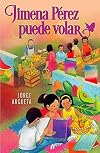
In this touching narrative poem, a young girl talks about her family's life in El Salvador, which is threatened by the fear of gangs recruiting children. The family decides that Jimena and her mother must try to immigrate to the United States. The story is beautiful and sad, so it might not be to everyone's taste (especially depending on the reader's mood) but it is quite lovely in its lyricism. The black-and-white illustrations are a nice touch. The book can be read in English and/or show more Spanish, with reverse covers. show less
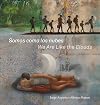
I shared this book with a group of fifth graders yesterday. They really enjoyed hearing Spanish. Maybe it reminded them of their countries. I don't particularly enjoy poetry, but I have one student that is always writing lines and trying to make them rhyme. It amazes me because she just learned how to read with me last school year. She was loaded down with vocabulary, and started to write words. Now she is writing complete sentences. This year has been a struggle for her because her regular show more classroom teacher is failing her on all of her writing assignments. I am trying to advocate for her. I let that teacher know that she has a true passion for writing. I don't want anyone to kill her spirit! She makes spelling errors, but still writes me all sorts of notes and little letters. After reading Somos como las Nubes, she wrote "See abuelita (grandma) in the clouds everyday i dream i am with her in Salvador (El Salvador) and her pupusas (a tasty food) in (on) the comal". I almost cried. I asked her to share it and we all clapped. She told us it was her poem she "felt like writing about this book" (she was inspired by the poems, and perhaps the images, in We are like the Clouds). I did not like most of the poems in this book, but I LOVE that they were all translated into English. Additionally, I absolutely love the impact it had on my students. When I finished reading, they started to talk about the things they used to eat there, and the places they would go. They also talked about how many countries they had to go through to make it here, and I really never thought about my students that aren't right across the border in Mexico. Most are from Honduras and El Salvador (which are next to each other on the map), but some students are from much further away. I am happy that I read this book, but I will not be purchasing it. show less
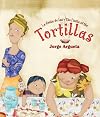
This book made me want tacos! This author did an excellent job at pulling the reader into the world of Koki and his aunts and cousins as they manage their family’s restaurant in El Salvador. In the story the “spirit of the corn” visits the restaurant causing a strange phenomenon which eventually leads into a celebration. The story is told through Koki’s perspective with attention to the detail of the smell of tortillas and the chatter of the restaurant as they make the food for the show more customers. An interesting aspect of this book is that it is bilingual. It has Spanish and English text on the same page so that children who read both languages can enjoy it. Another interesting feature in this book is the glossary. Along with the glossary it also has pictures to allow the reader to visually see what the terms are. The book shows the value of family and tradition in a culture that maybe different than the readers’. show less
Somos como las nubes is written by a Salvadoran poet who described the dark and dangerous subjects of the immigration issue. There is sheer emotion that there is hope when arriving in the United States. There are various poems of different perspectives from strong parents who carried their children or young children, alone and fearful, crossing the hot and dry desert. The art by Ruano used beautiful realism of communicating the emotions and conditions of the thousands of boys, girls, and show more young people who fleed their home country. The first pages capture the accuracy of the places where they lived and the reasons for leaving their home country due to violence and poverty. The illustrations teach readers the difficult experiences of the children in how they had to lay on the floors of the desert when traveling and the transportation of the train. The illustrations enhance the story by how some parts may not be understandable, and it truly describes the situations and the reactions of the scenarios. The book is written in Spanish and English to shed light on the situations of immigrants of the Spanish speakers. At the same time, the English translation provides the reader an understanding of what the immigrants struggle with. Argueta wrote poems about his encounters with the young children from El Salvador, Guatemala, Honduras, and Mexico. He was able to share their experiences and listen to their testimonies. He was also a fleeing immigrant when his home country, El Salvador, was undergoing war in the 1980s. He visited numerous shelters in California in 2014 when thousands of children began to arrive anxiously awaiting their future. Many hoped a family member would come to take charge to remain in the United States; many wanted to return home or both. The content and language are complex and need to have a sense of guide. Therefore, it is recommended for a book for higher-level elementary and bilingual classrooms. Argueta used vocabulary that was country-specific, slang, or technical in the text, providing a definition for understanding. The text used the figurative language of sharing the stories, while Ruano uses the illustrations to portray the emotions that Arguta creates with the poetry. As a daughter of immigrants from Mexico, it allowed me to understand their experiences of how my parents left their home to have better opportunities for them and their children. My parents would retell their stories of how their home country was; it was vivid but at the same time with a sense of nostalgia of longing to return home. Immigration is slowly becoming a social issue in how there is a current debate on illegal immigration by the programs of resources to assist while providing help to the low-income population already in the country. Another relevant text of the same social issue is by the same author, Caravan to the North: Misael's Long Walk, a novel about Misael Martinez, a Salvadoran boy, and his family joins the caravan to the United States. It provides various reasons why people need to leave and sadness for leaving their home. show less
Lists
Awards


Sopa de frijoles / Bean Soup: Un poema para cocinar / A Cooking Poem (Bilingual Cooking Poems, 2) (Commended Title – 2010)
Arroz con leche / Rice Pudding: Un poema para cocinar / A Cooking Poem (Bilingual Cooking Poems) (Commended Title – 2011)
Tierra, Tierrita / Earth, Little Earth (Madre Tierra / Mother Earth) (English and Spanish Edition) (Commended Title – 2024)


Sopa de frijoles / Bean Soup: Un poema para cocinar / A Cooking Poem (Bilingual Cooking Poems, 2) (2011)


Sopa de frijoles / Bean Soup: Un poema para cocinar / A Cooking Poem (Bilingual Cooking Poems, 2) (Addendum – 2013)


You May Also Like


Associated Authors
Statistics
- Works
- 27
- Also by
- 1
- Members
- 1,329
- Popularity
- #19,359
- Rating
- 4.3
- Reviews
- 74
- ISBNs
- 96
- Languages
- 2