

Joe Hayes
Author of The Day It Snowed Tortillas = El Día Que Nevaron Tortillas
About the Author
Image credit: storynet.org
Works by Joe Hayes
A Spoon for Every Bite / Cada Bocado con Nueva Cuchara (English and Spanish Edition) (1996) 210 copies, 10 reviews
The Coyote Under the Table/El coyote debajo de la mesa: Folk Tales Told in Spanish and English (2011) 61 copies
Dance, Nana, Dance / Baila, Nana, Baila: Cuban Folktales in English and Spanish (English and Spanish Edition) (2008) 40 copies, 2 reviews
Cuentos de Cuanto Hay: Tales from Spanish New Mexico (English and Spanish Edition) (1998) — Editor/Translator — 16 copies
Mariposa Mariposa: The Happy Tale of LA Mariposa the Butterfly Told in Two Languages (1988) 9 copies
Using a Bilingual Storybook in the Classroom: A Teacher's Guide to Tell Me a Cuento / Cuntame Un Story (2000) 5 copies
In the Days of King Adobe 1 copy
Rosa and Blanca 1 copy
Coyote and Turtle 1 copy
The Terrible Tragadabas 1 copy
Monday, Tuesday, Wednesday, Oh! ~~ Lunes, Martes, Miercoles, !O! ~~ A Story in Two Languages (1987) 1 copy
Tagged
Common Knowledge
- Birthdate
- 1945-11-12
- Gender
- male
- Nationality
- USA
- Birthplace
- Pittsburgh, Pennsylvania, USA
- Places of residence
- Sante Fe, New Mexico, USA
- Associated Place (for map)
- USA
Members
Reviews

Presented in both English and Spanish, this folktale from New Mexico follows the story of Arcía, the kindhearted daughter of a widowed sheepherder. Convincing her father to marry their neighbor, also widowed, she soon regrets the change in her familiar circumstances, as Margarita begins to mistreat her, and to favor her own biological daughters. When her sheep's wool is stolen by a hawk one day, while she is washing it at the local stream, Arcía's politeness to the avian thief wins her a show more reward, in the form of a little golden star on her forehead. Although this makes her stepsisters jealous, when those two girls attempt to win a star themselves, they are rude and contemptuous, rather than polite, and find themselves with a donkey ear and a cow horn on their foreheads instead of a star. As for Arcía, her bright star eventually attracts the attention of a nearby prince, who comes looking for her, after he gets a glimpse of her at his party...
This is the second retelling of this folktale that I have read in picture-book form, following upon Robert D. San Souci's Little Gold Star: A Spanish American Cinderella Tale. Unlike that other story, which features the figure of the Virgin Mary, Estrellita de oro / Little Gold Star: A Cinderella Cuento utilizes a hawk to reward the heroine with her lovely gold star. It's interesting to note that the two books were published the same year (2000), and that, according to author Joe Hayes' note, it is more common for this story to include the Virgin Mary, than not. This made me wonder why Hayes chose to use another variant - was he aware of the San Souci project, and wanting to set his version apart? According to his note, he was most influenced by the retelling of the tale found in Aurora Lucero-White's Literary Folklore of the Hispanic Southwest, so perhaps the explanation is simply that this version had a hawk, rather than the Virgin Mary.
Leaving aside issues of source material and variant, I enjoyed the story here, and I appreciated that it was presented in both English and Spanish. This is something that Joe Hayes is known for, and that I also appreciated in his wonderful Pajaro Verde / The Green Bird. I will have to try to track down more of his work! The accompanying artwork is lovely, created in a folk style using a vivid color palette. I found the back story behind the illustrations, discussed in the rear dust-jacket blurb, quite moving. Apparently the first three paintings were done by Gloria Osuna Pérez, who then became ill with ovarian cancer, in the midst of the project. Her daughter and caregiver, Lucía Ángela Pérez, also an artist, then stepped in and completed the work, under her mother's instruction. I'm sure this was a labor of love for both of them, and I found that information quite poignant. This is one I would recommend to young folklore enthusiasts, to readers seeking Cinderella variants from around the world, and to those interested in the Hispanic folklore of the American Southwest. show less
This is the second retelling of this folktale that I have read in picture-book form, following upon Robert D. San Souci's Little Gold Star: A Spanish American Cinderella Tale. Unlike that other story, which features the figure of the Virgin Mary, Estrellita de oro / Little Gold Star: A Cinderella Cuento utilizes a hawk to reward the heroine with her lovely gold star. It's interesting to note that the two books were published the same year (2000), and that, according to author Joe Hayes' note, it is more common for this story to include the Virgin Mary, than not. This made me wonder why Hayes chose to use another variant - was he aware of the San Souci project, and wanting to set his version apart? According to his note, he was most influenced by the retelling of the tale found in Aurora Lucero-White's Literary Folklore of the Hispanic Southwest, so perhaps the explanation is simply that this version had a hawk, rather than the Virgin Mary.
Leaving aside issues of source material and variant, I enjoyed the story here, and I appreciated that it was presented in both English and Spanish. This is something that Joe Hayes is known for, and that I also appreciated in his wonderful Pajaro Verde / The Green Bird. I will have to try to track down more of his work! The accompanying artwork is lovely, created in a folk style using a vivid color palette. I found the back story behind the illustrations, discussed in the rear dust-jacket blurb, quite moving. Apparently the first three paintings were done by Gloria Osuna Pérez, who then became ill with ovarian cancer, in the midst of the project. Her daughter and caregiver, Lucía Ángela Pérez, also an artist, then stepped in and completed the work, under her mother's instruction. I'm sure this was a labor of love for both of them, and I found that information quite poignant. This is one I would recommend to young folklore enthusiasts, to readers seeking Cinderella variants from around the world, and to those interested in the Hispanic folklore of the American Southwest. show less

This fabulous New Mexican folktale - a Spanish-derived combination of the "Quest for a Lost Husband" and the "Bird Lover" tale types (#425A and #432, respectively, in the Aarne-Thompson folklore classification system) - is reminiscent of the classic Norwegian story of East o' the Sun and West o' the Moon, as well as a host of other tales, but also wholly its own entity. The story of the beautiful Mirabel - one of nine sisters, each of whom has a different number of eyes - who agrees to marry show more an enchanted prince in the form of a green bird, only to find that her mother and sisters' jealousy has gravely injured her love, and that she must journey to the ends of the earth to save him, and win him back, Pajaro Verde / The Green Bird is entertaining, moving, and visually engrossing!
I read Joe Hayes' bilingual retelling of this story when it was first released, back in 2002, and have loved it ever since! Included in Betsy Hearne's international collection, Beauties and Beasts, where it is entitled The Enchanted Prince, it can also be found in J. Manuel Espinosa's Cuentos de Cuanto Hay: Tales from Spanish New Mexico (translated by Hayes), and will keep any folktale love engaged. Like most folktales, there are some disturbing elements - the cruel trap set for the Bird Prince by Mirabel's mother, the killing of the little song-birds in order to create the cure - although I think the general feeling of enchantment - that this both is and is not the real world - will carry all but the most sensitive young readers through.
The illustrations by Antonio Castro L. (assisted by his son, Antonio Castro H.), are simply gorgeous: colorful and vivid, with human figures modeled on real people, rather than (as the artist expresses it) "Hollywood stereotypes." The overall effect, in combination with the story, is one of wonder and enchantment - a lush, beautifully realized world that will draw the reader in! Highly recommended to all young folklore enthusiasts, to those looking for variants of the "Enchanted Bridegroom" tale, and to anyone needing good bilingual titles! show less
I read Joe Hayes' bilingual retelling of this story when it was first released, back in 2002, and have loved it ever since! Included in Betsy Hearne's international collection, Beauties and Beasts, where it is entitled The Enchanted Prince, it can also be found in J. Manuel Espinosa's Cuentos de Cuanto Hay: Tales from Spanish New Mexico (translated by Hayes), and will keep any folktale love engaged. Like most folktales, there are some disturbing elements - the cruel trap set for the Bird Prince by Mirabel's mother, the killing of the little song-birds in order to create the cure - although I think the general feeling of enchantment - that this both is and is not the real world - will carry all but the most sensitive young readers through.
The illustrations by Antonio Castro L. (assisted by his son, Antonio Castro H.), are simply gorgeous: colorful and vivid, with human figures modeled on real people, rather than (as the artist expresses it) "Hollywood stereotypes." The overall effect, in combination with the story, is one of wonder and enchantment - a lush, beautifully realized world that will draw the reader in! Highly recommended to all young folklore enthusiasts, to those looking for variants of the "Enchanted Bridegroom" tale, and to anyone needing good bilingual titles! show less
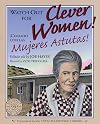
Picked this up thinking it would be 'good for me' - teach me something about Hispanic culture etc. I was pleasantly surprised at what a kick it is! I've seen some similar motifs in folk tales from other cultures, but Hayes and Hill bring these to vivid life, making them concise, funny, and effective.
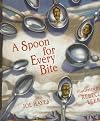
This is a Hispanic Folktale about a poor couple who invites their rich neighbor to dinner and the events that follow.
I thought this was a funny book with a great moral. It an be used to share culture and different viewpoints. It would be a great way to start discussions on social justice or differences in SES. I thought the story was interesting and it might prove funny to children.
I thought this was a funny book with a great moral. It an be used to share culture and different viewpoints. It would be a great way to start discussions on social justice or differences in SES. I thought the story was interesting and it might prove funny to children.
Lists
Awards


You May Also Like


Associated Authors
Statistics
- Works
- 46
- Members
- 1,925
- Popularity
- #13,370
- Rating
- 3.9
- Reviews
- 58
- ISBNs
- 135
- Languages
- 3