
Sharon Rudahl
Author of Dangerous Woman: The Graphic Biography of Emma Goldman
About the Author
Works by Sharon Rudahl
Lover's Crusade 1 copy
Associated Works
The Graphic Canon, Vol. 1: From the Epic of Gilgamesh to Shakespeare to Dangerous Liaisons (2012) — Illustrator — 304 copies, 7 reviews
Strip AIDS U.S.A.: A Collection of Cartoon Art to Benefit People With AIDS (1988) — Contributor — 65 copies
Choices: A Pro-Choice Benefit Comic Anthology for the National Organization for Women (1990) — Contributor — 20 copies
Ah! Nana № 1-9 — Contributor — 1 copy
Manhunt #2 — Contributor — 1 copy
Tagged
Common Knowledge
- Other names
- Sativa, Mary
- Birthdate
- 1947
- Gender
- female
- Education
- Cooper Union
- Occupations
- comic book artist
comic book writer - Nationality
- USA
- Birthplace
- Arlington, Virginia, USA
- Places of residence
- Los Angeles, California, USA
- Associated Place (for map)
- USA
Members
Reviews
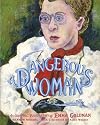
Emma Goldman is one of the big name names of American anarchists, as well as one of the earlier to contribute to free speech, birth control, and the labor movements. She was an amazing public speaker, something that is lost in this day of television and radio, and her writing still ranks amongst the classics of Anarchist thought for a free and just society. From her involvement in the shooting of Frick (though Alexander Berkman was a lousy shot) to free speech fights to labor struggles in show more Massachusetts to getting deported by Edgar Hoover, all the way to being amongst the first radicals to denounce the government of the Bolsheviks (which ostracized her amongst the left), and finally working to raise funds for the Spanish Revolutionary cause. She was jailed for fighting against the draft, advocating for birth control, and for “inciting a riot.” In a lot of ways, the stuff she said then was visionary for the time period. She remains one of the most amazing people in history, and someone who gave her all so others could be free and live in a just world.
"Dangerous Woman: A Graphic Biography of Emma Goldman" can be best described as a graphic novel version of "Living My Life", and it’s a real treat. The artist, Sharon Rudahl, does a great job capturing Goldman’s turbulent and unique life, growing from a fiery Jewish peasant girl fleeing Russia to an active Anarchist speaker and organizer hated by the government, to the patron-saint of the American Anarchist movement, though small by the time of her death. She spares no detail, especially the parts about Emma’s sex life and her many partners over the years. One of my favorite scenes in the book is when she has been sent by her mentor, Johann Most, on a speaking tour “Against the 8 Hour Day” (it was too little and was too reformist and not revolutionary enough.) She encounters an older man in the Chicago stop of the tour who tells her that while he understands why young people would be impatient with small demands, but “I won’t live to see the revolution. Will I never have a little time for reading or to walk openly in the park?” After this encounter, Emma vowed never to let doctrine or ideology get in the way of a good fight that brought real change to real people’s lives. That’s a lesson that a lot of radicals then and now could learn and take to heart.
Today, the closest we in the United States have to an Emma Goldman is academics in ivory towers, as loud mouth voices in the sea of state and corporate rule. The speaking tours of yesterday is the youtube, internet, music albums and television of today, which is much more controlled than speaking in public used to be, though less prone to violent disruption by people who disagree with the author. It’s hard to imagine a story like hers again where someone from such a humble beginning devotes her entire life, to the point where she refused to correct health problems like infertility, to the cause of fighting the existing order, and becoming such an international figure as she did. Maybe a new Emma Goldman of the internet or TV or music like hiphop will arise to become an inspiration to people’s movements everywhere, like Subcommader Marcos in Chiapas has, or elsewhere. It’s hard to say. Either way, check out Emma’s life in graphic novel comic form, because she’s a real life superhero in a way that Superman never could be. show less
"Dangerous Woman: A Graphic Biography of Emma Goldman" can be best described as a graphic novel version of "Living My Life", and it’s a real treat. The artist, Sharon Rudahl, does a great job capturing Goldman’s turbulent and unique life, growing from a fiery Jewish peasant girl fleeing Russia to an active Anarchist speaker and organizer hated by the government, to the patron-saint of the American Anarchist movement, though small by the time of her death. She spares no detail, especially the parts about Emma’s sex life and her many partners over the years. One of my favorite scenes in the book is when she has been sent by her mentor, Johann Most, on a speaking tour “Against the 8 Hour Day” (it was too little and was too reformist and not revolutionary enough.) She encounters an older man in the Chicago stop of the tour who tells her that while he understands why young people would be impatient with small demands, but “I won’t live to see the revolution. Will I never have a little time for reading or to walk openly in the park?” After this encounter, Emma vowed never to let doctrine or ideology get in the way of a good fight that brought real change to real people’s lives. That’s a lesson that a lot of radicals then and now could learn and take to heart.
Today, the closest we in the United States have to an Emma Goldman is academics in ivory towers, as loud mouth voices in the sea of state and corporate rule. The speaking tours of yesterday is the youtube, internet, music albums and television of today, which is much more controlled than speaking in public used to be, though less prone to violent disruption by people who disagree with the author. It’s hard to imagine a story like hers again where someone from such a humble beginning devotes her entire life, to the point where she refused to correct health problems like infertility, to the cause of fighting the existing order, and becoming such an international figure as she did. Maybe a new Emma Goldman of the internet or TV or music like hiphop will arise to become an inspiration to people’s movements everywhere, like Subcommader Marcos in Chiapas has, or elsewhere. It’s hard to say. Either way, check out Emma’s life in graphic novel comic form, because she’s a real life superhero in a way that Superman never could be. show less

In Ballad of An American: A Graphic Biography of Paul Robeson, Sharon Rudahl tells the story of athlete, scholar, singer, actor, and civil rights activist Paul Robeson in Rutgers University Press’s first graphic novel as part of the University's celebration of Robeson and the Class of 1919 Centennial. Rudahl brilliantly dramatizes Robeson’s life and her art succeeds in conveying her subjects’ emotions, alternating between photorealistic and expressionist styles. Rudahl also includes show more extensive quotes from Robeson that demonstrate his continued significance to those studying the importance of the arts in political debate. For example, Robeson said in the 1930s amid the rise of fascism, “The battlefield is everywhere. The artist must take sides. He must elect to fight for freedom or slavery. I have made my choice” (pg. 90). Robeson faced pushback under McCarthyism for his political activities just as the right targets entertainers for taking a stand now, though he was later recognized for his contributions to civil rights. Rudahl succeeds in her celebration of Robeson’s life while conveying his story in a manner that will reach readers beyond academia. show less

I wasn't overly impressed with the writing and drawing -- it's one of those graphic novels where the text and art fight for space on the page -- but I found myself quite fascinated with Paul Robeson's life. I couldn't recall ever hearing of him before, but in looking for his music on YouTube, I at least recognized his clip of "Old Man River" from the Showboat musical.
He seems to have been an impressive athlete, singer, actor, and political activist. I can vouch for the singing, as I went show more ahead and bought one of music compilations after I finished the book.
Robeson had some mental health issues late in life, and I was intrigued by the theory that he may have suffered CTE due to his early and rough football career at Rutgers University and the nascent NFL.
Unrelated to my rating, I find it odd that the male editors share nearly equal cover billing with the female writer/artist. They go so far as to list Buhle first on the "About the Authors Page." What are they communicating with this, intentionally and unintentionally? show less
He seems to have been an impressive athlete, singer, actor, and political activist. I can vouch for the singing, as I went show more ahead and bought one of music compilations after I finished the book.
Robeson had some mental health issues late in life, and I was intrigued by the theory that he may have suffered CTE due to his early and rough football career at Rutgers University and the nascent NFL.
Unrelated to my rating, I find it odd that the male editors share nearly equal cover billing with the female writer/artist. They go so far as to list Buhle first on the "About the Authors Page." What are they communicating with this, intentionally and unintentionally? show less
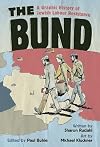
This was definitely a let down. It’s a very choppy, roundabout look at the history of the Bund, which is such an invigorating and interesting topic that somehow fell dead flat in these pages. The text itself often stops suddenly while learning of an individual or historical event, and is either too brief to fully understand what is happening or getting too off topic just because the author thought something was interesting. It was dry, and not much fun, and not even in a satisfying way show more robust learning can be.
Ultimately, it seems the author couldn’t decide who their audience should be: People with no background on Jewish history? People with no background in labour history? People with no background in Eastern European history? I have pretty firm grip on the first and latter, but sections of this were still sometimes confusing. The novel lacked a through-line and driving generation of knowledge a history book should be and instead presented a string of historical instances surrounding the Bund as its history. How can I learn when new faces, new places, and new ideas keep coming up page after page without context? Why do I feel like this is only appreciated by people who already know everything within its pages, and can fill in the necessary knowledge gaps to make a comprehensible history? I don’t know, someone tell me I’m insane!
This book also has an agenda, which is fine if you are aware and willing to engage with it, but not what I look for personally in my history. Half of the blurbs in and outside of the book purposely note an explicitly anti-Zionist intent, though it does not really reflect the work itself, oddly enough. Maybe the publisher was just trying to sell more books? The text is an accurate and well-tuned representation of the movement (even if does make some generalities that are a bit disingenuous), but not mentioning any influence on it from the founding of Israel was very apparent and a bit odd. What about Labour Zionism? What about the diaspora that moved to Israel? I understand not liking either of these histories, but ignoring the massive shift it wrought felt… intentional. It didn’t surprise me then that the book was funded in part by the DSA—when I’ve received books by Gefen Publishers for review, a Conservative Jewish and Israeli-owned publisher, I have to walk a similar right-rope line of reviewing a text that is forthright in its slanted intent and agenda. My only moral code is call it out, so this is me doing it here.
To conclude… I will await other graphic stories of this fascinating history. Even if you agree with their intent, it’s not a strong graphic novel by a mile. show less
Ultimately, it seems the author couldn’t decide who their audience should be: People with no background on Jewish history? People with no background in labour history? People with no background in Eastern European history? I have pretty firm grip on the first and latter, but sections of this were still sometimes confusing. The novel lacked a through-line and driving generation of knowledge a history book should be and instead presented a string of historical instances surrounding the Bund as its history. How can I learn when new faces, new places, and new ideas keep coming up page after page without context? Why do I feel like this is only appreciated by people who already know everything within its pages, and can fill in the necessary knowledge gaps to make a comprehensible history? I don’t know, someone tell me I’m insane!
This book also has an agenda, which is fine if you are aware and willing to engage with it, but not what I look for personally in my history. Half of the blurbs in and outside of the book purposely note an explicitly anti-Zionist intent, though it does not really reflect the work itself, oddly enough. Maybe the publisher was just trying to sell more books? The text is an accurate and well-tuned representation of the movement (even if does make some generalities that are a bit disingenuous), but not mentioning any influence on it from the founding of Israel was very apparent and a bit odd. What about Labour Zionism? What about the diaspora that moved to Israel? I understand not liking either of these histories, but ignoring the massive shift it wrought felt… intentional. It didn’t surprise me then that the book was funded in part by the DSA—when I’ve received books by Gefen Publishers for review, a Conservative Jewish and Israeli-owned publisher, I have to walk a similar right-rope line of reviewing a text that is forthright in its slanted intent and agenda. My only moral code is call it out, so this is me doing it here.
To conclude… I will await other graphic stories of this fascinating history. Even if you agree with their intent, it’s not a strong graphic novel by a mile. show less
Lists
Awards


You May Also Like


Associated Authors
Statistics
- Works
- 10
- Also by
- 21
- Members
- 244
- Popularity
- #93,238
- Rating
- 3.7
- Reviews
- 10
- ISBNs
- 11
- Languages
- 2