
Horace
Author of Epodes and Odes
About the Author
Image credit: Horace, as imagined by Anton von Werner
Series
Works by Horace
Horace: Satires, Epistles and Ars Poetica (Loeb Classical Library, No. 194) (English and Latin Edition) (1929) 729 copies, 7 reviews
Aristotle's Poetics, Demetrius on Style, and Other Classical Writings on Criticism [Everyman's library No. 901] (1943) 44 copies
Horace: Satires and Epistles/Persius : Satires (Penguin Classics) (English and Latin Edition) (1973) 29 copies
Oden I-III 18 copies
Libellus: Selections from Horace, Martial, Ovid, and Catullus. Handbook (Cambridge Latin Texts) (1978) 15 copies
Epistlar och sista dikter 15 copies
Rolfe's Satires and Epistles of Horace/Q. Horati Flacci Sermones et Epistulae (College Latin Series) (1901) 10 copies
Satire. Testo latino a fronte 8 copies
Odi ed epodi 6 copies
Ad Pyrrham 5 copies
The Complete Works of Horace: The 120 Odes and 42 Longer Poems: Modern Library No. 141 (1936) 5 copies
Q. Horatii Flacci epistolae ad Pisones, et Augustum with an English commentary and notes: to which are added critical di 5 copies, 1 review
Les poësies d'Horace 5 copies
Quintus Horatius Flaccus ad lectiones probatiores diligenter emendatus, et interpunctione nova saepius illustratus 5 copies, 1 review
The new life 4 copies
Quinti Horati Flacci Opera omnia ... With a commentary by E. C. Wickham. vol. I. The Odes, Carmen Saeculare, and Epodes. Third edition (2025) 4 copies
Sermons on living subjects 4 copies
Carminum librum quintum 4 copies
Christopher Smart's Verse Translation of Horace's Odes: Text and Introduction (ELS Monograph Series, No. 17) (1979) 3 copies
Horaz 3 copies
Epodos. Odas (El libro de bolsillo - Bibliotecas temáticas - Biblioteca de clásicos de Grecia y Roma) (Spanish Edition) (2005) 3 copies
Q. Horatii Flacci Carminum, liber I 3 copies
The Works of Q. Horatius Flaccus 3 copies
Horati carminum libri IV 3 copies
Epistulae 3 copies
Horace (2 volume set) 2 copies
Satire 2 copies
The complete Horace : odes, epodes, satires, epistles : based on by Bennett and Rolfe (2014) 2 copies
Sermo et lyra 2 copies
Versek 2 copies
Q Horati Flacci Epistulae. The Epistles of Horace, Edited with Notes by Augustus Wilkins. (1896) 2 copies
I Carmi 2 copies
Horats' Oder 2 copies
Q. Horatius Flaccus.vol. 1-3 2 copies
Horace's Art of Poetry Translated. Inscribed to the Right Honourable the Earl of Halifax. by William Popple, Esq (2018) 2 copies
Horace Odes: IV 2 copies
Translating Horace. Thirty odes translated into the original metres with the Latin text and an introductory and critical essay by J. B. Leishman (1956) 2 copies
Our Southern Highlanders: A Narrative of Adventure in the Southern Appalachians and a Study of Life Among the Mountaineers (Classic Reprint) (2020) 2 copies
Odi ed epodi 2 copies
Le epistole 2 copies
The Mentor book of religious verse 2 copies
Le liriche 2 copies
The carmen seculare of Horace 2 copies
Tutte le opere 2 copies
Q. Horatius Flaccus : Briefe 2 copies
Q. Horatii Flacci Opera 2 copies
A Commentary on Horace: Odes Book I 2 copies
Odes with Life and Notes 2 copies
The Christ of God 2 copies
Epistolas 2 copies
Horace. Odes IV. [ Q. Horatii Flacci Carminum Liber IV. ] (Elementary Classics) (1914) — Author — 2 copies
Odas selectas 2 copies
Oeuvres d'Horace en latin et en françois, avec des remarques critiques et historiques, vol. 1 2 copies
Q. Horatius Flaccus: Satiren 2 copies
Carmona 2 copies
Sermones et epistulae 2 copies
Arte poetica 2 copies
Q. Horati Flacci Carmina Sapphica 2 copies
Quinti Horati Flacci Carmina Alcaica 2 copies
Horace Odes II 2 copies
Odes: Book IV 2 copies
jeugdwerk 2 copies
Carmina 2 copies
Odes (Geuem??) P. McC. London 1822 2 copies
Oeuvres complètes , Odes et épodes , tome I , 1 , bilingue (texte et traduction en regard) - Texte établi, traduit et annoté par François… (1931) 2 copies
Jeugdwerk 2 copies
Life & Odes (Theodore Martin) 2 copies
Odes: Book II 2 copies
Gedichte 2 copies
Romaj Odoj 2 copies
Opera. Ed. Stephanus Borzsák 2 copies
Carmen Saeculare 2 copies
Horatius : Text 1 copy
Epistularum 1 copy
Odi 1 copy
Le satire ; Le epistole 1 copy
Epistole. Libro I 1 copy
Le liriche. Vol. II 1 copy
Epitres (Epistole) 1 copy
Satires (Satire) 1 copy
Le Odi 1 copy
ODI, Libro Secondo, 1 copy
Carmi 1 copy
Oeuvres d'Horace en latin et en françois, avec des remarques critiques et historiques, vol. 7 1 copy
Odes and Epodes 1 copy
Odas edición bilingüe 1 copy
Arte poética y otros poemas 1 copy
Oeuvres d'Horace en latin et en françois, avec des remarques critiques et historiques, vol. 10 1 copy
Oeuvres d'Horace en latin et en françois, avec des remarques critiques et historiques, vol. 9 1 copy
Oeuvres d'Horace en latin et en françois, avec des remarques critiques et historiques, vol. 6 1 copy
Odas - Epodos 1 copy
Sátiras ; Os Faustos 1 copy
Lucrecio 1 copy
Horātija Dzejas 1 copy
Römische Satiren 1 copy
Aspetti di vita: antologia modulare di autori latini per il triennio della scuola media superiore (2006) 1 copy
Romae vates: antologia delle opere oraziane: Odi, Epodi, Satire, Epistole/ a cura di Luigi Annibaletto (2005) 1 copy
Werke [aus d. Lat.] 1 copy
Satire / Epistole 1 copy
A Leuconoe e altre poesie 1 copy
Opere (antologia) 1 copy
I carmi 1 copy
ODI, Libro Primo, 1 copy
Horace : édition classique 1 copy
Carminum: Liber II 1 copy
Horácio — Poesia Completa 1 copy
Die Oden des Horaz 1 copy
Orazio: satire 1 copy
Horazens Oden 1 copy
Quinti Horatii Flacci opera 1 copy
Satiren und Episteln 1 copy
The Dream of My Return 1 copy
Odes d'Horace, traduites en vers françois. Avec des notes, par M. Chabanon de Maugris. Livre 3-e 1 copy
Le odi. Volume 1 1 copy
Horatius noster antologia 1 copy
Cuentos de Horacio Quiroga 1 copy
La pérdida de la razón 1 copy
Horatius epistulái 1 copy
Epistole I: le lettere agli amici, la morale del mondo, l'arte di vivere di un antico maestro e amico (1998) 1 copy
Q. Horatius Flaccus Ex Recesione et cum Notis Atque Emendationibus Richardi Bentleii. Editio tertia. 1 copy
Q. Horati Flacci Sermonum et Epistularum Libri: Satiren und Episteln des Horaz. Mit Anmerkung 1 copy
Q. Horatius Flaccus: Briefe 1 copy
Le epistole 1 copy
L'arte poetica 1 copy
Le satire e Le epistole 1 copy
La lirica di Orazio 1 copy
Oden 1-3 1 copy
Q. Horatius Flaccus 1 copy
Ausgewählte Gedichte 1 copy
HLe Isatire 1 copy
Horati Opera 1 copy
SATIRA DHE EPISTULA 1 copy
Horats' Satirer og Breve 1 copy
ODES I ÈPODES - VOLUM I 1 copy
Odes Book One 1 copy
Odas 1 copy
Odas Libro II 1 copy
Satires 1 copy
Odes et épodes 1 copy
Odas (libros I-II) 1 copy
Избранная лирика 1 copy
XL Odas Selectas 1 copy
Arte poética y otros poemas 1 copy
Odas de Q. Horacio Flaco 1 copy
Poesías 1 copy
Epístolas Arte poética 1 copy
Wybór pieśni 1 copy
El segundo epodo de Horacio 1 copy
Odi scelte 1 copy
Horatius I 1 copy
Poetik og kritik 1 copy
Horaci : cinc odes 1 copy
Valitud oodid 1 copy
Poésies d'Horace 1 copy
Third Book of Horace's Odes 1 copy
Odes et Epodes, Tome I 1 copy
Q. Horatii Carminum 1 copy
Wickham's Horace (2 vols.) 1 copy
Odes et Satyres, traduites en français.--[Essais sur quelques odes d'Horace ( par J. Duhamel)] 1 copy
Quinti Horati Flacci opera omni (v.1): the works of Horace with a commentary by E. C. Wickham (1891) 1 copy
Satires & Epistles of Horace 1 copy
Horati carmina viginti 1 copy
The Odes of Horace, Book II 1 copy
Epitres 1 copy
Horati Carminum: Liber I 1 copy
Horatius Delphini 1 copy
Hoartius Delphini 1 copy
The Works of Horace, vol. I 1 copy
Satire, odes, épîtres 1 copy
Souvenirs d'un artiste 1 copy
Q. Horatii Flacci Opera a Mauricio Hauptio recognita. Editio quinta ab Iohanne Vahleno curata 1 copy
The complete Odes and Epodes 1 copy
Quinti Horatii Flacci opera .... illustravit Ludovicus Desprez ... in usum serenissimi Delphini 1 copy
Horace For Modern Readers 1 copy
Odes, Epodes, and Satires 1 copy
The Temple classics 1 copy
Q. Horatius Flaccus Ad nuperam Richardi Bentleii editionem accurate expressus. Notas addidit Thomas Bentleius 1 copy, 1 review
Fifteen Odes of Horace — Author — 1 copy
Six Odes 1 copy
Les Carmina / Odes et Épodes 1 copy
Select odes / [appx.] 1 copy
Q. Horatius Flaccus, Briefe 1 copy
The third book of Horace's Odes, edited with translation and running commentary by Gordon Williams 1 copy
Horace for English readers: being a translation of the poems of Quinius Horatius Flaccus into English prose by E. C. Wickham (2010) 1 copy
Odes : book three 1 copy
Quintus Horatius Flaccus. Accedunt nunc Danielis Heinsii De satyra Horatiana libri duo. Cum ejusdem in omnia poëtae animaduersionibus, longe auctioribus 1 copy, 1 review
Oeuvres complètes tome 1 1 copy
Obras II 1 copy
Opera quae extant. 1 copy
Corneille 1 copy
ODES LIVRE PREMIER 1 copy
Œuvres complètes 1 copy
Odes (tr. James Michie) 1 copy
Kiss Tomorrow Goodbye 1 copy
On Himself (Alpha Classics) 1 copy
Epistolae ad Pisones 1 copy
Szatírák 1 copy
Poemata 1 copy
Ódák és epódoszok 1 copy
Orazio Satire 1 copy
Die Oden des Qu. Horatius Flaccus im Versmaß des Urtextes übersetzt von Adolf Bacmeister. (1900) 1 copy
Horatii Flacci Carmina 1 copy
Epodon liber 1 copy
Scalpel 1 copy
Broadsheet: Matrix 23 (C32) 1 copy
The Odes of Horace rendered into English, with other verses and translations, by Francis Law Latham (1910) 1 copy
Over de dichtkunst 1 copy
The Odes of Horace, Book II 1 copy
Odes, Carminum Libri IV 1 copy
Three odes of Horace 1 copy
The Complete Works of Horace; The Original Text Reduced to the Natural English Order, with a Literal Interlinear Translation (2013) 1 copy
Odes. Book II 1 copy
Oeuvres complètes d'Horace traduites en vers par P. Daru - sixième édition corrigée - 2 tomes (1823) 1 copy
Another Look 1 copy
Fifteen odes of Horace 1 copy
Horace; his life, friendships and philosophy as told by himself in unrhymed metrical translation 1 copy
Carminum, Liber I 1 copy
Rare Horace SATIRES EPISTLES & ARS POETICA Fairclough 1961 Heinemann / Harvard LOEB [Hardcover] Horace (1961) 1 copy
The Complete Works of Horace 1 copy
Satires et épitres 1 copy
The Satyres of Horace 1 copy
The third book of Horace's Odes. Edited with translation and running commentary by Gordon Williams 1 copy
Odes e Epodos 1 copy
Horace Odes Book One 1 copy
Horace, Complete 1 copy
The Eclogues and Georgics 1 copy
Horace, translated by Philip Francis, D.D. and revised by H.I. Pie, Esq. Poet Laureat to his Majesty 1 copy
Horācija Izmeklētas odas = Horatii Flacci Delecta carmina : trijās daļās — Author — 1 copy
Associated Works
Literature: An Introduction to Fiction, Poetry, and Drama (1995) — Contributor, some editions — 1,015 copies, 7 reviews
World Poetry: An Anthology of Verse from Antiquity to Our Time (1998) — Contributor — 499 copies, 2 reviews
Poems Bewitched and Haunted (Everyman's Library Pocket Poets Series) (2005) — Contributor — 230 copies
Games of Venus: An Anthology of Greek and Roman Erotic Verse from Sappho to Ovid (The New Ancient World) (1991) — Contributor — 57 copies, 1 review
Women in Power: Classical Myths and Stories, from the Amazons to Cleopatra (2024) — Contributor — 34 copies
Oogst Der Tijden. keur uit de werken van schrijvers en dichters aller volken en eeuwen (1940) — Contributor — 12 copies
Latijnse lyriek : een keuze van vertalingen uit Catullus, Horatius, Tibullus en Propertius (1949) — Contributor — 5 copies
Latijnse geschiedschrijvers : bloemlezing uit de werken van Sallustius, Caesar, Livius en Tacitus (1952) — Contributor — 4 copies
Ode to Boy: An Anthology of Same-Sex Attraction in Literature, Volume One: From Antiquity Through the Eighteenth Century (2014) — Contributor — 3 copies
Translations from Horace, Juvenal and Montaigne : with 2 imaginary conversations — Contributor — 2 copies
Römische Satiren : Ennius, Lucilius, Varro, Horaz, Persius, Juvenal, Seneca, Petronius (1962) — Contributor — 2 copies
Tagged
Common Knowledge
- Legal name
- Horatius Flaccus, Quintus
- Other names
- Horace
Horaz - Birthdate
- 65-12-08 BCE
- Date of death
- 8-11-27 BCE
- Gender
- male
- Agent
- Maecenas
- Nationality
- Roman Empire
- Birthplace
- Venusia, Apulia, Roman Empire
- Place of death
- Rome, Roman Empire
- Map Location
- Italy
Members
Discussions
Shakespeare-Owned Book Found? in The Globe: Shakespeare, his Contemporaries, and Context (May 2021)
Horace in Ancient History (August 2010)
Reviews
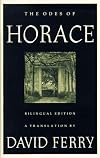
Just to be clear, I give Horace all the stars in the internet. I give David Ferry two of them.
Horace's poems are masterpieces of concision, obliquity, delay, and obfuscation. David Ferry's version of Horace is, well, prolix, acute, direct, and transparent. In his introduction he more or less says that his unit of translation is the poem as a whole, which is a perfectly defenseable position. Literal translations are terrible, translations of poems should really themselves be poems. The show more problem here is that Ferry and I disagree so strongly on what a poem should actually be. His ideal seems to be something that is very slightly metrical, but mostly conversational in tone.
I read his translations of Virgil's Eclogues many years ago and liked it okay, and I suspect his style is much better suited to long poems of that kind: what matters in them is what is being said as much as how it is written. But for Horace's odes, what is being said is almost entirely banal, and it is being said in an extraordinary, beautiful, fascinating way. Ferry loses all of that.
Is there a good, modernist translation of Horace out there, akin to Fagles' Oresteia? I hope to read one before I die. show less
Horace's poems are masterpieces of concision, obliquity, delay, and obfuscation. David Ferry's version of Horace is, well, prolix, acute, direct, and transparent. In his introduction he more or less says that his unit of translation is the poem as a whole, which is a perfectly defenseable position. Literal translations are terrible, translations of poems should really themselves be poems. The show more problem here is that Ferry and I disagree so strongly on what a poem should actually be. His ideal seems to be something that is very slightly metrical, but mostly conversational in tone.
I read his translations of Virgil's Eclogues many years ago and liked it okay, and I suspect his style is much better suited to long poems of that kind: what matters in them is what is being said as much as how it is written. But for Horace's odes, what is being said is almost entirely banal, and it is being said in an extraordinary, beautiful, fascinating way. Ferry loses all of that.
Is there a good, modernist translation of Horace out there, akin to Fagles' Oresteia? I hope to read one before I die. show less
With Horace, I’ve found yet another reason to learn Latin. There’s always a loss when you read a text in translation. Simply consider that ugly anglicisation Horace. As if Horatius isn’t a perfectly decent Roman name.
Quintus Horatius Flaccus had studied in Athens at the Academy founded by Plato where he also learned to appreciate the Greek lyrical poetry (Pindar, Sappho, Alcaeus) that later strongly inspired his own writings. Although he fought as a military tribune on the losing side show more at Philippi, he later supported Augustus, at least in writing. His Carmen Saeculare (also included in this book) was commissioned by Augustus in 17 BCE.
Horace later self-deprecatingly downplayed his role in the war – likely a wise thing to do all things considered. But it is under any circumstance as a great poet that he was celebrated, both in his own time and ever since. - I started reading this book containing his Odes last summer, and for some reason I left it hibernating all through the winter. It just might be that it should be read in the summer:
"The garlanded cupbearer waiting, and garlanded I,
Here in the shade of the arbour, drinking my wine." (i.38)
Personally I am inclined to forgo the garland, but life on Horace's Sabine farm is otherwise much to my liking – as is his praise of the simple living and the simple pleasures. But he is painfully aware of the ways things are changing:
"It won’t be long before the little farms
Will be crowded out of being by the great
Estates of these latter days with their enormous
Fish ponds bigger than Lake Lucrinus is.
(...)
It wasn’t like this at all in Cato’s time
Or Romulus's time. Our fathers' ways
Were not these ways. Nobody minded then
That this holding was nothing more than a little farm.
They thought more then about the common good."
... (ii.15)
He can also be, and indeed he often is, more humorous - here with a morbid twist in an ode dedicated to a tree on his estate:
...
"That man probably strangled his own father;
His hearth is probably stained with the blood of a houseguest
He murdered at midnight; he’s probably an expert at poison
Or any other crime you choose to name --
That man who planted you you wretched rotten
Falling tree come down on your master’s head."
... (ii.13)
His sense of humor is often present in the odes to faithless lovers or the banter between lovers - or in the praise of wine. But he always returns to the joys of simple rural life. It was Horace’s patron Maecenas who gave him the villa outside Rome - and the first three books of Odes were dedicated to him, and so is the particular ode this quote is taken from:
...
"The more the money grows the more the greed
Grows too; also the anxiety of greed.
Maecenas, glory of simple knighthood, this
Is the reason I myself was always afraid
Of too much ambition and of rising too high.
The more a man can do without, the more
The gods will do for him. So, empty-handed,
Deserting the camp of the rich, I seek the camp
Of those who ask for little, and thus I am
A more impressive master of all the wealth
I happily have contempt for than if I
Were that poor thing belittled by his riches,
Hiding away in his storehouse everything garnered
From the rich Apulian fields his peasants till.
The splendid lord of the riches of Africa
Mistakenly thinks he's better off than I,
With my little farm whose crops I'm certain of,
And my quiet little stream of pure brook water."
... (iii.16)
There is a subtlety in Horace that I find really intriguing, and I liked Ferry’s translations a lot - the only exceptions were when he used some very obvious anachronisms, but they were so few and far between that it really didn’t matter all that much. I haven’t read any other translations, but as can also be judged from the above quotes, this translation is quite an accomplishment. It is also great to have the Latin version on on the facing page – and it makes it all the more striking how much more wordy the English language is in comparison to the simple, concise and elegant Latin. show less
Quintus Horatius Flaccus had studied in Athens at the Academy founded by Plato where he also learned to appreciate the Greek lyrical poetry (Pindar, Sappho, Alcaeus) that later strongly inspired his own writings. Although he fought as a military tribune on the losing side show more at Philippi, he later supported Augustus, at least in writing. His Carmen Saeculare (also included in this book) was commissioned by Augustus in 17 BCE.
Horace later self-deprecatingly downplayed his role in the war – likely a wise thing to do all things considered. But it is under any circumstance as a great poet that he was celebrated, both in his own time and ever since. - I started reading this book containing his Odes last summer, and for some reason I left it hibernating all through the winter. It just might be that it should be read in the summer:
"The garlanded cupbearer waiting, and garlanded I,
Here in the shade of the arbour, drinking my wine." (i.38)
Personally I am inclined to forgo the garland, but life on Horace's Sabine farm is otherwise much to my liking – as is his praise of the simple living and the simple pleasures. But he is painfully aware of the ways things are changing:
"It won’t be long before the little farms
Will be crowded out of being by the great
Estates of these latter days with their enormous
Fish ponds bigger than Lake Lucrinus is.
(...)
It wasn’t like this at all in Cato’s time
Or Romulus's time. Our fathers' ways
Were not these ways. Nobody minded then
That this holding was nothing more than a little farm.
They thought more then about the common good."
... (ii.15)
He can also be, and indeed he often is, more humorous - here with a morbid twist in an ode dedicated to a tree on his estate:
...
"That man probably strangled his own father;
His hearth is probably stained with the blood of a houseguest
He murdered at midnight; he’s probably an expert at poison
Or any other crime you choose to name --
That man who planted you you wretched rotten
Falling tree come down on your master’s head."
... (ii.13)
His sense of humor is often present in the odes to faithless lovers or the banter between lovers - or in the praise of wine. But he always returns to the joys of simple rural life. It was Horace’s patron Maecenas who gave him the villa outside Rome - and the first three books of Odes were dedicated to him, and so is the particular ode this quote is taken from:
...
"The more the money grows the more the greed
Grows too; also the anxiety of greed.
Maecenas, glory of simple knighthood, this
Is the reason I myself was always afraid
Of too much ambition and of rising too high.
The more a man can do without, the more
The gods will do for him. So, empty-handed,
Deserting the camp of the rich, I seek the camp
Of those who ask for little, and thus I am
A more impressive master of all the wealth
I happily have contempt for than if I
Were that poor thing belittled by his riches,
Hiding away in his storehouse everything garnered
From the rich Apulian fields his peasants till.
The splendid lord of the riches of Africa
Mistakenly thinks he's better off than I,
With my little farm whose crops I'm certain of,
And my quiet little stream of pure brook water."
... (iii.16)
There is a subtlety in Horace that I find really intriguing, and I liked Ferry’s translations a lot - the only exceptions were when he used some very obvious anachronisms, but they were so few and far between that it really didn’t matter all that much. I haven’t read any other translations, but as can also be judged from the above quotes, this translation is quite an accomplishment. It is also great to have the Latin version on on the facing page – and it makes it all the more striking how much more wordy the English language is in comparison to the simple, concise and elegant Latin. show less
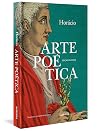
Passei a tarde estudando essa Arte Poética do Horácio porque um livro desses a gente não lê, estuda. Explico. A tradução e as notas do sempre magnânimo Guilherme Gontijo Flores é sempre um passo à frente na chamada leitura apenas por prazer. O tradutor é tão amplamente qualificado que até suas notas de rodapé nos auxiliam de maneira a melhor sorver o texto poético e, não só, ampliam o nosso conhecimento da interpretação, das referências, do aspecto formal, tanto que me show more parece pouco elogiar apenas como uma grande edição essa da Autêntica. Até faz me lamentar ter sofrido tanto nas aulas de latim da minha graduação na UEL. show less
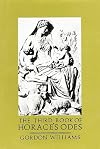
I found this book on the floor of a young relative's car. Serendipitously, 'A New Ganymede' in David Malouf's Typewriter Music is a version of ode 3:20, and the way Professor Williams presented 3:20 here was reader-friendly, so I decided to read the unfortunately pedagogical-looking book from cover to cover. Initially, the pleasures of reading it were mostly in the same category as the joys of really hard cryptic crosswords, but as my Latin began to revive I found myself engaging, enjoying show more the light the poems cast on my experience of the world. (Easy, for example, to see George W Bush and the new imperium as grotesque parody of Caesar Augustus and his imperium.) It strikes me that even though it does mean something to call Latin a dead language, it's not dead the way a tree or a bandicoot is dead: it's still full of life in these poems. A language isn't really dead until no one's left alive who can speak it or read it. Soon after I wrote that last sentence I read the 30th and last ode in the book, and found my thoughts echoed there:
Non omnis moriar, multaque pars mei
vitabit Libitinam.
In English:
Not all of me will die and a large part of me
will avoid the goddess of funerals.
He was right. Horace is dead and so is everyone who mourned his loss, but we can still engage with his language, the traces left by his mind spark living minds down fresh paths. show less
Non omnis moriar, multaque pars mei
vitabit Libitinam.
In English:
Not all of me will die and a large part of me
will avoid the goddess of funerals.
He was right. Horace is dead and so is everyone who mourned his loss, but we can still engage with his language, the traces left by his mind spark living minds down fresh paths. show less
Lists
Awards


You May Also Like


Associated Authors
Statistics
- Works
- 782
- Also by
- 30
- Members
- 7,864
- Popularity
- #3,089
- Rating
- 3.9
- Reviews
- 89
- ISBNs
- 494
- Languages
- 22
- Favorited
- 33