
George K. Simon Jr.
Author of In Sheep's Clothing: Understanding and Dealing with Manipulative People
About the Author
George K. Simon Jr., Ph.D. received his degree in clinical psychology at Texas Tech University. For thirty years, he has studied disorders of character, including the mayhem caused by under-developed or failed characters in the home, the classroom, and in society. Following his international show more best-seller (see reader reviews above), this new book is the culmination of Dr. Simon's career in psychology. Websites where Dr. Simon's blogs and essays can be found include www.drgeorgeksimon.com and www.manipulative-people.com show less
Works by George K. Simon Jr.
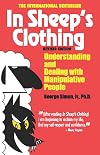
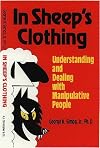
In Sheep's Clothing: Understanding and Dealing with Manipulative People (1996) — Author — 428 copies, 12 reviews
How Did We End Up Here?: Surviving and Thriving in a Character-Disordered World (2016) 9 copies, 1 review
Como lidar com pessoas manipuladoras 2 copies
Tagged
Common Knowledge
- Gender
- male
Members
Reviews
I think we all have to deal with at least one toxic manipulative person at some point in our lives; it might be a parent, a spouse, a boss, a co-worker, or even a child. In my case, I grew up with a master manipulator for a father. And now I work with someone who, although not nearly in the league of my father, is still a fairly good manipulator.
I think the best thing about this book is that it does encourage you to go with your gut. I've been told by everyone that "K" is going through a show more hard time, that she doesn't MEAN to be so cruel and hateful, etc, etc. But I couldn't shake the feeling in my gut that K, no matter the circumstances, is just a manipulator, and she's using people around us. After reading this book, I definitely feel much more validated in my assessment of her personality, especially since the list of manipulative behaviors fit her to a tee. I could give multiple examples for each one.
I do wish that this book gave you more ideas on how to deal with the manipulators. There is a chapter at the end of the book that lists some coping strategies, but I feel like it's just not enough. Most of them deal with changing your own behavior and reactions, which does make sense, since you'll never be able to "force" a manipulator to change their own ways. I'm planning on utilizing those that I can to see if it makes a difference in my interactions with my coworker. show less
I think the best thing about this book is that it does encourage you to go with your gut. I've been told by everyone that "K" is going through a show more hard time, that she doesn't MEAN to be so cruel and hateful, etc, etc. But I couldn't shake the feeling in my gut that K, no matter the circumstances, is just a manipulator, and she's using people around us. After reading this book, I definitely feel much more validated in my assessment of her personality, especially since the list of manipulative behaviors fit her to a tee. I could give multiple examples for each one.
I do wish that this book gave you more ideas on how to deal with the manipulators. There is a chapter at the end of the book that lists some coping strategies, but I feel like it's just not enough. Most of them deal with changing your own behavior and reactions, which does make sense, since you'll never be able to "force" a manipulator to change their own ways. I'm planning on utilizing those that I can to see if it makes a difference in my interactions with my coworker. show less
Summary
The book is an operating manual for folks who might find themselves dealing with a covert aggressive personality type.
Liked
Differentiation of neurotic vs character sufficiency spectrum
Didn't vilify the character difficient beyond pointing out that the may be mal adapted to current societal trends
Could be improved
The book has a tone that was a little too pleased with homself. It would have been better if there had been more links to further reading and other related areas of show more research.
Stories were a bit one sided and too smooth. When people then use the stories to justify the conclusions I think the final ideas suffer for that. Perhaps include a more detailed version of case studies in an appendix.
There's a social agenda woven into the book as well. Not sure what I think about that.
Highlight
Don't make the mistake of assuming everyone's basically the same on the inside. show less
The book is an operating manual for folks who might find themselves dealing with a covert aggressive personality type.
Liked
Differentiation of neurotic vs character sufficiency spectrum
Didn't vilify the character difficient beyond pointing out that the may be mal adapted to current societal trends
Could be improved
The book has a tone that was a little too pleased with homself. It would have been better if there had been more links to further reading and other related areas of show more research.
Stories were a bit one sided and too smooth. When people then use the stories to justify the conclusions I think the final ideas suffer for that. Perhaps include a more detailed version of case studies in an appendix.
There's a social agenda woven into the book as well. Not sure what I think about that.
Highlight
Don't make the mistake of assuming everyone's basically the same on the inside. show less
Fuck. Manny’s reading this book In Sheep’s Clothing Understanding and Dealing with Manipulative People and I’m thinking he’s going to start applying it to goodreads, isn’t he? He’s going to start looking at reviews and writing comments like, sorry, but that’s a review that’s trying to get a vote through covert-aggression and I’m not falling for it. Vote withheld.
So he says he’s especially interested in this concept covert-aggression, he thinks it’s useful and I’ve show more spent all night sitting up in bed here in hospital going through my reviews and wondering. Shit. Is that review where I said I was going to kill myself if people didn’t vote for it, is that covert aggression? It doesn’t seem covert to me, I thought it was just desperate, but. And that review where –
Before I went too far I thought I’d better look up what it means and I found this extract from the book itself, which I’ve quoted in part, for the detail go to http://www.rickross.com/reference/brainwashing/brainwashing11.htm
So, this is what I want to say right now before the whole Manny psycho-analysing goodreads friends starts. I’m not covertly aggressive. Anybody who thinks I am is just not able to see that it is their problem that I’m like this, not mine. Telling you I’m writing this in hospital is not a covert aggressive attempt to make you feel like you have to vote for my review, even though it’s probably the fault of whoever is reading this that I’m here. If this review isn’t any good it’s not my fault, you should blame the author of the book, George Simon and Manny, not necessarily in that order. Frankly I already feel like I’m a victim of Manny’s use of psycho-analysis on goodreads, even though it hasn’t happened yet. I would also point out that I vote for lots of your reviews, Manny, and isn’t that worth anything?
And, Manny, if I may end by blowing you a kiss and hoping it lands in the right place, I am just so NOT doing this:
I just love blowing you kisses, even if it isn’t going to get me a vote. x show less
So he says he’s especially interested in this concept covert-aggression, he thinks it’s useful and I’ve show more spent all night sitting up in bed here in hospital going through my reviews and wondering. Shit. Is that review where I said I was going to kill myself if people didn’t vote for it, is that covert aggression? It doesn’t seem covert to me, I thought it was just desperate, but. And that review where –
Before I went too far I thought I’d better look up what it means and I found this extract from the book itself, which I’ve quoted in part, for the detail go to http://www.rickross.com/reference/brainwashing/brainwashing11.htm
The Process of Victimization
For a long time, I wondered why manipulation victims have a hard time seeing what really goes on in manipulative interactions. At first, I was tempted to fault them. But I've learned that they get hoodwinked for some very good reasons:
1. A manipulator's aggression is not obvious. Our gut may tell us that they're fighting for something, struggling to overcome us, gain power, or have their way, and we find ourselves unconsciously on the defensive. But because we can't point to clear, objective evidence they're aggressing against us, we can't readily validate our feelings.
2. The tactics manipulators use can make it seem like they're hurting, caring, defending, ..., almost anything but fighting. These tactics are hard to recognize as merely clever ploys. They always make just enough sense to make a person doubt their gut hunch that they're being taken advantage of or abused. Besides, the tactics not only make it hard for you to consciously and objectively tell that a manipulator is fighting, but they also simultaneously keep you or consciously on the defensive. These features make them highly effective psychological weapons to which anyone can be vulnerable. It's hard to think clearly when someone has you emotionally on the run.
3. All of us have weaknesses and insecurities that a clever manipulator might exploit. Sometimes, we're aware of these weaknesses and how someone might use them to take advantage of us. For example, I hear parents say things like: "Yeah, I know I have a big guilt button." – But at the time their manipulative child is busily pushing that button, they can easily forget what's really going on. Besides, sometimes we're unaware of our biggest vulnerabilities. Manipulators often know us better than we know ourselves. They know what buttons to push, when and how hard. Our lack of self-knowledge sets us up to be exploited.
4. What our gut tells us a manipulator is like, challenges everything we've been taught to believe about human nature. We've been inundated with a psychology that has us seeing everybody, at least to some degree, as afraid, insecure or "hung-up." So, while our gut tells us we're dealing with a ruthless conniver, our head tells us they must be really frightened or wounded "underneath." What's more, most of us generally hate to think of ourselves as callous and insensitive people. We hesitate to make harsh or seemingly negative judgments about others. We want to give them the benefit of the doubt and assume they don't really harbor the malevolent intentions we suspect. We're more apt to doubt and blame ourselves for daring to believe what our gut tells us about our manipulator's character.
Almost everyone is familiar with the term defense mechanism. Defense mechanisms are the "automatic" (i.e. unconscious) mental behaviors all of us employ to protect or defend ourselves from the "threat" of some emotional pain…..
While, from a certain perspective we might say someone engaging in these behaviors is defending their ego from any sense of shame or guilt, it's important to realize that at the time the aggressor is exhibiting these behaviors, he is not primarily defending (i.e. attempting to prevent some internally painful event from occurring), but rather fighting to maintain position, gain power and to remove any obstacles (both internal and external) in the way of getting what he wants. Seeing the aggressor as on the defensive in any sense is a set-up for victimization. Recognizing that they're primarily on the offensive, mentally prepares a person for the decisive action they need to take in order to avoid being run over. Therefore, I think it's best to conceptualize many of the mental behaviors (no matter how "automatic" or "unconscious" they may appear) we often think of as defense mechanisms, as offensive power tactics, because aggressive personalities employ them primarily to manipulate, control and achieve dominance over others. Rather than trying to prevent something emotionally painful or dreadful from happening, anyone using these tactics is primarily trying to ensure that something they want to happen does indeed happen….
Denial – This is when the aggressor refuses to admit that they've done something harmful or hurtful when they clearly have. It's a way they lie (to themselves as well as to others) about their aggressive intentions. This "Who... Me?" tactic is a way of "playing innocent," and invites the victim to feel unjustified in confronting the aggressor about the inappropriateness of a behavior. It's also the way the aggressor gives him/herself permission to keep right on doing what they want to do….
Rationalization – A rationalization is the excuse an aggressor tries to offer for engaging in an inappropriate or harmful behavior. It can be an effective tactic, especially when the explanation or justification the aggressor offers makes just enough sense that any reasonably conscientious person is likely to fall for it. It's a powerful tactic because it not only serves to remove any internal resistance the aggressor might have about doing what he wants to do (quieting any qualms of conscience he might have) but also to keep others off his back. If the aggressor can convince you he's justified in whatever he's doing, then he's freer to pursue his goals without interference….
Lying – It's often hard to tell when a person is lying at the time he's doing it. Fortunately, there are times when the truth will out because circumstances don't bear out somebody's story. But there are also times when you don't know you've been deceived until it's too late. One way to minimize the chances that someone will put one over on you is to remember that because aggressive personalities of all types will generally stop at nothing to get what they want, you can expect them to lie and cheat. Another thing to remember is that manipulators – covert-aggressive personalities that they are – are prone to lie in subtle, covert ways. Courts are well aware of the many ways that people lie, as they require that court oaths charge that testifiers tell "the truth, the whole truth, and nothing but the truth." Manipulators often lie by withholding a significant amount of the truth from you or by distorting the truth. They are adept at being vague when you ask them direct questions. This is an especially slick way of lying' omission. Keep this in mind when dealing with a suspected wolf in sheep's clothing. Always seek and obtain specific, confirmable information.
Covert Intimidation – Aggressors frequently threaten their victims to keep them anxious, apprehensive and in a one-down position. Covert-aggressives intimidate their victims by making veiled (subtle, indirect or implied) threats. Guilt-tripping and shaming are two of the covert-aggressive's favourite weapons. Both are special intimidation tactics.
Guilt-tripping – One thing that aggressive personalities know well is that other types of persons have very different consciences than they do. Manipulators are often skilled at using what they know to be the greater conscientiousness of their victims as a means of keeping them in a self-doubting, anxious, and submissive position. The more conscientious the potential victim, the more effective guilt is as a weapon. Aggressive personalities of all types use guilt-tripping so frequently and effectively as a manipulative tactic, that I believe it illustrates how fundamentally different in character they are compared to other (especially neurotic) personalities. All a manipulator has to do is suggest to the conscientious person that they don't care enough, are too selfish, etc., and that person immediately starts to feel bad. On the contrary, a conscientious person might try until they're blue in the face to get a manipulator (or any other aggressive personality) to feel badly about a hurtful behavior, acknowledge responsibility, or admit wrongdoing, to absolutely no avail.
Shaming – This is the technique of using subtle sarcasm and put-downs as a means of increasing fear and self-doubt in others. Covert-aggressives use this tactic to make others feel inadequate or unworthy, and therefore, defer to them. It's an effective way to foster a continued sense of personal inadequacy in the weaker party, thereby allowing an aggressor to maintain a position of dominance.
Playing the Victim Role – This tactic involves portraying oneself as an innocent victim of circumstances or someone else's behavior in order to gain sympathy, evoke compassion and thereby get something from another. One thing that covert-aggressive personalities count on is the fact that less calloused and less hostile personalities usually can't stand to see anyone suffering. Therefore, the tactic is simple. Convince your victim you're suffering in some way, and they'll try to relieve your distress….
Vilifying the Victim – This tactic is frequently used in conjunction with the tactic of playing the victim role. The aggressor uses this tactic to make it appear he is only responding (i.e. defending himself against) aggression on the part of the victim. It enables the aggressor to better put the victim on the defensive….
Playing the Servant Role – Covert-aggressives use this tactic to cloak their self-serving agendas in the guise of service to a more noble cause. It's a common tactic but difficult to recognize. By pretending to be working hard on someone else's behalf, covert-aggressives conceal their own ambition, desire for power, and quest for a position of dominance over others….
Projecting the blame (blaming others) – Aggressive personalities are always looking for a way to shift the blame for their aggressive behavior. Covert-aggressives are not only skilled at finding scapegoats, they're expert at doing so in subtle, hard to detect ways.
Minimization – This tactic is a unique kind of denial coupled with rationalization. When using this maneuver, the aggressor is attempting to assert that his abusive behavior isn't really as harmful or irresponsible as someone else may be claiming. It's the aggressor's attempt to make a molehill out of a mountain.
I've presented the principal tactics that covert-aggressives use to manipulate and control others. They are not always easy to recognize. Although all aggressive personalities tend to use these tactics, covert-aggressives generally use them slickly, subtly and adeptly. Anyone dealing with a covertly aggressive person will need to heighten gut-level sensitivity to the use of these tactics if they're to avoid being taken in by them.
So, this is what I want to say right now before the whole Manny psycho-analysing goodreads friends starts. I’m not covertly aggressive. Anybody who thinks I am is just not able to see that it is their problem that I’m like this, not mine. Telling you I’m writing this in hospital is not a covert aggressive attempt to make you feel like you have to vote for my review, even though it’s probably the fault of whoever is reading this that I’m here. If this review isn’t any good it’s not my fault, you should blame the author of the book, George Simon and Manny, not necessarily in that order. Frankly I already feel like I’m a victim of Manny’s use of psycho-analysis on goodreads, even though it hasn’t happened yet. I would also point out that I vote for lots of your reviews, Manny, and isn’t that worth anything?
And, Manny, if I may end by blowing you a kiss and hoping it lands in the right place, I am just so NOT doing this:
Seduction – Covert-aggressive personalities are adept at charming, praising, flattering or overtly supporting others in order to get them to lower their defenses.
I just love blowing you kisses, even if it isn’t going to get me a vote. x show less
This book covers a gambit of methods that people use to manipulate others. Some specific case studies are included that are instructive. The discussion is largely intellectual although the author becomes philosophical at the end of the book by closing with some unrealistic expectations of social evolution. I liked the book, since it makes you think about you own interactions with others.
Lists
You May Also Like


Statistics
- Works
- 8
- Members
- 518
- Popularity
- #47,944
- Rating
- 4.0
- Reviews
- 15
- ISBNs
- 18
- Languages
- 3