
Jeremy Stangroom
Author of Do You Think What You Think You Think?
About the Author
Jeremy Stangroom has a PhD from the London School of Economics and is the co-founder of The Philosophers' Magazine (www.philosophersnet.com).
Series
Works by Jeremy Stangroom
Would You Eat Your Cat?: Key Ethical Conundrums and What They Tell You About Yourself (2010) 72 copies
Is Your Neighbor a Zombie?: Compelling Philosophical Puzzles That Challenge Your Beliefs (2014) 20 copies
The Philosophers' Magazine, Issue 61 2 copies
The Philosophers' Magazine, Issue 63 2 copies
The Philosophers' Magazine, Issue 62 2 copies
The Great Philosphers 1 copy
Would your eat your cat? 1 copy
Réveillez le philosophe qui sommeille en vous ! Enigmes pour aiguiser votre sens critique (2015) 1 copy
Philosophy 1 copy
Associated Works
Tagged
Common Knowledge
- Birthdate
- circa 1964
- Gender
- male
- Education
- London School of Economics (PhD)
- Organizations
- The Philosophers' Magazine (co-founder)
- Nationality
- UK
- Associated Place (for map)
- UK
Members
Reviews
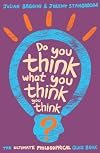
Another book in my campaign to step outside of my skull and have a good rummage around inside it.
This book catches you out in errors of thought that you didn't know you were making - a fantastic gift to anyone who wants to get better at thinking straight. Be warned, this can be painful. But by the end I was willing myself to find more faults with my thinking.
Doubting yourself can be useful, if you can use this to make a decision now that you can't actually make that decision just yet and show more furthermore if you can decide now what additional information you need to, in the future, decide when a decision might be made as well as deciding what that decision is when said information is to hand.
So to speak. show less
This book catches you out in errors of thought that you didn't know you were making - a fantastic gift to anyone who wants to get better at thinking straight. Be warned, this can be painful. But by the end I was willing myself to find more faults with my thinking.
Doubting yourself can be useful, if you can use this to make a decision now that you can't actually make that decision just yet and show more furthermore if you can decide now what additional information you need to, in the future, decide when a decision might be made as well as deciding what that decision is when said information is to hand.
So to speak. show less

This is an entertaining and fairly engaging look at 50 philosophers, except they aren't all philosophers, as the author admits. It is impossible in two pages (small pages, at that) to give more than a hint at what is important about each thinker, and in some cases, the two pages don't even achieve that. After a while, you'll forget which was Hegel and which was Kant. Perhaps it is a sign of today's short attention spans that such a book even gets published.
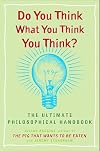
This is a really interesting book; not so much for what it reveals about you (I assume anyone interested enough in this subject to read it already has a pretty good idea of their own ideas and opinions) but for the questions it raises about the ideas themselves.
There is a clear bias towards the logical and rational, which is interesting considering that most of the quesions it raises deal with the abstract, unanswerable kinds of questions like "what makes art good?" or "what is ethical?" show more However, the strategy of looking at the undefinable through a lense of rationalism can only serve the purpose of making readers think a little longer about things than they otherwise might do. show less
There is a clear bias towards the logical and rational, which is interesting considering that most of the quesions it raises deal with the abstract, unanswerable kinds of questions like "what makes art good?" or "what is ethical?" show more However, the strategy of looking at the undefinable through a lense of rationalism can only serve the purpose of making readers think a little longer about things than they otherwise might do. show less
-I guess I don't, not always anyway. This is a frustrating but delightful way to learn about logic, philosophy, thought, and how we make mistakes.
Lists
You May Also Like


Statistics
- Works
- 39
- Also by
- 2
- Members
- 1,465
- Popularity
- #17,535
- Rating
- 3.5
- Reviews
- 12
- ISBNs
- 105
- Languages
- 12
- Favorited
- 1