
Martin Prechtel
Author of Secrets of the Talking Jaguar
About the Author
Martin Prechtel's life took him from his native New Mexico upbringing as a half-blood Native American from a Peublo Indian reservation to the village of Santiago Atitlan, Guatemala. There, he was trained as a shaman and eventually served the Tzutujil Mayan population as a full village member, show more becoming a principal in the body of village leaders. Martin once again resides in his native New Mexico where he is a writer, teacher, speaker, musician, and healer show less
Series
Works by Martin Prechtel
The Disobedience of the Daughter of the Sun: A Mayan Tale of Ecstasy, Time, and Finding One's True Form (2001) 60 copies, 2 reviews
The Unlikely Peace at Cuchumaquic: The Parallel Lives of People as Plants: Keeping the Seeds Alive (2011) 30 copies, 1 review
The Unlikely Peace at Cuchumaquic: The Parallel Lives of People as Plants: Keeping the Seeds Alive (2012) 2 copies
Tagged
Common Knowledge
- Birthdate
- 1951
- Gender
- male
- Occupations
- spiritual teacher
writer - Organizations
- Bolad's Kitchen (founder)
- Nationality
- USA
- Birthplace
- New Mexico, USA
- Places of residence
- Santiago Atitlán, Guatemala
Ojo Caliente, New Mexico, USA
Santo Domingo Pueblo, New Mexico, USA - Associated Place (for map)
- New Mexico, USA
Members
Reviews
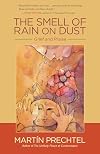
A year ago my grandfather died. He was the last of that generation in my family.
I can remember him clearly at eighty five, five years ago, out in his quarter-acre back garden, pushing the rototiller. That I might be growing my own food when I'm his age...
I borrowed this book from a friend back then. My partner and I have been slowly reading it aloud to each other since then, and just finished it.
It is the most concise of Prechtel's books. Like none other, Prechtel speaks to what it is to be show more human, in the fullest sense of the term. As the subtitle suggests, it is an exploration of grief and praise—two sides of the coin of remembrance and participation.
The book alternates between poignant stories and outright sermons on what does and doesn't work when it comes to the practice of grieving.Contrary to convention, grieving is not an optional or archaic rite; it is a demanding practice that is necessary to balance of the world in order.
Across my study of myth, there is something I'm learning about an older calculus of significance. Can you think of a fairytale or a parable where that which is forbidden isn't partaken? Beauty and sorrow are like this; they travel together. Grief and sorrow are not something to be avoided; in actuality, it is through their full range and expression that beauty and joy are fed. Grief is rich with meaning.
More than any other, it seems this book is an essential distillation of Prechtel's teachings. May it be a guide to you during these uncertain times. show less
I can remember him clearly at eighty five, five years ago, out in his quarter-acre back garden, pushing the rototiller. That I might be growing my own food when I'm his age...
I borrowed this book from a friend back then. My partner and I have been slowly reading it aloud to each other since then, and just finished it.
It is the most concise of Prechtel's books. Like none other, Prechtel speaks to what it is to be show more human, in the fullest sense of the term. As the subtitle suggests, it is an exploration of grief and praise—two sides of the coin of remembrance and participation.
The book alternates between poignant stories and outright sermons on what does and doesn't work when it comes to the practice of grieving.Contrary to convention, grieving is not an optional or archaic rite; it is a demanding practice that is necessary to balance of the world in order.
Across my study of myth, there is something I'm learning about an older calculus of significance. Can you think of a fairytale or a parable where that which is forbidden isn't partaken? Beauty and sorrow are like this; they travel together. Grief and sorrow are not something to be avoided; in actuality, it is through their full range and expression that beauty and joy are fed. Grief is rich with meaning.
More than any other, it seems this book is an essential distillation of Prechtel's teachings. May it be a guide to you during these uncertain times. show less
The Unlikely Peace at Cuchumaquic: The Parallel Lives of People as Plants, Keeping the Seeds Alive by Martín Prechtel
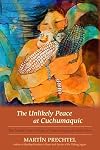
"Like victims of an ancient spiritual and cultural shipwreck, we have been adrift for four thousand years, floating on people-centered rafts of provisional civilizations that have convinced themselves they are the real thing and the cutting edge of human evolution, while designating our true magical origins of deep small cultures as some dirty, half-evolved, grunting, primitive past.
But no matter how far we’ve drifted away from those real indigenous shores, the spirits of our last happy, show more intact, indigenous ancestors from before we began to drift are effortlessly coursing right along with us. Having merged with the vastness of the natural wild tossing sea we so fear to drown in, they follow each of us like a pod of giant sea turtles, their big sweet scaly heads thumping up under us, trying their best to get our attention and tow us home to our real selves, knocking on the hull of the lifeboat of today’s assumed culture, while we drift along figuring that the anxiety of civilization’s never-ending feeling of emergency is normal."
This passage is from page 310 of the book. It sums up Prechtel's almost-desperate thesis; help is available to those who ask. Indigeneousity is a fundamental capacity of humans; what is forgotten is not lost. There's a fierce hopefulness to this book, overtaking the beauty and grief found in Prechtel's previous texts.
This is Prechtel's longest and most literal and prescriptive book. Whereas his past book have been written for a general audience, this book is very clearly aimed at his students in his school—Bolad's Kitchen. For these reasons, it also took me longer to read than any of his other books.
As the title suggests, the central theme of the book is the interconnected co-existance of plants and people. To take a plant discussed heavily in the book—what we are maize and maize is us? What if these two species are part of a kind of reciprocal maintenance, where each is sustained and evolves with the other? The Maya lived in such a world, and there’s a lot we’ve left behind by stepping out of such a story, to a place where food could be a commodity rather than a peer.
A subtext surrounds the importance of authenticity. There is merit to the hipster inclination towards provenance. We like to turn away from stories which displease us. “I can’t afford those handmade pants,” is the sort of statement you might hear, speaking of some artisanal denim from California or New York. But the speaker is unlikely to disavow pants altogether. They will purchase handmade pants—made by the hands of an eleven-year-old in Malaysia getting paid a dollar an hour. There’s a reason you don’t see the label “Handmade in China;” we don’t like to think about those hands, the hands that we are unwilling to pay enough to afford basic human dignity. Prechtel explores this thread by discussing a “House of Origins,” a place where we can tell the complete story of everything inside. How many objects in your life hold this significance? One facet of the sacred is a familiarity so deep that something becomes a part of ourselves.
If you sometimes find yourself picking at the chinks in the wall of Western culture, you will find this book a fortifying tonic. show less
But no matter how far we’ve drifted away from those real indigenous shores, the spirits of our last happy, show more intact, indigenous ancestors from before we began to drift are effortlessly coursing right along with us. Having merged with the vastness of the natural wild tossing sea we so fear to drown in, they follow each of us like a pod of giant sea turtles, their big sweet scaly heads thumping up under us, trying their best to get our attention and tow us home to our real selves, knocking on the hull of the lifeboat of today’s assumed culture, while we drift along figuring that the anxiety of civilization’s never-ending feeling of emergency is normal."
This passage is from page 310 of the book. It sums up Prechtel's almost-desperate thesis; help is available to those who ask. Indigeneousity is a fundamental capacity of humans; what is forgotten is not lost. There's a fierce hopefulness to this book, overtaking the beauty and grief found in Prechtel's previous texts.
This is Prechtel's longest and most literal and prescriptive book. Whereas his past book have been written for a general audience, this book is very clearly aimed at his students in his school—Bolad's Kitchen. For these reasons, it also took me longer to read than any of his other books.
As the title suggests, the central theme of the book is the interconnected co-existance of plants and people. To take a plant discussed heavily in the book—what we are maize and maize is us? What if these two species are part of a kind of reciprocal maintenance, where each is sustained and evolves with the other? The Maya lived in such a world, and there’s a lot we’ve left behind by stepping out of such a story, to a place where food could be a commodity rather than a peer.
A subtext surrounds the importance of authenticity. There is merit to the hipster inclination towards provenance. We like to turn away from stories which displease us. “I can’t afford those handmade pants,” is the sort of statement you might hear, speaking of some artisanal denim from California or New York. But the speaker is unlikely to disavow pants altogether. They will purchase handmade pants—made by the hands of an eleven-year-old in Malaysia getting paid a dollar an hour. There’s a reason you don’t see the label “Handmade in China;” we don’t like to think about those hands, the hands that we are unwilling to pay enough to afford basic human dignity. Prechtel explores this thread by discussing a “House of Origins,” a place where we can tell the complete story of everything inside. How many objects in your life hold this significance? One facet of the sacred is a familiarity so deep that something becomes a part of ourselves.
If you sometimes find yourself picking at the chinks in the wall of Western culture, you will find this book a fortifying tonic. show less
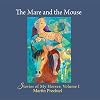
Unlike many of Prechtel's past books, this book is rather humble in scope. It is a memoir, telling a few stories of relationships he's had with horses over his lifetime (the first of three volumes on the subject).
The book's subject area—horses—strikes a chord with a wide range of audiences. Similar to the way that everyone has a story about a tree in their lives, it would seem that everyone has a story about a house—if not from their own personal experience, at least from a film or a show more book that struck them as a child.
Horses are often used in therapy work. As this is a book about horses, reading it has a therapeutic effect. show less
The book's subject area—horses—strikes a chord with a wide range of audiences. Similar to the way that everyone has a story about a tree in their lives, it would seem that everyone has a story about a house—if not from their own personal experience, at least from a film or a show more book that struck them as a child.
Horses are often used in therapy work. As this is a book about horses, reading it has a therapeutic effect. show less
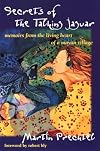
“Secrets of the Talking Jaguar: A Mayan Shaman’s Journey to the Heart of the Indigenous Soul,” is Martin Prechtel's first book, released in 1998. It's a book about his journey from childhood in New Mexico as an outcast part-Native American to his true life and home in the then-Mayan city of Santiago Atitlan in Guatemala. A shaman named Chiv summoned him there, and became his teacher. It's a book about the contrast between the culture of the alien US and the indigenous culture of the show more Maya.
That’s a good starting point - the question of what it means not to be indigenous. To be indigenous means to truly have a home, to belong. But so then what are we in the US? What is most of the modern world? We’re aliens. We’re homeless, lost, and unstable.
Martin paints a beautiful picture of a culture that no longer exists. Military started coming in and breaking up the community in the ’80s. Although a high percentage of the individuals serviced, their village was a culture dependent on many roles. Even with less than half being killed, running a way, or converting, the culture wasn’t able to survive.
Notable Fragments
Political leaders had to be married. This gave leadership a 50:50 male:female split. This wasn’t done in the interest of these individual, but for the sake of the community. When leaders move up a rank, they throw a giant party and give away all of their wealth.
Don’t trust a skinny shaman. Shamans are partially paid in food, and in a culture where food is scarce, fat is idolized.
All Mayan houses are only one room. Their entrance is their mouth. The concept of a door is outside of their paradigm.
We are each the House of the World, just as the outside is also the House of the World. Together these two form a mirror, for everything that can be found in the exterior can also be found in the interior.
The concept of existence isn’t a part of Mayan culture. Everything “is” only in it’s relationship to everything else. The names for relatives in Tz’utujil are subjective. There is no word for aunt - you describe the relationship to the person we call aunt, depending on the specifies of where you are. You can’t as the question, “who am I?” There is no being, or doing - only relationship. show less
That’s a good starting point - the question of what it means not to be indigenous. To be indigenous means to truly have a home, to belong. But so then what are we in the US? What is most of the modern world? We’re aliens. We’re homeless, lost, and unstable.
Martin paints a beautiful picture of a culture that no longer exists. Military started coming in and breaking up the community in the ’80s. Although a high percentage of the individuals serviced, their village was a culture dependent on many roles. Even with less than half being killed, running a way, or converting, the culture wasn’t able to survive.
Notable Fragments
Political leaders had to be married. This gave leadership a 50:50 male:female split. This wasn’t done in the interest of these individual, but for the sake of the community. When leaders move up a rank, they throw a giant party and give away all of their wealth.
Don’t trust a skinny shaman. Shamans are partially paid in food, and in a culture where food is scarce, fat is idolized.
All Mayan houses are only one room. Their entrance is their mouth. The concept of a door is outside of their paradigm.
We are each the House of the World, just as the outside is also the House of the World. Together these two form a mirror, for everything that can be found in the exterior can also be found in the interior.
The concept of existence isn’t a part of Mayan culture. Everything “is” only in it’s relationship to everything else. The names for relatives in Tz’utujil are subjective. There is no word for aunt - you describe the relationship to the person we call aunt, depending on the specifies of where you are. You can’t as the question, “who am I?” There is no being, or doing - only relationship. show less
Lists
You May Also Like


Associated Authors
Statistics
- Works
- 16
- Members
- 489
- Popularity
- #50,497
- Rating
- 4.3
- Reviews
- 12
- ISBNs
- 30
- Languages
- 3
- Favorited
- 2