
Rigoberta Menchú
Author of I, Rigoberta Menchú: An Indian Woman In Guatemala
About the Author
Disambiguation Notice:
(yid) VIAF:95246547
(mao) VIAF:PND:118732870
(ger) VIAF:90599516 (viafAdditional)
(swe) SELIBR:317921
(spa) BNE:XX951946
Works by Rigoberta Menchú
Associated Works
Wise Women: Over Two Thousand Years of Spiritual Writing by Women (1996) — Contributor — 232 copies, 1 review
On the Wings of Peace: Writers and Illustrators Speak Out for Peace, in Memory of Hiroshima and Nagasaki (1995) — Contributor — 105 copies, 1 review
The Sweet Breathing of Plants: Women Writing on the Green World (2001) — Contributor — 101 copies, 1 review
Tagged
Common Knowledge
- Canonical name
- Menchú, Rigoberta
- Legal name
- Menchú Tum, Rigoberta
- Other names
- Менчу, Ригоберта
- Birthdate
- 1959-01-29
- Gender
- female
- Awards and honors
- Nobel Prize (Peace, 1992)
- Nationality
- Guatemala
- Birthplace
- Laj Chimel, El Quiché, Guatemala
- Places of residence
- Mexico
Guatemala City, Guatemala - Disambiguation notice
- VIAF:90599516 (viafAdditional)
- Associated Place (for map)
- Guatemala
Members
Reviews
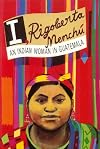
Here's the remarkable autobiography of Rigoberta Menchú, an activist those fight became a whole symbol when it comes to human rights (she received the Nobel Prize for Peace back in 1992).
In 1982, while in exile from her native country (Guatemala) she was welcomed by the ethnologist Elisabeth Burgos in her home in Paris, who wanted to interview her. This book is the result of such meetings, and where Rigoberta Menchú tells her story, a story which make for a powerful read, painful at show more times, yet always full of hope and strength, echoing that of Indian people all across the South American continent.
She describes their way of life, their traditions, their rites and customs. However, this is not about anthropology. This is, indeed and above all, political dynamite, exploding at the face of those ignoring the problems faced by indigenous people across Latin America.
Countries ethnically divided and still impacted by colonial mentalities, we discover the horrors of discriminations, the scorn Indians are victims of, exploited, forced into long working hours in 'fincas' and for a meagre salary. Children work as hard as adults, get sick easily (she lost a brother to malnutrition) and, poorly educated if at all, have no escape but working as prostitute or maids for wealthy, racist, families.
There is hope, though. Illiterate, not even speaking Spanish, many dared then to fight back and campaign. She talks about their struggles, from organising protests to guerrilla warfare, and those actions would spread across the country, leading to a brutal repression, and, even, massacres (her parents and a bother were executed), a repression which ultimately saw her fleeing into exile.
This is a powerful book, enraging, at times very difficult to read because of the horrors described, but which constitute an invaluable testimony about the fate of Indian people, as told by a very courageous woman indeed. show less
In 1982, while in exile from her native country (Guatemala) she was welcomed by the ethnologist Elisabeth Burgos in her home in Paris, who wanted to interview her. This book is the result of such meetings, and where Rigoberta Menchú tells her story, a story which make for a powerful read, painful at show more times, yet always full of hope and strength, echoing that of Indian people all across the South American continent.
She describes their way of life, their traditions, their rites and customs. However, this is not about anthropology. This is, indeed and above all, political dynamite, exploding at the face of those ignoring the problems faced by indigenous people across Latin America.
Countries ethnically divided and still impacted by colonial mentalities, we discover the horrors of discriminations, the scorn Indians are victims of, exploited, forced into long working hours in 'fincas' and for a meagre salary. Children work as hard as adults, get sick easily (she lost a brother to malnutrition) and, poorly educated if at all, have no escape but working as prostitute or maids for wealthy, racist, families.
There is hope, though. Illiterate, not even speaking Spanish, many dared then to fight back and campaign. She talks about their struggles, from organising protests to guerrilla warfare, and those actions would spread across the country, leading to a brutal repression, and, even, massacres (her parents and a bother were executed), a repression which ultimately saw her fleeing into exile.
This is a powerful book, enraging, at times very difficult to read because of the horrors described, but which constitute an invaluable testimony about the fate of Indian people, as told by a very courageous woman indeed. show less
And that's when my consciousness was born"
By sally tarbox on 22 December 2017
Format: Kindle Edition
The autobiography of a young Guatemalan peasant woman who went on to win the Nobel Peace Prize. Menchu was an uneducated Indian girl, brought up between the family home, subsistence farming in the Altiplano, and the fincas (plantations), where the family would spend some months earning a little money in almost slave-like conditions.
Menchu's story took place from the 1960s to 80s; she tells of show more the very traditional Mayan lifestyle - its happiness and security but also the way Indians were dismissed by the Ladino (Spanish) population as almost a sub-species. Malnutrition, defrauding of the workers, and horrific accounts of peasants killed on the fincas by the indiscriminate use of pesticides, make for grim reading.
As government-backed landowners muscled in, trying to seize the Indians' lands, Menchu and her family got caught up in the peasant struggle for rights in a corrupt regime. Murders and violence became commonplace as the authorities tried to silence them...
Menchu has a powerful story to tell. Illiterate till adulthood, she narrates her account in interviews with an anthropologist. The result is an interesting autobiography, but one that would have been much more readable if given a literary touch. show less
By sally tarbox on 22 December 2017
Format: Kindle Edition
The autobiography of a young Guatemalan peasant woman who went on to win the Nobel Peace Prize. Menchu was an uneducated Indian girl, brought up between the family home, subsistence farming in the Altiplano, and the fincas (plantations), where the family would spend some months earning a little money in almost slave-like conditions.
Menchu's story took place from the 1960s to 80s; she tells of show more the very traditional Mayan lifestyle - its happiness and security but also the way Indians were dismissed by the Ladino (Spanish) population as almost a sub-species. Malnutrition, defrauding of the workers, and horrific accounts of peasants killed on the fincas by the indiscriminate use of pesticides, make for grim reading.
As government-backed landowners muscled in, trying to seize the Indians' lands, Menchu and her family got caught up in the peasant struggle for rights in a corrupt regime. Murders and violence became commonplace as the authorities tried to silence them...
Menchu has a powerful story to tell. Illiterate till adulthood, she narrates her account in interviews with an anthropologist. The result is an interesting autobiography, but one that would have been much more readable if given a literary touch. show less
It's too bad that it was discovered that much of what she said about herself turned out to be untrue. BUT as she said, it's the story of her people, whether it was her or another Indian Woman the context is real and largely ignored. Everyone should be required to read. It's the global learning and understanding that we need.

Rigoberta nació en San Miguel Uspantán, Departamento El Quiché, en Guatemala. Hace 23 años nació, y el castellano lo aprendió hace tres, sin libros, maestros ni escuela. Lo aprendió con su voluntad feroz por romper el silencio en el que viven los indios de América Latina. Se apropió el lenguaje del colonizador, no para integrarse a una historia que nunca la incluyó, sino para hacer valer, mediante la palabra, una cultura que es parte de esa historia. "Me llamo Rigoberta show more Menchú", dice llanamente, y en esa frase escueta se escucha la voz de todo un pueblo indígena que ha decidido liberarse. Sus palabras no son meramente de denuncia y de protesta. Son ante todo una enérgica afirmación de una manera de ser, de un derecho a ser lo que se es: una cultura específica, una comprensión del universo, una interacción con la naturaleza. La historia de Rigoberta hace eco a la historia de todas las comunidades indígenas de América Latina que han decidido arrebatarle la palabra al opresor. Cover show less
Lists
Awards


You May Also Like


Associated Authors
Statistics
- Works
- 13
- Also by
- 6
- Members
- 1,877
- Popularity
- #13,718
- Rating
- 3.6
- Reviews
- 32
- ISBNs
- 66
- Languages
- 9
