
Theodore Zeldin
Author of An Intimate History of Humanity
About the Author
Theodore Zeldin, a fellow and former dean of St Antony's College, Oxford is a member of the BBC Brains Trust, the British Academy and the European Academy
Image credit: Theodore Zeldin attends a photocall at Edinburgh International Book Festival on August 31, 2015 in Edinburgh, Scotland
Series
Works by Theodore Zeldin
Associated Works
Tagged
Common Knowledge
- Canonical name
- Zeldin, Theodore
- Birthdate
- 1933-08-22
- Gender
- male
- Education
- St. Antony's College, Oxford University (D.Phil|1957)
Christ Church, Oxford University (BA)
Birkbeck College, the University of London (BA|1951) - Occupations
- historian
writer
philosopher
sociologist - Organizations
- Oxford Muse Foundation
St Antony's College, University of Oxford - Awards and honors
- Order of the British Empire (Commander, 2001)
British Academy (Fellow, 1995)
Royal Society of Literature (Fellow, 1999)
Academia Europaea (1993)
Légion d'Honneur (Commandeur, 2012)
Ordre des Arts et des Lettres (Commandeur, 1995) (show all 8)
Wolfson History Prize (1974)
BBC Brains Trust - Relationships
- Wilson, Deirdre (wife)
- Short biography
- Theodore Zeldin's works focus on the role of the individual and of the emotions in every aspect of life. His 2000 page, 5-volume History of French Passions made him "the most popular Englishman in France" (Le Point). He appears frequently on French radio and television. His writings have been translated into 24 languages. Zeldin is a Patron of the National Academy of Writing, on the Management Committee of the Society of Authors, and a Trustee of the Wytham Hall Medical Charity for the Homeless. He has been a visiting professor at Harvard and the University of Southern California, and has lectured in 15 countries.
- Nationality
- UK
- Birthplace
- British Mandate of Palestine
- Places of residence
- Oxford, Oxfordshire, England, UK
- Associated Place (for map)
- England, UK
Members
Reviews
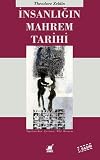
İnsanlığın Mahrem Tarihi, insanlık hafızasını tazelemeyi amaçlayan bir unutulmuşlar derlemesi, tarihe geçenlerden çok geçmeyenlerin tarihi. Zeldin, insanlığın unutulmuş anılarını gün ışığına çıkararak, köşeye sıkıştığı noktalardan çıkış yoları bulabilmesi için insanoğlunun ufkunu genişletmeyi ve modern zihinlere yerleşmiş yanılsamaları yıkmayı deniyor. Zeldin'e göre her kuşak, tıpkı kendisinden önceki sayısız kuşak gibi, dünyayı show more kendi çağının gözlüklerinden bakarak binlerce yıllık insanlık deneyimini boşa harcıyor. Kendi atalarının sınırlı ve kolay kolay değişmeyen hafızasını kullanmayı tercih ederken, geçmişin karanlığına gömülüp giden koca bir insanlık hafızasından yararlanma fırsatını kaçırıyor. Bu fırsatta yatan en değerli hazine, hayatın kendi çağımızın ışığıyla aydınlanmış görüntüsünün değişmez bir son durak değil, beklenmedik dönüşler yaparak ilerleyen insanlık tarihinin rastgele bir noktası olduğunu keşfetmek. Zeldin'in unutulmuşlar tarihi, insanların hayata ve kendilerine ezelden beri bugünkü gibi bakmadıklarını göstermekle kalmıyor, umudun tükenmeye yüz tuttuğu noktada insanlığın imdadına yetişen şeyin her zaman yeni bakış açıları, yeni düşünce biçimleri ve yeni yaklaşımlar olduğunu hatırlatıyor. show less
The Hidden Pleasures of Life: A New Way of Remembering the Past and Imagining the Future by Theodore Zeldin
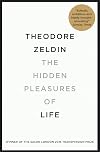
I thought this was even better than his book 'An Intimate History of Humanity', though it is similar in style: examining a multiplicity of stories of individuals throughout history to illustrate or illuminate some common human issues and questions.
His great skill is in bringing history to life in the form of anecdote and biography from across different eras and cultures, and weaving in eternal human preoccupations with creative thinking about different possibilities for answering some of show more the odd, basic and profound questions we ask ourselves.
Among the many questions he asks here: How many ways of committing suicide are there? What can replace the shortage of soul-mates? How can prejudices be overcome? What is the point of working so hard? What else can one do in a hotel?
He hints at answers with a lightness of touch, with some personal stories of his own, and with compassion for the other people on whose lives and ideas he draws from. Throughout, his intention seems to be to show us how valuable it is to learn more about each other's innermost thoughts and feelings, as well as from the myriad ways human beings have found of addressing some of the challenges that face us all. show less
His great skill is in bringing history to life in the form of anecdote and biography from across different eras and cultures, and weaving in eternal human preoccupations with creative thinking about different possibilities for answering some of show more the odd, basic and profound questions we ask ourselves.
Among the many questions he asks here: How many ways of committing suicide are there? What can replace the shortage of soul-mates? How can prejudices be overcome? What is the point of working so hard? What else can one do in a hotel?
He hints at answers with a lightness of touch, with some personal stories of his own, and with compassion for the other people on whose lives and ideas he draws from. Throughout, his intention seems to be to show us how valuable it is to learn more about each other's innermost thoughts and feelings, as well as from the myriad ways human beings have found of addressing some of the challenges that face us all. show less
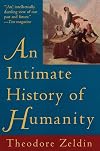
A very ambitious book that attempts to chronicle the history of human thought, emotions, problems, and (for a lack of a better description) general themes by exploring how humans are connected. For instance, the book's chapters have titles such as "How some people have acquired an immunity to loneliness" and "How respect has become more desirable than power." Each chapter starts with descriptions of modern day persons and how they have interacted with (or more often struggled with) the show more chapter's theme. After this, Zeldin then comments on the character's struggles and links them back to other cultures across time and geography, illustrating both how these "modern problems" often have historical roots and also how other people with similar problems have attempted to solve them.
Zeldin's intentions behind this book are admirable and it is from reading on his general philosophy/thoughts that led me to this book initially. The Preface captures his ideologies well. He writes, "I want to show how, today, it is possible for individuals to form a fresh view both of their own personal history and of humanity's' whole record of cruelty, misunderstanding, and joy. To have a new vision of the future, it has always been first necessary to have a new vision of the past." For more information on Zeldin, I suggest to watch this 5x15 talk he gives, https://www.youtube.com/watch?v=pdnnZ0Y4HEo, where he says, "I saw what I want from life is to discover life, to know what life is and that means getting to know as many people as possible, each of whom sees life in a different way and has experienced life in a different way and I can only see what I see, my idea of what life is, and each one of you sees something different and therefore I am almost blind and I am searching to see what there is...I have developed curiosity." You can feel this intense curiosity of Zeldin's from the book. The book is epic in scope and you get the sense that Zeldin has thought about, researched about, and knows a bit about...almost everything relating to humans and how we feel.
On the negative side, I did find some of the book slightly repetitive. I think Zeldin is so impassioned about his ideas about how people should seek to have conversations with each other and discover more of each other that similar arguments tend to come through again and again. At the end of each chapter are also wonderful lists of suggested additional reading related to the chapter, but I really wished that each page had footnotes as there were a lot of ideas I wanted to read further on and it would have helped to know specifically where to go.
Overall though, I found it a wonderful book and very easy to get through, for a "history book." One does have to go into it fairly open minded. Zeldin seems to be a bit of an idealist and also sometimes in the writing makes wide, sweeping, generalizing statements that made me to want to feel skeptical. However, for me, the point of the book is not to get a 100% detailed factual account of history - but one that inspires curiosity and makes me think in different ways about familiar topics. And in that respect, the book certainly succeeded. show less
Zeldin's intentions behind this book are admirable and it is from reading on his general philosophy/thoughts that led me to this book initially. The Preface captures his ideologies well. He writes, "I want to show how, today, it is possible for individuals to form a fresh view both of their own personal history and of humanity's' whole record of cruelty, misunderstanding, and joy. To have a new vision of the future, it has always been first necessary to have a new vision of the past." For more information on Zeldin, I suggest to watch this 5x15 talk he gives, https://www.youtube.com/watch?v=pdnnZ0Y4HEo, where he says, "I saw what I want from life is to discover life, to know what life is and that means getting to know as many people as possible, each of whom sees life in a different way and has experienced life in a different way and I can only see what I see, my idea of what life is, and each one of you sees something different and therefore I am almost blind and I am searching to see what there is...I have developed curiosity." You can feel this intense curiosity of Zeldin's from the book. The book is epic in scope and you get the sense that Zeldin has thought about, researched about, and knows a bit about...almost everything relating to humans and how we feel.
On the negative side, I did find some of the book slightly repetitive. I think Zeldin is so impassioned about his ideas about how people should seek to have conversations with each other and discover more of each other that similar arguments tend to come through again and again. At the end of each chapter are also wonderful lists of suggested additional reading related to the chapter, but I really wished that each page had footnotes as there were a lot of ideas I wanted to read further on and it would have helped to know specifically where to go.
Overall though, I found it a wonderful book and very easy to get through, for a "history book." One does have to go into it fairly open minded. Zeldin seems to be a bit of an idealist and also sometimes in the writing makes wide, sweeping, generalizing statements that made me to want to feel skeptical. However, for me, the point of the book is not to get a 100% detailed factual account of history - but one that inspires curiosity and makes me think in different ways about familiar topics. And in that respect, the book certainly succeeded. show less
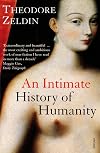
I have read numerous history books that take, in some cases, an eagle's eye view of the world, looking down on all that has happened and summing it up in a few hundred pages, such as Gombrich's excellent Children's History of the World; there are others that have taken a single era or epoch or even a single year, and examined it minutely, looking at the famous people who lived in that time and what they did and the impact they had on the world - Dava Sobel's Longitude is a reasonable show more example.
However, I have never read a book that looked at shared histories, the histories of real, everyday people, and how their thoughts and actions are influenced by the weight of history that there is all around us. Zeldin's book is that book, a book that looks at the way people behave and then examines the historical reasons for these actions, a book that makes one believe that history is not what we'd thought it was. It is a real paradigm-shifter. show less
However, I have never read a book that looked at shared histories, the histories of real, everyday people, and how their thoughts and actions are influenced by the weight of history that there is all around us. Zeldin's book is that book, a book that looks at the way people behave and then examines the historical reasons for these actions, a book that makes one believe that history is not what we'd thought it was. It is a real paradigm-shifter. show less
Lists
Awards

You May Also Like


Associated Authors
Statistics
- Works
- 23
- Also by
- 1
- Members
- 2,263
- Popularity
- #11,341
- Rating
- 3.8
- Reviews
- 24
- ISBNs
- 106
- Languages
- 12
- Favorited
- 6


