
Sam Sykes
Author of Seven Blades in Black
About the Author
Image credit: Sykes at WonderCon 2017 / Photo by Gage Skidmore
Series
Works by Sam Sykes
Gnome of The Undergates 1 copy
Munchkin ; Volume 5 1 copy
Name the Beast 1 copy
Siedem czarnych mieczy 1 copy
Associated Works
The Dragon Book: Magical Tales from the Masters of Modern Fantasy (2009) — Contributor — 487 copies, 14 reviews
Out of Avalon: An Anthology of Old Magic & New Myths (15-in-1) (2001) — Contributor — 322 copies, 3 reviews
Tagged
Common Knowledge
- Legal name
- Watkins, Samuel
- Other names
- Watkins, Sam
- Birthdate
- 1984-05-11
- Gender
- male
- Agent
- Danny Baror (Baror International)
- Relationships
- Gabaldon, Diana (parent)
- Nationality
- USA
- Places of residence
- Arizona, USA
- Associated Place (for map)
- Arizona, USA
Members
Reviews
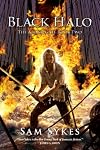
Sykes's Aeon's Gates Trilogy uses all the usual fantasy tropes but with inventive, vivid energy. I found this second book to be even stronger than the first, which sometimes felt slow due to the excessive spats between characters. Here, the characters are attacked at sea and they each end up on a blighted island, most of them separated and assuming the others are dead. The perils on the island are many, but the adventurers may be their own worst enemies.
I will continue onward to the third show more book soon; I am reading them in the collected volume An Affinity for Steel. show less
I will continue onward to the third show more book soon; I am reading them in the collected volume An Affinity for Steel. show less
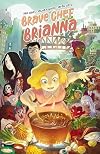
This was an adorable graphic novel about a girl with fifteen brothers who has to open her own restaurant and have it be more successful than the other fifteen in order to win the family legacy. Only, Brianna ends up opening her restaurant in Monster City, where she's almost the only human.
I liked the art style and I loved the characters, but I felt like the plot was lacking, a lot. I mean, part of the conflict in the story is that monsters can't legally eat sugar, flour or cooked meat, but show more like.... there are plenty of human foods without those? There are humans who are vegetarian, or can't eat sugar and flour? There are other options! Brianna could just... use those, instead of having the illegal substances in her restaurant?? This was something that I just really couldn't get over. My suspension of disbelief covered the monsters, but not this part.
Suzan is awesome, though.
(Also: If you want to read this, be aware that the main character is very insecure and anxious, which was nice to see because she kept on fighting despite that, but there is A LOT of self-hate, including internalised fatphobia that could be triggering.) show less
I liked the art style and I loved the characters, but I felt like the plot was lacking, a lot. I mean, part of the conflict in the story is that monsters can't legally eat sugar, flour or cooked meat, but show more like.... there are plenty of human foods without those? There are humans who are vegetarian, or can't eat sugar and flour? There are other options! Brianna could just... use those, instead of having the illegal substances in her restaurant?? This was something that I just really couldn't get over. My suspension of disbelief covered the monsters, but not this part.
Suzan is awesome, though.
(Also: If you want to read this, be aware that the main character is very insecure and anxious, which was nice to see because she kept on fighting despite that, but there is A LOT of self-hate, including internalised fatphobia that could be triggering.) show less
I feel torn on this.
On the one hand, Brianna is likable and her shortcomings are relateable. There is a feel-good story in here about believing in yourself and doing things because they make you happy, not to impress someone else (even if that someone else is your celebrity chef father.)
On the other hand, there's kind of a weird undercurrent of racism and gentrification in here that left an unpleasant taste in my mouth. The monsters were persecuted and basically forced into this ghetto show more called Monster City, where they make their own society apart from humans. The top chef there (Madame Cron) is a monster who remembers the days of persecution, being driven from their homes, etc. (She's also the brownest character in the book.) Now this rich, blonde human comes in and starts a restaurant that ignores their laws, takes business away from monster businesses, etc. And Madame Cron doesn't like it. And I get why she doesn't like it! There's a little bit of lip service paid to her background explaining why she hates humans so much, but she doesn't manage to escape her role as the bad guy, trying to take Brianna (and her restaurant,) down.
I'm not saying that the author is a racist, or that Brianna is an unlikable character, or that she's doing something bad on purpose, but the story IS problematic IMO. Maybe Sam Sykes meant to flesh out Madame Cron more and make her more sympathetic and less of a villain, but just didn't end up doing that. I don't know. But I found myself agreeing with her throughout the book, and feeling like all the people (and monsters) telling her to get over the subjugation of their people (because it was so long ago) were being total jerks. And Brianna should have had to realize that she was at least somewhat in the wrong here.
THAT ALL BEING SAID. It was otherwise fun. And cute. The art is colorful and eye-catching. But it could be better. 2 1/2 stars. show less
On the one hand, Brianna is likable and her shortcomings are relateable. There is a feel-good story in here about believing in yourself and doing things because they make you happy, not to impress someone else (even if that someone else is your celebrity chef father.)
On the other hand, there's kind of a weird undercurrent of racism and gentrification in here that left an unpleasant taste in my mouth. The monsters were persecuted and basically forced into this ghetto show more called Monster City, where they make their own society apart from humans. The top chef there (Madame Cron) is a monster who remembers the days of persecution, being driven from their homes, etc. (She's also the brownest character in the book.) Now this rich, blonde human comes in and starts a restaurant that ignores their laws, takes business away from monster businesses, etc. And Madame Cron doesn't like it. And I get why she doesn't like it! There's a little bit of lip service paid to her background explaining why she hates humans so much, but she doesn't manage to escape her role as the bad guy, trying to take Brianna (and her restaurant,) down.
I'm not saying that the author is a racist, or that Brianna is an unlikable character, or that she's doing something bad on purpose, but the story IS problematic IMO. Maybe Sam Sykes meant to flesh out Madame Cron more and make her more sympathetic and less of a villain, but just didn't end up doing that. I don't know. But I found myself agreeing with her throughout the book, and feeling like all the people (and monsters) telling her to get over the subjugation of their people (because it was so long ago) were being total jerks. And Brianna should have had to realize that she was at least somewhat in the wrong here.
THAT ALL BEING SAID. It was otherwise fun. And cute. The art is colorful and eye-catching. But it could be better. 2 1/2 stars. show less
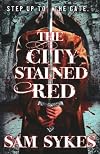
Add this to the list of epic fantasy that is much better than Song of Ice and Fire. City Stained Red takes the basic genre troops of the assorted fantasy party of humans and 'oids, twists everything around, and adds a major dose of wit and humor. Make no mistake--it's an intense and dark read, where human suffering is front and center, but Sykes balances that with funny commentary that feels real even when absurd.
Lists
Awards


You May Also Like


Associated Authors
Statistics
- Works
- 30
- Also by
- 6
- Members
- 1,978
- Popularity
- #13,002
- Rating
- 3.5
- Reviews
- 47
- ISBNs
- 107
- Languages
- 3
- Favorited
- 1