

Sarah Singleton
Author of Century
About the Author
Image credit: Danie Ware
Works by Sarah Singleton
Equi Maledicti 1 copy
Chef, Chef, What Do You See? 1 copy
Associated Works
Tagged
Common Knowledge
- Gender
- female
- Education
- Nottingham University
- Occupations
- journalist
writer
creative writing teacher - Nationality
- UK
- Birthplace
- Thornbury, England, UK
- Places of residence
- Chippenham, Wiltshire, England, UK
- Associated Place (for map)
- England, UK
Members
Reviews
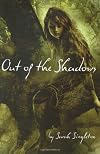
Cover. The thing about this book that captured me was the cover. I loved how the girl seemed to almost disappear in the tree. She seemed a part of the tree in a way and it called to me. It said,"Hey, you will really like this book. You should read me." I didn't actually hear the words but I knew that as soon as I looked at the cover that I needed to check it out. I barely paid attention as I read the summary until I realized how interesting it sounded. It did not matter to me though because show more I had been hooked by the cover. And when I started reading the book it only got better.
Plot. The story started off slow but from the first word I was on the edge of my seat. Isabella had just found herself 300 years from where she remembered and I could not wait to see how she reacted to the world. The fact that her senses seemed so much better than the average human was also fascinating to me. I wanted to know what would happened with her. Then Elizabeth showed up. I will admit that I was very disappointed that I could not learn more about Isabella but Elizabeth was almost as interesting if a little annoying and pathetic compared to Isabella. I waited with baited breathe for her narration portion to be over every time. And the book was speeding up and getting more interesting. And then religion began to slowly saturate the pages.
Religion There is such a thing as too much religion. In the beginning of the book they talk about the fact that most of the country is Protestant and Elizabeth's family are the last of the Catholic's in the village but it does not have much of a role in the beginning. At around half-way through the book characters start to throw around random, you're going to burn in hell and someone is working with the devil. The more religious it gets the less enthusiasm I hold for the book. Which accounts for the pause I am putting on it. I am just not a fan of books heavily filled with religion and how anyone not of their religion will burn in hell unless you follow their beliefs. The book is no longer one that can hold my attention. show less
Plot. The story started off slow but from the first word I was on the edge of my seat. Isabella had just found herself 300 years from where she remembered and I could not wait to see how she reacted to the world. The fact that her senses seemed so much better than the average human was also fascinating to me. I wanted to know what would happened with her. Then Elizabeth showed up. I will admit that I was very disappointed that I could not learn more about Isabella but Elizabeth was almost as interesting if a little annoying and pathetic compared to Isabella. I waited with baited breathe for her narration portion to be over every time. And the book was speeding up and getting more interesting. And then religion began to slowly saturate the pages.
Religion There is such a thing as too much religion. In the beginning of the book they talk about the fact that most of the country is Protestant and Elizabeth's family are the last of the Catholic's in the village but it does not have much of a role in the beginning. At around half-way through the book characters start to throw around random, you're going to burn in hell and someone is working with the devil. The more religious it gets the less enthusiasm I hold for the book. Which accounts for the pause I am putting on it. I am just not a fan of books heavily filled with religion and how anyone not of their religion will burn in hell unless you follow their beliefs. The book is no longer one that can hold my attention. show less
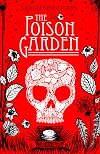
The ultimate origin of Paradise is a walled enclosure, an enclosed space where one can cultivate plants and enjoy the delights of running water. Since its Iranian beginnings five or six centuries before the birth of Christ it has accumulated so much symbolism, associations and expectations but that image of the walled garden has remained a constant, whether in the guise of parkland or as the smallest suburban plot. How much do we all, gardeners or not, see it as a place of peace, of repose, show more as a piece of heaven on earth!
But that walled garden concept is never so tightly bounded as by the confines of our own skull, within the folds of our brains: "I could be bounded in a nutshell and count myself a king of infinite space," as Hamlet said, and that idea of a garden at once expansive and yet contained is at the heart of Sarah Singleton's haunting novel.
We first meet young Thomas Kurt Reiter at his grandmother's funeral. Wandering around her garden afterwards he comes across a wooden box placed on a sundial. A curious stranger called Blake leads him through what the man terms the grandmother's 'secret' garden before violently attacking a stranger playing a violin by the grave of Thomas's grandmother. Thomas is naturally confused by what has happened, and even more astonished to later hear from his grandmother's lawyer that when he is fourteen he is to be apprenticed to Mr Constantine, a London chemist and herbalist. All this sets the scene for Singleton's mysterious Gothick fantasy, all against a backdrop of Victorian England -- all freezing cold and mists -- to which is added a touch of the supernatural (with a revenant) and clandestine guilds.
It is only when Thomas is apprenticed that he learns about the Guild of Medical Herbalists, an ancient organisation which has recently been revived. When he discovers that his grandmother was a member it soon becomes clear that she was murdered by poison, and that each of the current members are being targeted. But how, and by whom? The answers begin in his grandmother's oak chest, in which resides the wooden box that Thomas found earlier on the sundial.
Here then is the confluence of Time and Space. Time, prefigured by that sundial, is effectively stopped in the various gardens that Thomas visits, where seasons remain constant though the planting may show signs of neglect. Space, on the other hand, is subsumed within the objects contained not only in Thomas' box but also the others that he comes to know of, these objects becoming virtual black holes where reality is sucked in and distorted before being spat out.
Not only is this a case of Doctor Who's TARDIS meets medieval Guild; there are other themes to be met in this Box-of-Delights sort of book. The various gardens that Thomas either visits or hears about -- Arcadia, Acoma, Albion, Brocéliande, Tadmor, Nineveh, Xanadu -- not only are redolent of ancient sites associated with horticulture (pastureland, a desert mesa, a "green and pleasant land", a forest, an oasis, legendary hanging gardens and a pleasure park) but are also connected with aspects of herbalism (poisons, hallucinogens, aphrodisiacs, soporifics, healing plants and scents).
Their guardian gardeners also may have suggestive names: Blake is naturally with Albion, Constantine takes control of Tadmor (capital of the ancient Palmyran Empire, rival to Rome and possibly a spur to the founding of Constantinople) while the mellifluous forenames of Ernestina, Augusta and Louisa perhaps recall Octavia Hill, one of the founders of the National Trust. I should also add the young and enigmatic Maud (about whom I'd like to have known more) who, as well as recalling Ophelia in Shakespeare's play, also takes her name from the poem (and song) 'Come into the garden, Maud, | For the black bat Night has flown...'
Thomas Kurt Reiter is an interesting young man whose names seem to allude to aspects of his character. Various figures called Thomas (Tam Lin, Thomas the Rhymer, Tam o' Shanter) were supposed to have visited Fairyland; his curt mannerisms, so much a barrier to him being an attractive protagonist, may account for his middle name; and we're told that Reiter, which in German means 'rider', is as a surname "locational, derived from places called Reit or Reith (with an original meaning of 'clearing')" and thus another indication of a cultivated space.
There's also an Arthurian or Welsh dimension to Thomas' background: his grandmother's garden is called Brocéliande, after the Arthurian forest in Brittany, and -- like Gwion Bach in the native story of the witch Ceridwen-- Thomas licks a finger he has stuck in his grandmother's cooking, thereby gaining insights into a magical world. And the wooden box and the strange object it contains are all reminiscent of conflicting medieval descriptions of the Holy Grail. Now I've seen critical commentary on his supposed lack of character development, but to me Thomas seems like a typical 14-year-old boy, prey to his emotions and convinced he knows what is right. Typical, that is, except for all these layers of mythical significance which weigh him down.
So much for hidden depths in Singleton's fantasy; does it stand up on its own merits? The Poison Garden works cleverly across genres -- part murder mystery, ghost story, Gothick romance and fairytale -- keeping the reader intrigued and guessing. Then there are larger than life characters (though I found the female figures less convincing than the strongly delineated males), most with secrets of their own, not all of whom survive and whose demise we might regret. There is also a strong sense of atmosphere (the story is set in the middle of the 19th century, with Dickensian overtones) which is well maintained through to the end.
So, much to admire here, though Thomas remains as much of an enigma in the closing chapter as he did in the first: what's the significance of his German background? why does his immediate family cease to figure in the narrative? and what's his burning motivation beyond the solving of the mystery of the gardens of Eden? I was not totally engaged with him but, on the plus side, I was buoyed up and gripped by the action.
One little postscript: as well as the historical Guild of Medical Herbalists, a wonderful concept of the author's, Sarah Singleton acknowledges the existence of the Guild of Funerary Violinists and its 'learned' historian Rohan Kriwaczek. The interested browser can explore these sites and their many links to its history, members, both printed and recorded music, and international conferences. With its fascinating subject matter, practices and motto (nullus funus sine fidula: "no funeral without a fiddle") wouldn't it be marvellous to believe that it actually existed?
https://wp.me/s2oNj1-garden show less
But that walled garden concept is never so tightly bounded as by the confines of our own skull, within the folds of our brains: "I could be bounded in a nutshell and count myself a king of infinite space," as Hamlet said, and that idea of a garden at once expansive and yet contained is at the heart of Sarah Singleton's haunting novel.
We first meet young Thomas Kurt Reiter at his grandmother's funeral. Wandering around her garden afterwards he comes across a wooden box placed on a sundial. A curious stranger called Blake leads him through what the man terms the grandmother's 'secret' garden before violently attacking a stranger playing a violin by the grave of Thomas's grandmother. Thomas is naturally confused by what has happened, and even more astonished to later hear from his grandmother's lawyer that when he is fourteen he is to be apprenticed to Mr Constantine, a London chemist and herbalist. All this sets the scene for Singleton's mysterious Gothick fantasy, all against a backdrop of Victorian England -- all freezing cold and mists -- to which is added a touch of the supernatural (with a revenant) and clandestine guilds.
It is only when Thomas is apprenticed that he learns about the Guild of Medical Herbalists, an ancient organisation which has recently been revived. When he discovers that his grandmother was a member it soon becomes clear that she was murdered by poison, and that each of the current members are being targeted. But how, and by whom? The answers begin in his grandmother's oak chest, in which resides the wooden box that Thomas found earlier on the sundial.
Here then is the confluence of Time and Space. Time, prefigured by that sundial, is effectively stopped in the various gardens that Thomas visits, where seasons remain constant though the planting may show signs of neglect. Space, on the other hand, is subsumed within the objects contained not only in Thomas' box but also the others that he comes to know of, these objects becoming virtual black holes where reality is sucked in and distorted before being spat out.
Not only is this a case of Doctor Who's TARDIS meets medieval Guild; there are other themes to be met in this Box-of-Delights sort of book. The various gardens that Thomas either visits or hears about -- Arcadia, Acoma, Albion, Brocéliande, Tadmor, Nineveh, Xanadu -- not only are redolent of ancient sites associated with horticulture (pastureland, a desert mesa, a "green and pleasant land", a forest, an oasis, legendary hanging gardens and a pleasure park) but are also connected with aspects of herbalism (poisons, hallucinogens, aphrodisiacs, soporifics, healing plants and scents).
Their guardian gardeners also may have suggestive names: Blake is naturally with Albion, Constantine takes control of Tadmor (capital of the ancient Palmyran Empire, rival to Rome and possibly a spur to the founding of Constantinople) while the mellifluous forenames of Ernestina, Augusta and Louisa perhaps recall Octavia Hill, one of the founders of the National Trust. I should also add the young and enigmatic Maud (about whom I'd like to have known more) who, as well as recalling Ophelia in Shakespeare's play, also takes her name from the poem (and song) 'Come into the garden, Maud, | For the black bat Night has flown...'
Thomas Kurt Reiter is an interesting young man whose names seem to allude to aspects of his character. Various figures called Thomas (Tam Lin, Thomas the Rhymer, Tam o' Shanter) were supposed to have visited Fairyland; his curt mannerisms, so much a barrier to him being an attractive protagonist, may account for his middle name; and we're told that Reiter, which in German means 'rider', is as a surname "locational, derived from places called Reit or Reith (with an original meaning of 'clearing')" and thus another indication of a cultivated space.
There's also an Arthurian or Welsh dimension to Thomas' background: his grandmother's garden is called Brocéliande, after the Arthurian forest in Brittany, and -- like Gwion Bach in the native story of the witch Ceridwen-- Thomas licks a finger he has stuck in his grandmother's cooking, thereby gaining insights into a magical world. And the wooden box and the strange object it contains are all reminiscent of conflicting medieval descriptions of the Holy Grail. Now I've seen critical commentary on his supposed lack of character development, but to me Thomas seems like a typical 14-year-old boy, prey to his emotions and convinced he knows what is right. Typical, that is, except for all these layers of mythical significance which weigh him down.
So much for hidden depths in Singleton's fantasy; does it stand up on its own merits? The Poison Garden works cleverly across genres -- part murder mystery, ghost story, Gothick romance and fairytale -- keeping the reader intrigued and guessing. Then there are larger than life characters (though I found the female figures less convincing than the strongly delineated males), most with secrets of their own, not all of whom survive and whose demise we might regret. There is also a strong sense of atmosphere (the story is set in the middle of the 19th century, with Dickensian overtones) which is well maintained through to the end.
So, much to admire here, though Thomas remains as much of an enigma in the closing chapter as he did in the first: what's the significance of his German background? why does his immediate family cease to figure in the narrative? and what's his burning motivation beyond the solving of the mystery of the gardens of Eden? I was not totally engaged with him but, on the plus side, I was buoyed up and gripped by the action.
One little postscript: as well as the historical Guild of Medical Herbalists, a wonderful concept of the author's, Sarah Singleton acknowledges the existence of the Guild of Funerary Violinists and its 'learned' historian Rohan Kriwaczek. The interested browser can explore these sites and their many links to its history, members, both printed and recorded music, and international conferences. With its fascinating subject matter, practices and motto (nullus funus sine fidula: "no funeral without a fiddle") wouldn't it be marvellous to believe that it actually existed?
https://wp.me/s2oNj1-garden show less

To be honest, I think this story never quite figured out whether it wanted to be a paranormal story emphasizing Isabella's sacrifice or a historical one focused on the persecution of Catholics during Elizabethan times/wise women in general. I would have read either of those stories, but both seemed to get short shrift in Singleton's story.
The paranormal elements are largely told in flashbacks throughout the story when Isabella reflects on her past. I would have preferred if it had stayed show more like that, but there's a section near the end when the girls end up travelling through the Shadowlands that felt very oddly tacked on. Plus, it was confusing both as to how that section worked and in what way it was necessary to the plot.
The historical side of things is odd as well. There are some overly wise discussions of religious tolerance from Isabella (which I forgave since she had lived 300 years), but at no point does the author really focus on her issue - the religious persecution. While she implies that the persecution of Catholics during the Elizabethan age was wrong (which I don't deny), I thought it was odd that she didn't address at all the reasons behind the persecutions. Namely that the Pope had excommunicated Elizabeth in 1570 and exhorted all Catholics not to obey her lest they be excommunicated as well (which is a Big Deal at the time), and the numerous plots to kill Elizabeth hatched at the very seminary in Douai from which the priest arrives.
It seemed strange to me that it was never mentioned whether the Dyer family struggled with this order from the Pope or whether they were loyal to Elizabeth - the pope was a complete non-issue, which seems unlikely for a Catholic at the time. The entire lack of context and focusing only on how mean everyone was for being suspicious of the Dyers because they were Catholic really robbed the story of a lot of actual historical flavor for me. Instead, it felt a lot like a morality tale set during a 'convenient' time and without overmuch attention paid to historical detail. It doesn't help that (aside from the prevailing religion) there is nothing to set apart Elizabeth's life from Isabella's 300 years earlier.
Overall, Out of the Shadows/Heretic didn't really work for me, and I think the trouble was the attempt to blend the two stories. I liked both of the main characters, though I thought the depths of their friendship a little sudden. And I would gladly read either Heretic (the religious persecution historical) or Out of the Shadows (the loneliness and sacrifice of a girl leaving the Shadowlands), but this book tries to be both and, in my view, doesn't really succeed.
Also posted at A Hoyden's Look at Literature. show less
The paranormal elements are largely told in flashbacks throughout the story when Isabella reflects on her past. I would have preferred if it had stayed show more like that, but there's a section near the end when the girls end up travelling through the Shadowlands that felt very oddly tacked on. Plus, it was confusing both as to how that section worked and in what way it was necessary to the plot.
The historical side of things is odd as well. There are some overly wise discussions of religious tolerance from Isabella (which I forgave since she had lived 300 years), but at no point does the author really focus on her issue - the religious persecution. While she implies that the persecution of Catholics during the Elizabethan age was wrong (which I don't deny), I thought it was odd that she didn't address at all the reasons behind the persecutions. Namely that the Pope had excommunicated Elizabeth in 1570 and exhorted all Catholics not to obey her lest they be excommunicated as well (which is a Big Deal at the time), and the numerous plots to kill Elizabeth hatched at the very seminary in Douai from which the priest arrives.
It seemed strange to me that it was never mentioned whether the Dyer family struggled with this order from the Pope or whether they were loyal to Elizabeth - the pope was a complete non-issue, which seems unlikely for a Catholic at the time. The entire lack of context and focusing only on how mean everyone was for being suspicious of the Dyers because they were Catholic really robbed the story of a lot of actual historical flavor for me. Instead, it felt a lot like a morality tale set during a 'convenient' time and without overmuch attention paid to historical detail. It doesn't help that (aside from the prevailing religion) there is nothing to set apart Elizabeth's life from Isabella's 300 years earlier.
Overall, Out of the Shadows/Heretic didn't really work for me, and I think the trouble was the attempt to blend the two stories. I liked both of the main characters, though I thought the depths of their friendship a little sudden. And I would gladly read either Heretic (the religious persecution historical) or Out of the Shadows (the loneliness and sacrifice of a girl leaving the Shadowlands), but this book tries to be both and, in my view, doesn't really succeed.
Also posted at A Hoyden's Look at Literature. show less
Lists
Awards


You May Also Like


Associated Authors
Statistics
- Works
- 21
- Also by
- 20
- Members
- 495
- Popularity
- #49,935
- Rating
- 3.7
- Reviews
- 16
- ISBNs
- 42
- Languages
- 7
- Favorited
- 1