
Edith Olivier (1872–1948)
Author of The Love Child
About the Author
Image credit: Edith Olivier
Works by Edith Olivier
Associated Works
Tagged
Common Knowledge
- Legal name
- Olivier, Edith Maud
- Birthdate
- 1872-12-31
- Date of death
- 1948-05-10
- Gender
- female
- Education
- University of Oxford (St Hugh's College)
- Occupations
- novelist
politician
salonnière
autobiographer - Organizations
- St. John Ambulance
- Awards and honors
- MBE, 1920
- Relationships
- Whistler, Rex (friend)
Olivier, Laurence (cousin) - Short biography
- Edith Olivier was born in Wilton, in Wiltshire, England, one of 10 children of a clergyman and his wife. She was educated at home and went to Oxford University on a scholarship in 1895, but left because of severe asthma. She became a stalwart of the Conservative Party and the Women's Institute. In 1916, she helped form the Women's Land Army in Wiltshire, for which she was awarded an MBE in 1920. She was the first woman to serve on the Wilton Town Council, and served as the first female mayor from 1938 to 1941. She remained single and lived with her father and younger sister Mildred. In 1927, while she was mourning Mildred's death, she formed a deep and lasting friendship with painter Rex Whistler; she was 51 to his 19. She also became the hostess to a bohemian circle of poets, writers, and artists that included Cecil Beaton, Siegfried Sassoon, William Walton, and Osbert Sitwell. She also published her first novel, The Love Child, in 1927. It was followed by four more novels and several biographies, as well as an autobiography, Without Knowing Mr. Walkley (1938).
- Cause of death
- stroke (multiple)
- Nationality
- England
UK - Birthplace
- Wilton, Wiltshire, England, UK
- Places of residence
- Wilton, Wiltshire, England, UK
- Place of death
- Wilton, Wiltshire, England, UK
- Burial location
- Wilton Churchyard, Wilton, Wiltshire, UK
- Map Location
- UK
Members
Reviews

A Pinocchio-esque story for grown-ups, where loneliness and grief result in some accidental tentative magic realism exploring (un)conditional love, possessiveness and jealousy. Despite its Victorian-style title which turns out to be surprisingly apt and touching in context, the novella is about the powerful effects of love in its various forms. The transformative powers of love on Agatha from her languid passive nature to that violent tempest is a beauty to behold. Recommended for anybody show more with two hours to spare. show less

real...or imaginary?, 22 Dec. 2011
By
sally tarbox
Verified Purchase(What is this?)
This review is from: Love-Child (VMC) (Paperback)
Absolutely addictive reading, as we follow strange, awkward Agatha; desolate after her mother's death, she 'resurrects' the imaginary friend, Clarissa, from her youth. At first tentative of others' reactions to their games, it soon seems as if the elfin child is real- the vicar sends his daughter to play with her, the servants 'think she had done the right thing show more in adopting a child'. They both live for each other.
But even dream companions grow up; Clarissa becomes a young woman, still devoted to Agatha but eager to have real adventures instead of just playing at them. Cars, dances,picnics; Agatha, old before her time anyway, must reluctantly tag along or lose Clarissa.
Totally weird and brilliant book show less
By
sally tarbox
Verified Purchase(What is this?)
This review is from: Love-Child (VMC) (Paperback)
Absolutely addictive reading, as we follow strange, awkward Agatha; desolate after her mother's death, she 'resurrects' the imaginary friend, Clarissa, from her youth. At first tentative of others' reactions to their games, it soon seems as if the elfin child is real- the vicar sends his daughter to play with her, the servants 'think she had done the right thing show more in adopting a child'. They both live for each other.
But even dream companions grow up; Clarissa becomes a young woman, still devoted to Agatha but eager to have real adventures instead of just playing at them. Cars, dances,picnics; Agatha, old before her time anyway, must reluctantly tag along or lose Clarissa.
Totally weird and brilliant book show less

'Mrs Basildon IS your conscience- an occult influence', 3 Feb 2012
By
sally tarbox (aylesbury bucks uk) - See all my reviews
(TOP 1000 REVIEWER)
As a child, Jane's Grandmother's house represents the limits of her walks. Later as an adult, it is her Grandmother's old-fashioned and 'correct' standards which shape Jane's life. She becomes unable to break away from the norms of her environment- not that Grandmother is harsh or violent, but as Jane admits, 'I don't think I ever have done anything show more against her wishes. They always seem to be what I should choose myself'.
Thus her first and only love-affair becomes impossible to continue, as she sees her young man through Grandmother's eyes and finds him deficient. Later, drawn to the life of a nun, she develops insurmountable doubts after Grandmother's kindly advice. But Grandmother cannot live forever...will Jane find her true personality once she is alone?
In her memoirs, 'Without Knowing Mr Walkley', Olivier comments that 'the story of Jane with her few ineffectual struggles is really a symbolic picture of life in my own father's house'.
Really enjoyable read by the author of 'the Love Child'. show less
By
sally tarbox (aylesbury bucks uk) - See all my reviews
(TOP 1000 REVIEWER)
As a child, Jane's Grandmother's house represents the limits of her walks. Later as an adult, it is her Grandmother's old-fashioned and 'correct' standards which shape Jane's life. She becomes unable to break away from the norms of her environment- not that Grandmother is harsh or violent, but as Jane admits, 'I don't think I ever have done anything show more against her wishes. They always seem to be what I should choose myself'.
Thus her first and only love-affair becomes impossible to continue, as she sees her young man through Grandmother's eyes and finds him deficient. Later, drawn to the life of a nun, she develops insurmountable doubts after Grandmother's kindly advice. But Grandmother cannot live forever...will Jane find her true personality once she is alone?
In her memoirs, 'Without Knowing Mr Walkley', Olivier comments that 'the story of Jane with her few ineffectual struggles is really a symbolic picture of life in my own father's house'.
Really enjoyable read by the author of 'the Love Child'. show less
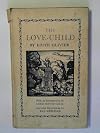
As The Love-Child opens, we see Agatha, a 32 year old spinster, burying her mother. Her life that always was empty and bereft of companionship is now even more so. To console herself, Agatha raises from the dead of her childhood her imaginary friend, Clarissa. All is well and good with Agatha's make-believe world that she shares with Clarissa until something goes terribly wrong--other people start to be able to see Clarissa too.
This is a confounding situation for Agatha indeed, and one which show more she handles with aplomb. The girl who was once her imaginary friend is now, scandalously, introduced to the world as her love child. Like other children, Clarissa grows up, and much to Agatha's satisfaction. Agatha's fantasy sours, however, when a young man falls in love with her. Here is where the book really displays its brilliance because it is forced to answer a difficult question--whose fantasy shall Clarissa ultimately be, Agatha's or her suitor's?
The issue of fantasy ownership within the novel is not to be underestimated given this novel's short length and pithy prose. It very delicately balances notions of incest, lesbianism, feminism, and heterosexual prerogative with surprising results.
A highly recommended read. show less
This is a confounding situation for Agatha indeed, and one which show more she handles with aplomb. The girl who was once her imaginary friend is now, scandalously, introduced to the world as her love child. Like other children, Clarissa grows up, and much to Agatha's satisfaction. Agatha's fantasy sours, however, when a young man falls in love with her. Here is where the book really displays its brilliance because it is forced to answer a difficult question--whose fantasy shall Clarissa ultimately be, Agatha's or her suitor's?
The issue of fantasy ownership within the novel is not to be underestimated given this novel's short length and pithy prose. It very delicately balances notions of incest, lesbianism, feminism, and heterosexual prerogative with surprising results.
A highly recommended read. show less
Lists
You May Also Like


Associated Authors
Statistics
- Works
- 18
- Also by
- 4
- Members
- 311
- Popularity
- #75,819
- Rating
- 3.9
- Reviews
- 12
- ISBNs
- 38
- Favorited
- 2
