
A. E. Stallings
Author of Hapax: Poems
About the Author
Works by A. E. Stallings
The Battle between the Frogs and the Mice: A Tiny Homeric Epic (2019) — Translator — 30 copies, 1 review
Associated Works
Orpheus and Company: Contemporary Poems on Greek Mythology (1999) — Contributor — 52 copies, 1 review
Tagged
Common Knowledge
- Other names
- Stallings, Alicia Elsbeth
- Birthdate
- 1968-07-02
- Gender
- female
- Education
- University of Georgia
Lady Margaret Hall, Oxford - Occupations
- poet
translator - Awards and honors
- Richard Wilbur Award (1999)
Poets' Prize (2008)
Pushcart Prize
Eunice Tietjens Prize
Howard Nemerov Sonnet Award (2004)
James Dickey Prize (show all 7)
Benjamin H. Danks Award (Fiction, 2008) - Nationality
- USA
- Birthplace
- Decatur, Georgia, USA
- Places of residence
- Athens, Greece
Decatur, Georgia, USA
Oxford, England, UK - Associated Place (for map)
- Decatur, Georgia, USA
Members
Reviews
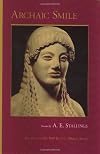
Archaic Smile is Alicia Stallings' debut collection of poetry, published in 1999, and since then, she's gone on to become Oxford's 47th Professor of Poetry, keeping company with Auden, Graves, Heaney, Padel and Muldoon. I had read and enjoyed the odd poem by her in magazines, but this is the first time I sat down to read an entire volume of her work, and was well-rewarded. In addition to her own work, Stallings is a classicist who translates from Greek (both, ancient and modern) and Latin. show more These poems, written from Greece, consequently, are filled with references to mythology, literature, and history, that create rich narrative accounts out of small poetic fragments. Structured in five parts, the first, titled the 'Underworld' leans most heavily on these influences: in one poem, titled 'Persephone Writes a Letter to her Mother,' Stallings writes of how the underworld, not deep underground but right below the feet of humans, generates a language born of darkness: "They say the light is 'loud' (their figures of speech / All come from sound..)". Her letters will not reach: they rot, like everything else in mulch, but Hades is not angered, Perspehone notes with surprise: "My effort is futile, he says, and doesn't forbid it." It is a poem that is beautiful and agonizing, making real not the passage to the underworld (which Lawrence evoked so beautifully in 'Bavarian Gentians' but instead, life in the afterlife: slow, boring, tragic, excruciating. Most well-known from this section is her well-constructed "Postcard from Greece" - a heartstopping account of a near-accident, but in the next few sections she continues that passage from the present to the past and back. In 'A Bestiary' Stallings considers why we say 'As the Crow Flies' (and not any other bird - "Raven's cousin / Alone will fly both straight and stark / His course, one feather with the dark.") and, laments dead childhood pets, roaches, loggerhead turtles, and draws insomnia as a cat, "..grown fat / On table scraps of the past / Sits like a ziggurat / And dreams about breakfast." I do like that she writes intentionally with rhyme, or near rhyme - she isn't writing in strict poetic form but there's enough form there to convey a sense of music, structure, shape.
In the third and fourth sections, Stallings' tone is more personal: in 'Tour of the Labyrinth' her poems go back to Greek and Roman mythology, but are filled with individual voice. In a painfully kind poem, she writes a consolation to a friend who accidentally broke an ancient pot, one that had survived centuries only to shatter in her hands, noting that it might have only been "emboldened by your blood, and so forgot / that it was not a rosebud, but a pot / And, trying to unfold for you, was brittle." Quoting Virgil (ferit circulum aureorum siderum clamor / the cries strike the circle of golden stars) she writes of the fall of Troy, and of the cost of the celebrations that followed ("...thought I saw our gods, of monstrous size / Splash barefoot in our blood, and with delight "). The labyrinth itself appears in a poem titled 'Ariadne and the rest," in which Ariadne asks, "Oh, free me from my labyrinthine days! / Oh, how each moment is is so like the next, / Each leading to another just the same, / Each branching-off of time so like the rest, / A wearisome, well-ordered maze!". Yet at times the wordplay is laboured, difficult - what are we to make of "The (wh)y in you that is not I" - an awkwardness seemingly out of character for such a skilled poet.
In the final section, 'For the Losers of Things' she turns that same compassionate eye of consolation to life's many indignities: mistakes, a lost umbrella, a child's tantrum taken seriously ("they told you, lying always about loss......and they were wrong."), a father-daughter fishing trip turned sour despite the "invisible line pulled taut that links them both" and in her most modern poem yet, 'The Machines Mourn the Passing of People' which yet conveys that great, grand sense of tragedy. I liked this section: unflinching but compassionate, most of all. In sum, these are very sophisticated and well-written poems, that stayed with me long after I read them - missteps, if any, were few, and reiterates for me that she's a very skillful writer whose work I greatly enjoy. show less
In the third and fourth sections, Stallings' tone is more personal: in 'Tour of the Labyrinth' her poems go back to Greek and Roman mythology, but are filled with individual voice. In a painfully kind poem, she writes a consolation to a friend who accidentally broke an ancient pot, one that had survived centuries only to shatter in her hands, noting that it might have only been "emboldened by your blood, and so forgot / that it was not a rosebud, but a pot / And, trying to unfold for you, was brittle." Quoting Virgil (ferit circulum aureorum siderum clamor / the cries strike the circle of golden stars) she writes of the fall of Troy, and of the cost of the celebrations that followed ("...thought I saw our gods, of monstrous size / Splash barefoot in our blood, and with delight "). The labyrinth itself appears in a poem titled 'Ariadne and the rest," in which Ariadne asks, "Oh, free me from my labyrinthine days! / Oh, how each moment is is so like the next, / Each leading to another just the same, / Each branching-off of time so like the rest, / A wearisome, well-ordered maze!". Yet at times the wordplay is laboured, difficult - what are we to make of "The (wh)y in you that is not I" - an awkwardness seemingly out of character for such a skilled poet.
In the final section, 'For the Losers of Things' she turns that same compassionate eye of consolation to life's many indignities: mistakes, a lost umbrella, a child's tantrum taken seriously ("they told you, lying always about loss......and they were wrong."), a father-daughter fishing trip turned sour despite the "invisible line pulled taut that links them both" and in her most modern poem yet, 'The Machines Mourn the Passing of People' which yet conveys that great, grand sense of tragedy. I liked this section: unflinching but compassionate, most of all. In sum, these are very sophisticated and well-written poems, that stayed with me long after I read them - missteps, if any, were few, and reiterates for me that she's a very skillful writer whose work I greatly enjoy. show less
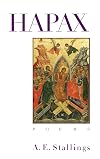
With an academic background in English literature, and a good bit of reading under my belt, I have found my contemporary poetic voice in A E Stallings: a woman's sensibility, a poet's wondrous eye and ear for metaphor, a joy in (and playing with) poetic forms, a background in Classics. Indeed, Stallings sometimes dips into Greek mythology to refresh contemporary experience even as she renders contemporary experience immediate, even (beautifully) painful. I actually have this book on my show more nightstand and read a few poems each night. They always yield a new twist, a new delight in form or implication, a new pleasure. Stallings is my absolute favorite modern poet, bar none, and has been for several years. show less
A E Stallings is my absolute favorite contemporary poet. Her poetry embraces (and modifies) poetic form and structure as well as all the other resources of the genre while revealing a very human, all too vulnerable sensibility. These poems are accessible, even playful, yet they reward exploration of their subtleties. Stallings often draws upon the Classics to sing to and about, albeit with a knowing contemporary voice. Her poems collapse millennia in shared wisdom and expand a gesture to show more infinity, all the while maintaining their human source and voice. Highly recommended. show less
I appreciate Stallings' combination of modern-day experiences sprinkled with the fantastical elements of classic literature and mythology. It is an incredible unique poetic style and so clearly owned by Stallings. Stallings is able to subtly instill why the classics are still relevant to the human experience today and keep them alive, which is very important in today's technological age and constant forgetting of the ideals that transformed art into what it is today.
However, I struggled to show more feel connected to the emotions told through the poems. The subjects felt far away and impersonal, despite my longing to truly grasp what was being said. I will give benefit to the doubt and say that could be in part to my current life experience and being a twenty-something single woman with no children. I would love to re-read this later in life and see if my thoughts and personal attachment to the book changes.
I enjoy Stallings' voice, but this book personally was not my favorite. I would like to read some of her other volumes and get a better feel for her as a poet. show less
However, I struggled to show more feel connected to the emotions told through the poems. The subjects felt far away and impersonal, despite my longing to truly grasp what was being said. I will give benefit to the doubt and say that could be in part to my current life experience and being a twenty-something single woman with no children. I would love to re-read this later in life and see if my thoughts and personal attachment to the book changes.
I enjoy Stallings' voice, but this book personally was not my favorite. I would like to read some of her other volumes and get a better feel for her as a poet. show less
Lists
Awards


You May Also Like


Associated Authors
Statistics
- Works
- 10
- Also by
- 11
- Members
- 398
- Popularity
- #60,945
- Rating
- 3.8
- Reviews
- 11
- ISBNs
- 19
- Favorited
- 2