
William Boekestein
Author of Why Christ Came: 31 Meditations on the Incarnation
About the Author
William Boekestein is the pastor of Covenant Reformed Church in Carbondale, Pennsylvania (URCNA). He has authored several books including Why Christ Came: 31 Meditations on the Incarnation (with Joel Beeke), and (for children) Faithfulness under Fire: The Story of Guido de Bres, The Quest for show more Comfort: The Story of the Heidelberg Catechism, and The Glory of Grace: The Story of the Canons of Dort. show less
Works by William Boekestein
Tagged
Common Knowledge
- Canonical name
- Boekestein, William
- Gender
- male
Members
Reviews

Growing up, I was introduced to a wide assortment of "heroes of the Christian faith." But most of them were Americans -- pastors, or presidents, or missionaries -- and most were from the last two hundred years. As an adult, I came to a deeper appreciation of the Reformation, and I learned about a whole era of church history that was to some degree overlooked in my education. I now appreciate men like John Calvin and Martin Luther for their courage and tenacity, their faith and piety. As I show more continue to study the Reformation, it's lesser-known figures are also catching my eye. The work of men whom history has almost entirely forgotten, continues down to this day in such influential church documents as the Westminster Confession of Faith and the Heidelberg Catechism.
In a new book by William Boekestein, the story of the creation of the Heidelberg Catechism is told on a child's level. "The Quest for Comfort: The Story of The Heidelberg Catechism" traces the life stories of Caspar Olevianus, Zacharius Ursinus, and Frederick III. These three forgotten men, are the primary authors of the most enduring Reformation era Catechism: The Heidelberg Catechism.
The turbulent period of the Reformation and the fervent faith of these great men are captured well in this short book. Children will see preachers in jail, and Christians in exile -- and such realities are sure to encourage reflection and interaction with the story. The book also introduces the Heidelberg Catechism and would serve well as a book to be read alongside a family study of this important catechism.
Young readers will be enthralled by the names of these men, if not their tales. And the pages of this book are fully illustrated with a classic look and rich, full colors which will transport the reader to another age. The deluxe hardback binding will ensure the book stands up to the constant use young minds will make of it.
I would imagine that young readers in the 3rd - 6th grades would be able to read this independently. And children from Kindergarten and up will find the story fascinating. The color pictures make the book ideal even for younger children in a family devotions setting.
I wish as a child I had access to books like this that majored on the Reformation story, and the rich and varied history of the Christian faith. Author William Boekestein has written other tales for children, such as "Faithfulness Under Fire: The Story of Guido de Bres" (the author of the Belgic Confession). His simple and direct style is suitable for children and I hope he goes on to write many more wonderful tales such as these for children.
I highly recommend this book. I recommend purchasing this book as a special gift for a young person in your life. You'll be doing them a big favor and introducing them to the world of the Reformation.
Disclaimer: This book was provided by the author for review. I was under no obligation to offer a favorable review. show less
In a new book by William Boekestein, the story of the creation of the Heidelberg Catechism is told on a child's level. "The Quest for Comfort: The Story of The Heidelberg Catechism" traces the life stories of Caspar Olevianus, Zacharius Ursinus, and Frederick III. These three forgotten men, are the primary authors of the most enduring Reformation era Catechism: The Heidelberg Catechism.
The turbulent period of the Reformation and the fervent faith of these great men are captured well in this short book. Children will see preachers in jail, and Christians in exile -- and such realities are sure to encourage reflection and interaction with the story. The book also introduces the Heidelberg Catechism and would serve well as a book to be read alongside a family study of this important catechism.
Young readers will be enthralled by the names of these men, if not their tales. And the pages of this book are fully illustrated with a classic look and rich, full colors which will transport the reader to another age. The deluxe hardback binding will ensure the book stands up to the constant use young minds will make of it.
I would imagine that young readers in the 3rd - 6th grades would be able to read this independently. And children from Kindergarten and up will find the story fascinating. The color pictures make the book ideal even for younger children in a family devotions setting.
I wish as a child I had access to books like this that majored on the Reformation story, and the rich and varied history of the Christian faith. Author William Boekestein has written other tales for children, such as "Faithfulness Under Fire: The Story of Guido de Bres" (the author of the Belgic Confession). His simple and direct style is suitable for children and I hope he goes on to write many more wonderful tales such as these for children.
I highly recommend this book. I recommend purchasing this book as a special gift for a young person in your life. You'll be doing them a big favor and introducing them to the world of the Reformation.
Disclaimer: This book was provided by the author for review. I was under no obligation to offer a favorable review. show less
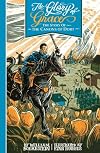
Once again William Boekestein has given us a fantastic book for children. "The Glory of Grace: the Story of the Canons of Dort" is his third book in a series from Reformation Heritage Books. Each book is illustrated by Evan Hughes and looks at the historical background to one of the confessional statements that make up the “Three Forms of Unity” treasured for centuries by the Reformed Church. I reviewed his book on the Heidelberg Catechism previously and was pleased to find this title show more lived up to my expectations.
The book is bright and colorful and provides a thorough backdrop to the Synod of Dort. The battle for Dutch independence and the Catholic inquisition are touched on, as well as the Protestant Reformation. The story of Jacobus Arminius and his followers, the Remonstrants, is then told in some detail. Boekestein describes the controversy that birthed the Synod and includes summaries of the five counterpoints (known as the “Canons of Dort”) it published in response to the five points of the Remonstrants. Boekestein then reflects on the lasting legacy of Dort and the current rise in Calvinism in light of the prevailing Arminian character of American Christianity.
This sure is a lot to cover in one small kids book, but the author manages to be just detailed enough to be accurate and simple enough to be understood by a variety of ages. He is thorough where he needs to be and also treats the topic with a largely irenic and charitable spirit. Still, at times the brevity and format of the book force the inclusion of some statements which seem to over-exaggerate the ill motives of Arminius and the Remonstrants. What more than redeems the book is its success in bringing the world of 17th century Holland to life and inviting today’s young people to consider the importance of theology and doctrine. His book brings the Reformation to life and will earn an important place on the bookshelves and home-school desks of Reformed Christians everywhere.
I hope that some who appreciate the history of the Reformation but eschew the Reformed label, will not hesitate to also pick up this title and use it as a historical resource. Those in Reformed-leaning churches and others who respect Luther and Calvin but have never heard of the Three Forms of Unity will find this book intriguing and perhaps venture on to read through, and learn to appreciate, the historic creeds and confessions of our Protestant heritage.
One more wish. I hope that Boekestein and Hughes don’t stop here. I’d love to see the Westminster Confession of Faith, and even the London Baptist Confession detailed in a similar story format to the titles in this series. For now, I’m going to have to purchase the first book in the series to complete my set – and I’d encourage my readers to pick up all three titles. You won’t be disappointed.
Disclaimer: This book was provided by Reformation Heritage Books. I was under no obligation to offer a favorable review. show less
The book is bright and colorful and provides a thorough backdrop to the Synod of Dort. The battle for Dutch independence and the Catholic inquisition are touched on, as well as the Protestant Reformation. The story of Jacobus Arminius and his followers, the Remonstrants, is then told in some detail. Boekestein describes the controversy that birthed the Synod and includes summaries of the five counterpoints (known as the “Canons of Dort”) it published in response to the five points of the Remonstrants. Boekestein then reflects on the lasting legacy of Dort and the current rise in Calvinism in light of the prevailing Arminian character of American Christianity.
This sure is a lot to cover in one small kids book, but the author manages to be just detailed enough to be accurate and simple enough to be understood by a variety of ages. He is thorough where he needs to be and also treats the topic with a largely irenic and charitable spirit. Still, at times the brevity and format of the book force the inclusion of some statements which seem to over-exaggerate the ill motives of Arminius and the Remonstrants. What more than redeems the book is its success in bringing the world of 17th century Holland to life and inviting today’s young people to consider the importance of theology and doctrine. His book brings the Reformation to life and will earn an important place on the bookshelves and home-school desks of Reformed Christians everywhere.
I hope that some who appreciate the history of the Reformation but eschew the Reformed label, will not hesitate to also pick up this title and use it as a historical resource. Those in Reformed-leaning churches and others who respect Luther and Calvin but have never heard of the Three Forms of Unity will find this book intriguing and perhaps venture on to read through, and learn to appreciate, the historic creeds and confessions of our Protestant heritage.
One more wish. I hope that Boekestein and Hughes don’t stop here. I’d love to see the Westminster Confession of Faith, and even the London Baptist Confession detailed in a similar story format to the titles in this series. For now, I’m going to have to purchase the first book in the series to complete my set – and I’d encourage my readers to pick up all three titles. You won’t be disappointed.
Disclaimer: This book was provided by Reformation Heritage Books. I was under no obligation to offer a favorable review. show less
Actually, you don't need to choose a job that's "perfect for you." But you do need to be productive in ways that honor God in your work life.
Here's a better question: As a believer, how can I determine what I am supposed to do, and then do it well? The doctrine of calling, or vocation, will lead you to the answer.
Finding My Vocation will help you do three things:
Ponder-learn what it means to have a calling and what Scripture teaches about work.Prepare-determine the skills and character show more traits you'll need and learn to sort through vocational options and be faithful in your other callings.Practice-apply biblical disciplines to succeed at work and relate work to the rest of your life as a Christian.
God placed us in his world to work for his glory. You might not know exactly what he has planned for you, but you must-and can-be faithful where he calls you. show less
Here's a better question: As a believer, how can I determine what I am supposed to do, and then do it well? The doctrine of calling, or vocation, will lead you to the answer.
Finding My Vocation will help you do three things:
Ponder-learn what it means to have a calling and what Scripture teaches about work.Prepare-determine the skills and character show more traits you'll need and learn to sort through vocational options and be faithful in your other callings.Practice-apply biblical disciplines to succeed at work and relate work to the rest of your life as a Christian.
God placed us in his world to work for his glory. You might not know exactly what he has planned for you, but you must-and can-be faithful where he calls you. show less
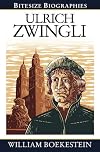
Ulrich Zwingli, by William Boekestein is, as the series is titled, a "Bitesize Biography" but there is a good amount o content in that 'bite'. Despite this biography's size, it gives a lot of information to Zwingli. It actually seems to 'introduce' you to him as opposed to making you a mere acquaintance of his life.
The things I most remember about Zwingli, from other books and sources on him, are that he died in a not-so justifiable battle/war and that he debated and opposed Luther on the show more presence of Christ in the Lord's 'Table'. I've found out that there were several things I didn't know about his life, these things include sanctifying works of God in and through his life such as his doing away with preaching on Bible texts assigned by the Catholic Church, and opting for a verse by verse, book by book method of preaching instead.
On the negative side, there were the manifestations of the sinful 'remnants' of Zwingli's dead old self that still hadn't conceded that God had won the victory(Rom. 7-8). Some of these negatives are evidenced in Zwingli's struggle with sexual sin(he solicited prostitutes), even when he had come to an accurate view of salvation. He technically shouldn't have been a pastor because of that, but he was still a 'Priest' in the Catholic church, and that sin was practiced by many 'Priests' of the day so I guess they just thought it was normal for church leaders. As the author puts it, "Zwingli's intellectual abilities had greatly outpaced his moral fortitude". Perhaps the key point in Zwingli's struggle was that it was actually a struggle with this sin, and not a resignation to it. It does look as though he ultimately did manage to get to get to a point of acting on the Spirit's promptings to habitually 'kill' those sins, and he married a widow and had several children with her.
Like all Christians, Zwingli had his flaws, and his own battles with his fleshly desires, which makes us admire God's use of the man, realizing even more that any truly godly thing that came out of Zwingli's life was God's work, not his own. And so it is in all of our lives as Christians, we are dependent upon God for all aspects of salvation, and we take comfort that God's work doesn't just stop at our justification but that it continues with our progressive sanctification and ultimate glorification(Rom. 8:30).
If you want to get a quick view of Zwingli's life and God's use of Him, this biography would do very well. show less
The things I most remember about Zwingli, from other books and sources on him, are that he died in a not-so justifiable battle/war and that he debated and opposed Luther on the show more presence of Christ in the Lord's 'Table'. I've found out that there were several things I didn't know about his life, these things include sanctifying works of God in and through his life such as his doing away with preaching on Bible texts assigned by the Catholic Church, and opting for a verse by verse, book by book method of preaching instead.
On the negative side, there were the manifestations of the sinful 'remnants' of Zwingli's dead old self that still hadn't conceded that God had won the victory(Rom. 7-8). Some of these negatives are evidenced in Zwingli's struggle with sexual sin(he solicited prostitutes), even when he had come to an accurate view of salvation. He technically shouldn't have been a pastor because of that, but he was still a 'Priest' in the Catholic church, and that sin was practiced by many 'Priests' of the day so I guess they just thought it was normal for church leaders. As the author puts it, "Zwingli's intellectual abilities had greatly outpaced his moral fortitude". Perhaps the key point in Zwingli's struggle was that it was actually a struggle with this sin, and not a resignation to it. It does look as though he ultimately did manage to get to get to a point of acting on the Spirit's promptings to habitually 'kill' those sins, and he married a widow and had several children with her.
Like all Christians, Zwingli had his flaws, and his own battles with his fleshly desires, which makes us admire God's use of the man, realizing even more that any truly godly thing that came out of Zwingli's life was God's work, not his own. And so it is in all of our lives as Christians, we are dependent upon God for all aspects of salvation, and we take comfort that God's work doesn't just stop at our justification but that it continues with our progressive sanctification and ultimate glorification(Rom. 8:30).
If you want to get a quick view of Zwingli's life and God's use of Him, this biography would do very well. show less
You May Also Like


Associated Authors
Statistics
- Works
- 20
- Members
- 909
- Popularity
- #28,218
- Rating
- 4.2
- Reviews
- 12
- ISBNs
- 29
- Languages
- 2