
Stephen J. Nichols
Author of The Reformation: How a Monk and a Mallet Changed the World
About the Author
Dr. Stephen J. Nichols is president of Reformation Bible College, chief academic officer for Ligonier Ministries, and a Ligonier Ministries teaching fellow. He is host of the podcasts 5 Minutes in Church History and Open Book. He is author of numerous books, including For Us and for Our Salvation show more and A Time for Confidence. show less
Image credit: Photo by Gini Woy
Works by Stephen J. Nichols
Jesus Made in America: A Cultural History from the Puritans to "The Passion of the Christ" (2008) 273 copies, 4 reviews
Reformation ABCs: The People, Places, and Things of the Reformation―from A to Z (2017) 216 copies, 1 review
Ancient Word, Changing Worlds: The Doctrine of Scripture in a Modern Age (2009) 202 copies, 1 review
5 Minutes in Church History: An Introduction to the Stories of God's Faithfulness in the History of the Church (2019) 199 copies
An Absolute Sort of Certainty: The Holy Spirit and the Apologetics of Jonathan Edwards (2003) 135 copies
The Legacy of Jonathan Edwards: American Religion and the Evangelical Tradition (2003) — Editor — 125 copies
Beyond the Ninety-Five Theses: Martin Luther's Life, Thought, and Lasting Legacy (2016) 111 copies, 1 review
Getting the Blues: What Blues Music Teaches Us about Suffering and Salvation (2008) 86 copies, 1 review
The Great Awakening 1 copy
Heaven on Earth 1 copy
Associated Works
Luther's Ninety-Five Theses (1517) — Editor, some editions; Editor, some editions — 588 copies, 2 reviews
Jonathan Edward's Resolutions — Editor, some editions — 1 copy
Tagged
Common Knowledge
- Birthdate
- 1970
- Gender
- male
- Education
- Philadelphia Biblical University
Westminster Theological Seminary (Th.M.)
West Chester University (M.A.|Philosophy)
Westminster Theological Seminary (Ph.D.) - Occupations
- professor
lecturer - Organizations
- Evangelical Theological Society
Presbyterian Church of the USA - Relationships
- Heidi (wife)
Nichols, Ben (son)
Nichols, Ian (son)
Nichols, Grace (daughter) - Nationality
- USA
- Places of residence
- Lancaster County, Pennsylvania, USA
- Associated Place (for map)
- Pennsylvania, USA
Members
Reviews
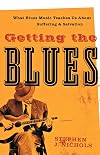
One of the many good things to come out of the recent Machen week was the chance to swap books with Steve Nichols. During the course of the week Steve mentioned a plan to meet up with the music journalist Steve Turner which opened up a side to him that I'd missed in a previous encounter. It turns out that Steve (N) has done this whole book Getting the blues looking at 'What blues music teaches us about suffering and salvation' and it really is a brilliant book.
Being a big music fan (though show more not the blues especially) and a lover of good theology I was immediately drawn to it. It takes you through a sort of history of the blues but all the way it gives you theology too. It is what he calls a theomusicology, a term borrowed from another contemporary writer in this area. The theology is good (ruin, redemption, regeneration, etc) and although there may be a little selectivity here and there his argument that a sound theology is woven through the blues stands up.
I liked this book on many levels - the fine introduction to the music (I'm pretty hazy except for the sound track to Brother where art thou and a half dozen Rev Gary Davis tracks in my i-tunes); the good theology (in a minor key); helpful things on Ruth and Ecclesiastes; the whole idea of looking at what is so often considered by secularists on robust Christian lines. Oh yeah - great title too.
I'm hoping to pass copies on to people who will appreciate it even more than me and who may be will get to understand the theology too. show less
Being a big music fan (though show more not the blues especially) and a lover of good theology I was immediately drawn to it. It takes you through a sort of history of the blues but all the way it gives you theology too. It is what he calls a theomusicology, a term borrowed from another contemporary writer in this area. The theology is good (ruin, redemption, regeneration, etc) and although there may be a little selectivity here and there his argument that a sound theology is woven through the blues stands up.
I liked this book on many levels - the fine introduction to the music (I'm pretty hazy except for the sound track to Brother where art thou and a half dozen Rev Gary Davis tracks in my i-tunes); the good theology (in a minor key); helpful things on Ruth and Ecclesiastes; the whole idea of looking at what is so often considered by secularists on robust Christian lines. Oh yeah - great title too.
I'm hoping to pass copies on to people who will appreciate it even more than me and who may be will get to understand the theology too. show less
What is Christmas about? Is it about presents or a bearded obese man squeezing down chimneys or awkward meals or public school pageants that attempt to walk the PC road of inclusivity mixed with nostalgia-lite(all the fluff and none of the substance)?
Or is it about peace on Earth? Or should I say, Peace on Earth.
Nichols recounts a story early on in this work about “The Miracle on the Western Front”. I vaguely remembered pieces of the story but was struck anew by this recounting. This show more Christmas truce of 1914 left opposing forces, who hours earlier would only rank “staying alive” higher on their to-do list than killing this enemy, singing together and playing football together and enjoying peace in the midst of battle, if only for a short time.
But this peace was not lasting. As any man-made peace is sure to do, this peace ended. The violence and bloodshed resumed and the war, and wars, would proceed as usual. Christmas is not about a truce. It is not about a hiatus of bloodshed, it is about peace. Peace with each other and peace with God, accomplished by His Son who came into the world via a virgin and a manger.
“The birthday of the Lord is the birthday of peace.”—Pope Leo I
But this story of peace does not begin in a manger and Nichols does well in showing this. It does not begin with an angelic announcement, but rather the Christmas story has its roots in eternity and grows throughout history—from the “Let there be” of God, to the Garden of Eden and on.
Nichols takes the reader from promise, to fulfillment, to reflection—seeing the manger from Genesis to Revelation, the incarnation from cover to cover. Nichols tells this story by blending Scripture readings, hymns and quotes. The reader will be encouraged to worship by the beauty of the content and the presentation.
Nichols chapter on “Keeping Christmas” helps the reader to develop traditions to keep the focus of Christmas firmly set on the God of Christmas. He gives some Scriptures to read alongside carols and introduces the practice of Advent with a month’s worth of Advent Sunday devotionals to do as a family. He also leaves space for families to record traditions or future traditions that they desire to develop.
Christmas is about the Lord and how He made peace with a rebellious creation. Nichols work leads the reader to this and leaves them worshiping in the midst of this truth. This is a great book to bring out every November and leave on the coffee table throughout the holiday season and a work to enjoy throughout the year. show less
Or is it about peace on Earth? Or should I say, Peace on Earth.
Nichols recounts a story early on in this work about “The Miracle on the Western Front”. I vaguely remembered pieces of the story but was struck anew by this recounting. This show more Christmas truce of 1914 left opposing forces, who hours earlier would only rank “staying alive” higher on their to-do list than killing this enemy, singing together and playing football together and enjoying peace in the midst of battle, if only for a short time.
But this peace was not lasting. As any man-made peace is sure to do, this peace ended. The violence and bloodshed resumed and the war, and wars, would proceed as usual. Christmas is not about a truce. It is not about a hiatus of bloodshed, it is about peace. Peace with each other and peace with God, accomplished by His Son who came into the world via a virgin and a manger.
“The birthday of the Lord is the birthday of peace.”—Pope Leo I
But this story of peace does not begin in a manger and Nichols does well in showing this. It does not begin with an angelic announcement, but rather the Christmas story has its roots in eternity and grows throughout history—from the “Let there be” of God, to the Garden of Eden and on.
Nichols takes the reader from promise, to fulfillment, to reflection—seeing the manger from Genesis to Revelation, the incarnation from cover to cover. Nichols tells this story by blending Scripture readings, hymns and quotes. The reader will be encouraged to worship by the beauty of the content and the presentation.
Nichols chapter on “Keeping Christmas” helps the reader to develop traditions to keep the focus of Christmas firmly set on the God of Christmas. He gives some Scriptures to read alongside carols and introduces the practice of Advent with a month’s worth of Advent Sunday devotionals to do as a family. He also leaves space for families to record traditions or future traditions that they desire to develop.
Christmas is about the Lord and how He made peace with a rebellious creation. Nichols work leads the reader to this and leaves them worshiping in the midst of this truth. This is a great book to bring out every November and leave on the coffee table throughout the holiday season and a work to enjoy throughout the year. show less
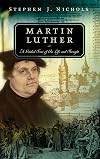
Martin Luther: A Guided Tour of His Life and Thought is exactly what the title suggests it is. Here is a brief biography combined with an introduction of some of the major contributions made by Luther to theology. The book is concise and easy to read. Certainly, it doesn't have the depth of the greater biographies. There are important points in Luther's life that are barely touched on. It doesn't fully develop all of the theology as well. Still, it is not fair to judge a work on what it is show more not. Nichols wanted to introduce Luther, and in this, he did a fine job. He is sympathetic to the man and understanding of his place in the world. Further resources are referenced throughout. Overall, it is a useful introduction to an important man. show less
Jesus Made in America: A Cultural History from the Puritans to the Passion of the Christ by Stephen J. Nichols
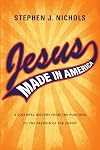
Often with little attention to the historical figure, each subsequent generation of American Christians have re-created the person and ministry of Jesus. This is particularly true to American Evangelicals, the subject of Nichols’ “cultural history.” Using the Puritans (e.g. Jonathan Edwards and Edward Taylor) as the theological standard of American orthodox Christology, Nichols traces the cultural trajectory of Christological beliefs in ensuing generations – as represented by show more frontier Jesus, modernist Jesus, Jesus People Jesus, Hollywood Jesus, T-Shirt Jesus, and Republican Jesus. Nichols provides an insightful cultural exegesis, but seems guilty of theological and historical reductionism – or at least favoritism. B show less
Lists
You May Also Like


Associated Authors
Statistics
- Works
- 42
- Also by
- 6
- Members
- 5,097
- Popularity
- #4,905
- Rating
- 4.1
- Reviews
- 27
- ISBNs
- 72
- Languages
- 4
- Favorited
- 2