
Boileau-Narcejac
Author of Vertigo
About the Author
Disambiguation Notice:
Boileau-Narcejac is the name by which Pierre Boileau and Pierre Ayraud, aka Thomas Narcejac wrote. Each having also written books under their own names, neither Boileau nor Ayraud should be combined with the other, or with Boileau-Narcejac.
Image credit: Pierre Louis Boileau et Thomas Narcejac en 1979, France
Series
Works by Boileau-Narcejac
I vedovi (Italian Edition) 2 copies
Seniors Card 1 copy
Open Door to the Sea 1 copy
Complot (Enigma) 1 copy
Tagged
Common Knowledge
- Other names
- Boileau, Pierre
Narcejac, Thomas
Буало-Нарсежак
Boıleau-Narcejac - Birthdate
- n/a
- Date of death
- n/a
- Gender
- male
- Nationality
- France
- Disambiguation notice
- Boileau-Narcejac is the name by which Pierre Boileau and Pierre Ayraud, aka Thomas Narcejac wrote. Each having also written books under their own names, neither Boileau nor Ayraud should be combined with the other, or with Boileau-Narcejac.
- Associated Place (for map)
- France
Members
Reviews
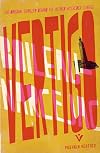
I was intrigued to read the book which became a Hitchcock film. Especially because I read that Boileau and Nacejac wrote it with Hitchcock in mind, after he failed to secure the rights to their first novel. I like the film. The book is just different enough to make it better than the film. The setting of Paris at the start of WW2 adds to the melancholy of the anti-hero Flavières. I think his status as a young enough man not at war is more important than his titular vertigo. The second part show more of the book is significantly different, and more satisfying, than the film. The story is exquisitely turned, the characters sighingly believable. show less

An intriguing mystery, revolving around an obsessional neurotic's decent into psychosis. Flavières' fixation upon the otherworldly Madeleine is creepy from the outset, develops into unpleasantness, finally twisting into a controlling abusiveness. Well-worthy of the Hitchcock treatment, a psychological drama which left me with a bad taste in my mouth.
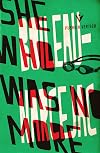
This year I promised myself a read through of the entire Pushkin Vertigo series, starting out with SHE WHO WAS NO MORE by Pierre Boileau and Pierre Ayraud (aka Thomas Narcejac), originally published in 1952. Collaborating as they did on mainly police stories I found the idea that Boilea was responsible for the plot and Narcejac the atmosphere and characters particularly intriguing. Both of which aspects really delivered in this novel - the story of an unfaithful husband, his ambitious doctor show more lover Lucienne, and his passive, stay at home wife Mireille. Lucience and Fernard Ravinel conspire to, and ultimately drown Mireille in the bath, transporting her body a long distance back to the Ravinel home by car to leave it to be discovered in a way that would indicate accidental death.
Only the body, carefully laid out by Ravinel, disappears before any such discovery can be made, and sightings of his dead wife (his lover is a doctor after all - surely she can recognise death when she sees it) start to reveal themselves, leaving Ravinel unraveling - his plot and his sanity.
Atmospheric, restrained and deeply dark noir, SHE WHO WAS NO MORE was utterly compelling reading. Carefully plotted there's little that can be said about that aspect without giving away a lot (and to be honest, astute readers may pick up on a series of clues along the way), but more's to the point with this book, it's the unraveling of Ravinel that's the most fascinating aspect. That and the wonderful combination of dark, rundown, almost seedy locations, the contrasts between foggy landscapes and thinking, and the almost visual aspects of the characterisations. You can clearly see expressions, thoughts and confusion on faces. You can feel the rooms they move through, the places they are in, the air that they are breathing. It's utterly mesmerising and you can see why there are multiple movies made of this story, and why the earlier of those (The Devils) is said to have inspired Psycho.
Another one of those reading quests that I wish I could devote more time to - the second book on my pile from the same series is I WAS JACK MORTIMER by Alexander Lernet-Holenia. It's only going to need to be half as good to make me very pleased with this decision and desperate to find the time to read more from their fabulous set of books.
https://www.austcrimefiction.org/review/she-who-was-no-more-pierre-boileau-and-t... show less
Only the body, carefully laid out by Ravinel, disappears before any such discovery can be made, and sightings of his dead wife (his lover is a doctor after all - surely she can recognise death when she sees it) start to reveal themselves, leaving Ravinel unraveling - his plot and his sanity.
Atmospheric, restrained and deeply dark noir, SHE WHO WAS NO MORE was utterly compelling reading. Carefully plotted there's little that can be said about that aspect without giving away a lot (and to be honest, astute readers may pick up on a series of clues along the way), but more's to the point with this book, it's the unraveling of Ravinel that's the most fascinating aspect. That and the wonderful combination of dark, rundown, almost seedy locations, the contrasts between foggy landscapes and thinking, and the almost visual aspects of the characterisations. You can clearly see expressions, thoughts and confusion on faces. You can feel the rooms they move through, the places they are in, the air that they are breathing. It's utterly mesmerising and you can see why there are multiple movies made of this story, and why the earlier of those (The Devils) is said to have inspired Psycho.
Another one of those reading quests that I wish I could devote more time to - the second book on my pile from the same series is I WAS JACK MORTIMER by Alexander Lernet-Holenia. It's only going to need to be half as good to make me very pleased with this decision and desperate to find the time to read more from their fabulous set of books.
https://www.austcrimefiction.org/review/she-who-was-no-more-pierre-boileau-and-t... show less
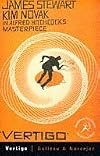
How very bizarre this book is. An overwrought, slightly hysterical crime melodrama - but one with a central idea so brilliant, so fantastically clever and elegantly simple that no wonder Hitchcock went crazy for it. It's rare to find a book which is so utterly improved upon by it's film adaptation. The hero as played by James Stewart is far more sympathetic and interestingly vulnerable than the slightly self pitying nutjob here. Similarly there's better pacing in terms of how the obsession show more begins to take form and then horribly explodes by the end of the narrative. Here it seems slightly rushed. Better still was Hitch's idea to reveal the twist at just past the halfway point. The pathos and horror of what's going on is far richer because of it. As with almost all of the things where the book differs from the film, the decisions Hitchcock made are just revealed to be more and more impressive. If you want a proof of his resolute genius - and that of the writers of the screenplay Coppel and Taylor - the ending is all you need. The book peters out in a bit of sensationalist silliness that would have befitted a Victorian melodrama. The film's ending is just *perfectly* judged - in terms of structure, narrative and with the climax of the character's emotional development. You can see what made Truffaut suggest it to Hitchcock, but it really is proof of who the genius really was. Interesting but deeply flawed. show less
Lists
Awards


You May Also Like


Associated Authors
Statistics
- Works
- 89
- Members
- 1,807
- Popularity
- #14,237
- Rating
- 3.5
- Reviews
- 29
- ISBNs
- 319
- Languages
- 15
- Favorited
- 1
