

Gaston Leroux (1868–1927)
Author of The Phantom of the Opera
About the Author
Gaston Leroux is best known as the creator of the 1911 novel, The Phantom of the Opera, about a masked figure who haunts the hidden parts of the Paris Opera House. The novel appeared first in serial installments a year before publication, ultimately grew into several movie versions, and later show more became an Tony Award-winning Andrew Lloyd Webber musical. Leroux was born in Paris in 1868. The only child of financially well-off parents, he moved easily into a clerk job in a law office. While working there, he wrote essays and short stories, many of which were accepted by publishers. This fired his enthusiasm, and he became a full-time reporter/writer in 1890. Law experience covering famous cases and theater reviews fueled his writing career, but it was his news reporter job that took him around the world at the turn of the century, providing details for his novels. Leroux wrote several mystery and fantasy novels, including the well-received The Mystery of the Yellow Room (1907) and The Man Who Came Back from the Dead (1912). Leroux also helped pioneer the character of the amateur detective who solves crime, so commonly seen today in movies and television. Gaston Leroux continued to write until his death on April 16, 1927. (Bowker Author Biography) show less
Image credit: Carte de presse judiciaire parisienne de Gaston Leroux, 8 février 1894
Series
Works by Gaston Leroux
Lire et s'entraîner : Gaston Leroux : Le Fantôme de l'Opéra [book + sound recording] (2001) — Writer — 21 copies, 1 review
Emoji Phantom of the Opera: Epic Tales in Tiny Texts (Condensed Classics) (2017) 11 copies, 2 reviews
The Phantom of the Opera (Deluxe Hardcover) — Gaston Leroux’s Gothic Classic of Love, Obsession, and Mystery (2025) 8 copies
Reading & Training : Gaston Leroux : The phantom of the opera [book + sound recording] (2007) — Writer — 7 copies
El fantasma de la opera/ The Phantom of the Opera (Clasicos Para Ninos/ Classics for Children) (Spanish Edition) (2005) 6 copies, 1 review
Lire et s'entraîner : Gaston Leroux : Le Mystère de la Chambre Jaune [book + sound recording] (2003) — Writer — 6 copies
Gaston Leroux's The Phantom of the Opera, Annotated and Illustrated (Oldstyle Tales' Gothic Novels) (2017) 4 copies
Level 5: The Phantom of the Opera Book and MP3 Pack (Pearson English Graded Readers) (2011) 3 copies
The Collected Works of Gaston Leroux: The Complete Works PergamonMedia (Highlights of World Literature) (2015) 3 copies
Dracula + Frankenstein + Phantom of the Opera (HORROR CLASSICS, 3 Volume Matched Set) (1965) 3 copies
La Bataille invisible - Aventures effroyables de M. Herbert de Renich - Tome II (French Edition) (2013) 2 copies
Le fantôme de l'opéra FLE lecture facile CD audio 2è édition (Découverte classique) (French Edition) (2016) 2 copies
The Masked Man 2 copies
Romans mystérieux : Le fantôme de l'opéra ; Le roi Mystère ; Le secret de la boîte à thé (2008) 2 copies
Il mistero della camera gialla. Il profumo della dama in nero. Il fantasma dell'Opera (1907) 2 copies
Nouveaux exploits de rouletabille r. chez le tsar le château noir — Author — 1 copy
O Fantasma da Óper 1 copy
El rey del misterio 1 copy
Racconti terrificanti 1 copy
Skrivnost rumene sobe 1 copy
Caro-Bibi y Cecilia 1 copy
El Fantasma de la Ópera 1 copy
Η στοιχειωμένη θέση 1 copy
SECRETUL LUI TOTH 1 copy
La maison des juges — Author — 1 copy
Phantom of the Opera 1 copy
Juodoji pilis 1 copy
Το φάντασμα της όπερας 1 copy
Le fantôme de l'Opéra... 1 copy
Not' Olympe 1 copy
Il Figlio di due razze 1 copy
The new terror 1 copy
1988 1 copy
Le mystère de la chambre jaune Lecture - niveau 3 B1 (Découverte classique) (French Edition) (2019) 1 copy
THREE NOVEL COLLECTION: The Double Life; Balaoo; The Bride of the Sun (Timeless Wisdom Collection) (2017) 1 copy
Rouletabille chez les bohémiens. Tome 2: La pieuvre (Editions Pierre Lafitte, 1923, EO) (1923) 1 copy
L'auberge épouvantable 1 copy
The son of three fathers 1 copy
The Phantom of the Opera - 4 Short Stories By Gaston Leroux (Fantasy and Horror Classics) (2011) 1 copy
Contos pavorosos 1 copy
PREMIERS EXPLOITS DE ROULETABILLE/ I : LE MYSTERE DE LA CHAMBRE JAUNE + II : LE PARFUM DE LA DAME EN NOIR. (1961) 1 copy
muñeca sangrienta, La 1 copy
Operaens Hemmelighed 1 copy
Associated Works
The Mammoth Book of Haunted House Stories (2000) — Contributor, some editions — 317 copies, 9 reviews
Masterpieces of Terror and the Unknown: A Treasury of Bizarre Tales Old and New (1993) — Contributor — 213 copies, 2 reviews
Murder on the Menu: Cordon Bleu Stories of Crime and Mystery, Volume 1 (1984) — Contributor — 211 copies, 2 reviews
The Phantom of the Opera: The Original 1987 London Cast Recording (2008) — Original book — 161 copies, 1 review
The Phantom of the Opera at the Royal Albert Hall [2011 TV presentation] (2011) — Original book — 136 copies
The Rivals of Sherlock Holmes: The Greatest Detective Stories: 1837-1914 (2019) — Contributor — 37 copies
Murder on the Menu: Cordon Bleu Stories of Crime and Mystery, Volume 2 (1993) — Contributor — 20 copies
The Locked-Room Mysteries (The Four Just Men, The Mystery of the Yellow Room, The Hollow Man) (2017) — Contributor — 18 copies, 1 review
Weird Tales Volume 14 Number 2, August 1929 — Contributor — 2 copies
Weird Tales Volume 19 Number 2, February 1932 — Contributor — 2 copies
Tagged
Common Knowledge
- Canonical name
- Leroux, Gaston
- Legal name
- Leroux, Gaston Louis Alfred
- Birthdate
- 1868-05-06
- Date of death
- 1927-04-15
- Gender
- male
- Education
- Faculté de droit de Paris (Licence, Droit, 18 89))
Lycée de Caen, Calvados (Baccalauréat, 18 86)
Collège d'Eu, Seine-Maritime (1880) - Occupations
- journalist
theater critic
novelist
court reporter - Organizations
- Société des Cinéromans, Société de production cinématographique, Nice (Fondateur, 19 18)
La Matin, Journal (Chroniqueur judiciaire, 18 94 | 19 01, Grand reporter, 19 01)
L'écho de Paris (Chroniqueur judiciare, 18 91| 18 94)
Barreau d'avocat, Paris (18 90 | 18 94) - Awards and honors
- Chevalier de la Légion d'honneur (1902)
- Short biography
- Gaston Louis Alfred Leroux (6 May 1868[1] – 15 April 1927) was a French journalist and author of detective fiction.
In the English-speaking world, he is best known for writing the novel The Phantom of the Opera (Le Fantôme de l'Opéra, 1910), which has been made into several film and stage productions of the same name, notably the 1925 film starring Lon Chaney, and Andrew Lloyd Webber's 1986 musical. His 1907 novel The Mystery of the Yellow Room is one of the most celebrated locked-room mysteries - Cause of death
- uremia
- Nationality
- France
- Birthplace
- Paris, Île-de-France, France
- Places of residence
- Paris, Île-de-France, France
Nice, Alpes-Maritimes, Provence-Alpes-Côte d'Azur, France - Place of death
- Nice, Alpes-Maritimes, France
- Burial location
- Cimetiére du Château, Nice, Alpes-Maritimes, France
- Associated Place (for map)
- France
Members
Discussions
Phantom of the Opera By Gaston Leroux Sep 2021 LTER in Reviews of Early Reviewers Books (September 2021)
Reviews
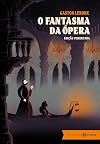
O fantasma da Ópera de Gaston Leroux ficou mais eternizado como um dos monstros da Universal no cinema do que propriamente como um verdadeiro clássico literário.
Em sua primeira adaptação em 1925 o Leroux ainda estava vivo e viu seu Erick ser transformado em puro vilão, mas no seu livro original a personagem tem um arco redentor de que a sociedade o transformara em vilão por ser feio desde a rejeição de seus pais, passando por ser atração de feiras, até a derradeira rejeição show more como Fantasma da Ópera por Christine. Em certo sentido me lembrou o Frankenstein de Mary Shelley e entendo o porquê Del Toro dizer que também gostaria de adaptar O Fantasma da Ópera, já que o cineasta é bastante afeito à personagens à margem da sociedade que de alguma forma são consideradas monstros por sua aparência. show less
Em sua primeira adaptação em 1925 o Leroux ainda estava vivo e viu seu Erick ser transformado em puro vilão, mas no seu livro original a personagem tem um arco redentor de que a sociedade o transformara em vilão por ser feio desde a rejeição de seus pais, passando por ser atração de feiras, até a derradeira rejeição show more como Fantasma da Ópera por Christine. Em certo sentido me lembrou o Frankenstein de Mary Shelley e entendo o porquê Del Toro dizer que também gostaria de adaptar O Fantasma da Ópera, já que o cineasta é bastante afeito à personagens à margem da sociedade que de alguma forma são consideradas monstros por sua aparência. show less

this was fun, well written, and engaging. and a thousand times better and less offensive than the musical production. all of the romanticizing of stalking that the musical does is gone here - he's described as a monster, and while some characters have compassion for him, that's because it's realistic. he's evil because of his past and how his experiences have made him that way, and that's worth feeling compassionate about. and it doesn't excuse his kidnapping of the woman, which is made into show more some kind of romantic gesture in the play. definitely a good read, and one that exceeded my expectations. show less

I always find locked-room mysteries highly contrived, but since that's a given for this type of story I always expect it and never let it get in the way of my enjoyment of it. That being said, I found the solution to this one even more convoluted and outside the bounds of reality. It's as if Leroux took a bet that he couldn't devise a plot so dependent on the outlandish and make it work. Maybe all authors who write locked-room mysteries make bets like that. In any case, I had to re-read show more parts of the explanation because I kept mentally saying "what?". I guess if you allow for some fine acting on the part of the victim and serious observational deficiencies on the part of the rescuers it works, but jeez it's a stretch. show less
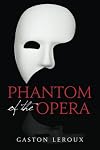
A classic filled with absolutely ridiculous things.
I love looking through the touchstones of horror and seeing what people have forgotten or never used. That's why I enjoyed my read-through of Dracula so much. Having seen the musical, I was equally surprised and delighted by going through the novel and viewing its craziness.
The musical sets the plot pretty quick as "young opera singer is pursued by masked, deformed genius." The novel takes a different tack. Our singer Christine, her would-be show more boy toy Raoul the lovestruck noble, and Erik the Phantom quickly learn of the dark triangle that involves them all, even if it takes Raoul a while more than most to figure out what's going on. The rest of the cast?
Almost everyone else in this damn book thinks it's a romantic comedy.
Imagine an 80's sex comedy where two people know that Jason Voorhees is out there while the rest do pratfalls, gossip, and vaudeville humor. Even as the bodies pile up, the denizens of the Paris Opera House act in entertainingly ludicrous ways.
Well, mostly. Something amazing and horrifying happens on stage halfway through the book. Surprise! Alarm! Then the next chapter focuses on people who heard from fourth-hand sources that one of the managers barricaded themselves in their office and screamed for a safety pin. Murder, magic, and kidnapping are all around, but everyone ignores that because they must get to the bottom of this safety pin shit.
Erik, the deformed man who lives in the secret parts of the Opera House, is fascinating. He's got a ridiculously detailed globe-trotting origin and the ingenuity of a homicidal Wile E. Coyote. Still, there's one figure he fears in the labyrinth below the Opera House. There's a cloaked shadow in a felt hat whom Erik avoids, a man with arrest powers who directly aids the managers, someone's whose identity is a state secret.
We never learn anything else about this guy, so get used to disappointment.
Also, the Phantom of the Opera goes grocery shopping
A classic gothic romance filled with absolutely ridiculous things.
I love looking through the touchstones of horror and seeing what people have forgotten or never used. That's why I enjoyed my read-through of Dracula so much. Having seen the musical, I was equally surprised and delighted by going through the novel and viewing its craziness.
The musical sets the plot pretty quick as "young opera singer is pursued by masked, deformed genius." The novel takes a different tack. Our singer Christine, her would-be boy toy Raoul the lovestruck noble, and Erik the Phantom quickly learn of the dark triangle that involves them all, even if it takes Raoul a while more than most to figure out what's going on. The rest of the cast?
Almost everyone else in this damn book thinks it's a romantic comedy.
Imagine an 80's sex comedy where two people know that Jason Voorhees is out there while the rest do pratfalls, gossip, and vaudeville humor. Even as the bodies pile up, the denizens of the Paris Opera House act in entertainingly ludicrous ways.
Well, mostly. Something amazing and horrifying happens on stage halfway through the book. Surprise! Alarm! Then the next chapter focuses on people who heard from fourth-hand sources that one of the managers barricaded themselves in their office and screamed for a safety pin. Murder, magic, and kidnapping are all around, but everyone ignores that because they must get to the bottom of this safety pin shit.
Erik, the deformed man who lives in the secret parts of the Opera House, is fascinating. He's got a ridiculously detailed globe-trotting origin and the ingenuity of a homicidal Wile E. Coyote.
Still, there's one figure he fears in the labyrinth below the Opera House. There's a cloaked shadow in a felt hat whom Erik avoids, a man with arrest powers who directly aids the managers, someone's whose identity is a state secret.
We never learn anything else about that guy, so get used to disappointment.
Also, the Phantom of the Opera goes grocery shopping in broad daylight wearing Groucho glasses. This is a Thing That Happens.
Every the narrator doesn't stay serious. Sometimes you get scenes that are chilling, such as when Christine pours out her heart to Raoul about how the Phantom terrifies her and you know for a fact that Mr. Opera Ghost is listening. Other times, the narration snarks like a French Douglas Adams.
And it's fun.
I really enjoyed going through this. It's a whole lot of crazy things, but (with the exception of the safety pin mishagosh, it is never boring. show less
I love looking through the touchstones of horror and seeing what people have forgotten or never used. That's why I enjoyed my read-through of Dracula so much. Having seen the musical, I was equally surprised and delighted by going through the novel and viewing its craziness.
The musical sets the plot pretty quick as "young opera singer is pursued by masked, deformed genius." The novel takes a different tack. Our singer Christine, her would-be show more boy toy Raoul the lovestruck noble, and Erik the Phantom quickly learn of the dark triangle that involves them all, even if it takes Raoul a while more than most to figure out what's going on. The rest of the cast?
Almost everyone else in this damn book thinks it's a romantic comedy.
Imagine an 80's sex comedy where two people know that Jason Voorhees is out there while the rest do pratfalls, gossip, and vaudeville humor. Even as the bodies pile up, the denizens of the Paris Opera House act in entertainingly ludicrous ways.
Well, mostly. Something amazing and horrifying happens on stage halfway through the book. Surprise! Alarm! Then the next chapter focuses on people who heard from fourth-hand sources that one of the managers barricaded themselves in their office and screamed for a safety pin. Murder, magic, and kidnapping are all around, but everyone ignores that because they must get to the bottom of this safety pin shit.
Erik, the deformed man who lives in the secret parts of the Opera House, is fascinating. He's got a ridiculously detailed globe-trotting origin and the ingenuity of a homicidal Wile E. Coyote. Still, there's one figure he fears in the labyrinth below the Opera House. There's a cloaked shadow in a felt hat whom Erik avoids, a man with arrest powers who directly aids the managers, someone's whose identity is a state secret.
We never learn anything else about this guy, so get used to disappointment.
Also, the Phantom of the Opera goes grocery shopping
A classic gothic romance filled with absolutely ridiculous things.
I love looking through the touchstones of horror and seeing what people have forgotten or never used. That's why I enjoyed my read-through of Dracula so much. Having seen the musical, I was equally surprised and delighted by going through the novel and viewing its craziness.
The musical sets the plot pretty quick as "young opera singer is pursued by masked, deformed genius." The novel takes a different tack. Our singer Christine, her would-be boy toy Raoul the lovestruck noble, and Erik the Phantom quickly learn of the dark triangle that involves them all, even if it takes Raoul a while more than most to figure out what's going on. The rest of the cast?
Almost everyone else in this damn book thinks it's a romantic comedy.
Imagine an 80's sex comedy where two people know that Jason Voorhees is out there while the rest do pratfalls, gossip, and vaudeville humor. Even as the bodies pile up, the denizens of the Paris Opera House act in entertainingly ludicrous ways.
Well, mostly. Something amazing and horrifying happens on stage halfway through the book. Surprise! Alarm! Then the next chapter focuses on people who heard from fourth-hand sources that one of the managers barricaded themselves in their office and screamed for a safety pin. Murder, magic, and kidnapping are all around, but everyone ignores that because they must get to the bottom of this safety pin shit.
Erik, the deformed man who lives in the secret parts of the Opera House, is fascinating. He's got a ridiculously detailed globe-trotting origin and the ingenuity of a homicidal Wile E. Coyote.
Still, there's one figure he fears in the labyrinth below the Opera House. There's a cloaked shadow in a felt hat whom Erik avoids, a man with arrest powers who directly aids the managers, someone's whose identity is a state secret.
We never learn anything else about that guy, so get used to disappointment.
Also, the Phantom of the Opera goes grocery shopping in broad daylight wearing Groucho glasses. This is a Thing That Happens.
Every the narrator doesn't stay serious. Sometimes you get scenes that are chilling, such as when Christine pours out her heart to Raoul about how the Phantom terrifies her and you know for a fact that Mr. Opera Ghost is listening. Other times, the narration snarks like a French Douglas Adams.
And it's fun.
I really enjoyed going through this. It's a whole lot of crazy things, but (with the exception of the safety pin mishagosh, it is never boring. show less
Lists
Favourite Books (2)
Out of Copyright (1)
Overdue Podcast (1)
Awards


You May Also Like


Associated Authors
Statistics
- Works
- 168
- Also by
- 27
- Members
- 19,672
- Popularity
- #1,106
- Rating
- 3.7
- Reviews
- 314
- ISBNs
- 1,173
- Languages
- 26
- Favorited
- 23


