
Susan Kay (1) (1952–)
Author of Phantom
For other authors named Susan Kay, see the disambiguation page.
Works by Susan Kay
Tagged
Common Knowledge
- Canonical name
- Kay, Susan
- Birthdate
- 1952
- Gender
- female
- Occupations
- teacher
novelist - Short biography
- Susan Kay was born on 1952 in Manchester, England. She worked as a primary school teacher until leaving to bring up a family, and now lives with her husband and two children in Cheshire. Her first novel was Legacy, about the life of Queen Elizabeth I and won a Georgette Heyer Historical Novel Prize and a Betty Trask Award in 1985. Her second novel was Phantom, which expands upon the history of Erik, the hideous, brilliant character from Gaston Leroux's The Phantom of the Opera, and won the Romantic Novel of the Year Award by the Romantic Novelists' Association in 1991.
- Nationality
- UK
- Birthplace
- Manchester, England, UK
- Places of residence
- Cheshire, England, UK
- Associated Place (for map)
- England, UK
Members
Reviews

Strangely, I read this book before reading the original Phantom novel. Now, I cannot reconcile the troubled and romantic Erik of this book with the single-minded and brutal Erik of the original.
Still, after I read the original I thought that I would have had a lot of questions and this book answers those. Granted, it's a different imagining than the original, but it is an excellent read.
Still, after I read the original I thought that I would have had a lot of questions and this book answers those. Granted, it's a different imagining than the original, but it is an excellent read.

It's no secret that I find English history fascinating, and while I prefer the Hanoverians to the Tudors, it's pretty hard not to be intrigued by one of Britain's most historically dysfunctional families. Susan Kay clearly has a fascination for them, as evidenced by her novel that spans about 70 years, chronicling all of Queen Elizabeth I's life.
The book is entertaining- whether it's entirely accurate, I don't know. There are love affairs galore, innuendos everywhere, secrets alluded to but show more not brought fully into the open, and many conclusions drawn that may or may not be true. It's as much as soap opera as a historical novel (though I would strongly disagree with Publishers Weekly above in calling it a "romance"), and I don't think I can really believe everything Kay wrote and seemed to pass off as fact. But it sure was fun to read :-)
The book has many central characters in it, all satellites around the gravitational force that is Elizabeth. These characters are all well-drawn and could be subjects of complex, critical analysis on their own. But no one really notices them (and by no one, I mean me) because of the Queen.
I think Kay's novel is a success because of how completely mesmerizing Elizabeth I is. She shines from the start and doesn't let up until the very end. She's generous and cruel, happy and depressed, and completely captivating. It is easy to see why she is still seen as a legend today, and her masterful manipulation of not only her own courtiers but those from all over Europe is portrayed perfectly.
The most interesting part to me, though, was the psychology of Elizabeth's character. In Kay's book, she is supremely flawed. She is haunted by the death of her mother, by the actions of her father, and by the effects of both these people on her country and her life. Every one of her relationships has a shadow on it because of her parents. She goes through life believing that perhaps she is a witch. She has trouble getting close to people. She feels the need to be cruel and stand-offish and proud. She feels that she must be married to England, and not to any man.
Why is it that strong women are so often portrayed as ones with no heart, or ones who turn their hearts off for the good of others? I understand that Elizabeth's entire reign was built around the premise of her being the Virgin Queen who toiled for England and not for a husband and family- but why is that the only way it ever seems to work for females? Most male heroes, throughout history, have a female counterpart that they seem to trust and love and confide in, and it never makes them seem weak. But for women, automatically, it is assumed that the man would take over the central role in her life and that everything else would take a backseat to him. And, what's more, if her husband were not to be less important than her work, then something is always, always considered to be wrong with the woman. Well, how often is she considered to be unwomanly in those circumstances?
Elizabeth was ruling a country that was bankrupt and basically in shambles- I think she was quite justified in putting England before any man in her life. But part of the reason she lives on so strongly is because she didn't marry anyone, and that was considered the ultimate sacrifice (and a huge aberration by a royal person, of course). She is remembered in this almost goddess-like mentality of being a strong and able woman who gave up her personal happiness for the sake of her country. But who's to really say now that she gave up her chance at happiness? What if she just really wanted to rule her country and not be bothered by a husband and children who would probably spend a good amount of their time trying to take her power away from her? Is that so wrong? Is it accurate for authors to portray her as a lonely and depressed ruler, just because she was female? If she had been a man, would she be so fascinating to us still? Would people romanticize him the way they romanticize her? There have been many manipulative and cunning men in English history- check out those Plantaganets- so why is it that it's always the women who act in these ways that create such a stir?
Of course, there are issues of sexism throughout history to contend with in all of the above questions I raise, and I understand that there aren't easy answers- but I think that's why Queen Elizabeth is such an interesting figure to so many people. What was it that made her the way she was? When she died, was she content with the way her life went, or would she have preferred it to go differently? Did she want the greatness and immortality, or would she have preferred to be Robert Dudley's wife?
I think Kay confronts a lot of these issues in her novel, and she does not cut Elizabeth short at all. The Queen is even more complex and difficult to understand at the end of the novel than she was at the beginning. And I think that's where the book really shines- Kay doesn't pigeonhole Elizabeth at all, but makes her huge and inspiring, so that we have some idea of what the Elizabethan age must have been like. show less
The book is entertaining- whether it's entirely accurate, I don't know. There are love affairs galore, innuendos everywhere, secrets alluded to but show more not brought fully into the open, and many conclusions drawn that may or may not be true. It's as much as soap opera as a historical novel (though I would strongly disagree with Publishers Weekly above in calling it a "romance"), and I don't think I can really believe everything Kay wrote and seemed to pass off as fact. But it sure was fun to read :-)
The book has many central characters in it, all satellites around the gravitational force that is Elizabeth. These characters are all well-drawn and could be subjects of complex, critical analysis on their own. But no one really notices them (and by no one, I mean me) because of the Queen.
I think Kay's novel is a success because of how completely mesmerizing Elizabeth I is. She shines from the start and doesn't let up until the very end. She's generous and cruel, happy and depressed, and completely captivating. It is easy to see why she is still seen as a legend today, and her masterful manipulation of not only her own courtiers but those from all over Europe is portrayed perfectly.
The most interesting part to me, though, was the psychology of Elizabeth's character. In Kay's book, she is supremely flawed. She is haunted by the death of her mother, by the actions of her father, and by the effects of both these people on her country and her life. Every one of her relationships has a shadow on it because of her parents. She goes through life believing that perhaps she is a witch. She has trouble getting close to people. She feels the need to be cruel and stand-offish and proud. She feels that she must be married to England, and not to any man.
Why is it that strong women are so often portrayed as ones with no heart, or ones who turn their hearts off for the good of others? I understand that Elizabeth's entire reign was built around the premise of her being the Virgin Queen who toiled for England and not for a husband and family- but why is that the only way it ever seems to work for females? Most male heroes, throughout history, have a female counterpart that they seem to trust and love and confide in, and it never makes them seem weak. But for women, automatically, it is assumed that the man would take over the central role in her life and that everything else would take a backseat to him. And, what's more, if her husband were not to be less important than her work, then something is always, always considered to be wrong with the woman. Well, how often is she considered to be unwomanly in those circumstances?
Elizabeth was ruling a country that was bankrupt and basically in shambles- I think she was quite justified in putting England before any man in her life. But part of the reason she lives on so strongly is because she didn't marry anyone, and that was considered the ultimate sacrifice (and a huge aberration by a royal person, of course). She is remembered in this almost goddess-like mentality of being a strong and able woman who gave up her personal happiness for the sake of her country. But who's to really say now that she gave up her chance at happiness? What if she just really wanted to rule her country and not be bothered by a husband and children who would probably spend a good amount of their time trying to take her power away from her? Is that so wrong? Is it accurate for authors to portray her as a lonely and depressed ruler, just because she was female? If she had been a man, would she be so fascinating to us still? Would people romanticize him the way they romanticize her? There have been many manipulative and cunning men in English history- check out those Plantaganets- so why is it that it's always the women who act in these ways that create such a stir?
Of course, there are issues of sexism throughout history to contend with in all of the above questions I raise, and I understand that there aren't easy answers- but I think that's why Queen Elizabeth is such an interesting figure to so many people. What was it that made her the way she was? When she died, was she content with the way her life went, or would she have preferred it to go differently? Did she want the greatness and immortality, or would she have preferred to be Robert Dudley's wife?
I think Kay confronts a lot of these issues in her novel, and she does not cut Elizabeth short at all. The Queen is even more complex and difficult to understand at the end of the novel than she was at the beginning. And I think that's where the book really shines- Kay doesn't pigeonhole Elizabeth at all, but makes her huge and inspiring, so that we have some idea of what the Elizabethan age must have been like. show less
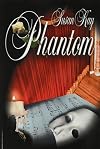
Back in 2005 I became a huge Phantom Phan after seeing the stage production for the first time (I had actually listened to and memorized the soundtrack a few years before that, but nothing compares to actually knowing the story). After seeing the stage production and the 2004 movie, I decided it was time to read the books (yes, yes, I read the original Leroux novel AFTER seeing the stage production and the movie, how horrible of me :P). First, I started with the original Leroux novel, which show more I enjoyed (thought mostly for the parts with Erik), then I proceded to read The Phantom of Manhattan (holy crap; plot holes, out of characterness and wrong ages. Basically, an AU fan fiction got published. Good thing I like fan fiction, or else I wouldn't have at least liked a few parts of that book). However, it was Susan Kay's novel I happened across that really won my heart. This novel tells of Erik's (The Phantom's) life from birth to death in a stunningly realistic way. I was moved to tears at many parts of this book and I highly recommend it to any other Phantom Phan out there as well as anyone interested in the life of a musical genius who was shunned from society simply because of a facial deformation. show less
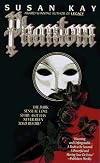
This is my favorite retelling of the story of the Phantom of the Opera. Susan Kay takes the facts about Eric, the phantom, as told by Leroux in the most boring manner possible, and retells them in a much, much better format. The reader becomes deeply involved in the story, and it is impossible not to empathize with the characters (unless you are a disturbing sort of person who really shouldn't be allowed out in public until you get some manner of sensitivity training). The story Kay tells us show more gives us a backstory that is rich and believable, and tells the events from the perspectives of the characters. I enjoy reading many versions of the same work (as seen in my interest in fairy tales), and I adore the musical this is based on (though it isn't as good), but this will remain, for me, The Story of the Phantom of the Opera. show less
Lists
Awards


You May Also Like


Associated Authors
Statistics
- Works
- 5
- Members
- 1,721
- Popularity
- #14,927
- Rating
- 4.2
- Reviews
- 43
- ISBNs
- 67
- Languages
- 7
- Favorited
- 2