
Maurice Leblanc (1864–1941)
Author of Arsène Lupin, Gentleman-Thief
About the Author
Maurice Leblanc was a prolific French writer of novels and short stories, many of which became films. He passed away in 1941.
Image credit: Wikipédia France
Series
Works by Maurice Leblanc
Extraordinary Adventures of Arsène Lupin, Gentleman-Burglar {nine stories; 1910} (1977) 65 copies, 1 review
Les aventures extraordinaires d'Arsène Lupin, Tome 1 : Arsène Lupin gentleman cambrioleur. Arsène Lupin contre Sherlo (1905) 24 copies, 1 review
Delphi Collected Works of Maurice Leblanc (Illustrated) (Delphi Series Nine Book 17) (2018) 18 copies
Les aventures extraordinaires d'Arsène Lupin, Tome 2 : L'éclat d'obus. Le triangle d'or. L'île aux trente cercueils. (2004) 14 copies
Los Tres crímenes de Arsenio Lupin ; La aguja hueca ; El tapón de cristal (1980) 14 copies, 1 review
The Arsène Lupin Collection: 5-Book Paperback Boxed Set (Arcturus Classic Collections) (2022) 11 copies
L'aiguille creuse. 813. Le bouchon de cristal T24 (La bibliothèque idéale de Jean d'Ormesson) (French Edition) (2011) — Author — 10 copies
Arsène Lupin, Gentleman Cambrioleur (Lecture En Francais Facile: Niveau 2) (2003) — Author — 10 copies
Le Cabochon d'émeraude précédé de l'homme à la peau de bique: Arsène Lupin (Libretti) (French Edition) (2001) 9 copies
ARSENE LUPIN: THE FIRST TRILOGY. Arsene Lupin Gentleman Burglar; Arsene Lupin vs. Herlock Sholmes; (2017) 8 copies
The Arsène Lupin Collection: Deluxe 4-Book Hardcover Boxed Set (Arcturus Collector's Classics) (2023) 6 copies
Arsène Lupin - Le bouchon de cristal suivi de La demoiselle aux yeux verts (French Edition) (2021) 5 copies
Arsène Lupin: Le Collier de la Reine (L'édition intégrale): Une nouvelle policière paru dans le recueil Arsène Lupin gentleman cambrioleur (2014) 4 copies, 1 review
Arsène Lupin - Les huit coups de l'horloge suivi de La demeure mystérieuse (French Edition) (2021) 3 copies
ARSENE LUPIN: THE THIRD TRILOGY. The Confessions of Arsene Lupin, The Golden Triangle, The Secret of Sarek (2017) 3 copies
ノー・マンズ・ランド 3 copies
L'arrestation d'Arsène Lupin: suivi de Arsène Lupin en prison: et de L'évasion d'Arsène Lupin 3 copies
ルパン 最後の恋 2 copies
La technique du vide 2 copies
Les Aventures d'Arsène Lupin gentleman-cambrioleur : Maurice Leblanc, Tome 4 : Le bouchon de cristal, La demoiselle aux yeux verts, L'Agence Barnett & Cie 2 copies, 1 review
813 2 copies
The Adventures of Arsène Lupin 2 copies
أرسين لوبين : بوليس آداب 2 copies
Les aventures d'Arsène Lupin gentleman-cambrioleur - tome 8 - Victor de la Brigade Mondaine - La Cagliostro se venge - Arsène Lupin (1962) 2 copies
The eyes of innocence 2 copies
Les aventures extraordinaires d'Arsène Lupin - L'Aiguille creuse et autres histoires - Tome 2 (2012) 2 copies
Les aventures d' arsene lupin gentleman-cambrioleur. tome 6. le triangle d' or. l' ile aux trente cercueils. (1961) 2 copies
A Câmara da Morte 1 copy
O paiol de Pólvora 1 copy
Arsene Lupin, (Arsene Lupin) 1 copy
El hombre negro 1 copy
LADRÃO DE CASACA 1 copy
Trzy zbrodnie Arsena Lupina 1 copy
Les Aventures d'Arsène Lupin - 1 - La Comtesse de Cagliostro - Arsène Lupin, gentleman-cambrioleur (1968) 1 copy
arsnène lupin 1 copy
L'Évasion d'Arsène Lupin 1 copy
Voici Des Aîles 1 copy
Lupin l'éclat d'obus 1 copy
O Segredo de Eunerville 1 copy
Arsen Lupen - Kusursuz 1 copy
Arsen Lupen - Tuzak 1 copy
Sikiysa Yakala! 1 copy
On the Top of the Tower 1 copy
Arsenio Lupin, ladro gentiluomo: Le confidenze di Arsenio Lupin: La signorina dagli occhi verdi (1987) 1 copy
Tigertänderna : Förra delen 1 copy
Arisène Lupin 1 copy
Le film révélateur 1 copy
A Carta Anônima 1 copy
Arsene Lupin 5 1 copy
The Seven of Hearts 1 copy
Box Arsene Lupin - Artimanhas - poster marcador e suplemento de leitura (Em Portugues do Brasil) (2019) 1 copy
Arsene Lupin Collection: The Gentleman Burglar, The Hollow Needle, Arsene Lupin Vs Sherlock Holmes: 3 books inside (2021) 1 copy
Arsen Lüpen - Yakalanıyor 1 copy
Les Aventures d'Arsène Lupin 1 copy
Arsenio Lupin lavora... 1 copy
La vittoria di Arsenio Lupin 1 copy
Arsenio Lupin poliziotto 1 copy
Arsène Lupin (Splitter) 1 copy
Arsene lupine 1 copy
Associated Works
101 Years' Entertainment: The Great Detective Stories 1841-1941 (1941) — Contributor; Contributor — 111 copies, 1 review
The Rivals of Sherlock Holmes: The Greatest Detective Stories: 1837-1914 (2019) — Contributor — 40 copies
The Graphic Canon of Crime & Mystery, Vol. 1: From Sherlock Holmes to A Clockwork Orange to Jo Nesbø (2017) — Contributor — 39 copies, 2 reviews
To the Queen's Taste: The First Supplement to 101 Years Entertainment Consisting of the Best Stories Published in the First Four Years of Ellery Queen's Mystery Magazine (1946) — Contributor — 28 copies
Best Detective Stories, Second Series — Contributor — 4 copies
Tagged
Common Knowledge
- Legal name
- Leblanc, Maurice Marie Emile
- Birthdate
- 1864-12-11
- Date of death
- 1941-11-06
- Gender
- male
- Education
- Lycée Pierre-Corneille, Rouen
- Occupations
- novelist
journalist - Awards and honors
- Legion d'honneur (1908)
- Relationships
- Leblanc, Georgette (sister)
- Short biography
- Maurice Leblanc is best known as the creator of the popular series of French novels featuring the witty and charming gentleman-thief Arsène Lupin. The character has since inspired numerous television, film, stage, and comic book adaptations.
- Nationality
- France
- Birthplace
- Rouen, Seine-Maritime, Normandy, France
- Places of residence
- Rouen, Seine-Maritime, Normandy, France (Naissance)
Paris, France
Etretat, Seine-Maritime, Normandie, France (Le Clos Lupin)
Perpignan, Pyrénées-Orientales, Occitanie, France (Mort) - Place of death
- Perpignan, Pyrénées-Orientales, Occitanie, France
- Burial location
- Cimetière Saint-Martin, Perpignan, Occitanie, France (1941 ∙ 1947)
Cimetière du Montparnasse, Paris, Île-de-France, France (1947) - Associated Place (for map)
- France
Members
Reviews
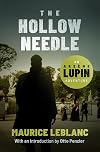
Arsène Lupin as a character is hard for me to pin down psychologically, but I feel he's finally starting to come into his own in this third installment of his adventures. In the first collection of short stories, his modus operandi is clear (steal from the rich, the desperate, the criminal), but his motivations are murky to me, apart from a bored disdain for the structures of ordered society. In the second collection, his battle of wits with the legendary Herlock Sholmes and Dr. Wilson, at show more least one aspect of his psychology comes into focus: Arsène Lupin is driven as much by thrill-seeking as he is by love of wealth and art. If anything, his boredom is his motivation; crime is so easy that it takes a contest with the great English detective to move Lupin's needle.
In this third book, and the first full-length novel of Arsène Lupin's adventures, I feel that the character comes into even sharper focus as he battles his most formidable foe yet. When the net draws tighter than ever before, the mask of gentility slips, revealing beneath the stereotypically ironical French thief something else entirely: a supremely dangerous man who leads supremely dangerous men, and who will stop at nothing to ensure his own safety and survival. For the first time, I sense that Lupin is more than a highly-intelligent fop amusing himself at society's expense, and this patina of danger improves the character's attractions for me. I find it all the more delicious that this favorable evolution of Arsène Lupin is driven not by a great foreign detective or the police of Paris, but by that most sobering of adversaries: a 17-year-old schoolboy who is, perhaps, the mental equal even of the great Arsène Lupin. show less
In this third book, and the first full-length novel of Arsène Lupin's adventures, I feel that the character comes into even sharper focus as he battles his most formidable foe yet. When the net draws tighter than ever before, the mask of gentility slips, revealing beneath the stereotypically ironical French thief something else entirely: a supremely dangerous man who leads supremely dangerous men, and who will stop at nothing to ensure his own safety and survival. For the first time, I sense that Lupin is more than a highly-intelligent fop amusing himself at society's expense, and this patina of danger improves the character's attractions for me. I find it all the more delicious that this favorable evolution of Arsène Lupin is driven not by a great foreign detective or the police of Paris, but by that most sobering of adversaries: a 17-year-old schoolboy who is, perhaps, the mental equal even of the great Arsène Lupin. show less

I picked this up while travelling in Porto, looking for something that would be engaging and not too demanding, in a compact portable format. It was perfect.
The stories are relatively short, but long enough to develop a complex plot and raise questions about the morality of thieves and gentlemen. The language in this original translation is in the dated formal style of the past century, like Conan Doyle, which fits the text.
Set in the bourgeois society of late 19th century France, the show more stories involve clever mysteries like a Sherlock Holmes story, with the twist of being told from the point of view of the master criminal. Like Holmes, they frequently point to the ineptness of the police forces, but Leblanc adds the issues involving people of wealth, power and class. Leblanc makes a point of parody with “Holmlock Shears,” especially in the story “Holmlock Shears Arrives Too Late.”
What’s interesting in these stories is not so much the mystery, but the social circumstances they reveal. Lupin’s motivation seems to arise from the suggestion that he is the son of a mistreated woman and uses theft in order to humiliate the rich who caused his mother’s downfall. He often identifies with the working classes, while taking advantage of his privilege as a wealthy bourgeois. He enjoys showing up the patronizing police. And he shows a strong sense of justice in wanting to help or protect other bourgeois who have been robbed or threatened. While a sense of justice is featured in the Conan Doyle’s Holmes stories, Holmes more often treats his cases as an intellectual puzzle, and, in my recollection, seems to have little awareness for London’s working class.
Arsène Lupin is a dedicated and principled vigilante, especially in defending the honour of women. Leblanc shows him as a human with a nervous heart in the presence of the woman he has fallen for, a curious twist of the psychology of the master thief. In one story, he gives back the items that he has stolen in order that the woman will not think he is a thief. Did Sherlock Holmes ever show affection toward women, aside perhaps from his landlady and the more modern stories that try to correct an evident misogyny?
Lupin toys with a complex moral balance. In one story, he sets a trap for a murderer, which results in Lupin keeping a gem that the murderer stole, executing a tricky moral trade to his benefit. He is a thief, but he steals from people who are worse than he is.
Lupin also uses a distinctive strategy to increase his fame and add to the embarrassment of his victims – he advertises! While Holmes has his Dr Watson, and there seems to be a knowledgeable narrator in Lupin’s stories, Lupin takes the initiative of buying newspaper notices to draw attention to his capers and his victims. Since he’s not looking for a clientele like Holmes, this can only be to show off his superiority and his accomplishments – and occasionally to misdirect attention. As a self-made man, he puts considerable time and effort into creating himself and building his public persona and fame. This desire for attention perhaps also comes from his sense of overcoming an unjust life and challenging the bourgeois morality that surrounds him.
It’s some time since I’ve read Conan Doyle and I certainly have not read all of his stories, so I hope I’m not mischaracterizing his hero. I enjoy reading the Holmes stories, but Leblanc’s “gentleman-thief” stories add some additional layers that make them a bit more satisfying. Overall, this was excellent holiday reading – engaging, convenient and thoughtful. show less
The stories are relatively short, but long enough to develop a complex plot and raise questions about the morality of thieves and gentlemen. The language in this original translation is in the dated formal style of the past century, like Conan Doyle, which fits the text.
Set in the bourgeois society of late 19th century France, the show more stories involve clever mysteries like a Sherlock Holmes story, with the twist of being told from the point of view of the master criminal. Like Holmes, they frequently point to the ineptness of the police forces, but Leblanc adds the issues involving people of wealth, power and class. Leblanc makes a point of parody with “Holmlock Shears,” especially in the story “Holmlock Shears Arrives Too Late.”
What’s interesting in these stories is not so much the mystery, but the social circumstances they reveal. Lupin’s motivation seems to arise from the suggestion that he is the son of a mistreated woman and uses theft in order to humiliate the rich who caused his mother’s downfall. He often identifies with the working classes, while taking advantage of his privilege as a wealthy bourgeois. He enjoys showing up the patronizing police. And he shows a strong sense of justice in wanting to help or protect other bourgeois who have been robbed or threatened. While a sense of justice is featured in the Conan Doyle’s Holmes stories, Holmes more often treats his cases as an intellectual puzzle, and, in my recollection, seems to have little awareness for London’s working class.
Arsène Lupin is a dedicated and principled vigilante, especially in defending the honour of women. Leblanc shows him as a human with a nervous heart in the presence of the woman he has fallen for, a curious twist of the psychology of the master thief. In one story, he gives back the items that he has stolen in order that the woman will not think he is a thief. Did Sherlock Holmes ever show affection toward women, aside perhaps from his landlady and the more modern stories that try to correct an evident misogyny?
Lupin toys with a complex moral balance. In one story, he sets a trap for a murderer, which results in Lupin keeping a gem that the murderer stole, executing a tricky moral trade to his benefit. He is a thief, but he steals from people who are worse than he is.
Lupin also uses a distinctive strategy to increase his fame and add to the embarrassment of his victims – he advertises! While Holmes has his Dr Watson, and there seems to be a knowledgeable narrator in Lupin’s stories, Lupin takes the initiative of buying newspaper notices to draw attention to his capers and his victims. Since he’s not looking for a clientele like Holmes, this can only be to show off his superiority and his accomplishments – and occasionally to misdirect attention. As a self-made man, he puts considerable time and effort into creating himself and building his public persona and fame. This desire for attention perhaps also comes from his sense of overcoming an unjust life and challenging the bourgeois morality that surrounds him.
It’s some time since I’ve read Conan Doyle and I certainly have not read all of his stories, so I hope I’m not mischaracterizing his hero. I enjoy reading the Holmes stories, but Leblanc’s “gentleman-thief” stories add some additional layers that make them a bit more satisfying. Overall, this was excellent holiday reading – engaging, convenient and thoughtful. show less

I can see the charm, but I think a brief taste is all that I really needed here before deciding to move on. Lupin is clearly inspired by the stories of Sherlock Holmes, simply flipped to show the expertise going into committing a crime rather than solving one. Lupin is a fun character to read about with his blend of playful and clever antics and I can definitely see why the series garnered such a fanbase.
Though while it was fun, I can still say Sherlock Holmes is the far more enduring of the show more two works. There’s a novelty in seeing the Holmesian playbook turned around to committing crimes but it also feels unsatisfying at times with the mix of grandiose ruses and subtle misdirection never feeling quite as natural as Holmes’ analysis of a weird but largely grounded crime. The hand of the author is much more visible, lining up the police to fall for the ruse exactly as Lupin intended and, while that's a feature of all stories to some extent, it's much harder to hide when Lupin’s actions are meant to predict rather than explain.
Further, the shift in how the stories approach Lupin’s character also hurts the overall feel of the narrative. I understand this is to be expected to some extent with an anthology work but Lupin’s shift from criminal to independent sleuth, while perhaps bringing him more in line with the Holmesian structure, feels like it weakened the unique characteristics that made Lupin stand out in the first place and were probably the weakest aspect of the collection.
Ultimately I had a fun time reading this and while it was nice to see firsthand another branch of the mystery genre I don’t think it's one I care much to go down any further. show less
Though while it was fun, I can still say Sherlock Holmes is the far more enduring of the show more two works. There’s a novelty in seeing the Holmesian playbook turned around to committing crimes but it also feels unsatisfying at times with the mix of grandiose ruses and subtle misdirection never feeling quite as natural as Holmes’ analysis of a weird but largely grounded crime. The hand of the author is much more visible, lining up the police to fall for the ruse exactly as Lupin intended and, while that's a feature of all stories to some extent, it's much harder to hide when Lupin’s actions are meant to predict rather than explain.
Further, the shift in how the stories approach Lupin’s character also hurts the overall feel of the narrative. I understand this is to be expected to some extent with an anthology work but Lupin’s shift from criminal to independent sleuth, while perhaps bringing him more in line with the Holmesian structure, feels like it weakened the unique characteristics that made Lupin stand out in the first place and were probably the weakest aspect of the collection.
Ultimately I had a fun time reading this and while it was nice to see firsthand another branch of the mystery genre I don’t think it's one I care much to go down any further. show less

Arsène Lupin! The name echoes through the newspapers of France. Arsène Lupin! The well-born and well-off lock their chambers and sleep badly. Arsène Lupin! The criminals of the gutter glance uneasily over their shoulders. Arsène Lupin! The police spread their nets and the judges pound their gavels, but in vain. For if Arsène Lupin has set his mind to releasing you from your burdensome wealth, no one can prevent him from doing just that in a most genteel manner.
Maurice Leblanc’s show more gentleman thief stands in the original rogue’s gallery of modern antiheroes. A master of masquerade, he wears and discards identities and easily as you or I might change coats. A master of media, he uses the newspapers to generate publicity for his crimes and stoke the fires of legend around the name of Arsène Lupin. A master of mind, he unravels puzzles with ease, and manipulates both the psychology of his victims and the machinery of the law to his benefit. A master of muscle, he surfaces hidden depths of strength when confronted with violent men. All of these advantages he turns not to the task of serving society at large, but to extracting wealth from those who themselves have stolen it, or who by their high and unearned station in a decaying aristocracy have no business hoarding that much anyway.
Indeed, in terms of Lupin’s inventory of strengths, he reminds me of no one so much as a Sherlock Holmes turned to perpetrating crimes instead of solving them. The parallels between Lupin and Holmes aren’t likely to be accidental given that the most famous conman in France and the most famous detective in England have a brush with each other in the final tale of this collection. I don’t think Leblanc’s ability to tell a story, chart a plot, or draw a character is in the same league as Arthur Conan Doyle’s, at least not in these earliest of short stories. Lupin and his band of faceless merry men don’t feel as real or compelling to me as Holmes or Watson, and Lupin often evades capture as much from the stupidity of his victims as from his innate talents.
Still, as an example of an early antihero, a predator who preys on other predators, he retains some interest as one of the first modern archetypes of a character who has become familiar to us all: the elemental and unstoppable force who stands outside the system, and who — while ultimately serving his own interests above all else — manages to deal out a measure of justice to those who are otherwise untouchable. show less
Maurice Leblanc’s show more gentleman thief stands in the original rogue’s gallery of modern antiheroes. A master of masquerade, he wears and discards identities and easily as you or I might change coats. A master of media, he uses the newspapers to generate publicity for his crimes and stoke the fires of legend around the name of Arsène Lupin. A master of mind, he unravels puzzles with ease, and manipulates both the psychology of his victims and the machinery of the law to his benefit. A master of muscle, he surfaces hidden depths of strength when confronted with violent men. All of these advantages he turns not to the task of serving society at large, but to extracting wealth from those who themselves have stolen it, or who by their high and unearned station in a decaying aristocracy have no business hoarding that much anyway.
Indeed, in terms of Lupin’s inventory of strengths, he reminds me of no one so much as a Sherlock Holmes turned to perpetrating crimes instead of solving them. The parallels between Lupin and Holmes aren’t likely to be accidental given that the most famous conman in France and the most famous detective in England have a brush with each other in the final tale of this collection. I don’t think Leblanc’s ability to tell a story, chart a plot, or draw a character is in the same league as Arthur Conan Doyle’s, at least not in these earliest of short stories. Lupin and his band of faceless merry men don’t feel as real or compelling to me as Holmes or Watson, and Lupin often evades capture as much from the stupidity of his victims as from his innate talents.
Still, as an example of an early antihero, a predator who preys on other predators, he retains some interest as one of the first modern archetypes of a character who has become familiar to us all: the elemental and unstoppable force who stands outside the system, and who — while ultimately serving his own interests above all else — manages to deal out a measure of justice to those who are otherwise untouchable. show less
Lists
Schwob Nederland (1)
Awards


You May Also Like


Associated Authors
Statistics
- Works
- 268
- Also by
- 45
- Members
- 7,296
- Popularity
- #3,351
- Rating
- 3.6
- Reviews
- 159
- ISBNs
- 1,416
- Languages
- 26
- Favorited
- 13


