
Paul Williams (3) (1950–)
Author of Mahayana Buddhism: The Doctrinal Foundations
For other authors named Paul Williams, see the disambiguation page.
About the Author
Paul Williams is Professor of Indian and Tibetan Philosophy and Head of the Department of Theology and Religious Studies at the University of Bristol.
Image credit: Paul Williams (3)
Works by Paul Williams
The Reflexive Nature of Awareness: A Tibetan Madhyamaka Defence (Routledge Critical Studies in Buddhism) (1997) 21 copies
Songs of Love, Poems of Sadness: The Erotic Verse of the Sixth Dalai Lama (2005) — Translator — 15 copies, 1 review
Associated Works
Philosophy, Religion and the Spiritual Life (Royal Institute of Philosophy Supplements, Series Number 32) (1992) — Contributor — 15 copies
Tagged
Common Knowledge
- Birthdate
- 1950-09-12
- Gender
- male
- Education
- University of Sussex
University of Oxford - Short biography
- Paul Williams (b. 1950) is Emeritus Professor of Indian and Tibetan Philosophy at the University of Bristol, England. Until his retirement in 2011 he was also director for the University's Centre for Buddhist Studies, and is a former President of the UK Association for Buddhist StudiesBA (First Class), School of African and Asian Studies, University of Sussex (1972)
DPhil (Buddhist Philosophy), Oriental Institute and Wadham College, University of Oxford (1978) - Nationality
- UK
- Associated Place (for map)
- UK
Members
Discussions
Crawdaddy! Founder Paul Williams 1948-2013 in Book talk (April 2013)
Crawdaddy! Founder Paul Williams 1948-2013 in Science Fiction Fans (April 2013)
Reviews
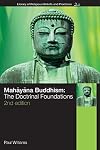
I would like to add some short remarks to mkp's thorough and accurate review.
1. The book does not cover Zen or Tantric Buddhism. It focuses on Indian and Chinese Buddhism, with discussions of selected (non-tantric) doctrines of Tibetan Buddhism.
2. The title means what it says about emphasis on doctrine. There is little or no discussion of practice as such.
3. For most readers the book may be primarily useful as a reference work. It is, as mkp described, thoroughly academic, philological, show more and detailed. The author truly leaves no stone unturned in the topics he treats. I read all the endnotes, which fill a large proportion of the book, and there is an enormous amount of valuable material in them as well as in the text.
4. The best parts are on Indian Buddhism, which are superb, especially the sections on Madhyamika. The parts on East Asian Buddhism are very good but not as encyclopedic as the Indian sections. IMO the author did not present an adequate grasp of the Taoist elements in Chinese Buddhism. And of course the limitation on the discussion of Chan and Zen is a drawback.
5. Despite my caveats, I recommend this book highly to anyone who feels interested in the challenge.
Incidentally, until I read mkp's review I had not heard of the author's alleged conversion to Roman Catholicism. I can think of not one example of pro-Catholic or Christian leaning or bias in the book. Interestingly, though, while reading it, I could not determine whether the author was or was not Buddhist, or was pursuing a strictly academic inquiry. show less
1. The book does not cover Zen or Tantric Buddhism. It focuses on Indian and Chinese Buddhism, with discussions of selected (non-tantric) doctrines of Tibetan Buddhism.
2. The title means what it says about emphasis on doctrine. There is little or no discussion of practice as such.
3. For most readers the book may be primarily useful as a reference work. It is, as mkp described, thoroughly academic, philological, show more and detailed. The author truly leaves no stone unturned in the topics he treats. I read all the endnotes, which fill a large proportion of the book, and there is an enormous amount of valuable material in them as well as in the text.
4. The best parts are on Indian Buddhism, which are superb, especially the sections on Madhyamika. The parts on East Asian Buddhism are very good but not as encyclopedic as the Indian sections. IMO the author did not present an adequate grasp of the Taoist elements in Chinese Buddhism. And of course the limitation on the discussion of Chan and Zen is a drawback.
5. Despite my caveats, I recommend this book highly to anyone who feels interested in the challenge.
Incidentally, until I read mkp's review I had not heard of the author's alleged conversion to Roman Catholicism. I can think of not one example of pro-Catholic or Christian leaning or bias in the book. Interestingly, though, while reading it, I could not determine whether the author was or was not Buddhist, or was pursuing a strictly academic inquiry. show less
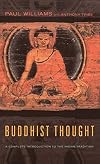
Buddhist Thought guides the reader towards a richer understanding of the central concepts of classical Indian Buddhist thought, from the time of Buddha, to the latest scholarly perspectives and controversies. Abstract and complex ideas are made understandable by the authors' lucid style. Of particular interest is the up-to-date survey of Buddhist Tantra in India, a branch of Buddhism where strictly controlled sexual activity can play a part in the religious path. Williams' discussion of this show more controversial practice as well as of many other subjects makes Buddhist Thought crucial reading for all interested in Buddhism. show less
Mahayana Buddhism: The Doctrinal Foundations (Library of Religious Beliefs and Practices) by Paul Williams
My goal was to get a general overview of Mahayana Buddhism, and at first I thought this book was not for me. In fact there are several aspects to the book that I found disturbing:
1. The author, Paul Williams, writes in a cautious, academic style. Almost every sentence is filled with extra clauses that qualify his assertions or otherwise make comments on what is being said.
2. Overall, Williams’s focus is on the philology of the sacred texts. How authentic was the attributed authorship, what show more editorial changes were made, how accurately were the various editions translated into other languages, etc.
3.. There are almost 150 pages of lengthy endnotes which are even more academic than the text. One is tempted to read them, because they include more background information, but these represent further distractions from the general narrative.
4. I understand that Williams, converted from Buddhism to Roman Catholicism sometime between the first and second editions. This was a concern, because it suggested that Williams had lost interest in the fundamental messages of Buddhism.
So you may be surprised that I heartily recommend this book, anyway, and rate it at five stars. Williams’s careful academic style turns out to be just right, after all. There are all sorts of subtleties in connection with the evolution of Buddhist thought, and Williams elucidates these subtleties very well. It turns out to be well worth the effort to wade through his exposition and follow the various developments that he charts. Certainly his expertise in this area is impressive.
Because of the complicated, nonlinear history of Buddhism, it’s difficult to put it all into a single narrative thread. Now that I have read it all, I intend to read it all over again, because the next time I will have the fuller context in my head as I read the opening chapters. This book is not a quick, casual read, but it is definitely rewarding. show less
1. The author, Paul Williams, writes in a cautious, academic style. Almost every sentence is filled with extra clauses that qualify his assertions or otherwise make comments on what is being said.
2. Overall, Williams’s focus is on the philology of the sacred texts. How authentic was the attributed authorship, what show more editorial changes were made, how accurately were the various editions translated into other languages, etc.
3.. There are almost 150 pages of lengthy endnotes which are even more academic than the text. One is tempted to read them, because they include more background information, but these represent further distractions from the general narrative.
4. I understand that Williams, converted from Buddhism to Roman Catholicism sometime between the first and second editions. This was a concern, because it suggested that Williams had lost interest in the fundamental messages of Buddhism.
So you may be surprised that I heartily recommend this book, anyway, and rate it at five stars. Williams’s careful academic style turns out to be just right, after all. There are all sorts of subtleties in connection with the evolution of Buddhist thought, and Williams elucidates these subtleties very well. It turns out to be well worth the effort to wade through his exposition and follow the various developments that he charts. Certainly his expertise in this area is impressive.
Because of the complicated, nonlinear history of Buddhism, it’s difficult to put it all into a single narrative thread. Now that I have read it all, I intend to read it all over again, because the next time I will have the fuller context in my head as I read the opening chapters. This book is not a quick, casual read, but it is definitely rewarding. show less
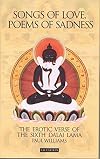
This book is not just another study of the notorious Sixth Dalai Lama (1683-1706). It is in fact a critical introduction to the very institution of the Dalai Lama itself and the concept of reincarnation that is its basis. Williams' book presents a haunting picture of the tragedy that became the life of the young Dalai lama in 17th Century Tibet. His translations help us to appreciate the songs for what they really are - the yearnings and frustrations of a restless, yet deeply human heart - show more and to gain insights into Tibetan Buddhism. show less
You May Also Like


Associated Authors
Statistics
- Works
- 11
- Also by
- 1
- Members
- 549
- Popularity
- #45,446
- Rating
- 3.9
- Reviews
- 9
- ISBNs
- 448
- Languages
- 10