
Richard F. Gombrich
Author of The World of Buddhism: Buddhist Monks and Nuns in Society and Culture
About the Author
Richard Gombrich is founder and President of the Oxford Centre for Buddhist Studies, and Chairman of the UK Association for Buddhist Studies. Before his retirement in 2004, he held the Boden Chair of Sanskrit at Oxford University and a Professorial Fellowship at Balliol College for twenty-eight show more years. The author of 200 publications, he continues to lecture and teach at universities round the world. show less
Works by Richard F. Gombrich
The World of Buddhism: Buddhist Monks and Nuns in Society and Culture (1984) — Editor; Contributor; Introduction — 174 copies, 5 reviews
Buddhist Precept and Practice: Traditional Buddhism in the Rural Highlands of Ceylon (1971) 26 copies
Theravāda Buddhism 1 copy
Associated Works
Tagged
Common Knowledge
- Legal name
- Gombrich, Richard Francis
- Birthdate
- 1937-07-17
- Gender
- male
- Education
- University of Oxford (Magdalen College) (B.A. 1961, D.Phil. 1970)
Harvard University (M.A., 1963)
St Paul's School, London, England, UK - Occupations
- Indologist
Professor of Sanskrit - Organizations
- University of Oxford
Oxford Centre for Buddhist Studies
Pali Text Society
Clay Sanskrit Library - Awards and honors
- SC Chakraborty medal (1993)
Sri Lanka Ranajana (1994) - Relationships
- Gombrich, E. H. (father)
Gombrich, Carl (son) - Nationality
- UK
- Birthplace
- London, England, UK
- Places of residence
- London, England, UK
- Map Location
- UK
Members
Reviews
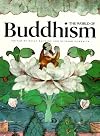
Although already 35 years old, this is a superb, detailed, academic but readable account of Buddhism's doctrines, history and practice from its inception through to the end of the 1970s. Eleven long essays are supplemented with excellent illustrations and substantial photography.
It is hard to praise this book enough. It is sensitive to its subject without being seduced by it. It is very well edited and produced, bringing 11 experts into play with a strong German contribution expressing show more Germany's important role in Buddhist studies.
I cannot say it made me any the more likely to become a Buddhist but that is not its purpose and, yes, it is perhaps not the book to go to for a critical reading of Buddhism's role in maintaining various oppressive feudalisms or the sexual exploitation inevitable in monastic life.
However, having made that caveat (which is down to me and you to research further), what I felt after reading it was that I understood the phenomenon much better than I did before - and its contribution to globally important South, Central and East Asian cultures.
Buddhism remains intellectually complex and the basis of much interesting philosophical thinking (not least its influence on Schopenhauer) but Pope John Paul II's criticisms still stand - that it is still essentially nihilistic. At root, it is just another essentialism from the Iron Age.
If you belief in reincarnation alongside Pythagoras or that the world is so bloody miserable that self-extinction is a positive response, then this religion might be for you. If you are a more cheery soul like me who is not worried about extinction, then it probably is not.
I cannot get sentimental over it given what I know from other sources of its actual role in the world but its doctrines may be a comfort to many people even when they are not plausible. If I wanted to go deeper, I would almost certainly explore Chan and Zen and leave the rest to the rest.
What is attractive - noting a few rather nasty nationalist outgrowths of the religion - are the brutal truths about existence that Gautama Buddha began with and the transformation of this into a surprising (in the light of this) compassion.
Buddhism is not, or is rarely, a religion of good works done by the religious. I am not persuaded that poor peasant lives are best improved by handing over their small surpluses to whole monasteries of self-regarding monks living their lives on a spurious cosmology.
However, it clearly worked to bring order to otherwise potentially disordered societies (if only to house lots of young men where they could do no harm). There is nothing more dangerous to a peasant than disorder and it encouraged a basic shared kindness. That is no small thing.
In other words, this religion is a very complex phenomenon, like all others, in which social and individual goods are wrought out of absurdity and then become established as a culture that many people identify with. It must be taken account of as a fact on the ground.
It also offers us many homilies about the interface between belief and reality. Ashoka, the Indian Emperor is interesting. Imagine Hitler discovering the Buddha after seeing the devastation of Operation Barbarossa and you can only wonder how he would be presented today.
There is also its doctrinal tolerance in its favour. There are the extensive Sutras and commentaries but there is no God-given single text from on high to squabble over. Conflicts occur but they are the conflicts of splittism over organisational trivialities rather than over the meanings of things.
Although there a few exceptions, heresy is not a concern of a religion which respects the fact that different minds seek different paths to salvation. Internal religious wars (though not wars on the faith by rivals, notably Islam) are not part of the story.
Of course, Buddhists competed for the ear of power and had some major victories. Even today, there are a number of smaller Buddhist states in the Himalayas as well as Sri Lanka, Burma and Thailand while Japan and South Korea both have important Buddhist cultural underpinnings.
Buddhism has seen some revival in its origin country India but it is small-scale and has been eliminated from Muslim-dominated areas while Communism (though now more tolerant) effectively suppressed it in its territories, most notably in Tibet., on the back of civil war victories.
The late emergence of Buddhism in the West, on the back of academic studies and the rise of theosophy, in the late nineteenth and twentieth centuries is well covered in the final chapter albeit that the author is 'sniffy' about 'beat zen', the unstable Alan Watts and commercial popularisation.
In the United Kingdom, Buddhism is still small but taken very seriously, as it is by many Buddhists in the US but 'pop' Buddhism needs a fairer evaluation than the book can give. Personally I see it as no more absurd than much earlier forms of Asian adoption of the faith.
Religions do not grow through purity in the street. They need political authority to flourish. Political authority is only interested if religion controls the street. It is tougher to police the street when a religion (like Buddhism) has no hierarchy. The Catholics long since scored on that.
Sometimes Buddhism becomes the street as an expression of national feeling (and this applies to the small states listed above) but only pre-Chinese Tibet appears to have created the structures of political control necessary to comprise the state itself.
Somehow Tibetan Buddhism was able to mount a coup against imperial kingship in the wake of the time of troubles all dynastic despotisms go through (in the mid-ninth century in this case) and establish itself as strong theocratic state - not even Rome ever really achieved that.
The varieties of Buddhism are what strikes one most about this narrative. It evolves to fill every possible niche in a social ecology. It survives and wins through variation, often very much detached from the primary organism - the Buddha himself.
The move of the organism from East to West and the advantage of Western conditions taken by ousted Tibetans adapting to their new eco-system suggests this ability to survive and adapt. This religion is a major survivor.
One of its strengths is its core simplicity (despite the almost neurotic complexities that emerge in late iterations). It can constantly reinvent itself to meet new psychological, cultural and political conditions. My guess is that Buddhism will adapt well to interplanetary travel.
So, a worthwhile book that is also in the library as a reference work with a good glossary of terms and a bibliography that takes us up to the early 1980s. Recommended. show less
It is hard to praise this book enough. It is sensitive to its subject without being seduced by it. It is very well edited and produced, bringing 11 experts into play with a strong German contribution expressing show more Germany's important role in Buddhist studies.
I cannot say it made me any the more likely to become a Buddhist but that is not its purpose and, yes, it is perhaps not the book to go to for a critical reading of Buddhism's role in maintaining various oppressive feudalisms or the sexual exploitation inevitable in monastic life.
However, having made that caveat (which is down to me and you to research further), what I felt after reading it was that I understood the phenomenon much better than I did before - and its contribution to globally important South, Central and East Asian cultures.
Buddhism remains intellectually complex and the basis of much interesting philosophical thinking (not least its influence on Schopenhauer) but Pope John Paul II's criticisms still stand - that it is still essentially nihilistic. At root, it is just another essentialism from the Iron Age.
If you belief in reincarnation alongside Pythagoras or that the world is so bloody miserable that self-extinction is a positive response, then this religion might be for you. If you are a more cheery soul like me who is not worried about extinction, then it probably is not.
I cannot get sentimental over it given what I know from other sources of its actual role in the world but its doctrines may be a comfort to many people even when they are not plausible. If I wanted to go deeper, I would almost certainly explore Chan and Zen and leave the rest to the rest.
What is attractive - noting a few rather nasty nationalist outgrowths of the religion - are the brutal truths about existence that Gautama Buddha began with and the transformation of this into a surprising (in the light of this) compassion.
Buddhism is not, or is rarely, a religion of good works done by the religious. I am not persuaded that poor peasant lives are best improved by handing over their small surpluses to whole monasteries of self-regarding monks living their lives on a spurious cosmology.
However, it clearly worked to bring order to otherwise potentially disordered societies (if only to house lots of young men where they could do no harm). There is nothing more dangerous to a peasant than disorder and it encouraged a basic shared kindness. That is no small thing.
In other words, this religion is a very complex phenomenon, like all others, in which social and individual goods are wrought out of absurdity and then become established as a culture that many people identify with. It must be taken account of as a fact on the ground.
It also offers us many homilies about the interface between belief and reality. Ashoka, the Indian Emperor is interesting. Imagine Hitler discovering the Buddha after seeing the devastation of Operation Barbarossa and you can only wonder how he would be presented today.
There is also its doctrinal tolerance in its favour. There are the extensive Sutras and commentaries but there is no God-given single text from on high to squabble over. Conflicts occur but they are the conflicts of splittism over organisational trivialities rather than over the meanings of things.
Although there a few exceptions, heresy is not a concern of a religion which respects the fact that different minds seek different paths to salvation. Internal religious wars (though not wars on the faith by rivals, notably Islam) are not part of the story.
Of course, Buddhists competed for the ear of power and had some major victories. Even today, there are a number of smaller Buddhist states in the Himalayas as well as Sri Lanka, Burma and Thailand while Japan and South Korea both have important Buddhist cultural underpinnings.
Buddhism has seen some revival in its origin country India but it is small-scale and has been eliminated from Muslim-dominated areas while Communism (though now more tolerant) effectively suppressed it in its territories, most notably in Tibet., on the back of civil war victories.
The late emergence of Buddhism in the West, on the back of academic studies and the rise of theosophy, in the late nineteenth and twentieth centuries is well covered in the final chapter albeit that the author is 'sniffy' about 'beat zen', the unstable Alan Watts and commercial popularisation.
In the United Kingdom, Buddhism is still small but taken very seriously, as it is by many Buddhists in the US but 'pop' Buddhism needs a fairer evaluation than the book can give. Personally I see it as no more absurd than much earlier forms of Asian adoption of the faith.
Religions do not grow through purity in the street. They need political authority to flourish. Political authority is only interested if religion controls the street. It is tougher to police the street when a religion (like Buddhism) has no hierarchy. The Catholics long since scored on that.
Sometimes Buddhism becomes the street as an expression of national feeling (and this applies to the small states listed above) but only pre-Chinese Tibet appears to have created the structures of political control necessary to comprise the state itself.
Somehow Tibetan Buddhism was able to mount a coup against imperial kingship in the wake of the time of troubles all dynastic despotisms go through (in the mid-ninth century in this case) and establish itself as strong theocratic state - not even Rome ever really achieved that.
The varieties of Buddhism are what strikes one most about this narrative. It evolves to fill every possible niche in a social ecology. It survives and wins through variation, often very much detached from the primary organism - the Buddha himself.
The move of the organism from East to West and the advantage of Western conditions taken by ousted Tibetans adapting to their new eco-system suggests this ability to survive and adapt. This religion is a major survivor.
One of its strengths is its core simplicity (despite the almost neurotic complexities that emerge in late iterations). It can constantly reinvent itself to meet new psychological, cultural and political conditions. My guess is that Buddhism will adapt well to interplanetary travel.
So, a worthwhile book that is also in the library as a reference work with a good glossary of terms and a bibliography that takes us up to the early 1980s. Recommended. show less
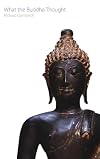
Gombrich is a very senior academic student of Theravada Buddhism. He tells us immediately that he does not consider himself to be a Buddhist, though he holds the teachings of the Buddha to be of a world historical significance similar to Plato. He also tells us in this book that his father was the art historian E. H. Gombrich! So his superlative scholarship has deep roots!
The basic thesis of this book is that the teachings of the Buddha, of Shakyamuni, the historical Buddha, need to be show more understood in the context of the time and place in which he taught. Gombrich makes some use of Jain materials to interpret Buddhist teachings, but the main references are to Brahmanical works, especially the Rig Veda and the Brihad Aranyaka Upanishad.
Gombrich discusses the five skandhas, the twelve nidanas, and the four immeasurables, and the eightfold noble path. He shows how some of the elements of these were borrowed from Brahmanical sources, and how some were formulated in deliberate contrast.
Gombrich considers karma to be the core teaching of the Buddha. He discusses how karma in Vedic tradition referred to ritual action. The Jains moved to an ethical theory of karma, but with a very concrete materialistic vision. The Buddha then elevated this to a more abstract process-oriented level.
Gombrich confesses that he doesn't really understand the Mahayana tradition, e.g. Nagarjuna's teaching.
This is not a strictly orthodox book. Gombrich holds that the tradition has interpreted some of the Buddhist words too literally and forgotten their proper context. The Buddha taught with analogy and metaphor and even with humor.
Probably Gombrich does not have all the tools at hand that would be required to recover all of the original sparkle of the Buddha's teaching. Like the recent renovation of the Sistine Chapel - some folks may have become accustomed to the dimmer colors from the accumulated layers of devotion. No doubt the new colors do not capture precisely what Michaelangelo painted. But if you are willing to risk a few errors, a fresh look at such brilliant original material might just be inspiring! show less
The basic thesis of this book is that the teachings of the Buddha, of Shakyamuni, the historical Buddha, need to be show more understood in the context of the time and place in which he taught. Gombrich makes some use of Jain materials to interpret Buddhist teachings, but the main references are to Brahmanical works, especially the Rig Veda and the Brihad Aranyaka Upanishad.
Gombrich discusses the five skandhas, the twelve nidanas, and the four immeasurables, and the eightfold noble path. He shows how some of the elements of these were borrowed from Brahmanical sources, and how some were formulated in deliberate contrast.
Gombrich considers karma to be the core teaching of the Buddha. He discusses how karma in Vedic tradition referred to ritual action. The Jains moved to an ethical theory of karma, but with a very concrete materialistic vision. The Buddha then elevated this to a more abstract process-oriented level.
Gombrich confesses that he doesn't really understand the Mahayana tradition, e.g. Nagarjuna's teaching.
This is not a strictly orthodox book. Gombrich holds that the tradition has interpreted some of the Buddhist words too literally and forgotten their proper context. The Buddha taught with analogy and metaphor and even with humor.
Probably Gombrich does not have all the tools at hand that would be required to recover all of the original sparkle of the Buddha's teaching. Like the recent renovation of the Sistine Chapel - some folks may have become accustomed to the dimmer colors from the accumulated layers of devotion. No doubt the new colors do not capture precisely what Michaelangelo painted. But if you are willing to risk a few errors, a fresh look at such brilliant original material might just be inspiring! show less

A formidable tome that I hope to devour with considerable haste.
An extremely well researched and scholarly work into whose creation has gone the painstaking work of several eminent minds.
Buddha in search of Nirvana, that exalted state that helps you break away from the eternal cycle of life, death and rebirth, finds that in the middle path. He finds out that neither extreme comfort nor extreme suffering (self imposed or otherwise) can lead you to this state, so after days and weeks of show more extreme corporeal punishment, he sees that this path is futile, has a hearty meal, sits under a Bodhi tree and viola, what do you know, Nirvana. So he chooses the middle path. Thus were born the Buddhist principles of leading a balanced life and yet achieve that supereme state.
Buddha essentially rejected the Hindu Caste System and a lot of the other practices associated with the religion. The Buddhist texts were written in Pali and Prakrit and not in Sanskrit which he associated with Hindu Brahminical Elitism. Buddhism provided a recourse to people who wanted to drop out of the rigid and discriminating Hindu Caste System.
It then describes in detail how this religion spread at first within India, where it would experience a steep decline and ultimately fade away due to the Islamic onslaught. It then spread very rapidly to Sri Lanka (through Mahendra, Ashoka's son), Thailand, Burma, China, Central Asia, Japan, Korea, Vietnam, Laos and Cambodia.
Buddhism was and is still practised in it's conservative form as Theravada Buddhism in Sri Lanka, Myanmar and Thailand. Interestingly, monks from Ceylon were invited to Burma and Thailand to inculcate and spread the form of Theravada Buddhism practised there. However in the other regions especially China and Japan, a sort of reform took place that let even laymen enter monkhood and other factors including the influences of Tantra, led to the development of another form of Buddhism called Mahayana or Greater Vehicle.
Before the advent of Buddhism, the regions comprising parts of Thailand, Vietnam and Cambodia were actually Hinduized regions that worshipped Hindu gods, esp Vishnu and build great Hindu temples of which Angkor Wat is a magnificient example. It is only later that they came under the spell of Buddhism.
The form of Buddhism practised in Tibet, a form of Mahayana Buddhism based on the Madhyamaka school of thought that originated in India, is also subjected to detailed examination. The Tibetans also managed to convert the Mongols to Buddhism and this form is now practised in Bhutan, Sikkim and parts of Nepal.
Indonesia is also subjected to detailed examination. Initially one of the Hinduized states, it later went on to adopt Buddhism and finally Islam. In the late 19th century there were movements to revive Buddhism and Buddhist practices in the Islands.
All in all a very, very fascinating read. Probably the most authoritative book on this topic. show less
An extremely well researched and scholarly work into whose creation has gone the painstaking work of several eminent minds.
Buddha in search of Nirvana, that exalted state that helps you break away from the eternal cycle of life, death and rebirth, finds that in the middle path. He finds out that neither extreme comfort nor extreme suffering (self imposed or otherwise) can lead you to this state, so after days and weeks of show more extreme corporeal punishment, he sees that this path is futile, has a hearty meal, sits under a Bodhi tree and viola, what do you know, Nirvana. So he chooses the middle path. Thus were born the Buddhist principles of leading a balanced life and yet achieve that supereme state.
Buddha essentially rejected the Hindu Caste System and a lot of the other practices associated with the religion. The Buddhist texts were written in Pali and Prakrit and not in Sanskrit which he associated with Hindu Brahminical Elitism. Buddhism provided a recourse to people who wanted to drop out of the rigid and discriminating Hindu Caste System.
It then describes in detail how this religion spread at first within India, where it would experience a steep decline and ultimately fade away due to the Islamic onslaught. It then spread very rapidly to Sri Lanka (through Mahendra, Ashoka's son), Thailand, Burma, China, Central Asia, Japan, Korea, Vietnam, Laos and Cambodia.
Buddhism was and is still practised in it's conservative form as Theravada Buddhism in Sri Lanka, Myanmar and Thailand. Interestingly, monks from Ceylon were invited to Burma and Thailand to inculcate and spread the form of Theravada Buddhism practised there. However in the other regions especially China and Japan, a sort of reform took place that let even laymen enter monkhood and other factors including the influences of Tantra, led to the development of another form of Buddhism called Mahayana or Greater Vehicle.
Before the advent of Buddhism, the regions comprising parts of Thailand, Vietnam and Cambodia were actually Hinduized regions that worshipped Hindu gods, esp Vishnu and build great Hindu temples of which Angkor Wat is a magnificient example. It is only later that they came under the spell of Buddhism.
The form of Buddhism practised in Tibet, a form of Mahayana Buddhism based on the Madhyamaka school of thought that originated in India, is also subjected to detailed examination. The Tibetans also managed to convert the Mongols to Buddhism and this form is now practised in Bhutan, Sikkim and parts of Nepal.
Indonesia is also subjected to detailed examination. Initially one of the Hinduized states, it later went on to adopt Buddhism and finally Islam. In the late 19th century there were movements to revive Buddhism and Buddhist practices in the Islands.
All in all a very, very fascinating read. Probably the most authoritative book on this topic. show less
A formidable tome that I hope to devour with considerable haste.
An extremely well researched and scholarly work into whose creation has gone the painstaking work of several eminent minds.
Buddha in search of Nirvana, that exalted state that helps you break away from the eternal cycle of life, death and rebirth, finds that in the middle path. He finds out that neither extreme comfort nor extreme suffering (self imposed or otherwise) can lead you to this state, so after days and weeks of show more extreme corporeal punishment, he sees that this path is futile, has a hearty meal, sits under a Bodhi tree and viola, what do you know, Nirvana. So he chooses the middle path. Thus were born the Buddhist principles of leading a balanced life and yet achieve that supereme state.
Buddha essentially rejected the Hindu Caste System and a lot of the other practices associated with the religion. The Buddhist texts were written in Pali and Prakrit and not in Sanskrit which he associated with Hindu Brahminical Elitism. Buddhism provided a recourse to people who wanted to drop out of the rigid and discriminating Hindu Caste System.
It then describes in detail how this religion spread at first within India, where it would experience a steep decline and ultimately fade away due to the Islamic onslaught. It then spread very rapidly to Sri Lanka (through Mahendra, Ashoka's son), Thailand, Burma, China, Central Asia, Japan, Korea, Vietnam, Laos and Cambodia.
Buddhism was and is still practised in it's conservative form as Theravada Buddhism in Sri Lanka, Myanmar and Thailand. Interestingly, monks from Ceylon were invited to Burma and Thailand to inculcate and spread the form of Theravada Buddhism practised there. However in the other regions especially China and Japan, a sort of reform took place that let even laymen enter monkhood and other factors including the influences of Tantra, led to the development of another form of Buddhism called Mahayana or Greater Vehicle.
Before the advent of Buddhism, the regions comprising parts of Thailand, Vietnam and Cambodia were actually Hinduized regions that worshipped Hindu gods, esp Vishnu and build great Hindu temples of which Angkor Wat is a magnificient example. It is only later that they came under the spell of Buddhism.
The form of Buddhism practised in Tibet, a form of Mahayana Buddhism based on the Madhyamaka school of thought that originated in India, is also subjected to detailed examination. The Tibetans also managed to convert the Mongols to Buddhism and this form is now practised in Bhutan, Sikkim and parts of Nepal.
Indonesia is also subjected to detailed examination. Initially one of the Hinduized states, it later went on to adopt Buddhism and finally Islam. In the late 19th century there were movements to revive Buddhism and Buddhist practices in the Islands.
All in all a very, very fascinating read. Probably the most authoritative book on this topic. show less
An extremely well researched and scholarly work into whose creation has gone the painstaking work of several eminent minds.
Buddha in search of Nirvana, that exalted state that helps you break away from the eternal cycle of life, death and rebirth, finds that in the middle path. He finds out that neither extreme comfort nor extreme suffering (self imposed or otherwise) can lead you to this state, so after days and weeks of show more extreme corporeal punishment, he sees that this path is futile, has a hearty meal, sits under a Bodhi tree and viola, what do you know, Nirvana. So he chooses the middle path. Thus were born the Buddhist principles of leading a balanced life and yet achieve that supereme state.
Buddha essentially rejected the Hindu Caste System and a lot of the other practices associated with the religion. The Buddhist texts were written in Pali and Prakrit and not in Sanskrit which he associated with Hindu Brahminical Elitism. Buddhism provided a recourse to people who wanted to drop out of the rigid and discriminating Hindu Caste System.
It then describes in detail how this religion spread at first within India, where it would experience a steep decline and ultimately fade away due to the Islamic onslaught. It then spread very rapidly to Sri Lanka (through Mahendra, Ashoka's son), Thailand, Burma, China, Central Asia, Japan, Korea, Vietnam, Laos and Cambodia.
Buddhism was and is still practised in it's conservative form as Theravada Buddhism in Sri Lanka, Myanmar and Thailand. Interestingly, monks from Ceylon were invited to Burma and Thailand to inculcate and spread the form of Theravada Buddhism practised there. However in the other regions especially China and Japan, a sort of reform took place that let even laymen enter monkhood and other factors including the influences of Tantra, led to the development of another form of Buddhism called Mahayana or Greater Vehicle.
Before the advent of Buddhism, the regions comprising parts of Thailand, Vietnam and Cambodia were actually Hinduized regions that worshipped Hindu gods, esp Vishnu and build great Hindu temples of which Angkor Wat is a magnificient example. It is only later that they came under the spell of Buddhism.
The form of Buddhism practised in Tibet, a form of Mahayana Buddhism based on the Madhyamaka school of thought that originated in India, is also subjected to detailed examination. The Tibetans also managed to convert the Mongols to Buddhism and this form is now practised in Bhutan, Sikkim and parts of Nepal.
Indonesia is also subjected to detailed examination. Initially one of the Hinduized states, it later went on to adopt Buddhism and finally Islam. In the late 19th century there were movements to revive Buddhism and Buddhist practices in the Islands.
All in all a very, very fascinating read. Probably the most authoritative book on this topic. show less
Lists
You May Also Like


Associated Authors
Statistics
- Works
- 12
- Also by
- 1
- Members
- 362
- Popularity
- #66,318
- Rating
- 3.6
- Reviews
- 11
- ISBNs
- 44
- Languages
- 3