
William Jones (2)
Author of Arkham Tales
For other authors named William Jones, see the disambiguation page.
Series
Works by William Jones
The Stars Are Right! - Nine Disturbing Tales of Mankind's Corruption (Call of Cthulhu Horror Roleplaying) (2004) 47 copies
High Seas Cthulhu: Swashbuckling Adventure Meets the Mythos (2007) — Editor; Contributor — 47 copies, 2 reviews
Mysteries of Morocco (monograph) 4 copies
Associated Works
Hardboiled Cthulhu: Two-Fisted Tales of Tentacled Terror (2006) — Contributor — 89 copies, 4 reviews
What to Do When You Meet Cthulhu: A Guide to Surviving the Cthulhu Mythos (2010) — Editor — 37 copies, 1 review
Tagged
Common Knowledge
- Gender
- male
- Short biography
- American horror fiction writer, editor, publisher, and game designer.
- Nationality
- USA
- Places of residence
- Michigan, USA
- Associated Place (for map)
- Michigan, USA
Members
Reviews
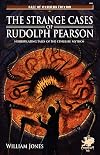
This is a very enjoyable fixup novel probably because Jones says he conceived the story as a whole from the onset.
It is Lovecraftian in tone and theme but it eschews, apart from a certain blasphemous book (no, not the Mad Arab’s), any of the names associated with the Cthulhu Mythos.
It also accomplishes something most Lovecraftian fiction, especially at the shorter length, doesn’t: creating a psychologically complex and sympathetic narrator in Pearson. Most characters in Lovecraftian show more short fiction (and most short horror fiction, I suspect) are stand-ins, just human enough to make us feel sympathy or dread at their situation but don’t come across as real individuals. I’d suggest Lovecraft maybe only accomplished something like a fully realized character in “The Colour Out of Space”, “The Shadow Over Innsmouth”, and “The Thing at the Doorstep”. You could add The Case of Charles Dexter Ward, but that is a novel with more room to work. Likewise, David Hambling’s work in the Stubbsverse does this most of the time, particularly in the many adventures of its titular character.
Pearson is a Professor of Medieval Studies at Columbia University in the 1920s, a man carrying a burden of guilt from his conduct on a World War One battlefield.
He gets dragged into his occult adventures when asked by New York City Detective Matthew Leahy to investigate some Old English words written in blood at the site of a cannibalistic murder. He’ll learn the universe is bleaker and more hostile than he realized. But he’ll also find solace and hope in smaller human moments, particularly centering around Jordan Gabriel, an anthropologist that gets dragged into his adventures. Despite her facing danger with him, Pearson won’t confide in her. Despite her obvious affection for him, he can only awkwardly deal with her.
Jones is somewhat vague as to how Pearson gets some of his occult knowledge and abilities. There’s not much of a developed system of magic here or superscience, just good enough, just presented well enough, to keep the story going.
We do get dimensional crossing beings, “death priests”, Sumerian gods, something like the Hounds of Tindalos, and, most interestingly, a variation on the idea of the ghoul.
Pearson, as a professor, occasionally drops in literary quotes from William Blake and The Illiad and, perhaps the only time it’s ever been done in a Mythos story, Boethius. Amusingly, Jordan is fond of pulp stories and gives several to Pearson which he purports to never read and burn. But he develops a shameful habit of reading them, and, at one point, he quotes a pulp story when it seems appropriate when dealing with a bad guy.
The emphasis on Pearson and Jordan, as well as the nature of some of the menaces, are what make this one a rewarding read and not the details of how Pearson came by all this abilities. show less
It is Lovecraftian in tone and theme but it eschews, apart from a certain blasphemous book (no, not the Mad Arab’s), any of the names associated with the Cthulhu Mythos.
It also accomplishes something most Lovecraftian fiction, especially at the shorter length, doesn’t: creating a psychologically complex and sympathetic narrator in Pearson. Most characters in Lovecraftian show more short fiction (and most short horror fiction, I suspect) are stand-ins, just human enough to make us feel sympathy or dread at their situation but don’t come across as real individuals. I’d suggest Lovecraft maybe only accomplished something like a fully realized character in “The Colour Out of Space”, “The Shadow Over Innsmouth”, and “The Thing at the Doorstep”. You could add The Case of Charles Dexter Ward, but that is a novel with more room to work. Likewise, David Hambling’s work in the Stubbsverse does this most of the time, particularly in the many adventures of its titular character.
Pearson is a Professor of Medieval Studies at Columbia University in the 1920s, a man carrying a burden of guilt from his conduct on a World War One battlefield.
He gets dragged into his occult adventures when asked by New York City Detective Matthew Leahy to investigate some Old English words written in blood at the site of a cannibalistic murder. He’ll learn the universe is bleaker and more hostile than he realized. But he’ll also find solace and hope in smaller human moments, particularly centering around Jordan Gabriel, an anthropologist that gets dragged into his adventures. Despite her facing danger with him, Pearson won’t confide in her. Despite her obvious affection for him, he can only awkwardly deal with her.
Jones is somewhat vague as to how Pearson gets some of his occult knowledge and abilities. There’s not much of a developed system of magic here or superscience, just good enough, just presented well enough, to keep the story going.
We do get dimensional crossing beings, “death priests”, Sumerian gods, something like the Hounds of Tindalos, and, most interestingly, a variation on the idea of the ghoul.
Pearson, as a professor, occasionally drops in literary quotes from William Blake and The Illiad and, perhaps the only time it’s ever been done in a Mythos story, Boethius. Amusingly, Jordan is fond of pulp stories and gives several to Pearson which he purports to never read and burn. But he develops a shameful habit of reading them, and, at one point, he quotes a pulp story when it seems appropriate when dealing with a bad guy.
The emphasis on Pearson and Jordan, as well as the nature of some of the menaces, are what make this one a rewarding read and not the details of how Pearson came by all this abilities. show less
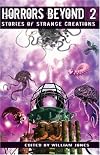
Horrors Beyond II is the latest offering by Elder Signs Press. This enterprising publisher has gone from strength to strength with every new book. HB2 is subtitled Stories of Strange Creations; the idea was to compile and anthology of dark fiction centered around devices. When I first heard that this title was on the drawing board I immediately thought about Kafka's The Penal Colony. While nothing here evoked such creepy crawlies in me, it was another resounding triumph for one of my show more favorite small presses. It seems the authors got quite a bit of latitude about what constituted a device and how they incorporated them into their story. I got a copy of the limited edition hardcover, which was $45 and is a gorgeous book. A trade paperback is available, more reasonably priced. The cover art by Dave Carson is magnificent, not specifically related to any story but wonderfully evoking the overall theme of the book. Page count was 333, with 8 pages of titles etc and 3 pages of authors' minibios at the end. Editing was by ESP workhorse William Jones. Unlike the usual flawless product from ESP I noticed a few typos, including substitution of the word sorceress for sorcerous. Also there was one big type setting flaw, where the text following page 306 appears on page 313. I do not know if this was an issue for the paperback. It was easy enough to figure out and did not interfere with my enjoyment of the book. I have a particular fondness for Cthulhu mythos fiction; HB 1 was not exactly a Lovecraftian athology although some of the stories were of direct interest to Lovecraft fans and others certainly had a Lovecraftian feel. HB2, to my read, was more straight up science fiction and related horror, but I am happy to note there were a few mythos tales. My bottom line is that HB2 was the best dark fiction anthology I have read in a long time. Here are the contents. All of these stories were new to me, and only A Family Affair had been printed elsewhere before. A few of these authors were represented in the original Horrors Beyond, but as ESP becomes more and more renowned they attract more widely published and respected writers than those who confine themselves to Cthulhu mythos fiction.
Isolation Point, California - John Shirley
Serenade - Lucien Soulban
Wyshes.com - Richard A. Lupoff
5150 - Gene O'Neill
The Signal - Paul Kemp
Fractal Freaks - A.A. Attanasio
Ghost Lens - Stephen Mark Rainey
Dead Air - David Niall Wilson
The Bigger They Are . . . - C.J. Henderson
The Margins - Robert Weinberg
Wormwood - Tim Curran
When the Ship Came - John Sunseri
The Manuscript in the Drawer - Greg Beaty
Spheres of Influence - Ron Shiflet
A Monster in the Lake - Michail Velichansky
The Clockmaker's Daughter - E. Sedia
Magic Fingers - Jay Caselberg
A Family Affair - William C. Dietz
The Mortification of the Flesh - Alexis Glynn Latner
Predicting Perdition - Paul Melniczek
When the Stars Fell - William Jones
John Shirley is a well established horror author. I am familiar with his Those Who Come to Dagon from High Seas Cthulhu; he also has a story in the forthcoming Cthulhian Singularity. Isolation Point, California is a wonderfully bleak story of post apocalyptic America where people dare not approach each other due to the effects of an unknown biological manipulation called the Aggression Factor...but it is still natural to long for human contact...
Lucien Soulban offers the story of most direct interest to Cthulhu mythos fans with Serenade, where a down and out Black Chamber operative is offerd the chance to decipher an encrypted message, which turns out to be a chant. Goodness me it was well written! I sure hope Mr. Soulban will give us more genre stories in the future.
Richard Lupoff is quite prolific; his Dreams.biz was a highlight from Hard Boiled Cthulhu. In Wyshes.com, a techno expert is asked to beta test a virtual reality world that is actually not virtual. Lupoff delivers again with a crackerjack good read.
The only mythos tale I know of from Gene O'Neil was Invasors de Suenos from the now unavailable Cthulhu Express. 5150 is named for the call code police receive for a deranged person. Unfortunately for the protagonist, a cop on the verge of retirement, has his own issues. I couldn't exactly figure out what was the strange device in this story but who cares? It was great, gritty and disturbing.
Paul Kemp's The Signal introduces Abe Gustafsson, a big mook who investigates demonic presences. This story has a nice hard boiled feel.
My copy of Twice Dead Things is out on loan, so I do not know if AA Attanasio's Fractal Freaks was printed there. This was a highly stylized story of vampires and demons hidden in plain sight, with aconflict spanning across time and unknown dimensions. I liked it well enough but not as much as I had hoped.
Stephen Mark Rainey is a well known dark fiction author and editor. I have liked just about every short story of his that I've read. Ghost Lens was another winner, describing a weird discovery that allows its user to see into the very fibers of a person's existence, making a mockery of modern medical imaging, and also allows the healing of all ills. But as you look through the lens, something looks at you, sizing you up...One thing I like about Rainey's stories is that the characters are so well drawn, coming to life on the page.
David Niall Wilson has stories in The Last Continent and Shadows Over Baker Street. A decent read, Dead Air is a very brief story that shows how a much maligned shock radio DJ gets the last laugh.
CJ Henderson's The Bigger They Are... was unlike anything else by him I've ever read. It was an over the top time travel tale played mostly for humor. Lovecraft's Mi-Go make an appearance. OK enough, it didn't really jazz me, but then humor in horror anthologies almost never does.
Robert Weinberg edited the 1990 collection Lovecraft's Legacy. The Margins is a really good gory story featuring
extradimensional Hounds that travel through angles (Cthulhu mythos fans know these critters well!). Weinberg's take on them is very original and the prose is quite gripping.
Tim Curran's The Margins may well be the best story in this collection, although the competition is fierce! It is set in the contaminated area around Chernobyl, a very fertile area for dark fiction (or even noir crime fiction; Wolves Eat Dogs, the Arkady Renko novel was set there). I don't think I am amiss in saying it had very Lovecraftian sensibilities about science gone awry and a remorseless unfathomable alien. A masterpiece.
When the Ship Came shows the versatility of John Sunseri. Five-Mile Creek is a very ordinary town in Oregon, as we see from some slice-of-life vignettes of the inhabitants. There¡¯s no obvious reason why an alien ship would set down near there, or why they did what they did. I have yet to read a story by Mr. Sunseri I did not like.
The Manuscript in the Drawer by Greg Beatty is very brief, and features a book near and dear to the hearts of all Lovecraftans.
Spheres of Influence by Ron Shiflet would make a good episode from The Twilight Zone (I think I said this before about Mr. Shiflet's fiction; he should really try his hand at a screen play.). Mysterious metallic spheres drop from the sky. They are not benign meteorites. I am also struck again by the way his characters seem to come to life.
Michail Velichansky weighs in with another very bleak story, A Monster in the Lake, about a lonely man, isolated from the world who gives an alien creature permission to live in a lake in a park. It was absolutely terrific, with an ending to leave you squirming.
The Clockmaker's Daughter by E. Sedia was an unnerving tale about automatons. It was very nice counterpoint for me, as I had just read The Invention of Hugo Cabret to my sons.
The idea of being connected to the web in your head is as old as cyberpunk fiction. In Magic Fingers, Jay Caselberg gives us a less optimistic vision of how that reality may eventually turn out. I liked this story a lot.
A Family Affair by William C. Dietz reminded me of Jeffrey Thomas' Punktown. We meet Max Maxon, a hired goon, who gets involved in the deadly political machinations of a futuristic corporation. He has all the makings of a good hard boiled hero for a series of stories. Another terrific story, as this anthology moves from winner to winner.
The Mortification of the Flesh By Alexis Latner is an outstanding science fiction piece about how after centuries of having the galaxy to themselves, humans encounter a different form of sentience. After this wonderful piece I will have to seek out Ms. Latner's novel, Hurricane Moon.
Maybe Paul Melniczek's Predicting Perdition was the best story! It would also make an outstanding episode of The Twilight Zone. In a drained reservoir an metallic object is found that fills the mayor with a nameless dread. Marvelous!
Kudos to William Jones for editing a sensational anthology. His When the Stars Fell brings HB2 to a triumphant conclusion. Science fiction with a very Lovecraftian feel, apocalypse comes to humanity.
I can easily exhaust my superlatives in attempting to describe this anthology. It is another star in the firmament of Elder Signs Press. I highly recommend it to all fans of horror, science fiction, Lovecraftian fiction, dark fiction and just plain old good yarns. I can't wait to see what they come up with next! Bring on Horrors Beyond III! show less
Isolation Point, California - John Shirley
Serenade - Lucien Soulban
Wyshes.com - Richard A. Lupoff
5150 - Gene O'Neill
The Signal - Paul Kemp
Fractal Freaks - A.A. Attanasio
Ghost Lens - Stephen Mark Rainey
Dead Air - David Niall Wilson
The Bigger They Are . . . - C.J. Henderson
The Margins - Robert Weinberg
Wormwood - Tim Curran
When the Ship Came - John Sunseri
The Manuscript in the Drawer - Greg Beaty
Spheres of Influence - Ron Shiflet
A Monster in the Lake - Michail Velichansky
The Clockmaker's Daughter - E. Sedia
Magic Fingers - Jay Caselberg
A Family Affair - William C. Dietz
The Mortification of the Flesh - Alexis Glynn Latner
Predicting Perdition - Paul Melniczek
When the Stars Fell - William Jones
John Shirley is a well established horror author. I am familiar with his Those Who Come to Dagon from High Seas Cthulhu; he also has a story in the forthcoming Cthulhian Singularity. Isolation Point, California is a wonderfully bleak story of post apocalyptic America where people dare not approach each other due to the effects of an unknown biological manipulation called the Aggression Factor...but it is still natural to long for human contact...
Lucien Soulban offers the story of most direct interest to Cthulhu mythos fans with Serenade, where a down and out Black Chamber operative is offerd the chance to decipher an encrypted message, which turns out to be a chant. Goodness me it was well written! I sure hope Mr. Soulban will give us more genre stories in the future.
Richard Lupoff is quite prolific; his Dreams.biz was a highlight from Hard Boiled Cthulhu. In Wyshes.com, a techno expert is asked to beta test a virtual reality world that is actually not virtual. Lupoff delivers again with a crackerjack good read.
The only mythos tale I know of from Gene O'Neil was Invasors de Suenos from the now unavailable Cthulhu Express. 5150 is named for the call code police receive for a deranged person. Unfortunately for the protagonist, a cop on the verge of retirement, has his own issues. I couldn't exactly figure out what was the strange device in this story but who cares? It was great, gritty and disturbing.
Paul Kemp's The Signal introduces Abe Gustafsson, a big mook who investigates demonic presences. This story has a nice hard boiled feel.
My copy of Twice Dead Things is out on loan, so I do not know if AA Attanasio's Fractal Freaks was printed there. This was a highly stylized story of vampires and demons hidden in plain sight, with aconflict spanning across time and unknown dimensions. I liked it well enough but not as much as I had hoped.
Stephen Mark Rainey is a well known dark fiction author and editor. I have liked just about every short story of his that I've read. Ghost Lens was another winner, describing a weird discovery that allows its user to see into the very fibers of a person's existence, making a mockery of modern medical imaging, and also allows the healing of all ills. But as you look through the lens, something looks at you, sizing you up...One thing I like about Rainey's stories is that the characters are so well drawn, coming to life on the page.
David Niall Wilson has stories in The Last Continent and Shadows Over Baker Street. A decent read, Dead Air is a very brief story that shows how a much maligned shock radio DJ gets the last laugh.
CJ Henderson's The Bigger They Are... was unlike anything else by him I've ever read. It was an over the top time travel tale played mostly for humor. Lovecraft's Mi-Go make an appearance. OK enough, it didn't really jazz me, but then humor in horror anthologies almost never does.
Robert Weinberg edited the 1990 collection Lovecraft's Legacy. The Margins is a really good gory story featuring
extradimensional Hounds that travel through angles (Cthulhu mythos fans know these critters well!). Weinberg's take on them is very original and the prose is quite gripping.
Tim Curran's The Margins may well be the best story in this collection, although the competition is fierce! It is set in the contaminated area around Chernobyl, a very fertile area for dark fiction (or even noir crime fiction; Wolves Eat Dogs, the Arkady Renko novel was set there). I don't think I am amiss in saying it had very Lovecraftian sensibilities about science gone awry and a remorseless unfathomable alien. A masterpiece.
When the Ship Came shows the versatility of John Sunseri. Five-Mile Creek is a very ordinary town in Oregon, as we see from some slice-of-life vignettes of the inhabitants. There¡¯s no obvious reason why an alien ship would set down near there, or why they did what they did. I have yet to read a story by Mr. Sunseri I did not like.
The Manuscript in the Drawer by Greg Beatty is very brief, and features a book near and dear to the hearts of all Lovecraftans.
Spheres of Influence by Ron Shiflet would make a good episode from The Twilight Zone (I think I said this before about Mr. Shiflet's fiction; he should really try his hand at a screen play.). Mysterious metallic spheres drop from the sky. They are not benign meteorites. I am also struck again by the way his characters seem to come to life.
Michail Velichansky weighs in with another very bleak story, A Monster in the Lake, about a lonely man, isolated from the world who gives an alien creature permission to live in a lake in a park. It was absolutely terrific, with an ending to leave you squirming.
The Clockmaker's Daughter by E. Sedia was an unnerving tale about automatons. It was very nice counterpoint for me, as I had just read The Invention of Hugo Cabret to my sons.
The idea of being connected to the web in your head is as old as cyberpunk fiction. In Magic Fingers, Jay Caselberg gives us a less optimistic vision of how that reality may eventually turn out. I liked this story a lot.
A Family Affair by William C. Dietz reminded me of Jeffrey Thomas' Punktown. We meet Max Maxon, a hired goon, who gets involved in the deadly political machinations of a futuristic corporation. He has all the makings of a good hard boiled hero for a series of stories. Another terrific story, as this anthology moves from winner to winner.
The Mortification of the Flesh By Alexis Latner is an outstanding science fiction piece about how after centuries of having the galaxy to themselves, humans encounter a different form of sentience. After this wonderful piece I will have to seek out Ms. Latner's novel, Hurricane Moon.
Maybe Paul Melniczek's Predicting Perdition was the best story! It would also make an outstanding episode of The Twilight Zone. In a drained reservoir an metallic object is found that fills the mayor with a nameless dread. Marvelous!
Kudos to William Jones for editing a sensational anthology. His When the Stars Fell brings HB2 to a triumphant conclusion. Science fiction with a very Lovecraftian feel, apocalypse comes to humanity.
I can easily exhaust my superlatives in attempting to describe this anthology. It is another star in the firmament of Elder Signs Press. I highly recommend it to all fans of horror, science fiction, Lovecraftian fiction, dark fiction and just plain old good yarns. I can't wait to see what they come up with next! Bring on Horrors Beyond III! show less
The Strange Cases of Rudolph Pearson: Horripilating Tales of the Cthulhu Mythos (Call of Cthulhu Fiction) by William Jones
The Strange Cases of Rudolph Pearson by William Jones is a trade paperback published by Chaosium. List price is $14.95; currently is not available directly from Amazon. Cover art is by Steven Gilberts, who gave us the covers of Frontier Cthulhu (my favorite of his works) and Arkham Tales (which I also liked better than this). A vile multi-tentacled thing with weirdly segmented legs is trying to pass through some portal. Mr. Gilberts seems to be the house artist for Chaosium these days. Page show more count is 240 but the actual text doesn't start until page 15, and there are scattered blank pages between sections. For the price, for publishers in this genre, I think this is a reasonably generous book. Production values are high and editing was tight; I didn't notice any typographical errors. Several of the stories have been published before (as noted in the useful acknowledgements, but only in obscure periodicals. I actually previously read Feasters of the Dark when it saw the light of print in Dreaming in R'lyeh (a magazine that tanked rapidly thereafter, lamented only because they welshed on my subscription money). The author William Jones is well known due to his tireless efforts on behalf of Elder Signs Press (one of my favorite publishing concerns!) and horror fiction in general.
Rudolph Pearson is a Doctor of Medieval Studies at Columbia University in New York. The stories in this book are his journals as presented by his great grandson many years later. In many ways this book is similar to The Tales of Inspector Legrasse by CJ Henderson. Although these stories were written across a span of years and could be read separately, in aggregate they read like interconnected chapters of a novel. In fact, here I disagree with the author. I think they must be read sequentially and would be far less enjoyable if taken out of context. In particular, Mr. Jones has slightly amended some of them so that they have less redundancy and fit together more seamlessly. Rather than list the individual story titles, I think it better to consider the individual works as a whole. Dr. Pearson is summoned at first by Detective Matthew Leahy to help translate some strange words written in blood at the scene of a gruesome murder. This leads to a confrontation of strange creatures in the sewers of New York. One thing I really liked was that Mr. Jones did not elbow the reader in the side and harp on Lovecraftian context or entities; clearly these were ghouls and it did not need to be explicitly stated. I like a good ghoulish story (NB: Throne of Bones by McNaughton cannot be recommended highly enough, and we all regret that Charnel Feast will forever remain a concept and not a book); Mr. Jones' explanation of the ghouls' origin is as good as I have read. After that adventure, one of Dr. Pearson's colleagues, Effram Harris, creates a device that pierces the veil of reality. The outcome is pretty predictable but well executed. What follows is a creature that is clearly a Hound of Tindalos is attracted to Harris' temporal manipulations, causing mayhem throughout the city. The details of manipulation of the occult and the purposes of chants, sigils and gestures is more completely described in this book than in any except perhaps Where Goeth Nyarlathotep; again Mr. Jones has given a lot of thought to his subject matter and developed it carefully. It is up to Dr. Pearson to somehow stop this Hound. Along the way we meet his annoying colleague, Jordan Gabriel, an accomplished archeologist and brash go getter trying to break through in the man's world of the 1920s. At first our hero doesn't care for her, but anyone can see where this is eventually going. Now that Dr. Pearson is more in tune with the occult (for a very good reason that becomes clearer later) he is gradually drawn into the machinations of Gregor Van Eych, a wealthy New Yorker. Over several stories we learn about a gathering of mysterious forces, a darker underlying purpose and a cult of demon possessed souls that is striving to bring Xinlurgash, the ever consuming, into our world. Only Dr. Pearson gradually becomes aware of the truth of what is happening and he must harness all of his nascent sorcerous skills to save humanity, and his sanity. If or how this happens I leave to your reading pleasure. The book comes full circle to finish with a nice ghoulish denouement.
I found The Strange Cases of Rudolph Pearson to be an undemanding, thoroughly entertaining read; I finished it off into 2 or 3 breezy nights. I guess the fact that I didn't want to set it aside, that I kept wanting to know what happened next, is my strongest recommendation. Plotting was tight and moved along breathlessly. The main character developed and changed over the course of the book, although the supporting players were basically only loosely sketched out. Dialogue had some snap and sparkle. Lovecraftian elements were central to the book, but as I indicated before, Mr. Jones prefers understatement in this regard. If I have to point out one miscue, it would be that Dr. Pearson noted humanity was "the soul of the cosmos." In most Lovecraftian fiction humanity is a barely noticeable snack on Cthulhu's smorgasbord.
So here we have a reasonably priced book by a highly regarded author full of tightly written stories in engaging prose. All Lovecraftians have to have it; go ahead and order a copy. show less
Rudolph Pearson is a Doctor of Medieval Studies at Columbia University in New York. The stories in this book are his journals as presented by his great grandson many years later. In many ways this book is similar to The Tales of Inspector Legrasse by CJ Henderson. Although these stories were written across a span of years and could be read separately, in aggregate they read like interconnected chapters of a novel. In fact, here I disagree with the author. I think they must be read sequentially and would be far less enjoyable if taken out of context. In particular, Mr. Jones has slightly amended some of them so that they have less redundancy and fit together more seamlessly. Rather than list the individual story titles, I think it better to consider the individual works as a whole. Dr. Pearson is summoned at first by Detective Matthew Leahy to help translate some strange words written in blood at the scene of a gruesome murder. This leads to a confrontation of strange creatures in the sewers of New York. One thing I really liked was that Mr. Jones did not elbow the reader in the side and harp on Lovecraftian context or entities; clearly these were ghouls and it did not need to be explicitly stated. I like a good ghoulish story (NB: Throne of Bones by McNaughton cannot be recommended highly enough, and we all regret that Charnel Feast will forever remain a concept and not a book); Mr. Jones' explanation of the ghouls' origin is as good as I have read. After that adventure, one of Dr. Pearson's colleagues, Effram Harris, creates a device that pierces the veil of reality. The outcome is pretty predictable but well executed. What follows is a creature that is clearly a Hound of Tindalos is attracted to Harris' temporal manipulations, causing mayhem throughout the city. The details of manipulation of the occult and the purposes of chants, sigils and gestures is more completely described in this book than in any except perhaps Where Goeth Nyarlathotep; again Mr. Jones has given a lot of thought to his subject matter and developed it carefully. It is up to Dr. Pearson to somehow stop this Hound. Along the way we meet his annoying colleague, Jordan Gabriel, an accomplished archeologist and brash go getter trying to break through in the man's world of the 1920s. At first our hero doesn't care for her, but anyone can see where this is eventually going. Now that Dr. Pearson is more in tune with the occult (for a very good reason that becomes clearer later) he is gradually drawn into the machinations of Gregor Van Eych, a wealthy New Yorker. Over several stories we learn about a gathering of mysterious forces, a darker underlying purpose and a cult of demon possessed souls that is striving to bring Xinlurgash, the ever consuming, into our world. Only Dr. Pearson gradually becomes aware of the truth of what is happening and he must harness all of his nascent sorcerous skills to save humanity, and his sanity. If or how this happens I leave to your reading pleasure. The book comes full circle to finish with a nice ghoulish denouement.
I found The Strange Cases of Rudolph Pearson to be an undemanding, thoroughly entertaining read; I finished it off into 2 or 3 breezy nights. I guess the fact that I didn't want to set it aside, that I kept wanting to know what happened next, is my strongest recommendation. Plotting was tight and moved along breathlessly. The main character developed and changed over the course of the book, although the supporting players were basically only loosely sketched out. Dialogue had some snap and sparkle. Lovecraftian elements were central to the book, but as I indicated before, Mr. Jones prefers understatement in this regard. If I have to point out one miscue, it would be that Dr. Pearson noted humanity was "the soul of the cosmos." In most Lovecraftian fiction humanity is a barely noticeable snack on Cthulhu's smorgasbord.
So here we have a reasonably priced book by a highly regarded author full of tightly written stories in engaging prose. All Lovecraftians have to have it; go ahead and order a copy. show less
Arkham Tales is perhaps the beginning of a new venture for Chaosium, all original fiction set in the world of their role playing game, Call of Cthulhu. Back in the day, before the internet, I was unaware of the small and (semi) thriving of small press mythos magazines. The only access to modern Lovecraftian fiction I knew about was through the cycle books, trade paperbacks by Chaosium. The most recent example of these was The Tsathoggia Cycle. Generally, these books featured reprinted show more stories gleaned and selected, usually by Robert Price, from these various magazines (Cthulhu Codex, Crypt of Cthulhu, Midnight Shambler etc). These were a definite mixed bag, with the books often containing a few winners, much mediocrity and a fair number of dogs. Alas, this was all that was available, except for an occasional fine quality hardback like Cthulhu 2000 (and even that had reprints). Lately, with improved on line connections and facilitation of book production by small presses the amount of books containing almost all new published mythos fiction has sky rocketed. Also, maybe it's only my imagination but this new generation of authors (not that the last one has moved off the scene) (maybe the 4th or 5th Lovecraft Circle?) is immensely talented so most of these collections have highly superior fiction. I always say we are in a golden age of mythos fiction, and point to books like Dead But Dreaming, Hardboiled Cthulhu, Horrors Beyond and the Delta Green books. And there is so much more in the pipeline, it is almost an embarrassment of riches. GW Thomas is set to release Cthulhu Express soon, and Rainfall Books has some titles in the offing, while Pagan Publishing has a new trade paperback collection of DG chapbooks planned. Elder Signs Press has stayed very, very busy, while Kevin O' Brien and Lindisfarne Press are getting back on their feet. Edward Lipsett has opened our eyes to Japanese mythos fiction via Kurodahan Press, John Pelan plans to issue The Cthulhian Singularity and Charlie Stross' The Jennifer Morgue is coming from Golden Gryphon. This is the golden age! Even so, we must admit our debt to Chaosium and Robert Price for keeping the eldritch fires burning.
And we also owe a debt to Chaosium for their role playing game, Call of Cthulhu. Actually I never played it; back when I had time for such leisure pursuits I was a D&D fan (but you gotta love a game where no matter how good you are, you eventually go insane or get eaten...). So here is my bias for the review: I do not know the source materials other than the stories by HPL and his legion of followers. And here is my assessment: you do not need to know their source material! Just like you don't need to know any of the Delta Green sources to really enjoy their books. Frankly, it's a wonder it took so long for Chaosium to elicit fiction based on their game world. After all there are tons of D&D based books. Delta Green, a version of CoC set in the modern era rife with secret government agencies and conspiracies, has been generating GREAT fiction for years now. Maybe the idea was germinating for a while but Chaosium was too broke to act on it, I dunno. Although set in or about Arkham, authors had free rein about all other content and setting, so there is no sense of repetition at all.
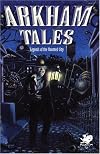
Someone will have to fill me in on the authors' reimbursement but I think it was peanuts plus 2 copies of the book, so truly these stories are labors of love. What I really like is that there was a solicitation of stories and a culling process by the highly respected William Jones, from Elder Signs Press. This means the stories are notches above the cycle books. List price is $15.95 but it is discounted on Amazon to $10.37, and available for free shipping if you buy $25 worth of stuff (like Hardboiled Cthulhu!). The book itself is a good quality trade paperback, like all the cycle books. Page count is 288, not counting the editor's note, so very generous! The editor's note by William Jones is quite useful and details the setting for the anthology in Chaosium's world. Unfortunately there are no bios on the authors. Cover art is by Steven Gilberts. It shows a grizzled one eyed grounds keeper at Miskatonic University, shadowed by various critters. I am not sure about this, but I believe Mr. Gilberts did the artwork for some CoC game scenarios, so this is a very appropriate choice. This brings me to the biggest flaw in the book: there were at least a half dozen careless typos, mostly word substitutions. I did not jot them down as I was reading but, for example, p160 "fowl odors" (unless everything was supposed to smell like chickens). I think someone relied too much on a spell checker. Also in the story Burnt Tea by Michael Dziesinski busted was used as a descriptive adjective, "busted body." OK, I'll accept that a woman has a bust, or a narc conducts a bust, or you sculpt a bust. I'll buy that if you are writing colloquially in dialogue, or representing someone's thoughts, to say something was busted is appropriate slang, but in narrative detached from thoughts or dialogue it reads like the mistake of an ignoramus. Why not "broken body?" I saw this same mistaken usage twice in another story somewhere recently, maybe a chapbook, and I was equally put off by it. I won't say it killed the story, but goodness gracious it peeved me. I greatly enjoyed Eats, Shoots, & Leaves by Lynne Truss, so consider this my panda paw print.
Here are the contents (not otherwise listed elsewhere that I could find, so I typed the dang thing myself):
Mysterious Dan's Legacy - Matthew Baugh
Vaughn's Diary - Robert Vaughn
The Orb - Tony Campbell
The Nether Collection - Cody Goodfellow
Worms - Pat Harrigan
They Thrive in Darkness - Ron Shiflet
What Sorrows May Come - Lee Clark Zumpe
Arkham Pets - James Ambuehl
Small Ghost - Michael Minnis
Burnt Tea - Michael Dziesinski
Arkham Rain - John Goodrich
Regrowth - David Conyers
The Idea of Fear - CJ Henderson
Disconnected - Brian Sammons
The Lady in the Grove - Scott Lette
On Leave in Arkham - Bill Bilstad
Geometry of the Soul - Jason Andrew
Spoilers may follow so stop now if that bothers you *********
Mysterious Dan's Legacy - Matthew Baugh - This is a new author to me. In 1873 a Kansas cowboy (that was frontier territory right after the Civil War) comes to Arkham to collect an inheritance, which brings unwelcome knowledge, responsibilities and enemies. This was a very likeable story; I wonder if the protagonist, Daniel Hawkins, will become a regular character in Mr. Baugh's stories.
Vaughn's Diary - Robert Vaughn - Here is one story where my knowledge of the source material wasn't up to scratch and I couldn't remember if there was an antecedent story but HPL or someone else, so I don't recognize the name Timothy Erasmus Vaughn. Regarding this tale, never ever read the diary of a deceased relative who was an occultist in Arkham. Never! I hadn't read anything by Mr. Vaughn before, but this was a good read and I hope he is writing more mythos fiction.
The Orb - Tony Campbell - Tony Campbell wrote After the War which appeared in Horrors Beyond. I liked that story well enough but it didn't knock my socks off. That impression is confirmed in The Orb, which is also OK but doesn't stand up to the best in this anthology. A Miskatonic Unversity librarian's father has to match wits with the Hounds of Tindalos and Nyalathotep.
The Nether Collection - Cody Goodfellow - After the absorbing Cahokia in Horrors Beyond and the unreasonably entertaining To Skin a Dead Man in Hardboiled Cthulhu, and his sensational novels Radiant Dawn and Ravenous Dusk, Mr. Goodfellow can basically do no wrong. This was a change of pace, being a story of Harry Houdini and Lovecraftian ghouls. What can I say, I really liked it.
Worms - Pat Harrigan - This was a fascinating story by an author I never encountered before. It chronicles the rise of a man from office drone to fanatical rabble rouser, with terrific Lovecraftian touches scattered throughout. I loved that more subtle touches were used as opposed to the usual rub your face in the fact that there's a mythos out there.
They Thrive in Darkness - Ron Shiflet - With Unfinished Business in Hardboiled Cthulhu Mr. Shiflet now has two tales of Pickman and his ghouls in print. While I enjoyed the story, I confess to liking Unfinished Business better.
What Sorrows May Come - Lee Clark Zumpe - Mr. Zumpe wrote The Breach, a terrific story in Horrors Beyond, and has a few stories in mythos magazines. This effort was OK, sort of a reanimation tale with a protective ghost thrown in. I liked the prose but the story left me flat; I didn't dislike it, there was just better stuff here.
Arkham Pets - James Ambuehl - This very brief story by the ubiquitous Mr. Ambuehl concerned a boy who finds some crawly things in an Arkham swamp and decides to bring them home. Complications ensue. I found this amusing and diverting.
Small Ghost - Michael Minnis - Mr. Minnis is very productive. Recently we've had A Little Color in Your Cheeks in Horrors Beyond (mostly good) The Prodigies of Monkfield Cabot in Eldritch Blue (OK), Salt Air (superb) in Dead But Dreaming and The Butcher of Vyones (great) Lost Worlds of Space and Time #1. Small Ghost was terrific, maybe the highlight of Arkham Tales. It was about Brown Jenkin, the rat-like witch's familiar and someone with the health department.
Burnt Tea - Michael Dziesinski- I already mentioned my problem with the typos. Otherwise this was a very nifty work by an author I never encountered before, about the Hounds of Tindalos and Japanese tea ceremonies in the 1920s.
Arkham Rain - John Goodrich - Mr. Goodrich is active on the mythos scene but I don't recall seeing his work before. I'll have to remedy that! Arkham Rain was a terrific story about the Innsmouth taint visiting an unwitting family. An old mythos trope? You bet! But this was a wonderfully original take.
Regrowth - David Conyers - I'm a big David Conyers fan. He is becoming well published in almost all the newer mythos anthologies. This story has some thematic similarity to False Containment in Horrors Beyond, and deals with unnatural melding of disparate species. Being a Conyers yarn it was a darn good read, although I've liked other stories by him better.
The Idea of Fear - CJ Henderson - We, of course, did need a hard boiled PI story in this book! Who better to do it than the masterful CJ Henderson? But this story was refreshingly different; the ending will catch you by surprise, as a PI and a medium try to find a ghost.
Disconnected - Brian Sammons - Mr. Sammons can also do no wrong, especially after One Way Conversation in Horrors Beyond. This is another winner. It is about the Mi-Go and Yuggoth, and a PI tracking down a missing relative. But like everything else by Brian Sammons, do not expect the usual mythos conventions or story format.
The Lady in the Grove - Scott Lette - Yet another new author to me and yet another auspicious introduction! An Irish enforcer is sent to Arkham to provide a little muscle for an MU professor.
On Leave in Arkham - Bill Bilstad - Ditto the above. This story has a complex construction with rapidly switching time frames and viewpoints, about WWI veteran/murderer. Very worthwhile read.
Geometry of the Soul - Jason Andrew - Also a new author to me, Mr. Andrew's story was only OK, about a MU expedition that goes horribly awry. The initial few pages in the Arkham sanitarium were much better for me than the last few pages.
So in summary, this is a terrific book of all brand new fiction. Even the stories that aren't the best are pretty good, and the best stories are first rate. The price is low and the page count is generous. Many of these authors are new on the scene and the rest are among the hot new mythos talents. Don't try to choose between it and Hard Boiled Cthulhu; order both of them discounted from Amazon! Together they are still less than Weird Shadows Over Innsmouth. Mythos fans should not hesitate. show less
And we also owe a debt to Chaosium for their role playing game, Call of Cthulhu. Actually I never played it; back when I had time for such leisure pursuits I was a D&D fan (but you gotta love a game where no matter how good you are, you eventually go insane or get eaten...). So here is my bias for the review: I do not know the source materials other than the stories by HPL and his legion of followers. And here is my assessment: you do not need to know their source material! Just like you don't need to know any of the Delta Green sources to really enjoy their books. Frankly, it's a wonder it took so long for Chaosium to elicit fiction based on their game world. After all there are tons of D&D based books. Delta Green, a version of CoC set in the modern era rife with secret government agencies and conspiracies, has been generating GREAT fiction for years now. Maybe the idea was germinating for a while but Chaosium was too broke to act on it, I dunno. Although set in or about Arkham, authors had free rein about all other content and setting, so there is no sense of repetition at all.
Someone will have to fill me in on the authors' reimbursement but I think it was peanuts plus 2 copies of the book, so truly these stories are labors of love. What I really like is that there was a solicitation of stories and a culling process by the highly respected William Jones, from Elder Signs Press. This means the stories are notches above the cycle books. List price is $15.95 but it is discounted on Amazon to $10.37, and available for free shipping if you buy $25 worth of stuff (like Hardboiled Cthulhu!). The book itself is a good quality trade paperback, like all the cycle books. Page count is 288, not counting the editor's note, so very generous! The editor's note by William Jones is quite useful and details the setting for the anthology in Chaosium's world. Unfortunately there are no bios on the authors. Cover art is by Steven Gilberts. It shows a grizzled one eyed grounds keeper at Miskatonic University, shadowed by various critters. I am not sure about this, but I believe Mr. Gilberts did the artwork for some CoC game scenarios, so this is a very appropriate choice. This brings me to the biggest flaw in the book: there were at least a half dozen careless typos, mostly word substitutions. I did not jot them down as I was reading but, for example, p160 "fowl odors" (unless everything was supposed to smell like chickens). I think someone relied too much on a spell checker. Also in the story Burnt Tea by Michael Dziesinski busted was used as a descriptive adjective, "busted body." OK, I'll accept that a woman has a bust, or a narc conducts a bust, or you sculpt a bust. I'll buy that if you are writing colloquially in dialogue, or representing someone's thoughts, to say something was busted is appropriate slang, but in narrative detached from thoughts or dialogue it reads like the mistake of an ignoramus. Why not "broken body?" I saw this same mistaken usage twice in another story somewhere recently, maybe a chapbook, and I was equally put off by it. I won't say it killed the story, but goodness gracious it peeved me. I greatly enjoyed Eats, Shoots, & Leaves by Lynne Truss, so consider this my panda paw print.
Here are the contents (not otherwise listed elsewhere that I could find, so I typed the dang thing myself):
Mysterious Dan's Legacy - Matthew Baugh
Vaughn's Diary - Robert Vaughn
The Orb - Tony Campbell
The Nether Collection - Cody Goodfellow
Worms - Pat Harrigan
They Thrive in Darkness - Ron Shiflet
What Sorrows May Come - Lee Clark Zumpe
Arkham Pets - James Ambuehl
Small Ghost - Michael Minnis
Burnt Tea - Michael Dziesinski
Arkham Rain - John Goodrich
Regrowth - David Conyers
The Idea of Fear - CJ Henderson
Disconnected - Brian Sammons
The Lady in the Grove - Scott Lette
On Leave in Arkham - Bill Bilstad
Geometry of the Soul - Jason Andrew
Spoilers may follow so stop now if that bothers you *********
Mysterious Dan's Legacy - Matthew Baugh - This is a new author to me. In 1873 a Kansas cowboy (that was frontier territory right after the Civil War) comes to Arkham to collect an inheritance, which brings unwelcome knowledge, responsibilities and enemies. This was a very likeable story; I wonder if the protagonist, Daniel Hawkins, will become a regular character in Mr. Baugh's stories.
Vaughn's Diary - Robert Vaughn - Here is one story where my knowledge of the source material wasn't up to scratch and I couldn't remember if there was an antecedent story but HPL or someone else, so I don't recognize the name Timothy Erasmus Vaughn. Regarding this tale, never ever read the diary of a deceased relative who was an occultist in Arkham. Never! I hadn't read anything by Mr. Vaughn before, but this was a good read and I hope he is writing more mythos fiction.
The Orb - Tony Campbell - Tony Campbell wrote After the War which appeared in Horrors Beyond. I liked that story well enough but it didn't knock my socks off. That impression is confirmed in The Orb, which is also OK but doesn't stand up to the best in this anthology. A Miskatonic Unversity librarian's father has to match wits with the Hounds of Tindalos and Nyalathotep.
The Nether Collection - Cody Goodfellow - After the absorbing Cahokia in Horrors Beyond and the unreasonably entertaining To Skin a Dead Man in Hardboiled Cthulhu, and his sensational novels Radiant Dawn and Ravenous Dusk, Mr. Goodfellow can basically do no wrong. This was a change of pace, being a story of Harry Houdini and Lovecraftian ghouls. What can I say, I really liked it.
Worms - Pat Harrigan - This was a fascinating story by an author I never encountered before. It chronicles the rise of a man from office drone to fanatical rabble rouser, with terrific Lovecraftian touches scattered throughout. I loved that more subtle touches were used as opposed to the usual rub your face in the fact that there's a mythos out there.
They Thrive in Darkness - Ron Shiflet - With Unfinished Business in Hardboiled Cthulhu Mr. Shiflet now has two tales of Pickman and his ghouls in print. While I enjoyed the story, I confess to liking Unfinished Business better.
What Sorrows May Come - Lee Clark Zumpe - Mr. Zumpe wrote The Breach, a terrific story in Horrors Beyond, and has a few stories in mythos magazines. This effort was OK, sort of a reanimation tale with a protective ghost thrown in. I liked the prose but the story left me flat; I didn't dislike it, there was just better stuff here.
Arkham Pets - James Ambuehl - This very brief story by the ubiquitous Mr. Ambuehl concerned a boy who finds some crawly things in an Arkham swamp and decides to bring them home. Complications ensue. I found this amusing and diverting.
Small Ghost - Michael Minnis - Mr. Minnis is very productive. Recently we've had A Little Color in Your Cheeks in Horrors Beyond (mostly good) The Prodigies of Monkfield Cabot in Eldritch Blue (OK), Salt Air (superb) in Dead But Dreaming and The Butcher of Vyones (great) Lost Worlds of Space and Time #1. Small Ghost was terrific, maybe the highlight of Arkham Tales. It was about Brown Jenkin, the rat-like witch's familiar and someone with the health department.
Burnt Tea - Michael Dziesinski- I already mentioned my problem with the typos. Otherwise this was a very nifty work by an author I never encountered before, about the Hounds of Tindalos and Japanese tea ceremonies in the 1920s.
Arkham Rain - John Goodrich - Mr. Goodrich is active on the mythos scene but I don't recall seeing his work before. I'll have to remedy that! Arkham Rain was a terrific story about the Innsmouth taint visiting an unwitting family. An old mythos trope? You bet! But this was a wonderfully original take.
Regrowth - David Conyers - I'm a big David Conyers fan. He is becoming well published in almost all the newer mythos anthologies. This story has some thematic similarity to False Containment in Horrors Beyond, and deals with unnatural melding of disparate species. Being a Conyers yarn it was a darn good read, although I've liked other stories by him better.
The Idea of Fear - CJ Henderson - We, of course, did need a hard boiled PI story in this book! Who better to do it than the masterful CJ Henderson? But this story was refreshingly different; the ending will catch you by surprise, as a PI and a medium try to find a ghost.
Disconnected - Brian Sammons - Mr. Sammons can also do no wrong, especially after One Way Conversation in Horrors Beyond. This is another winner. It is about the Mi-Go and Yuggoth, and a PI tracking down a missing relative. But like everything else by Brian Sammons, do not expect the usual mythos conventions or story format.
The Lady in the Grove - Scott Lette - Yet another new author to me and yet another auspicious introduction! An Irish enforcer is sent to Arkham to provide a little muscle for an MU professor.
On Leave in Arkham - Bill Bilstad - Ditto the above. This story has a complex construction with rapidly switching time frames and viewpoints, about WWI veteran/murderer. Very worthwhile read.
Geometry of the Soul - Jason Andrew - Also a new author to me, Mr. Andrew's story was only OK, about a MU expedition that goes horribly awry. The initial few pages in the Arkham sanitarium were much better for me than the last few pages.
So in summary, this is a terrific book of all brand new fiction. Even the stories that aren't the best are pretty good, and the best stories are first rate. The price is low and the page count is generous. Many of these authors are new on the scene and the rest are among the hot new mythos talents. Don't try to choose between it and Hard Boiled Cthulhu; order both of them discounted from Amazon! Together they are still less than Weird Shadows Over Innsmouth. Mythos fans should not hesitate. show less
Lists
Awards

You May Also Like


Associated Authors
Statistics
- Works
- 28
- Also by
- 7
- Members
- 538
- Popularity
- #46,305
- Rating
- 3.4
- Reviews
- 17
- ISBNs
- 114
- Languages
- 4