
David Owen (3) (1955–)
Author of Green Metropolis: Why Living Smaller, Living Closer, and Driving Less are the Keys to Sustainability
For other authors named David Owen, see the disambiguation page.
About the Author
David Owen is on the staffs of both The New Yorker and Golf Digest. A frequent contributor to The Atlantic Monthly, and the author of nine previous books, he lives in Washington, Connecticut. (Bowker Author Biography)
Image credit: David Owen
Works by David Owen
Green Metropolis: Why Living Smaller, Living Closer, and Driving Less are the Keys to Sustainability (2009) 278 copies, 7 reviews
Copies in Seconds: How a Lone Inventor and an Unknown Company Created the Biggest Communication Breakthrough Since Gutenberg--Chester Carlson and the Birth of the Xerox Machine (2004) 132 copies, 4 reviews
The Conundrum: How Scientific Innovation, Increased Efficiency, and Good Intentions Can Make Our Energy and Climate Problems Worse (2012) 129 copies, 6 reviews
The Making of the Masters: Clifford Roberts, Augusta National, and Golf's Most Prestigious Tournament (1999) 86 copies
Sheetrock & Shellac: A Thinking Person's Guide to the Art and Science of Home Improvement (2006) 76 copies
Associated Works
Fierce Pajamas: An Anthology of Humor Writing from The New Yorker (2001) — Contributor — 787 copies, 5 reviews
The 50 Funniest American Writers: An Anthology of Humor from Mark Twain to The Onion (2011) — Contributor — 284 copies, 3 reviews
Tagged
Common Knowledge
- Birthdate
- 1955-02-14
- Gender
- male
- Education
- Colorado College
Harvard University - Occupations
- journalist
author - Nationality
- USA
- Birthplace
- Kansas City, Missouri, USA
- Places of residence
- Washington, Connecticut, USA
Kansas City, Missouri, USA - Associated Place (for map)
- USA
Members
Reviews
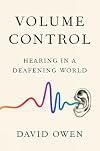
Hearing gets no respect. We can imagine blindness by closing our eyes, but there’s no way to shut down our ears. And because they seem to bounce back after every abuse, from stereo speakers and earbuds to circular saws to motorcycles to rock concerts, we think we dodged a bullet and that we can take it.
But David Owen says that is not true. In Volume Control, he visits the experts, sees the experiments and the measurements, and shows that every incident causes irreversible damage. It often show more only starts to appear later, but plenty of people become hard of hearing in their prime years, with the prospect of a largely silent future. And every incident from fireworks to gunshots to power tools and kitchen appliances has the potential to plant permanent damage in our ears.
Unless they also develop tinnitus (he says it’s pronounced like tin-itis, with accents on the first two syllables). This constant hissing or ringing in the ears, 24/7, merits two chapters in the book. For one thing, it is far more common than we think. It can be so annoying it drives people to suicide. He makes it clear there is no cure, no specific ways to cause its onset, and usually leads to other hearing problems. Early diagnosis is too late. And it continues even when you’re totally deaf. Avoidance means avoiding shocks to your hearing, next to impossible in our world.
The whole book is rather downbeat this way. Damage is not repairable. Even with cochlear implants, hearing can only be restored to a low level. Our whole civilization operates not just on fossil fuels, but on loud noise. Meanwhile, our ears have evolved to pick out tiny noises in otherwise total silence. The coming together of those two states can only lead to permanent damage in hearing.
Our solutions range from nothing to pathetic. Owen points out that while glasses actually build up vision back to the perfect range, we have nothing to restore the quality of hearing. The result is while people have no problem employing glasses and changing them often, hearing aids are typically put off for a decade of annoying everyone else with “What?” and “Huh?” People who plunk for them often put them in a drawer after the first use, where they sit for years. Where glasses are stylish and become people’s signature identifier, hearing aids are pure stigma. So we hide them, if not in a drawer, at least behind the ear.
Hearing aids are a scam, as we all know, and which Owen confirms in no uncertain terms. They cost less than $100 to make, but we get charged $6000 for a pair. And all they are are miniaturized loudspeakers and tiny microphones. Manufacturers have lobbied states successfully, so that in most jurisdictions, customers cannot order or even adjust them themselves. Only a professional, licensed audiologist can turn up the volume. More reason not to go that route.
And because they don’t have a workaround for the loss of range we made the appointment for in the first place, all they can do is boost the volume to exploit the range we still have left. They do not restore the higher tones most people lose first, so everything remains distorted and difficult. They sound tinny and in general, worse than a lousy cellphone connection.
Instead, like most hi tech, all kinds of add-ons (bloatware) are offered, including a choice of constant sounds to cover the tinnitus, to even a personal alarm-clock only the wearer will hear. There are lots of color choices to complement glasses or clothing too, but nothing to restore hearing.
The book is quite comprehensive, delving into the differences of the deaf at birth from those who lose hearing early and those who lose it over a lifetime. He examines the history of sign language, and goes over the arguments of ASL vs vocal training. The conclusion is both are legitimate, full-featured languages and deserve the same respect.
One thing missing, and I can’t believe this myself, is that no one is using noise cancelling headphones to eliminate the single tone of tinnitus. Owen knows his is about 6000 Hertz, or cycles per second, but he doesn’t pursue Bose, which makes top of the line noise cancelling equipment, to program a unit with the inverse of 6000 Hz, which should, in theory, silence it. If that is a foolish notion, he should at least explain why, because noise cancelling headphones now offer masking noises to hide tinnitus, rather than zero them out. That is correct: noise cancelling headphones now offer additional noise to muffle noise. How wrong is that?
On the hearing aid front, there is modest hope, at least financially. Bose, which rates a lot of coverage in Volume Control, even to a profile of the founder, now sells a hearing aid it cannot by law call a hearing aid. It does of course perform exactly as a high-end hearing aid, with all the same components, but don’t call it a hearing aid. It’s a Hearphone. You wear it around your neck, and plug earbuds into it and your ears. It is rechargeable, stylish and carries no stigma because it looks like a music appliance. It has all kinds of adjustments for noisy restaurants, quiet rooms, traffic, cinemas, airplanes, loud conversation and on and on. And no audiologist is required to change the settings. You can do it on a phone app. Best of all — $500 to find out if it works for you. Beats the hell out of $6000.
There is an even greater important revelation in Volume Control, concerning the tiny hairs in our ears. Damage to them has long been blamed for increasing deafness and loss of range, as well as tinnitus. But we’ve been looking in the wrong place all this time, simply because the light was better under this lamppost. The real culprit apparently lies farther inside our skulls, where the synapses that transfer sounds to the neurons of our brains have shrunk back, no longer making the connection. It seems that when we apply too much noise, synapses disconnect rather than annoy our brains with painful, endless, not to mention useless sounds. Just like how we ignore a constant droning sound so we don’t even notice it, the brain physically disengages from harmful sound. This has big implications for actually restoring quality hearing, but it will take years to figure out.
Owen weaves his usual easy to read and digest text, filled with stories of people he knows, and in this case his own hearing issues. It is a fast and pleasant read, but most of all it is a critically important read. Volume Control offers really valuable information. Everyone needs to act on this information right away, from using earplugs, to turning down the volume, to educating children. The harm is gigantic. As Owen explains in comparing loss of sight and hearing, it is far more difficult to sit among friends and family and be unable to hear their stories, laugh at their jokes and (not) respond with your own, than to be blind but still participate in human social activity. The subtleties and cues from our irreparable hearing are taken for granted, and you don’t know what you’ve got till it’s gone.
David Wineberg show less
But David Owen says that is not true. In Volume Control, he visits the experts, sees the experiments and the measurements, and shows that every incident causes irreversible damage. It often show more only starts to appear later, but plenty of people become hard of hearing in their prime years, with the prospect of a largely silent future. And every incident from fireworks to gunshots to power tools and kitchen appliances has the potential to plant permanent damage in our ears.
Unless they also develop tinnitus (he says it’s pronounced like tin-itis, with accents on the first two syllables). This constant hissing or ringing in the ears, 24/7, merits two chapters in the book. For one thing, it is far more common than we think. It can be so annoying it drives people to suicide. He makes it clear there is no cure, no specific ways to cause its onset, and usually leads to other hearing problems. Early diagnosis is too late. And it continues even when you’re totally deaf. Avoidance means avoiding shocks to your hearing, next to impossible in our world.
The whole book is rather downbeat this way. Damage is not repairable. Even with cochlear implants, hearing can only be restored to a low level. Our whole civilization operates not just on fossil fuels, but on loud noise. Meanwhile, our ears have evolved to pick out tiny noises in otherwise total silence. The coming together of those two states can only lead to permanent damage in hearing.
Our solutions range from nothing to pathetic. Owen points out that while glasses actually build up vision back to the perfect range, we have nothing to restore the quality of hearing. The result is while people have no problem employing glasses and changing them often, hearing aids are typically put off for a decade of annoying everyone else with “What?” and “Huh?” People who plunk for them often put them in a drawer after the first use, where they sit for years. Where glasses are stylish and become people’s signature identifier, hearing aids are pure stigma. So we hide them, if not in a drawer, at least behind the ear.
Hearing aids are a scam, as we all know, and which Owen confirms in no uncertain terms. They cost less than $100 to make, but we get charged $6000 for a pair. And all they are are miniaturized loudspeakers and tiny microphones. Manufacturers have lobbied states successfully, so that in most jurisdictions, customers cannot order or even adjust them themselves. Only a professional, licensed audiologist can turn up the volume. More reason not to go that route.
And because they don’t have a workaround for the loss of range we made the appointment for in the first place, all they can do is boost the volume to exploit the range we still have left. They do not restore the higher tones most people lose first, so everything remains distorted and difficult. They sound tinny and in general, worse than a lousy cellphone connection.
Instead, like most hi tech, all kinds of add-ons (bloatware) are offered, including a choice of constant sounds to cover the tinnitus, to even a personal alarm-clock only the wearer will hear. There are lots of color choices to complement glasses or clothing too, but nothing to restore hearing.
The book is quite comprehensive, delving into the differences of the deaf at birth from those who lose hearing early and those who lose it over a lifetime. He examines the history of sign language, and goes over the arguments of ASL vs vocal training. The conclusion is both are legitimate, full-featured languages and deserve the same respect.
One thing missing, and I can’t believe this myself, is that no one is using noise cancelling headphones to eliminate the single tone of tinnitus. Owen knows his is about 6000 Hertz, or cycles per second, but he doesn’t pursue Bose, which makes top of the line noise cancelling equipment, to program a unit with the inverse of 6000 Hz, which should, in theory, silence it. If that is a foolish notion, he should at least explain why, because noise cancelling headphones now offer masking noises to hide tinnitus, rather than zero them out. That is correct: noise cancelling headphones now offer additional noise to muffle noise. How wrong is that?
On the hearing aid front, there is modest hope, at least financially. Bose, which rates a lot of coverage in Volume Control, even to a profile of the founder, now sells a hearing aid it cannot by law call a hearing aid. It does of course perform exactly as a high-end hearing aid, with all the same components, but don’t call it a hearing aid. It’s a Hearphone. You wear it around your neck, and plug earbuds into it and your ears. It is rechargeable, stylish and carries no stigma because it looks like a music appliance. It has all kinds of adjustments for noisy restaurants, quiet rooms, traffic, cinemas, airplanes, loud conversation and on and on. And no audiologist is required to change the settings. You can do it on a phone app. Best of all — $500 to find out if it works for you. Beats the hell out of $6000.
There is an even greater important revelation in Volume Control, concerning the tiny hairs in our ears. Damage to them has long been blamed for increasing deafness and loss of range, as well as tinnitus. But we’ve been looking in the wrong place all this time, simply because the light was better under this lamppost. The real culprit apparently lies farther inside our skulls, where the synapses that transfer sounds to the neurons of our brains have shrunk back, no longer making the connection. It seems that when we apply too much noise, synapses disconnect rather than annoy our brains with painful, endless, not to mention useless sounds. Just like how we ignore a constant droning sound so we don’t even notice it, the brain physically disengages from harmful sound. This has big implications for actually restoring quality hearing, but it will take years to figure out.
Owen weaves his usual easy to read and digest text, filled with stories of people he knows, and in this case his own hearing issues. It is a fast and pleasant read, but most of all it is a critically important read. Volume Control offers really valuable information. Everyone needs to act on this information right away, from using earplugs, to turning down the volume, to educating children. The harm is gigantic. As Owen explains in comparing loss of sight and hearing, it is far more difficult to sit among friends and family and be unable to hear their stories, laugh at their jokes and (not) respond with your own, than to be blind but still participate in human social activity. The subtleties and cues from our irreparable hearing are taken for granted, and you don’t know what you’ve got till it’s gone.
David Wineberg show less
This was a terrific book. I'm not sure how interesting it would be to a fully hearing person, but it was amazing to me as a hearing-impaired individual. Because it was recently published, it contained very relevant information for me.
Not all of what I read was making me very happy, though. In fact, I was fuming after I read the way that the hearing aid industry is ripping off people for the costs of hearing aids. I learned a lot more about alternatives to hearing aids, a product that my show more husband had been pushing me to try. Now those less expensive, self-programmable alternatives don't seem quite as strange. In fact, there is one product I'd really like to try. Maybe one day I'll have the chance.
I liked learning about the difference in the way hearing aids and cochlear implants work. Since I know personally about hearing aids, I think now I more fully understand what the sensation of a cochlear implant must be like. The experience sounds (no pun intended) quite different.
I was happily encouraged by the section about hearing research. I think I more fully understand what my hearing loss is really about (loss of connection to the auditory nerve rather than loss of hair cells). I was also intrigued by the discovery that loud noises which seem temporarily resolved after the fact then later in life can be the cause of hearing decline. I'm sorry that I was of the generation who paid no attention to hearing protection so now I'm suffering because of it. I liked the very last chapter about hearing protection and am glad to report that my grandchildren know exactly when it's time to don those sound-decreasing ear muffs.
This book was comprehensive, easy-to-read, and very informative. I recommend it mostly to those who are either hearing impaired or who interact with others who are hearing impaired. show less
Not all of what I read was making me very happy, though. In fact, I was fuming after I read the way that the hearing aid industry is ripping off people for the costs of hearing aids. I learned a lot more about alternatives to hearing aids, a product that my show more husband had been pushing me to try. Now those less expensive, self-programmable alternatives don't seem quite as strange. In fact, there is one product I'd really like to try. Maybe one day I'll have the chance.
I liked learning about the difference in the way hearing aids and cochlear implants work. Since I know personally about hearing aids, I think now I more fully understand what the sensation of a cochlear implant must be like. The experience sounds (no pun intended) quite different.
I was happily encouraged by the section about hearing research. I think I more fully understand what my hearing loss is really about (loss of connection to the auditory nerve rather than loss of hair cells). I was also intrigued by the discovery that loud noises which seem temporarily resolved after the fact then later in life can be the cause of hearing decline. I'm sorry that I was of the generation who paid no attention to hearing protection so now I'm suffering because of it. I liked the very last chapter about hearing protection and am glad to report that my grandchildren know exactly when it's time to don those sound-decreasing ear muffs.
This book was comprehensive, easy-to-read, and very informative. I recommend it mostly to those who are either hearing impaired or who interact with others who are hearing impaired. show less

This is an excellent, well-rounded examination of hearing: how it works, what happens when it doesn’t, and the devices that can help people hear better. It also covers sign language, the deaf/Deaf community, and the struggle to bring affordable hearing aids to people who want them. This is one of those books that is exactly the right length and covers the topic in sufficient breadth to make you informed, but not overwhelmed. It’s written with sensitivity and warmth, and I would highly show more recommend it to pretty much everyone. You may not know someone with hearing loss, but someday that someone might be you, so it’s worth reading more about it. show less
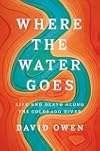
Where The Water Goes is ostensibly a driving tour of the Colorado River, from its tributary headwaters to Baja in Mexico where it is supposed to end. Owen drives and describes the scenery and the various characters he meets (sometimes with his family), and fills in the history and significance of the location. But where it gets really interesting is in the legislatures and the courts, where the water has a completely different status.
There is real water and there is paper water. There are show more negotiated agreements and there is The Law Of The River, which seems to be whatever the legislator or lawyer talking wants it to be. And you don’t want to bring The Law Of The River to court. The book is most informative when paper water properties rear their heads. It’s not logical, intuitive, direct, simple, or efficient. And no one dares tamper with it lest the whole house of cards come tumbling down.
In Arizona, new developments can be built and sold without service or access to water. Owners have to go pick it up and bring it back as needed. In Colorado, the water that runs off your roof is not yours and you have no right to retain it. At the state level, there is a race to consume the allocation, lest it be reduced and grabbed by another state. And by the time the river gets to Mexico, there is literally nothing left. In the mean time, agriculture still flood-irrigates, and cities keep expanding. Deserts don’t mean no one can live or farm; they just have to divert more water. Incredibly, the locals argue about exporting agricultural products as if they were exporting the water in them. It’s all very Alice in Wonderland.
The whole arrangement was originally built on faulty data; the river system cannot produce what it says on paper. The big reservoirs are so low they constantly need to retain all the water they can, leaving little or nothing trickling down the system. Canals and other diversions pervert nature. Dams cause more problems than they solve. Worst of all is the first come first served arrangement, whereby those who have the oldest permits get all the water they’re allowed before newer participants can take any. In perpetuity. This is how the West was built.
None of this is news and Owen cites numerous predecessors in trying to explain it (but not rationalize it. No one can do that). Owen ends by making recommendations he knows full well no one will ever consider. It’s a remarkable trip.
David Wineberg show less
There is real water and there is paper water. There are show more negotiated agreements and there is The Law Of The River, which seems to be whatever the legislator or lawyer talking wants it to be. And you don’t want to bring The Law Of The River to court. The book is most informative when paper water properties rear their heads. It’s not logical, intuitive, direct, simple, or efficient. And no one dares tamper with it lest the whole house of cards come tumbling down.
In Arizona, new developments can be built and sold without service or access to water. Owners have to go pick it up and bring it back as needed. In Colorado, the water that runs off your roof is not yours and you have no right to retain it. At the state level, there is a race to consume the allocation, lest it be reduced and grabbed by another state. And by the time the river gets to Mexico, there is literally nothing left. In the mean time, agriculture still flood-irrigates, and cities keep expanding. Deserts don’t mean no one can live or farm; they just have to divert more water. Incredibly, the locals argue about exporting agricultural products as if they were exporting the water in them. It’s all very Alice in Wonderland.
The whole arrangement was originally built on faulty data; the river system cannot produce what it says on paper. The big reservoirs are so low they constantly need to retain all the water they can, leaving little or nothing trickling down the system. Canals and other diversions pervert nature. Dams cause more problems than they solve. Worst of all is the first come first served arrangement, whereby those who have the oldest permits get all the water they’re allowed before newer participants can take any. In perpetuity. This is how the West was built.
None of this is news and Owen cites numerous predecessors in trying to explain it (but not rationalize it. No one can do that). Owen ends by making recommendations he knows full well no one will ever consider. It’s a remarkable trip.
David Wineberg show less
Lists
Awards


You May Also Like


Associated Authors
Statistics
- Works
- 19
- Also by
- 5
- Members
- 1,620
- Popularity
- #15,894
- Rating
- 3.7
- Reviews
- 37
- ISBNs
- 413
- Languages
- 11