
Max Jacobson (2) (1941–)
Author of Patterns of Home: The Ten Essentials of Enduring Design
For other authors named Max Jacobson, see the disambiguation page.
Works by Max Jacobson
Associated Works
Tagged
Common Knowledge
Members
Reviews
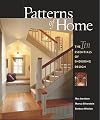
This book contains a distillation of the most important patterns from [b:A Pattern Language|79766|A Pattern Language Towns, Buildings, Construction|Christopher Alexander|http://d.gr-assets.com/books/1348983573s/79766.jpg|77027]. As the authors put it,
Having read A Pattern show more Language I approached this book skeptically. I did not think the authors could capture the essence of a good home in 10 patterns. However, I was pleasantly surprised. This book does not contain 10 patterns, in Alexander's sense of the word. It discusses 10 themes. Each theme references several patterns (implicitly or explicitly). I did not keep a formal count, but I would estimate that over half of Alexander's patterns that can be applied to home design are referenced in this book. This new look at the patterns makes the book worth reading even if you have read A Pattern Language, but it also makes it worth reading if you care about what makes a good home but do not want to read the nearly 1200 pages that make up A Pattern Language. If you are buying or building a home, it should be recommended reading.
Without further detail the 10 themes are: Inhabiting the Site; Creating Rooms, Outside and In; Sheltering Roof; Capturing Light; Parts in Proportion; The Flow Through Rooms; Private Edges, Common Core; Refuge and Outlook; Places in Between; Composing with Materials. show less
While there may be many dozens, even hundreds, of patterns that go into the making of homes, there are only a handful that we would now say are essential.This book takes a stab at defining those essential patterns.
Having read A Pattern show more Language I approached this book skeptically. I did not think the authors could capture the essence of a good home in 10 patterns. However, I was pleasantly surprised. This book does not contain 10 patterns, in Alexander's sense of the word. It discusses 10 themes. Each theme references several patterns (implicitly or explicitly). I did not keep a formal count, but I would estimate that over half of Alexander's patterns that can be applied to home design are referenced in this book. This new look at the patterns makes the book worth reading even if you have read A Pattern Language, but it also makes it worth reading if you care about what makes a good home but do not want to read the nearly 1200 pages that make up A Pattern Language. If you are buying or building a home, it should be recommended reading.
Without further detail the 10 themes are: Inhabiting the Site; Creating Rooms, Outside and In; Sheltering Roof; Capturing Light; Parts in Proportion; The Flow Through Rooms; Private Edges, Common Core; Refuge and Outlook; Places in Between; Composing with Materials. show less
The book starts with a discussion of the theory of contrast and then presents a number of case studies to illustrate those principles. The authors claim that emphasizing the natural contrasts in a home can make it more interesting, comfortable, and compelling. Areas of contrast that are common in the home are the contrast between inside and outside, exposed and tempered, up and down, something and nothing, light and dark, and order and mystery.
Perhaps counter-intuitively, the authors suggest show more that the best way to emphasize contrast is to connect the contrasting elements rather than, for example, making each contrasting element more extreme. The book contains many examples, but a couple stuck with me.
To emphasize the contrast between inside and outside, connect them with a covered porch. The covered porch allows one to partially observe and experience both inside and outside without being a part of either. On a more practical level, the contrast between light and dark can be improved by adding a transition from light to dark. Without such a transition, the contrast can be overwhelming (e.g., by making it so you cannot see).
This book presented concepts I came back to many times as I designed my own home. show less
Perhaps counter-intuitively, the authors suggest show more that the best way to emphasize contrast is to connect the contrasting elements rather than, for example, making each contrasting element more extreme. The book contains many examples, but a couple stuck with me.
To emphasize the contrast between inside and outside, connect them with a covered porch. The covered porch allows one to partially observe and experience both inside and outside without being a part of either. On a more practical level, the contrast between light and dark can be improved by adding a transition from light to dark. Without such a transition, the contrast can be overwhelming (e.g., by making it so you cannot see).
This book presented concepts I came back to many times as I designed my own home. show less
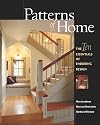
If you are building a home or remodeling, and were going to purchase just one book, this is it! Basics such as situating on the site, light, proportion are addressed. The photos are beautiful. The entire book is an inspiration. I had read the original version and was so glad to find this updated version.
You May Also Like


Associated Authors
Statistics
- Works
- 5
- Also by
- 1
- Members
- 324
- Popularity
- #73,084
- Rating
- 4.4
- Reviews
- 3
- ISBNs
- 8