
Jim Dutcher
Author of Wolves at Our Door : The Extraordinary Story of the Couple Who Lived with Wolves
About the Author
Image credit: via Audible
Works by Jim Dutcher
Wolves at Our Door : The Extraordinary Story of the Couple Who Lived with Wolves (2002) 174 copies, 3 reviews
Associated Works
Tagged
Common Knowledge
- Birthdate
- 1943
- Gender
- male
- Occupations
- naturalist
film director
cinematographer
author - Organizations
- Living with Wolves (cofounder)
- Relationships
- Dutcher, Jamie (wife)
- Nationality
- USA
- Associated Place (for map)
- USA
Members
Reviews
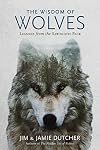
There had been a debate raging in the US starting in the 1970s about reintroducing wolves into Yellowstone and other national parks. Historically, wolves have been one of the most vilified animals on the planet, a dangerous even evil predator. How often, for example, are mass murderers called ‘lone wolves’? It was a universally accepted ‘fact’ that wolves needed to be completely eliminated. And, in the US they almost were. But after they were gone, elk herds expanded out of control. show more The debate was finally settled in the 1990s in favour of reintroduction although the decision was and continues to be vehemently opposed by ranchers and hunters.
Before the start of the program, Jim Dutcher was given permission to do a documentary about wolves in Yellowstone. To truly understand the animal, he felt he had to live in proximity with them. Wolf cubs were brought in from Canada and raised by Jim and his team until they were old enough to live on their own. To ensure the safety of the wolves, a fence was erected and Jim and his team provided food for them to keep the pack from wandering. Jim and Jamie Dutcher lived with the Sawtooth pack for six year, watching and recording their behaviour.
Over the years, they gained the trust of the pack and what they observed looked nothing like the vicious animal of legend. Instead what they saw were distinct individuals but who formed a familial bond, who displayed ‘kindness, teamwork, playfulness, respect, curiosity, and compassion’. In The Wisdom of Wolves: Lessons from the Sawtooth Pack, Jim and Jamie discuss these virtues.
I have no doubt that some would say that, in The Wisdom of Wolves, the Dutchers have anthropomorphized the wolves, attributing to them human characteristics and behaviour that aren’t really there or that, by keeping them in a safe place they changed the normal behaviour. But, throughout the book, the Dutchers give examples of similar behaviour from packs other observers have documented in the wild and from a distance.
The Dutchers not only provide a fascinating view of the behaviours of wolves, they make it clear that, not only are they similar to humans in many surprising ways but that we could learn a great deal from them - by the end, I felt I knew and cared very deeply for the fate of the pack. They also show how important wolves are to the ecosystem. For anyone who believes that nature is a system of interconnected species and that the loss of even one group has a domino effect on the rest or, for that matter, just wants to know more about this beautiful animal, I can’t recommend The Wisdom of Wolves highly enough.
Thanks to Edelweiss and National Geographic for the opportunity to read this book in exchange for an honest review show less
Before the start of the program, Jim Dutcher was given permission to do a documentary about wolves in Yellowstone. To truly understand the animal, he felt he had to live in proximity with them. Wolf cubs were brought in from Canada and raised by Jim and his team until they were old enough to live on their own. To ensure the safety of the wolves, a fence was erected and Jim and his team provided food for them to keep the pack from wandering. Jim and Jamie Dutcher lived with the Sawtooth pack for six year, watching and recording their behaviour.
Over the years, they gained the trust of the pack and what they observed looked nothing like the vicious animal of legend. Instead what they saw were distinct individuals but who formed a familial bond, who displayed ‘kindness, teamwork, playfulness, respect, curiosity, and compassion’. In The Wisdom of Wolves: Lessons from the Sawtooth Pack, Jim and Jamie discuss these virtues.
I have no doubt that some would say that, in The Wisdom of Wolves, the Dutchers have anthropomorphized the wolves, attributing to them human characteristics and behaviour that aren’t really there or that, by keeping them in a safe place they changed the normal behaviour. But, throughout the book, the Dutchers give examples of similar behaviour from packs other observers have documented in the wild and from a distance.
The Dutchers not only provide a fascinating view of the behaviours of wolves, they make it clear that, not only are they similar to humans in many surprising ways but that we could learn a great deal from them - by the end, I felt I knew and cared very deeply for the fate of the pack. They also show how important wolves are to the ecosystem. For anyone who believes that nature is a system of interconnected species and that the loss of even one group has a domino effect on the rest or, for that matter, just wants to know more about this beautiful animal, I can’t recommend The Wisdom of Wolves highly enough.
Thanks to Edelweiss and National Geographic for the opportunity to read this book in exchange for an honest review show less
A tad disappointing that I've wanted to read this book for years, and now that I finally got a chance to, I just wasn’t that awestruck. It’s another photograph-heavy coffee-table sized book, companion to The Hidden Life of Wolves. The project it was based on is described in Wolves At Our Door. Having already read those other two books, this one offers very little new or different info. There’s parts that describe (briefly) the filming project, the social structure of the wolf pack, show more their hunting skills and intense care of the young. There’s very little narrative of actual incidents- but two stand out to my mind in particular: the wolves’ reaction when a raven died, and how they were observed eating flowers (shooting stars) in a field every spring (but nobody was sure why). The photographs really are beautiful and expressive, but also a bit grainy, not with the clarity of focus or printing as nowadays. For it’s time this is a gorgeous book, but I can’t help comparing it to other things I’ve read before that were written since, and it doesn’t stand up as excellent in that regard. All that said, I am holding onto it! show less
This book was written in a way that made me wish I could have been there to know these magnificent animals for myself. I absolutely loved learning and gaining a better understanding about wolves, not only in a more controlled setting with the Dutchers, but also in seeing glimpses of wolf behaviors in the wild through other's observations and work.
There were so many things I loved experiencing remotely, but I think my favorite had to be when the female wolf, Chemukh, let author Jamie into show more her den to see her pups. I remember thinking how lucky Jamie was to be so trusted! It felt like this breathtaking moment, and I wasn't even there.
I felt The Wisdom of Wolves was an amazing story that reminded me just how important it is to have an open mind when digging deeper into anything. For me, this book will stay in my heart forever. show less
There were so many things I loved experiencing remotely, but I think my favorite had to be when the female wolf, Chemukh, let author Jamie into show more her den to see her pups. I remember thinking how lucky Jamie was to be so trusted! It felt like this breathtaking moment, and I wasn't even there.
I felt The Wisdom of Wolves was an amazing story that reminded me just how important it is to have an open mind when digging deeper into anything. For me, this book will stay in my heart forever. show less
Your reaction of this book will depend on what you are looking for. First, obviously you have to have an interest in wolves, which I do, and second if you are looking for a book about wolves in the wild, this one will not appeal. For me, it was exactly what I was looking for, a controlled environment that allowed the Dutchers a first hand look at wolf behavior. Each chapter is preceded by a photo, by books end all the wolves in their orbit were shown. Beautiful animals.
Not only did I get to show more see each wolf's picture but I also learned about their different personalities, their role in the pack. How they played, where they gave birth, how they mourned when a pack member died or was killed. These animals have many of the same emotions and traits thatwe have, empathy, sensitivity, playfulness, loyalty, grief, curiousity. The cooperation between wolves and Ravens, how they use each other to search out food. I felt like I really got to know these wolves personally and missed them already at books end.
The background of the Dutchers, the reintroduction of wolves at Yellowstone, wolves at Denali are also a part of this book. The fear people have, wanting to kill them when they step out of protected territory, and many are killed that way. There are so horrible statistics given terrible ways these wolves and their pups are killed. Heartbreaking, but as usual many are afraid of something they don't understand.
Anyway this was exactly the book I personally was looking for.
ARC from Edelweiss. show less
Not only did I get to show more see each wolf's picture but I also learned about their different personalities, their role in the pack. How they played, where they gave birth, how they mourned when a pack member died or was killed. These animals have many of the same emotions and traits thatwe have, empathy, sensitivity, playfulness, loyalty, grief, curiousity. The cooperation between wolves and Ravens, how they use each other to search out food. I felt like I really got to know these wolves personally and missed them already at books end.
The background of the Dutchers, the reintroduction of wolves at Yellowstone, wolves at Denali are also a part of this book. The fear people have, wanting to kill them when they step out of protected territory, and many are killed that way. There are so horrible statistics given terrible ways these wolves and their pups are killed. Heartbreaking, but as usual many are afraid of something they don't understand.
Anyway this was exactly the book I personally was looking for.
ARC from Edelweiss. show less
Awards


You May Also Like


Associated Authors
Statistics
- Works
- 6
- Also by
- 1
- Members
- 631
- Popularity
- #39,928
- Rating
- 4.1
- Reviews
- 12
- ISBNs
- 35
- Languages
- 2
- Favorited
- 1