
Ronald W. Walker (1) (1939–2016)
Author of Massacre at Mountain Meadows
For other authors named Ronald W. Walker, see the disambiguation page.
About the Author
Ronald W. Walker is a professor of history and the director of research at the Joseph Fielding Smith Institute at Brigham Young University.
Works by Ronald W. Walker
Nearly Everything Imaginable: The Everyday Life of Utah's Mormon Pioneers (Studies in Latter-Day Saint History) (1999) — Editor; Contributor — 24 copies
Reflections of a Mormon Historian: Leonard J. Arrington on the New Mormon History (2006) — Editor; Preface; Prologue — 12 copies
Mountain Meadows Massacre: The Andrew Jenson and David H Morris Collections (2009) — Editor — 11 copies
The Prophet and the Reformer: The Letters of Brigham Young and Thomas L. Kane (2015) — Editor — 10 copies
Associated Works
Great Basin Kingdom: An Economic History of the Latter-day Saints, 1830-1900, New Edition (1958) — Introduction, some editions — 106 copies, 2 reviews
The New Mormon History: Revisionist Essays on the Past (Essays on Mormonism Series) (1992) — Contributor — 46 copies
Supporting Saints Life Stories of 19th Century Mormons (The Religious Studies Center specialized monograph series) (1985) — Contributor — 16 copies
New Views of Mormon History: A Collection of Essays in Honor of Leonard J. Arrington (1987) — Contributor — 16 copies
A Firm Foundation: The History of Church Organization and Administration (BYU Church History Symposium) (2011) — Contributor — 14 copies
Life in Utah: Centennial Selections from Byu Studies (Byu Studies Monographs,) (1996) — Contributor — 8 copies
Taking the Gospel to the Japanese, 1901-2001 (Studies in Latter-Day Saint History) (2005) — Contributor — 6 copies
Times of Transition: Proceedings of the 2000 Symposium of the Joseph Fielding Smith Institute for Latter-day Saint History at Brigham Young University (2003) — Contributor — 4 copies
The Exodus and Beyond. Essays in Mormon History. Lyndon W. Cook & Donald Q. Cannon. Softbound. (1980) — Contributor — 4 copies
Honoring Juanita Brooks: A Compilation of 30 Annual Presentations from the Juanita Brooks Lecture Series, Dixie State University (2014) — Contributor — 3 copies
Utah Historical Quarterly - Vol. 50, No. 4, Fall 1982 - Currents in Mormon Culture (1982) — Contributor — 3 copies
The Twentieth Century American West: Contributions to an Understanding (1983) — Contributor — 3 copies
Dialogue: A Journal of Mormon Thought, Volume 19, Number 4, Winter 1986 (1986) — Contributor — 2 copies
Celebrating the LDS Past: Essays Commemorating the 20th Anniversary of the 1972 Founding of the LDS Church Historical Department's 'History Division' (1992) — Contributor — 1 copy
Dialogue: A Journal of Mormon Thought - Volume 10, Number 4 (Autumn 1977) (1977) — Contributor — 1 copy
Utah Historical Quarterly - Vol. 42, No. 3, Summer 1974 - The Transportation Landscape (1974) — Contributor — 1 copy
Dialogue: A Journal of Mormon Thought - Volume 12, Number 4 (Winter 1979) (1979) — Contributor — 1 copy
Dialogue: A Journal of Mormon Thought - Volume 26, Number 4 (Winter 1993) (1993) — Contributor — 1 copy
Dialogue: A Journal of Mormon Thought - Volume 26, Number 3 (Fall 1993) (1993) — Contributor — 1 copy
Dialogue: A Journal of Mormon Thought - Volume 23, Number 4 (Winter 1990) (1990) — Contributor — 1 copy
Dialogue: A Journal of Mormon Thought - Volume 15, Number 3 (Autumn 1982) (1982) — Contributor — 1 copy
Tagged
Common Knowledge
- Legal name
- Walker, Ronald Warren
- Birthdate
- 1939
- Date of death
- 2016-05-09
- Gender
- male
- Education
- University of Utah (PhD|History|1977)
Stanford University (MS|1968)
Brigham Young University (MA|1965)
Brigham Young University (BS|1961) - Occupations
- professor of history
Research Fellow
LDS Institute of Religion curriculum writer - Organizations
- The Church of Jesus Christ of Latter-day Saints (bishop)
Brigham Young University
Joseph Fielding Smith Institute (Senior Research Fellow)
Church Educational System
LDS Church Historical Department (Senior Research Historian)
Charles Redd Center for Western Studies (show all 8)
Mormon History Association (president ∙ 1991-92)
LDS Institute of Religion, University of Utah - Relationships
- Walker, Nelani Midgley (wife)
- Nationality
- USA
- Birthplace
- Missoula, Montana, USA
- Places of residence
- Iowa, USA
San Joaquin Valley, California, USA
Salt Lake City, Utah, USA - Associated Place (for map)
- USA
Members
Reviews
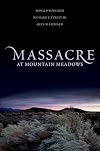
Although written by professional historians trying to be very careful about sources and piecing together a cloudy story, the book was very readable. (This may be due to Walker, who I've heard is one of the best writers in Mormon history.)
I felt like it did a fair job, not trying to vilify or defend anyone. The authors concluded that Brigham Young didn't order the Mormons to massacre the victims, but he shared responsibility, along with George A. Smith, for creating a climate of paranoia and show more aggression during the build-up to the Utah War. The locals and regional church/government leaders got caught up in a bad plan that spiraled out of control, and they attempted to contain it by brutal means.
Besides taking a fresh approach to the corpus of source material that has been amassed over the years, the authors also compared this tragedy with the culture of frontier violence and vigilantism. I hope they're still planning on Volume 2, to discuss the cover up by church headquarters, national attention, and the federal investigations. show less
I felt like it did a fair job, not trying to vilify or defend anyone. The authors concluded that Brigham Young didn't order the Mormons to massacre the victims, but he shared responsibility, along with George A. Smith, for creating a climate of paranoia and show more aggression during the build-up to the Utah War. The locals and regional church/government leaders got caught up in a bad plan that spiraled out of control, and they attempted to contain it by brutal means.
Besides taking a fresh approach to the corpus of source material that has been amassed over the years, the authors also compared this tragedy with the culture of frontier violence and vigilantism. I hope they're still planning on Volume 2, to discuss the cover up by church headquarters, national attention, and the federal investigations. show less
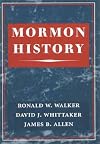
This book was originally published in 2001, then spent some time online
in the University of Illinois Press free electronic library between 2001
and 2006, and has now been reprinted. It was meant as a companion to the
1,168 page bibliographic "Studies in Mormon History, 1830-1997,"
published in 2000 and apparently still available. The intention of the
book "is to provide a handbook for those starting a study in Mormon
history" (page ix).
Chapter One introduces us to 19th century writing, beginning show more with Eber
D. Howe's anti-Mormon book, "Mormonism Unvailed." It then continues with
LDS pamphleteers, manuscript histories, and newspapers. "The History of
the Church" is described as being "unsurpassed as a nineteenth-century
LDS work...[that] remains a basic research tool for beginning students
of the early Mormon experience" (page 9).
It goes on to talk about "middle way" books, which were written by
non-members, and fit somewhere between "Mormonism Unvailed" and "The
History of the Church," before continuing with LDS authors such as
Andrew Jensen and George Q. Cannon, and the establishment of the George
Q. Cannon and Sons printing press.
In Chapter Two, the first half of the 20th century is looked at. Here
the work of Nephi Anderson and B. H. Roberts is gone into, along with
the Improvement Era and "Essentials in Church History." Academic and
professional historians also did some important work during this time,
such as Richard T. Ely, Lowry Nelson, and Levi Edgar Young. Fawn Brodie,
Dale Morgan, and Juanita Brooks are given a couple of pages each,
referred to as "the three leading historians of Mormonism at
midcentury" (page 51).
Chapter three discusses what Moses Rischin called the "new Mormon
history." Leonard J. Arrington is credited with capturing the spirit of
this writing: "investigating the Mormon past in human or naturalistic
terms without rejecting its divinity." Shortly after this book was
originally published, Louis Midgley showed that Arrington was not
actually the author of that idea, and that he had spent many years
coming up with what it actually meant after he had been credited with
it, since it is an apparent contradiction. (See
http://www.fairlds.org/FAIR_Conferences/2001_Naturalistic_Terms.html .)
Arrington's work and that of others with him in the the LDS Historical
Department is discussed, along with reactions by leaders such as Boyd K.
Packer and Ezra Taft Benson. After the office was moved to BYU, many
other books and articles were produced, by authors such as Dean C.
Jessee and Thomas Alexander.
The BYU Department of History also made many contributions, as did the
Church Educational System and the College of Religious Education.
Scholars from the RLDS church (this book was written before it was
renamed to "Community of Christ") such as Robert B. Flanders and Richard
P. Howard did some important writing as well.
Space is also given to the work of people such as Jan Shipps, Lowell
Bennion, Lawrence Foster, Richard L. Bushman, and D. Michael Quinn, and
publications such as "Utah History Encyclopedia," as well as
computer-based databases. The beginnings of the Mormon History
Association are related, along with periodicals such BYU Studies,
Dialogue, the John Whitmer Historical Journal, the Improvement Era and
Ensign, and Sunstone.
Chapter Four discusses the challenges of Mormon biography. It gives a
history of LDS biographies, especially those of Joseph Smith and Brigham
Young. It talks about how biographies have changed over the centuries.
It touches on biographies of women, dissenters, and schismatics, as well
as autobiographies. It then outlines what the authors feel is still left
to be done: "the lives of the rank and file," women, and more LDS
leaders. And "the writing of LDS autobiographies is just getting
started" (page 140).
Chapter five was written by Armand L. Mauss. It talks about social
science literature. He points out that the studies on Mormons that have
been done outside the church have not yielded reliable data, having
either come from flawed samples or shortcomings in research methods, and
that Utah cannot be used to represent the church.
He talks about the church's Research Information Division, which does
produce reliable research, but is used internally by church leaders, and
very little information that has been produced has been made available
publicly. It has made contributions, however, by training young social
scientists and giving "a degree of legitimacy to the social scientific
perspective on religion, always suspect in the minds of conservative
church leaders and members" (page 163).
Mauss also covers continuing as well as newly developing directions in
LDS social science, such as family life, values, politics, racial and
ethnic relationships, and the roles of modern women. He then discusses
neglected topics: Mormon missiology; consequences of the exportation of
the Mormon religion; social stratification; organizational studies; and
deviance, discipline, and self control.
He ends his chapter with a statement that I wonder if he would still
agree with today: "All things considered, it seems unlikely that the
first decades of the twenty-first century will see the same rate of
growth in social science literature on the Mormons that occurred in the
final decades of the twentieth century" (page 182).
Appendix A and Appendix B go back over some of the same ground covered
earlier in the book, listing books and other sources of value to
historians. Appendix A evaluates "Mormon imprints" (although it also
talks about some anti-Mormon titles and other works published by non-LDS
publishers). It gives a history of publishing by the LDS church,
including scriptures, periodicals, hymnals, and almanacs. Appendix B
lists reference works, bibliographies, indexes, and even the
familysearch.org web site as places to help find things to aid in
research. A statement by Bernard De Voto that "a complete bibliography
of articles on Mormonism by qualified scholars would hardly fill one
page" (page 250) is indeed proven wrong.
In all, this book is a thorough (in some cases, perhaps too thorough)
walk through the writing of the history of the church up through the
close of the twentieth century. I found it to be very interesting and I
learned many things from it. However, it is rather unfortunate that it
was not updated when it was reprinted. Not only are the same
typographical errors still intact from the first printing ten years ago
(as verified by the archived e-book version at archive.org), but a great
deal has changed in the last ten years, and I believe the changes have
definitely been significant enough to warrant at least an additional
appendix, if not an actual revision to the text.
Although the book is very useful for an amateur historian (such as
myself) - or even still for a student, as was intended - to get up to
speed on what has gone on before us, I'm afraid the book's own
description of some outdated bibliographies now applies to itself: a
"useful signpost...to the past journey of Mormon scholarship, telling of
its quantity and quality when...[it] was produced." Still, I highly
recommend this book for anyone interested in Mormon history or Mormon
book collecting who wants to know more about the context in which the
literature was produced. show less
in the University of Illinois Press free electronic library between 2001
and 2006, and has now been reprinted. It was meant as a companion to the
1,168 page bibliographic "Studies in Mormon History, 1830-1997,"
published in 2000 and apparently still available. The intention of the
book "is to provide a handbook for those starting a study in Mormon
history" (page ix).
Chapter One introduces us to 19th century writing, beginning show more with Eber
D. Howe's anti-Mormon book, "Mormonism Unvailed." It then continues with
LDS pamphleteers, manuscript histories, and newspapers. "The History of
the Church" is described as being "unsurpassed as a nineteenth-century
LDS work...[that] remains a basic research tool for beginning students
of the early Mormon experience" (page 9).
It goes on to talk about "middle way" books, which were written by
non-members, and fit somewhere between "Mormonism Unvailed" and "The
History of the Church," before continuing with LDS authors such as
Andrew Jensen and George Q. Cannon, and the establishment of the George
Q. Cannon and Sons printing press.
In Chapter Two, the first half of the 20th century is looked at. Here
the work of Nephi Anderson and B. H. Roberts is gone into, along with
the Improvement Era and "Essentials in Church History." Academic and
professional historians also did some important work during this time,
such as Richard T. Ely, Lowry Nelson, and Levi Edgar Young. Fawn Brodie,
Dale Morgan, and Juanita Brooks are given a couple of pages each,
referred to as "the three leading historians of Mormonism at
midcentury" (page 51).
Chapter three discusses what Moses Rischin called the "new Mormon
history." Leonard J. Arrington is credited with capturing the spirit of
this writing: "investigating the Mormon past in human or naturalistic
terms without rejecting its divinity." Shortly after this book was
originally published, Louis Midgley showed that Arrington was not
actually the author of that idea, and that he had spent many years
coming up with what it actually meant after he had been credited with
it, since it is an apparent contradiction. (See
http://www.fairlds.org/FAIR_Conferences/2001_Naturalistic_Terms.html .)
Arrington's work and that of others with him in the the LDS Historical
Department is discussed, along with reactions by leaders such as Boyd K.
Packer and Ezra Taft Benson. After the office was moved to BYU, many
other books and articles were produced, by authors such as Dean C.
Jessee and Thomas Alexander.
The BYU Department of History also made many contributions, as did the
Church Educational System and the College of Religious Education.
Scholars from the RLDS church (this book was written before it was
renamed to "Community of Christ") such as Robert B. Flanders and Richard
P. Howard did some important writing as well.
Space is also given to the work of people such as Jan Shipps, Lowell
Bennion, Lawrence Foster, Richard L. Bushman, and D. Michael Quinn, and
publications such as "Utah History Encyclopedia," as well as
computer-based databases. The beginnings of the Mormon History
Association are related, along with periodicals such BYU Studies,
Dialogue, the John Whitmer Historical Journal, the Improvement Era and
Ensign, and Sunstone.
Chapter Four discusses the challenges of Mormon biography. It gives a
history of LDS biographies, especially those of Joseph Smith and Brigham
Young. It talks about how biographies have changed over the centuries.
It touches on biographies of women, dissenters, and schismatics, as well
as autobiographies. It then outlines what the authors feel is still left
to be done: "the lives of the rank and file," women, and more LDS
leaders. And "the writing of LDS autobiographies is just getting
started" (page 140).
Chapter five was written by Armand L. Mauss. It talks about social
science literature. He points out that the studies on Mormons that have
been done outside the church have not yielded reliable data, having
either come from flawed samples or shortcomings in research methods, and
that Utah cannot be used to represent the church.
He talks about the church's Research Information Division, which does
produce reliable research, but is used internally by church leaders, and
very little information that has been produced has been made available
publicly. It has made contributions, however, by training young social
scientists and giving "a degree of legitimacy to the social scientific
perspective on religion, always suspect in the minds of conservative
church leaders and members" (page 163).
Mauss also covers continuing as well as newly developing directions in
LDS social science, such as family life, values, politics, racial and
ethnic relationships, and the roles of modern women. He then discusses
neglected topics: Mormon missiology; consequences of the exportation of
the Mormon religion; social stratification; organizational studies; and
deviance, discipline, and self control.
He ends his chapter with a statement that I wonder if he would still
agree with today: "All things considered, it seems unlikely that the
first decades of the twenty-first century will see the same rate of
growth in social science literature on the Mormons that occurred in the
final decades of the twentieth century" (page 182).
Appendix A and Appendix B go back over some of the same ground covered
earlier in the book, listing books and other sources of value to
historians. Appendix A evaluates "Mormon imprints" (although it also
talks about some anti-Mormon titles and other works published by non-LDS
publishers). It gives a history of publishing by the LDS church,
including scriptures, periodicals, hymnals, and almanacs. Appendix B
lists reference works, bibliographies, indexes, and even the
familysearch.org web site as places to help find things to aid in
research. A statement by Bernard De Voto that "a complete bibliography
of articles on Mormonism by qualified scholars would hardly fill one
page" (page 250) is indeed proven wrong.
In all, this book is a thorough (in some cases, perhaps too thorough)
walk through the writing of the history of the church up through the
close of the twentieth century. I found it to be very interesting and I
learned many things from it. However, it is rather unfortunate that it
was not updated when it was reprinted. Not only are the same
typographical errors still intact from the first printing ten years ago
(as verified by the archived e-book version at archive.org), but a great
deal has changed in the last ten years, and I believe the changes have
definitely been significant enough to warrant at least an additional
appendix, if not an actual revision to the text.
Although the book is very useful for an amateur historian (such as
myself) - or even still for a student, as was intended - to get up to
speed on what has gone on before us, I'm afraid the book's own
description of some outdated bibliographies now applies to itself: a
"useful signpost...to the past journey of Mormon scholarship, telling of
its quantity and quality when...[it] was produced." Still, I highly
recommend this book for anyone interested in Mormon history or Mormon
book collecting who wants to know more about the context in which the
literature was produced. show less
Well-researched and even-handed account of a horrific episode in Mormon and Western U.S. History. Would like the authors to add at least one more chapter to this relatively brief account to detail the fates of the other main actors that apparently avoided legal justice.
Have now read this and Juanita Brooks book as well. Surprisingly, this is fairly balanced in its approach. But then, the horse was outta the barn for some years, unlike for Brooks' book. Finished 25.09.19.
Lists
True Crime (1)
Awards


You May Also Like


Associated Authors
Statistics
- Works
- 12
- Also by
- 54
- Members
- 321
- Popularity
- #73,714
- Rating
- 4.2
- Reviews
- 7
- ISBNs
- 20
- Favorited
- 1